There used to be a little wine bar in Brooklyn called The Gathered Table that made the most incredible fall grazing board I’ve ever had. When they closed their doors in 2019—the owner moved back to Italy, of all things—I honestly felt a little lost. That board was the star of every catch-up with friends, every lazy Sunday afternoon. After maybe seven tries—some where the cheese toppled over, one where I accidentally used smoked gouda instead of aged—I finally cracked the code. This Friendsgiving fall charcuterie board is the result of that obsession, and let me tell you, it’s become the centerpiece of my own Thanksgiving-eve tradition now. You know that feeling when you find *the* thing that brings everyone together without stress? This is it.
I remember the first time I served this board at my own place. My friend Sarah walked in, dropped her bag, and just stared. “Did you hire a caterer?” she asked. Nope, just a cutting board, some good ingredients, and a whole lot of trial and error. The secret isn’t fancy skills—it’s knowing how to layer flavors and textures so every bite feels intentional. The sweetness of roasted figs against the sharpness of aged cheddar. The crunch of candied pecans next to silky prosciutto. It’s a symphony, honestly, and you don’t need a culinary degree to conduct it.
What I love most about this board is how it makes people slow down. There’s no formal plating, no waiting for a main course. Everyone just gathers around, picking and chatting, and somehow the conversation flows as easily as the wine. For Friendsgiving, that’s exactly the vibe you want—low pressure, high reward, and a table that looks like you spent hours when really, it’s all about smart arranging. Let’s build this thing together, shall we?
Why You’ll Love This Friendsgiving Fall Charcuterie Board
This isn’t just another cheese board thrown together last minute. It’s a curated experience that screams fall without screaming for attention. After testing this board at three different Friendsgiving gatherings—with friends who have very strong opinions about blue cheese—I can promise you it delivers every single time.
- Stress-Free Entertaining: Everything comes together in under 30 minutes of active prep. No cooking, no timing disasters, just arranging and enjoying.
- Simple, Seasonal Ingredients: You don’t need a specialty grocery store. Most items are available at your regular market, especially during fall when apples, pears, and figs are everywhere.
- Perfect for Friendsgiving: This board sets the tone for a relaxed, communal meal. It’s the appetizer that doubles as the main event for grazing-style gatherings.
- Crowd-Pleaser Guaranteed: With a mix of savory, sweet, salty, and tangy, there’s something for everyone. Even your friend who “doesn’t like cheese” will find something to love.
- Unbelievably Beautiful: The color palette of deep reds, golden yellows, and earthy greens makes this board a showstopper. It’s basically edible fall decor.
What makes this board different from the countless others you’ll see online? It’s the balance. I’ve tested ratios of cheese to meat to fruit until my friends begged me to stop bringing boards to every hangout. The trick is treating each component like a supporting actor—none of them steals the show, but together they create a masterpiece. And that roasted honey drizzle over the brie? That’s the plot twist nobody sees coming.
This recipe isn’t just good—it’s the kind that makes you close your eyes after the first bite. It’s comfort food reimagined for sharing, with the same soul-soothing satisfaction as a warm slice of pie but way less work. Perfect for impressing your chosen family without stress, or turning a simple Tuesday night into something memorable.
What Ingredients You Will Need
This Friendsgiving fall charcuterie board uses simple, seasonal ingredients to deliver bold flavor and satisfying texture without the fuss. Most of these are pantry staples or easy fall finds, and I’ve included substitution notes where they matter.
The Cheeses (The Foundation)
- Aged Cheddar: 8 ounces, sliced into thin wedges (I prefer Cabot’s Seriously Sharp for that crystalline crunch)
- Brie: 8 ounces, one whole wheel (look for a double or triple cream for maximum creaminess)
- Blue Cheese: 4 ounces, crumbled or in a wedge (Roquefort or Gorgonzola dolce both work beautifully)
- Goat Cheese Log: 4 ounces, plain or herbed (chevre adds a tangy, creamy contrast)
The Meats (The Savory Backbone)
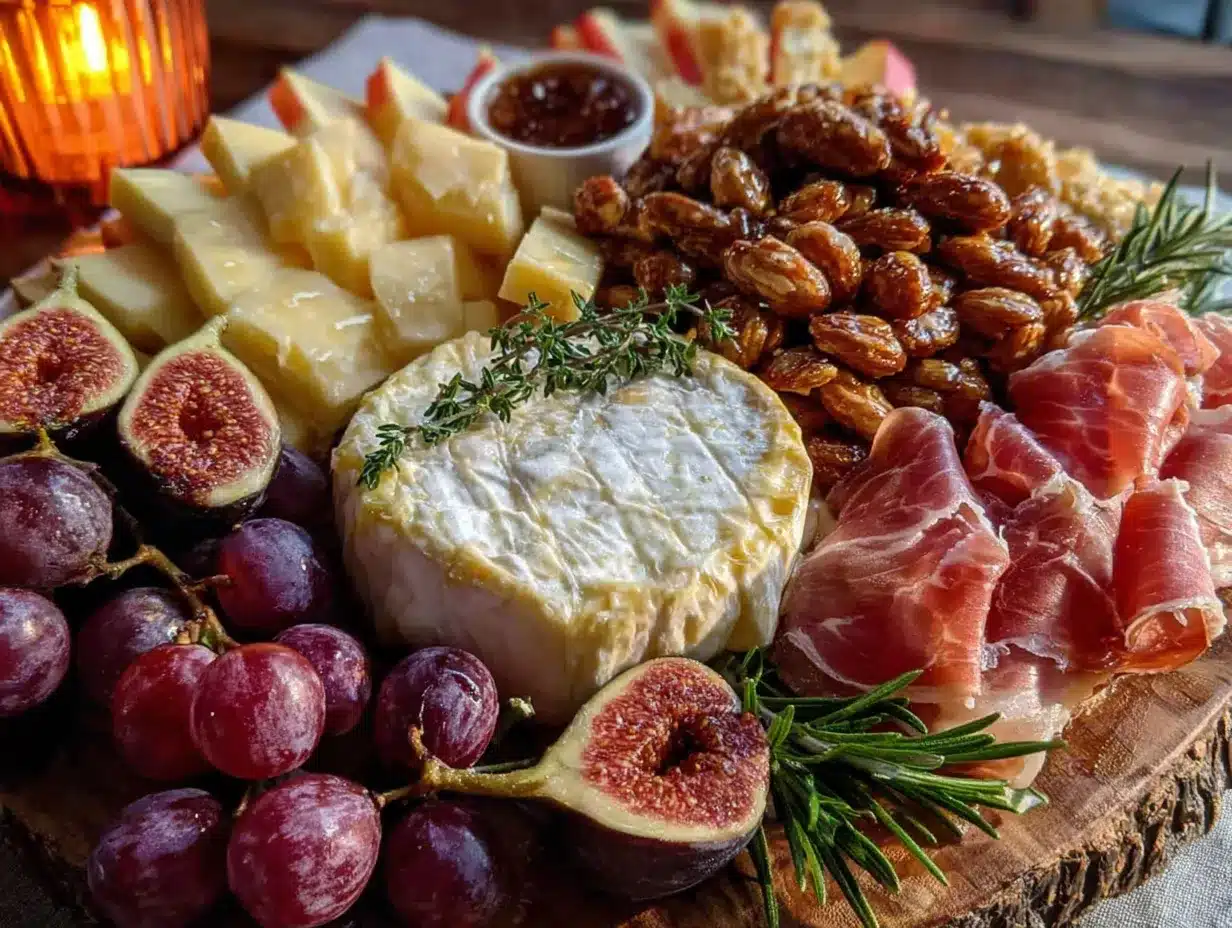
- Prosciutto: 6 ounces, thinly sliced (I recommend Di Bruno Bros. for authentic flavor)
- Sopressata: 6 ounces, sliced into thin rounds (spicy or sweet—your call)
- Genoa Salami: 4 ounces, sliced (look for one with visible peppercorns)
The Fruits (The Sweet Balance)
- Fresh Figs: 6-8, halved (ripe but firm; if out of season, use dried Mission figs soaked in warm water for 10 minutes)
- Apple: 1 Honeycrisp or Fuji, sliced thin and tossed in lemon juice to prevent browning
- Pear: 1 Bosc or Anjou, sliced (same lemon juice trick applies)
- Dried Apricots: 1/2 cup (adds chewy sweetness)
- Medjool Dates: 1/2 cup, pitted (stuff with goat cheese for an extra treat)
The Crunch (Texture Essentials)
- Candied Pecans: 1 cup (store-bought or homemade; I love Trader Joe’s Candied Pecans for convenience)
- Marcona Almonds: 1/2 cup (salted, for that buttery richness)
- Pumpkin Seeds: 1/4 cup, toasted (adds a pop of green and earthiness)
- Crostini: 1 baguette, sliced and toasted (or use store-bought crackers like Raincoast Crisps)
- Pita Chips: 1 cup (for scooping soft cheese)
The Sweet & Savory Accents
- Honey: 1/4 cup, warmed with a sprig of rosemary for drizzling
- Fig Jam: 1/3 cup (Bonne Maman Fig Jam is my go-to; adds a luxurious sweetness)
- Olives: 1/2 cup Castelvetrano or Kalamata (rinsed and drained)
- Cornichons: 1/4 cup (those tiny pickles cut through richness perfectly)
- Fresh Rosemary & Thyme: A few sprigs for garnish (edible and beautiful)
Substitution Guidance
For a dairy-free version, swap the cheeses with high-quality vegan alternatives—Miyoko’s makes an excellent vegan brie. If you’re avoiding pork, use turkey prosciutto or beef salami. Gluten-free guests can enjoy this with rice crackers or sliced cucumber rounds instead of crostini. In summer, swap figs for fresh berries and apples for stone fruits like peaches or plums.
Equipment Needed
You don’t need a professional kitchen to build a stunning board. Here’s what I use every time:
- Large Wooden Cutting Board or Slate Board: 18×24 inches is ideal. I picked mine up at a flea market for $15, and it’s held up for years. A large baking sheet lined with parchment works in a pinch.
- Small Bowls: 3-4 ramekins or small ceramic bowls for jam, honey, olives, and nuts. Anything that keeps wet ingredients from touching dry ones.
- Cheese Knives: At least 2—one for soft cheese, one for hard. A butter knife works for brie if you’re in a bind.
- Tongs: Small serving tongs for meats and olives. Or just let people use their hands—I won’t judge.
- Paring Knife: For slicing fruits and trimming cheese. A sharp one makes all the difference.
- Small Saucepan: For warming honey with rosemary. Microwave works too, but watch it closely so it doesn’t boil over.
- Parchment Paper: Optional, but great for lining the board if you want easy cleanup.
Pro tip: If your board is new, rub it with mineral oil before first use to prevent staining from the cheese and fruits. And don’t stress about having the perfect board—a clean countertop works too. I’ve built boards on a marble pastry slab and even a clean pizza peel!
Preparation Method
Let’s build this Friendsgiving fall charcuterie board step by step. Trust me, the order matters—you want to start with the anchors and fill in the gaps.
- Warm the honey (5 minutes): In a small saucepan over low heat, warm 1/4 cup honey with a sprig of fresh rosemary. Stir gently for 2-3 minutes until the honey is runny and fragrant. Don’t let it boil—you just want it warm enough to drizzle. Remove the rosemary sprig and set aside.
- Prep the fruits (10 minutes): Wash and dry the figs, apple, and pear. Halve the figs lengthwise. Core the apple and pear, then slice them into thin wedges about 1/4 inch thick. Toss the apple and pear slices with a squeeze of fresh lemon juice to keep them from browning. Pat the dried apricots and dates dry if they feel sticky. If using dried figs, soak them in warm water for 10 minutes first, then pat dry.
- Arrange the cheeses (5 minutes): Place your cheese wedges on the board first—they’re the anchors. Put the brie wheel in the upper left quadrant, the aged cheddar slices in the upper right, the goat cheese log in the lower left, and the blue cheese crumbles in a small pile in the lower right. Leave space between each cheese for the other ingredients. If you’re using a round board, think of a clock face: cheeses at 12, 3, 6, and 9.
- Add the meats (5 minutes): Fold the prosciutto slices into loose ribbons and place them near the brie. Arrange the sopressata rounds overlapping like fallen dominoes next to the cheddar. Pile the genoa salami slices into a small heap near the blue cheese. The meats should create visual lines that guide the eye around the board.
- Fill with fruits (5 minutes): Scatter the fresh fig halves around the board, tucking them between cheeses and meats. Arrange the apple and pear slices in fan patterns near the edges. Dot the dried apricots and dates in small clusters. This is where the board starts looking abundant—don’t be shy with the fruit.
- Add crunch elements (5 minutes): Place the candied pecans in a small bowl or directly on the board in a few piles. Do the same with the Marcona almonds and pumpkin seeds. Arrange the crostini and pita chips around the edges, standing some upright for height. The crunch elements should be easy to grab without reaching over other items.
- Set out the bowls (3 minutes): Place the small bowls on the board: one with fig jam, one with the warmed rosemary honey, one with olives, and one with cornichons. Position them so they’re evenly spaced and accessible. The bowls also break up the visual field and add height variation.
- Garnish and drizzle (2 minutes): Tuck fresh rosemary and thyme sprigs around the board—under cheese wedges or behind fruit clusters. Drizzle the warm honey over the brie wheel in a zigzag pattern. Sprinkle a few flaky sea salt crystals over the goat cheese. Step back and admire your work.
- Final check (1 minute): Look for any empty spots and fill them with extra nuts, fruit, or crackers. The board should look abundant but not crowded—you want every ingredient visible and reachable. If something feels off, move a cheese wedge or rearrange a meat pile. Trust your eyes.
Sensory cues: The honey should smell floral and herbal from the rosemary. The figs should be soft but not mushy when pressed. The cheese should be at room temperature—pull everything from the fridge 30 minutes before assembling. The board should look like a fall forest floor: layered, textured, and inviting.
Cooking Tips & Techniques
After building this board more times than I can count—including one memorable disaster where the brie slid off the board and landed on my friend’s lap—I’ve learned a few things. Here’s what I wish I’d known from the start.
Let the cheese breathe. Pull your cheeses out of the fridge at least 30 minutes before serving. Cold cheese is flavorless cheese. Room temperature brie is practically a different food—creamy, buttery, and utterly delicious. I’ve made the mistake of serving fridge-cold cheddar before, and it was like eating rubber. Never again.
Layer for texture contrast. The magic of a great charcuterie board is the interplay of textures. Put something crunchy next to something soft. Pair salty prosciutto with sweet figs. Place tangy blue cheese near honey-drizzled brie. Your guests should never get two bites that feel the same. I learned this the hard way after a board where everything was soft—it felt like eating baby food.
Don’t overcrowd the board. I know it’s tempting to pile everything on, but leave about 20% of the board surface visible. This gives the eye room to rest and makes the board look intentional rather than chaotic. Plus, people need space to grab things without knocking over a bowl of olives. Trust me on this one—I’ve cleaned up olive brine from a rug before.
Prep everything before you start arranging. Have all your fruits sliced, nuts measured, and meats unwrapped before you touch the board. Once you start arranging, you don’t want to stop and wash your hands. I keep a damp paper towel nearby for quick finger wipes between ingredients. It sounds fussy, but it saves so much time.
Use bowls strategically. Anything wet or sticky—jams, honey, olives, pickles—goes in bowls. Anything dry can go directly on the board. This prevents cross-contamination and keeps the board looking fresh longer. I once put wet olives directly on the board, and the juice stained the wood and made the crackers soggy. Lesson learned.
Build height for drama. Stand some crackers upright. Stack a few cheese slices. Place a small bowl on top of a folded napkin. Height makes the board look professional and invites people to explore. Flat boards feel boring; layered boards feel like a celebration.
Variations & Adaptations
One of the best things about this Friendsgiving fall charcuterie board is how flexible it is. Here are some ways to make it your own.
Vegetarian Version: Skip the meats entirely and double up on cheese and vegetables. Roasted red peppers, marinated artichoke hearts, and grilled eggplant slices add savory depth. Smoked gouda and halloumi (grilled briefly) bring that umami hit you’d miss from the meat. I’ve served this version to a mixed crowd, and the meat-eaters didn’t even notice the absence.
Gluten-Free Adaptation: Replace crostini and pita chips with gluten-free crackers, rice cakes, or sliced cucumber rounds. Use corn chips for scooping soft cheese. Most nuts and dried fruits are naturally gluten-free, so the rest of the board stays the same. Just double-check your fig jam and honey labels—some brands add wheat-based thickeners.
Seasonal Swaps: In winter, use pomegranate seeds, persimmons, and dried cranberries instead of figs and apples. In spring, swap in fresh strawberries, radishes, and edible flowers. In summer, go with peaches, plums, and fresh basil leaves. The structure of the board stays the same; just change the produce to match what’s fresh. I once did a summer board with grilled peaches and burrata, and it was a revelation.
Spicy Twist: Add sliced jalapeños, pickled red onions, and a spicy honey drizzle (just mix honey with red pepper flakes). Swap the sopressata for spicy ‘nduja spread and add pepper jack cheese. This version is perfect for friends who like a kick. My spice-loving friend Dave requests this version every year now.
Dessert Board: Transform this into a sweet board by swapping cheeses for chocolate, meats for dried fruit, and crackers for cookies. Use dark chocolate wedges, white chocolate bark, and chocolate-covered almonds. Add fresh berries, marshmallows, and a bowl of caramel sauce. It’s the perfect way to end a Friendsgiving meal without baking a pie.
Serving & Storage Suggestions
This board is best served at room temperature, so pull everything from the fridge about 30 minutes before your guests arrive. Arrange the board on a large table or counter where people can gather around it. I like to place it in the center of the action—next to the drinks, not hidden in a corner. The board is a conversation starter; it deserves to be seen.
Temperature tips: If you’re serving outdoors (lucky you with a warm fall day), keep the board in the shade and consider using a chilled serving platter for the cheese. In colder weather, the board will stay at room temperature longer. I’ve found that the board holds up well for about 2 hours before the cheese starts to sweat and the crackers soften.
What to serve alongside: This board pairs beautifully with a crisp Sauvignon Blanc, a fruity Pinot Noir, or a hard apple cider. For non-alcoholic options, sparkling water with a splash of pomegranate juice or a warm spiced apple cider works wonderfully. Add a side of roasted butternut squash soup or a simple arugula salad with lemon vinaigrette for a more filling meal.
Storage instructions: Leftover cheese and meats can be wrapped separately in parchment paper and stored in the fridge for up to 3 days. Fruits should be eaten within 24 hours—they don’t hold up well. Nuts and crackers can be stored in airtight containers at room temperature for weeks. The honey drizzle can be stored in a jar in the pantry for future use.
Reheating tips: If you have leftover brie with honey drizzle, pop it in a 350°F oven for 5-7 minutes until warm and gooey. Serve it with fresh crackers for a quick appetizer the next day. The fig jam can be warmed and used as a glaze for roasted chicken or pork—it’s a great way to repurpose leftovers.
How flavors develop: Interestingly, the flavors of this board actually meld together beautifully after an hour at room temperature. The honey seeps into the brie, the fig jam mingles with the blue cheese, and the prosciutto releases its saltiness into the surrounding fruits. If you can, let the board sit for 15-20 minutes after assembling before serving. It’s like letting a good conversation warm up.
Nutritional Information & Benefits
While a charcuterie board is definitely an indulgence, it does offer some surprising nutritional benefits. Here’s a rough breakdown per serving (assuming 8 servings from this board):
| Nutrient | Approximate Amount Per Serving |
|---|---|
| Calories | 450-550 |
| Protein | 18-22g |
| Fat | 30-35g |
| Carbohydrates | 35-40g |
| Fiber | 5-7g |
| Sugar | 20-25g (mostly natural from fruit) |
| Sodium | 800-1000mg |
Health benefits of key ingredients: Figs are packed with fiber and potassium, which support digestive health. Almonds provide healthy monounsaturated fats and vitamin E for skin health. Cheese offers calcium and protein, though it’s also high in saturated fat, so moderation is key. Prosciutto and other cured meats are good sources of iron and B vitamins, but they’re also high in sodium—balance them with the fresh fruits and vegetables on the board.
Dietary considerations: This board can be made gluten-free with simple swaps. For a lower-carb version, skip the crostini and pita chips and use cucumber slices and bell pepper strips instead. The nuts and cheese are naturally low-carb. If you’re watching sodium, choose low-sodium cheeses and reduce the amount of cured meats. And for anyone with nut allergies, replace all nuts with roasted chickpeas or seed crackers.
My personal take? This board is about celebration and connection, not daily nutrition. It’s the centerpiece of a special gathering, and it’s okay to indulge. Just balance it with lighter meals the next day and enjoy every single bite.
Conclusion
This Friendsgiving fall charcuterie board is more than just appetizers on a platter—it’s an invitation to slow down, share stories, and celebrate the people you’ve chosen as family. After recreating that Brooklyn wine bar board so many times, I’ve learned that the real magic isn’t in the perfect arrangement or the most expensive cheese. It’s in the way people gather around it, reaching for the same fig at the same time, laughing, and passing the honey.
I hope you’ll make this board your own. Swap in your favorite cheese, use whatever fruit looks best at the market, and don’t stress about making it perfect. The best boards are the ones that reflect your taste and your story. Maybe you’ll add a family recipe jam or a cheese from your local farmer’s market. That’s what makes it yours.
I’d love to hear how your board turns out! Drop a comment below with your favorite fall ingredient, or tag me in your photos if you share them online. And if you’re looking for more Friendsgiving inspiration, check out our fall appetizer recipes or this roasted butternut soup that pairs beautifully with this board. Until next time, happy grazing!
Frequently Asked Questions
How far in advance can I assemble this charcuterie board?
You can assemble the board up to 2 hours before serving. Keep it covered with plastic wrap in the fridge, then let it sit at room temperature for 30 minutes before serving. The honey drizzle should be added just before serving to keep it from soaking into the cheese.
Can I make this board for a smaller group?
Absolutely! Cut all the quantities in half for 4 servings, or just use a smaller board. The key is maintaining the same ratio of cheese, meat, fruit, and crunch. For a romantic date night, a small cheese board with brie, prosciutto, figs, and candied pecans is perfect.
What’s the best way to arrange the board so it looks full?
Start with the largest items (cheese wheels and bowls) first, then fill in with meats, fruits, and finally nuts and crackers. Use clusters rather than scattering everything evenly. Leave small gaps for garnish. And remember—height adds visual interest, so stand some crackers upright or stack cheese slices.
How do I keep the apple and pear slices from browning?
Toss them in a little fresh lemon juice immediately after slicing. You can also use a solution of 1 part honey to 3 parts water for a sweeter alternative. Both methods will keep the fruit looking fresh for several hours.
What if I can’t find fresh figs?
No worries! Dried Mission figs work beautifully—just soak them in warm water for 10 minutes to plump them up. You can also substitute fresh grapes, sliced persimmons, or even pomegranate seeds. The board is flexible, so use what’s available at your market.
Pin This Recipe!
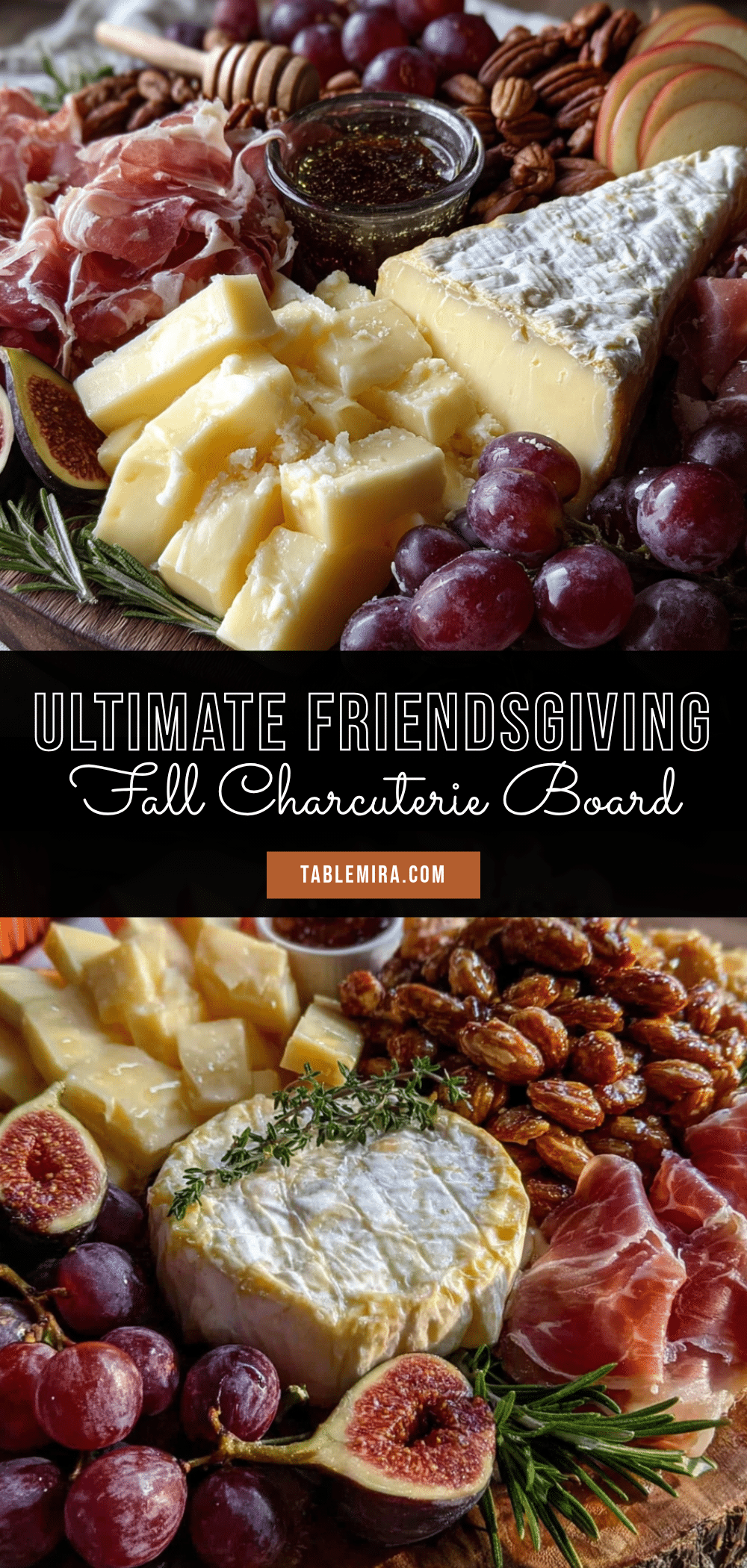
Ultimate Friendsgiving Fall Charcuterie Board: Easy & Best Recipe
This Friendsgiving fall charcuterie board is a curated experience that screams fall without screaming for attention. It’s the centerpiece of a relaxed, communal meal, with a mix of savory, sweet, salty, and tangy flavors that everyone will love.
- Prep Time: 30 minutes
- Cook Time: 5 minutes
- Total Time: 35 minutes
- Yield: 8 servings 1x
- Category: Appetizer
- Cuisine: American
Ingredients
- 8 ounces aged cheddar, sliced into thin wedges
- 8 ounces brie, one whole wheel
- 4 ounces blue cheese, crumbled or in a wedge
- 4 ounces goat cheese log, plain or herbed
- 6 ounces prosciutto, thinly sliced
- 6 ounces sopressata, sliced into thin rounds
- 4 ounces genoa salami, sliced
- 6–8 fresh figs, halved
- 1 Honeycrisp or Fuji apple, sliced thin and tossed in lemon juice
- 1 Bosc or Anjou pear, sliced thin and tossed in lemon juice
- 1/2 cup dried apricots
- 1/2 cup Medjool dates, pitted
- 1 cup candied pecans
- 1/2 cup Marcona almonds, salted
- 1/4 cup pumpkin seeds, toasted
- 1 baguette, sliced and toasted (crostini)
- 1 cup pita chips
- 1/4 cup honey, warmed with a sprig of rosemary
- 1/3 cup fig jam
- 1/2 cup Castelvetrano or Kalamata olives, rinsed and drained
- 1/4 cup cornichons
- Fresh rosemary and thyme sprigs for garnish
Instructions
- Warm the honey: In a small saucepan over low heat, warm 1/4 cup honey with a sprig of fresh rosemary. Stir gently for 2-3 minutes until the honey is runny and fragrant. Don’t let it boil. Remove the rosemary sprig and set aside.
- Prep the fruits: Wash and dry the figs, apple, and pear. Halve the figs lengthwise. Core the apple and pear, then slice them into thin wedges about 1/4 inch thick. Toss the apple and pear slices with a squeeze of fresh lemon juice to prevent browning. Pat the dried apricots and dates dry if they feel sticky.
- Arrange the cheeses: Place the cheese wedges on the board first as anchors. Put the brie wheel in the upper left quadrant, the aged cheddar slices in the upper right, the goat cheese log in the lower left, and the blue cheese crumbles in a small pile in the lower right. Leave space between each cheese.
- Add the meats: Fold the prosciutto slices into loose ribbons and place them near the brie. Arrange the sopressata rounds overlapping like fallen dominoes next to the cheddar. Pile the genoa salami slices into a small heap near the blue cheese.
- Fill with fruits: Scatter the fresh fig halves around the board, tucking them between cheeses and meats. Arrange the apple and pear slices in fan patterns near the edges. Dot the dried apricots and dates in small clusters.
- Add crunch elements: Place the candied pecans in a small bowl or directly on the board in a few piles. Do the same with the Marcona almonds and pumpkin seeds. Arrange the crostini and pita chips around the edges, standing some upright for height.
- Set out the bowls: Place small bowls on the board: one with fig jam, one with the warmed rosemary honey, one with olives, and one with cornichons. Position them evenly spaced and accessible.
- Garnish and drizzle: Tuck fresh rosemary and thyme sprigs around the board. Drizzle the warm honey over the brie wheel in a zigzag pattern. Sprinkle a few flaky sea salt crystals over the goat cheese.
- Final check: Look for any empty spots and fill them with extra nuts, fruit, or crackers. The board should look abundant but not crowded.
Notes
Let the cheese breathe: pull cheeses out of the fridge at least 30 minutes before serving. Layer for texture contrast: put something crunchy next to something soft. Don’t overcrowd the board; leave about 20% of the board surface visible. Prep everything before you start arranging. Use bowls for anything wet or sticky. Build height for drama by standing some crackers upright or stacking cheese slices.
Nutrition
- Serving Size: 1 serving (approxima
- Calories: 450550
- Sugar: 2025
- Sodium: 8001000
- Fat: 3035
- Carbohydrates: 3540
- Fiber: 57
- Protein: 1822
Keywords: Friendsgiving, fall charcuterie board, cheese board, appetizer, grazing board, Thanksgiving, party food