I was halfway through arranging a fifth slice of prosciutto when my husband walked into the kitchen and stopped dead. “Wait,” he said, squinting at the cutting board. “Is that for us?”
The thing is—it wasn’t supposed to be a thing. Our usual Friday night had collapsed under the weight of a late work meeting and a forgotten reservation. We had maybe forty minutes before we both needed to be horizontal. So I did what any reasonable, slightly hangry person would do: I opened the fridge, pulled out everything that wasn’t a leftover, and started arranging it on a board I’d bought at a flea market for seven dollars.
What happened next surprised me. We sat on the living room floor—because the table was covered in mail—and ate with our hands. We talked about nothing important. We laughed at a story I’d heard a hundred times. And somewhere between the third slice of manchego and the last fig, I realized this was the best date we’d had in months. Not because of the food, but because of the way the food made us slow down.
That’s how this perfect rustic charcuterie board for two was born. Not from a recipe book or a Pinterest board, but from necessity and a half-empty fridge. I’ve refined it since then, obviously. I’ve learned which cheeses hold their own and which meats disappear too fast. I’ve figured out the exact ratio of crunchy to creamy that keeps you reaching for just one more bite. But the heart of it is still that spontaneous night on the floor.
This isn’t a fancy production. It’s a date you can throw together in fifteen minutes with ingredients you can grab from any grocery store. And honestly? It might be the best date night you’ll have all year.
Why You’ll Love This Rustic Charcuterie Board for Two
- 15-Minute Prep: No cooking, no complicated steps. Just arrange and serve. Perfect for those nights when you’re both too tired to decide on takeout.
- No Special Equipment: You don’t need a fancy wooden board or a cheese knife set. A dinner plate, a cutting board, or even a baking sheet works beautifully.
- Perfect for Date Night: There’s something about sharing food from a single board that makes conversation flow easier. No passing plates, no awkward pauses.
- Endlessly Customizable: Use whatever you have on hand. The formula works with any combination of proteins, cheeses, and accompaniments.
- Actually Satisfying: Unlike some grazing boards that leave you hungry, this one is built to be a full meal. Protein, fat, fiber, and a little sweetness—all in balance.
What makes this version different from the rest? It’s designed for two people who actually want to eat, not just nibble. I’ve tested the portions so you get enough without drowning in leftovers. And the arrangement method? I learned it the hard way—after making about twenty boards that looked pretty but were impossible to eat without knocking everything over. This one works. Trust me.
There’s a quiet intimacy to building a board together. You hand each other a slice of apple, you both reach for the same cracker, you argue about whether the honey goes on the brie or the gouda. It’s not just dinner. It’s a shared experience that somehow makes you feel closer without trying.
What Ingredients You Will Need
This recipe uses simple, high-quality ingredients to create a board that feels special without requiring a trip to a specialty store. Everything here is available at a regular grocery store, though I’ll note a few things worth seeking out if you have the chance.
The Cheese (Pick 3)
- Manchego (3 oz) – A firm Spanish sheep’s milk cheese with a nutty, slightly salty flavor. It slices beautifully and holds up well at room temperature. I prefer the aged version for more complexity.
- Brie (3 oz) – Soft, creamy, and indulgent. Look for one that’s slightly ripe but not runny. The triple-cream versions are worth the extra dollar or two.
- Smoked Gouda (3 oz) – Adds a smoky depth that balances the sweet and salty elements on the board. The rind is edible but you can trim it if you prefer.
- Sharp Cheddar (3 oz) – A reliable crowd-pleaser. Go for an aged white cheddar for more bite. Cabot and Kerrygold are my go-to brands.
- Goat Cheese Log (3 oz) – Tangy and soft. Roll it in cracked pepper or herbs for an easy upgrade.
The Meats (Pick 2-3)
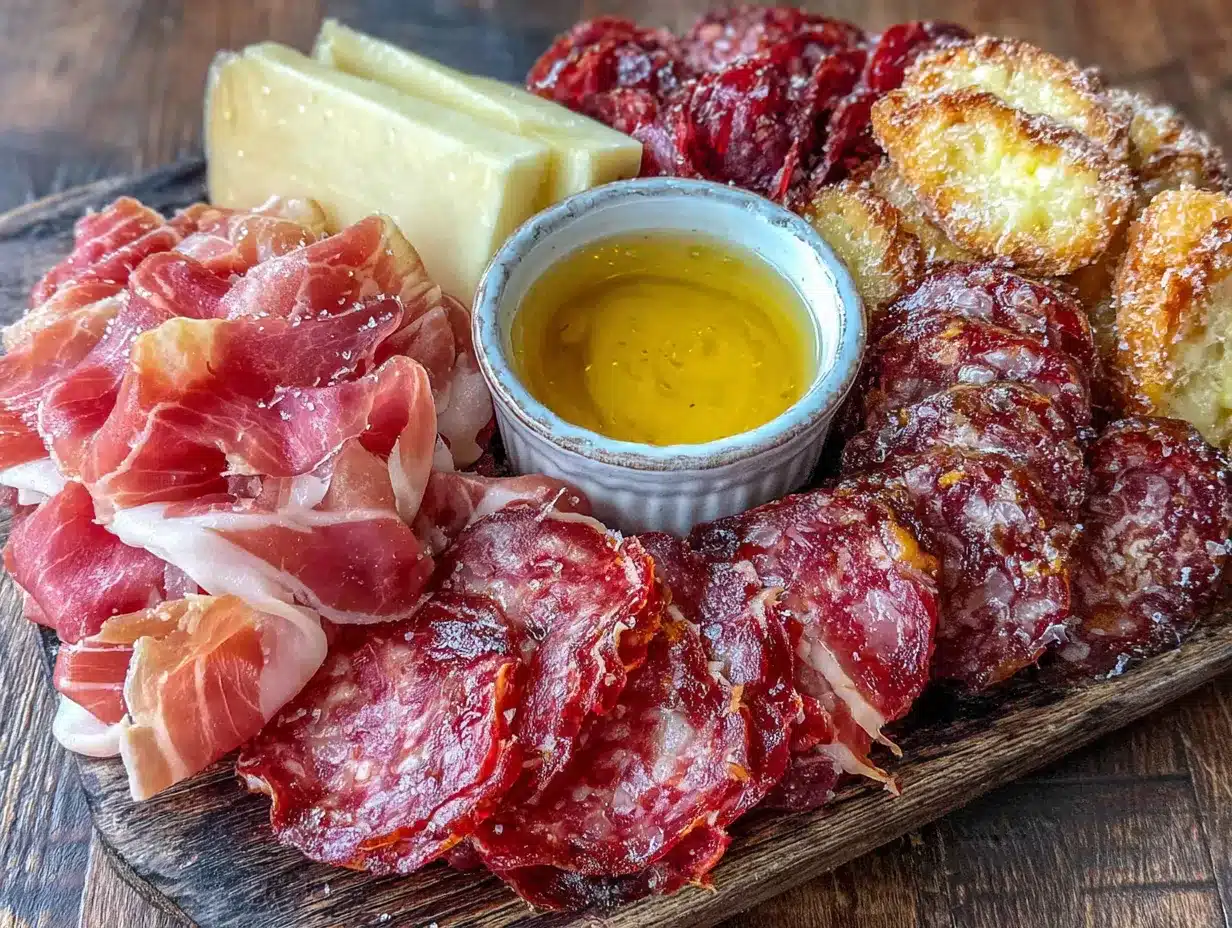
- Prosciutto (4 oz) – Thinly sliced, salty, and silky. Look for imported Italian prosciutto di Parma if you can find it. The domestic versions work fine too.
- Salami (4 oz) – I prefer Genoa salami for its balance of fat and spice. Slice it into thin rounds or leave it in a stick for guests to cut themselves.
- Soppressata (4 oz) – A dry Italian salami with a coarser texture and more pronounced spice. The spicy version adds a nice kick.
- Capicola (4 oz) – Also called gabagool. It’s like prosciutto’s spicier, more flavorful cousin. Highly recommended if you can find it.
The Accompaniments
- Crackers or Crostini (about 12 pieces) – Go for something neutral like water crackers or a seedy crispbread. Avoid flavored crackers that compete with the cheese. For a gluten-free option, use rice crackers or cucumber rounds.
- Fresh Fruit – Red grapes (1 cup, washed and stemmed) add bursts of sweetness. Figs (4-6, halved) are seasonal but worth it. Apple slices (1 apple, thinly sliced and tossed in lemon juice to prevent browning) add crunch.
- Dried Fruit – Dried apricots (¼ cup) and dried figs (¼ cup) add concentrated sweetness and chewy texture. Medjool dates are a luxurious alternative.
- Nuts – Marcona almonds (¼ cup) are my favorite—they’re already salted and fried, so they’re perfectly crispy. Toasted walnuts or candied pecans also work wonderfully.
- Olives (¼ cup) – Castelvetrano olives are buttery and mild. Kalamata olives are more intense. Mix them if you like variety.
- Honey or Fig Jam (2 tbsp) – A drizzle of honey over the brie or a spoonful of fig jam next to the manchego is non-negotiable. It ties everything together.
- Cornichons or Pickled Vegetables (¼ cup) – These tiny pickles cut through the richness of the cheese and meat. They’re small but mighty.
Optional Additions
- Dark chocolate (a few squares of 70% or higher)
- Fresh herbs (rosemary sprigs or thyme for garnish)
- Edible flowers (for visual appeal)
- Whole grain mustard or honey mustard
Equipment Needed
The beauty of a charcuterie board is that you don’t need much. Here’s what I use:
- A Board or Platter – A wooden cutting board, a slate board, a marble slab, or even a large dinner plate. I use a 12×16 inch reclaimed wood board I found at a thrift store. It’s got knife marks and character.
- Cheese Knives – You don’t need a full set. One small knife for soft cheese and one larger knife for hard cheese is plenty. A butter knife works in a pinch.
- Small Bowls or Ramekins – For honey, jam, olives, and anything that might leak or roll. I use 4-ounce ramekins from a restaurant supply store.
- Tongs or Small Spoons – For serving olives and pickles. Not strictly necessary but keeps things tidy.
- Paring Knife – For slicing fruit and cheese.
- Cutting Board – A separate small one for prepping fruit and cheese before arranging.
If you’re just starting out, don’t overthink it. I made my first ten boards on a plastic cutting board with a single butter knife. It still tasted amazing.
Preparation Method
This method is designed to be quick and stress-free. You’re not building a museum exhibit—you’re making dinner. Here’s how I do it in about 15 minutes.
- Take the cheese out of the fridge 30 minutes before serving. Cold cheese is flavorless cheese. Let it come to room temperature for the best texture and taste. If you forget (I forget half the time), microwave the brie for 10 seconds on low power. It’s not ideal but it works.
- Wash and prep your fruit. Rinse the grapes and pat them dry. Slice the apple and toss it in a little lemon juice to keep it from browning. Halve the figs if you’re using them. Arrange the fruit in small clusters on the board—grapes in one corner, apple slices in a fan shape, figs scattered nearby.
- Slice the hard cheeses. Cut the manchego into thin triangles. Slice the cheddar into rectangles or cubes. Leave the brie whole—guests can cut their own. Place the cheeses at different points on the board so there’s variety in every reach. I usually put the soft cheese in the center and the hard cheeses at opposite ends.
- Fold the meats. Take each slice of prosciutto and fold it loosely into a ribbon or a small bundle. Don’t press it flat—you want those airy, ruffled folds that look effortless. Arrange the salami slices in a slight overlap. Place the meats near the cheeses they pair best with (prosciutto near the brie, salami near the manchego).
- Fill in with accompaniments. Spoon the olives into a small bowl and place it on the board. Do the same with the honey or jam. Scatter the nuts and dried fruit in the empty spaces. Tuck the cornichons into small gaps. The goal is to fill the board so you can’t see the surface—it looks abundant and generous.
- Add the crackers. Place them in a small stack or fan them out near the center. Don’t scatter them all over the board or they’ll get soggy. Guests can grab as needed.
- Garnish and serve. Tuck a few rosemary sprigs between the cheese and fruit for color. Drizzle a little honey over the brie. Step back and admire your work—then dig in.
Pro Tip: If you’re serving this as a full meal (which I recommend), aim for about 4-5 ounces of protein and 3-4 ounces of cheese per person. That’s enough to feel satisfied without feeling stuffed.
Cooking Tips & Techniques
After making this board more times than I can count, here are the lessons I learned the hard way.
Don’t overcrowd the board. I know it’s tempting to cram everything on there, but a crowded board is a messy board. Leave a little breathing room between items. It looks better and it’s easier to eat from. If you have too much food, use a second plate or save the extras for tomorrow’s lunch.
Balance textures and flavors. You want a mix of soft and hard, mild and sharp, sweet and salty. If all your cheeses are soft and mild, the board falls flat. If everything is sharp and funky, it’s overwhelming. Taste as you go and adjust accordingly.
Think about how people actually eat. Place the crackers near the cheese they go with best. Put the honey next to the brie. Keep the olives near the salami. When guests have to reach across the board to assemble a bite, they’re less likely to go back for seconds.
Let the board sit for 10 minutes after assembling. This gives the cheese a chance to soften slightly and the flavors to meld. I usually make the board, then pour the wine, then serve. Perfect timing.
Don’t stress about perfection. I once spent 45 minutes arranging a board for a dinner party, only to have my first guest immediately demolish the symmetry. Now I embrace the chaos. A board that looks slightly imperfect feels more inviting anyway.
Variations & Adaptations
This board is endlessly flexible. Here are some of my favorite variations:
Vegetarian Version
Skip the meat and double up on cheese. Add roasted vegetables like bell peppers, zucchini, or eggplant. Include marinated artichoke hearts and roasted red peppers. Hummus or baba ganoush makes a great addition. I’ve made this for vegetarian friends and they always leave happy.
Seasonal Version
In summer, use fresh peaches, nectarines, and berries. In fall, swap in sliced pears, pomegranate seeds, and roasted figs. In winter, go with clementines, dried cherries, and candied ginger. In spring, add fresh strawberries, edible flowers, and pea shoots. The board changes with the calendar, and that’s part of the fun.
Sweet Version
For dessert, swap the meats and savory accompaniments for dark chocolate, white chocolate, fresh berries, shortbread cookies, and a small bowl of caramel sauce. Add a few squares of dark chocolate for depth. This is dangerous in the best way.
Low-Carb / Keto Version
Skip the crackers and fruit. Add more meat, cheese, and olives. Include cucumber slices, celery sticks, and bell pepper strips for crunch. Use a sugar-free jam or skip the sweet element entirely. This version is just as satisfying—maybe more so.
Spicy Version
Use spicy soppressata, pepper jack cheese, and jalapeño-stuffed olives. Add a small bowl of hot honey or sriracha. Include pickled jalapeños and a sprinkle of red pepper flakes. This one wakes you up.
Serving & Storage Suggestions
Serve at room temperature. This is crucial. Cold cheese tastes like nothing. Take everything out of the fridge 30 minutes before serving. The honey and jam should be at room temperature too—cold honey is impossible to drizzle.
Pair with wine or cocktails. A crisp Sauvignon Blanc or a light Pinot Noir works beautifully. For cocktails, try a gin and tonic with a sprig of rosemary or a simple glass of Prosecco. My personal favorite is a dry rosé with a few ice cubes—simple and refreshing.
Presentation matters. Use a board that contrasts with the food. Dark wood makes cheese and fruit pop. White marble looks elegant but shows every crumb. I prefer the rustic look of a well-worn wooden board. Add a few small bunches of fresh herbs for color and aroma.
Storage: Leftovers can be stored separately in airtight containers. Cheese should be wrapped in wax paper or cheese paper, not plastic wrap (plastic makes it sweat and lose flavor). Meats can be wrapped in parchment paper. Fruit should be refrigerated. The board itself will stay good for 2-3 days in the fridge, though the crackers will get soft. I usually just make a smaller board the next day with the leftovers.
Flavor development: Some cheeses actually taste better the next day. Manchego and aged cheddar develop more complexity after a day in the fridge. The prosciutto will dry out slightly, so eat that first. The honey and jam keep indefinitely at room temperature.
Nutritional Information & Benefits
This board is surprisingly balanced. Here’s an approximate breakdown for one serving (half the board):
- Calories: 550-650
- Protein: 28-35g
- Fat: 35-45g
- Carbohydrates: 25-35g
- Fiber: 5-7g
- Sugar: 15-20g (mostly from fruit)
Health highlights: Cheese is a good source of calcium and protein. Nuts provide healthy fats and fiber. Fruit adds vitamins and antioxidants. Olives contain heart-healthy monounsaturated fats. The honey offers natural sweetness without refined sugar.
Dietary considerations: This board can be made gluten-free (use rice crackers or cucumber slices), low-carb (skip the crackers and fruit), or vegetarian (skip the meat and add extra cheese). It’s naturally high in protein and fat, which makes it satisfying and energizing.
Potential allergens: Dairy (cheese), nuts, and gluten (crackers). If you’re serving someone with allergies, check labels carefully. Many cheeses are gluten-free, but some crackers contain wheat.
Conclusion
This rustic charcuterie board for two isn’t just about the food—it’s about the moment. It’s about sitting close, sharing bites, and actually talking to each other without a screen in between. It’s about slowing down and remembering why you like each other in the first place.
I’ve made this board for anniversaries, for lazy Sundays, for nights when we needed a reminder that simple is better. Every time, it delivers. Not because the ingredients are fancy, but because the act of sharing food from a single board creates a kind of intimacy that’s hard to replicate.
So go ahead. Grab a board, grab some cheese, and make something that feels like a date. You don’t need a reservation or a special occasion. You just need fifteen minutes and someone worth sharing with.
I’d love to hear how yours turns out. Leave a comment below and tell me what you put on your board—or better yet, tag me in a photo. There’s nothing I love more than seeing people enjoy this recipe.
Frequently Asked Questions
How far in advance can I make a charcuterie board?
You can prep everything up to 24 hours in advance. Slice the cheese, wash the fruit, and store everything separately in the fridge. Assemble the board about 30 minutes before serving so the cheese comes to room temperature. The crackers and nuts should be added just before serving to keep them crisp.
What’s the best cheese for a beginner charcuterie board?
Start with a firm cheese like manchego or aged cheddar (easy to slice and not too strong), a soft cheese like brie (creamy and familiar), and a funky cheese like gorgonzola or blue cheese (just a small piece for adventurous eaters). That gives you a range of textures and flavors without overwhelming anyone.
How do I keep the fruit from browning?
Toss apple or pear slices in a little lemon juice or pineapple juice. The acid prevents oxidation. You can also brush them with a thin layer of honey. If you’re using avocado, squeeze lime juice over it. And honestly? A little browning isn’t the end of the world—it still tastes fine.
Can I make this board vegan?
Absolutely. Use vegan cheeses (look for cashew-based or coconut-based options), roasted vegetables, hummus, olives, nuts, dried fruit, and crackers. Skip the honey and use maple syrup or agave instead. The same principles apply—balance textures and flavors, and don’t overcrowd the board.
How much food do I need for two people?
For a full meal, plan on 4-5 ounces of meat, 3-4 ounces of cheese, a handful of crackers, and a generous amount of accompaniments per person. If it’s just a snack or appetizer, cut those amounts in half. I always err on the side of too much—leftovers make a great lunch the next day.
Pin This Recipe!
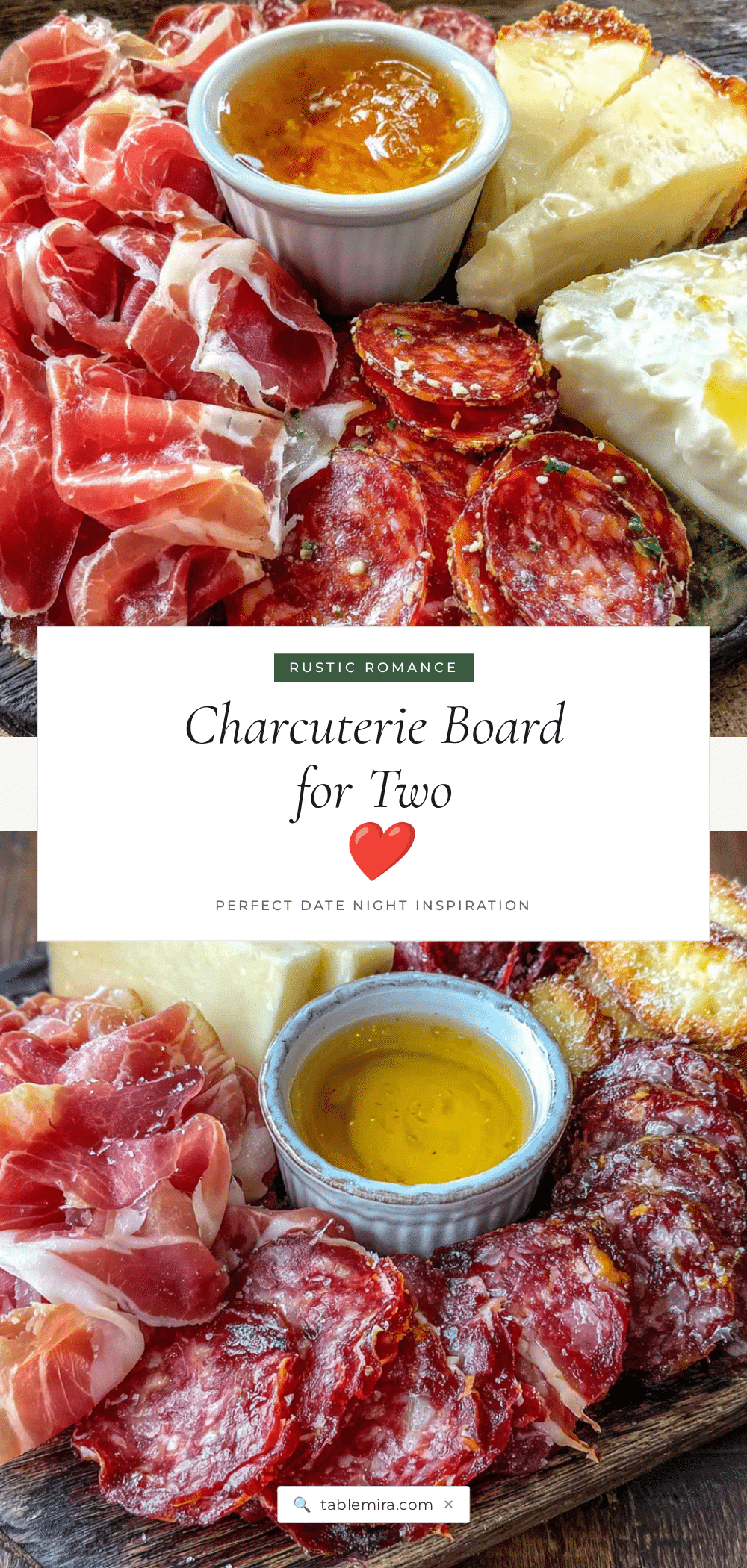
Perfect Rustic Charcuterie Board for Two: Easy Date Night Idea
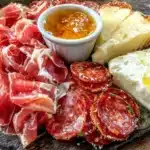
A simple, 15-minute charcuterie board designed for two people, perfect for a spontaneous date night. It features a balanced selection of cheeses, meats, and accompaniments that encourage sharing and conversation.
- Prep Time: 15 minutes
- Cook Time: 0 minutes
- Total Time: 15 minutes
- Yield: 2 servings 1x
- Category: Appetizer
- Cuisine: American
Ingredients
- 3 oz Manchego cheese
- 3 oz Brie cheese
- 3 oz Smoked Gouda cheese
- 3 oz Sharp Cheddar cheese
- 3 oz Goat Cheese Log
- 4 oz Prosciutto
- 4 oz Salami (Genoa)
- 4 oz Soppressata
- 4 oz Capicola
- 12 pieces Crackers or Crostini
- 1 cup Red grapes, washed and stemmed
- 4–6 Figs, halved
- 1 Apple, thinly sliced and tossed in lemon juice
- 1/4 cup Dried apricots
- 1/4 cup Dried figs
- 1/4 cup Marcona almonds
- 1/4 cup Olives (Castelvetrano or Kalamata)
- 2 tbsp Honey or Fig Jam
- 1/4 cup Cornichons or Pickled Vegetables
- Dark chocolate (optional, a few squares of 70% or higher)
- Fresh herbs (optional, rosemary sprigs or thyme for garnish)
- Edible flowers (optional, for visual appeal)
- Whole grain mustard or honey mustard (optional)
Instructions
- Take the cheese out of the fridge 30 minutes before serving to bring to room temperature.
- Wash and prep the fruit: rinse grapes and pat dry, slice apple and toss in lemon juice, halve figs if using.
- Slice hard cheeses (manchego into thin triangles, cheddar into rectangles or cubes). Leave brie whole.
- Fold meats loosely into ribbons or small bundles. Arrange salami slices in a slight overlap.
- Place cheeses at different points on the board, with soft cheese in the center and hard cheeses at opposite ends.
- Place meats near the cheeses they pair best with (prosciutto near brie, salami near manchego).
- Spoon olives into a small bowl and place on the board. Do the same with honey or jam.
- Scatter nuts and dried fruit in empty spaces. Tuck cornichons into small gaps.
- Place crackers in a small stack or fan them out near the center.
- Garnish with rosemary sprigs and drizzle honey over the brie. Serve immediately.
Notes
For best flavor, let cheese come to room temperature before serving. If you forget, microwave brie for 10 seconds on low power. Don’t overcrowd the board; leave breathing room between items. Balance textures and flavors with a mix of soft and hard, mild and sharp, sweet and salty. Let the board sit for 10 minutes after assembling to allow flavors to meld. Leftovers can be stored separately in airtight containers for 2-3 days.
Nutrition
- Serving Size: Half the board
- Calories: 550650
- Sugar: 1520
- Fat: 3545
- Carbohydrates: 2535
- Fiber: 57
- Protein: 2835
Keywords: charcuterie board, date night, easy appetizer, cheese board, rustic, for two, 15-minute meal