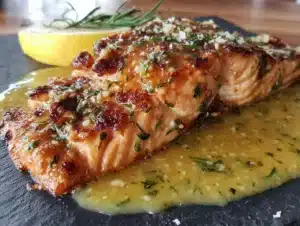
My brother claimed he hated fish for seventeen years. Seventeen years of watching him push salmon around his plate at family dinners, making faces, muttering about “that fishy taste” under his breath. Then last April, I caught him. Standing in my kitchen, fork in hand, eating cold baked salmon straight off the sheet pan at 10 PM when he thought nobody was looking. “This doesn’t taste like fish,” he said, mouth half-full, as if that excused the whole thing. I just smiled and handed him another fork.
That was the spring I accidentally created the recipe that finally cracked my brother’s anti-seafood stance. And honestly? It wasn’t complicated. It wasn’t some fancy restaurant technique. It was just good salmon, baked at the right temperature, with a butter sauce that makes you forget you’re eating something healthy. The lemon cuts through everything, the dill brings this fresh garden taste, and the whole thing comes together in under thirty minutes. I mean, who knew a simple sheet pan could cause a seventeen-year feud to just dissolve like butter in a hot pan?
This Spring Baked Salmon with Lemon Dill Butter Sauce has become my go-to for exactly that reason. It’s the recipe I make when I need to prove something to someone who thinks they don’t like seafood. It’s the dish I bring to spring gatherings when I want to show up with something that looks fancy but took almost zero effort. Maybe you’ve been there — standing in the grocery aisle, wondering if this is the week you finally try cooking salmon at home. Let me tell you, this is the recipe to start with. It’s forgiving, it’s fast, and it might just change someone’s mind.
Why You’ll Love This Recipe
I’ve tested this recipe more times than I care to admit. The first few attempts were, let’s say, educational. Too much lemon, not enough salt, overcooked by exactly four minutes (which matters a lot with salmon, as I learned the hard way). But after countless trials and a few very patient dinner guests, I landed on a version that works every single time. Here’s why this one is different:
- Quick & Easy: From fridge to table in 25 minutes flat. No marinating, no complicated techniques, no stress. Perfect for those spring evenings when you want something nice but don’t want to spend all night in the kitchen.
- Simple Ingredients: You probably have most of this in your kitchen right now. Lemon, butter, garlic, dill — these are pantry heroes that do heavy lifting without making you hunt down specialty items.
- Perfect for Spring Gatherings: Easter brunch, Mother’s Day dinner, a random Tuesday when you need something bright and fresh. This salmon fits every spring occasion without feeling heavy or overly rich.
- Crowd-Pleaser: I’ve served this to self-proclaimed fish haters, picky kids, and serious food snobs. It gets empty plates every time. The butter sauce does most of the convincing.
- Unbelievably Delicious: The texture is what gets people. Flaky, tender, with that perfect crust on top from the butter basting. The dill adds this fresh, almost grassy note that screams spring, while the lemon keeps everything bright and balanced.
What makes this recipe different from every other salmon recipe out there? It’s the technique. Instead of just throwing everything in the oven and hoping for the best, you baste the salmon halfway through with the melted butter mixture. This keeps the fish incredibly moist and builds layers of flavor that you just don’t get from a simple drizzle. It’s a small extra step that makes a massive difference. The first time I tried it, I actually closed my eyes after the first bite. Not even exaggerating. It’s that good.
This isn’t just another baked salmon recipe. It’s the one that turns skeptics into believers, that makes weeknight dinners feel special, that proves healthy food doesn’t have to taste like punishment. Trust me on this one.
What Ingredients You Will Need
This recipe relies on simple, fresh ingredients that work together to create something genuinely impressive. No weird science experiments here — just good food that tastes like itself.
For the Salmon
- 4 salmon fillets (6 oz each, skin-on or skinless — I prefer skin-on for extra moisture) — Look for fillets that are similar in thickness so they cook evenly. Wild-caught is great if you can find it, but good-quality farmed salmon works beautifully here too.
- 2 tablespoons olive oil — A good extra virgin olive oil adds richness. Don’t use the cheap stuff; you’ll taste the difference.
- 1 teaspoon salt — I use fine sea salt. Kosher salt works too, but you might need a bit more since the crystals are bigger.
- ½ teaspoon black pepper — Freshly ground is always better. The pre-ground stuff loses its punch over time.
- 1 teaspoon garlic powder — Not the same as fresh garlic, but it distributes more evenly and doesn’t burn in the oven. I’ve tried both, and garlic powder wins for baked salmon.
For the Lemon Dill Butter Sauce
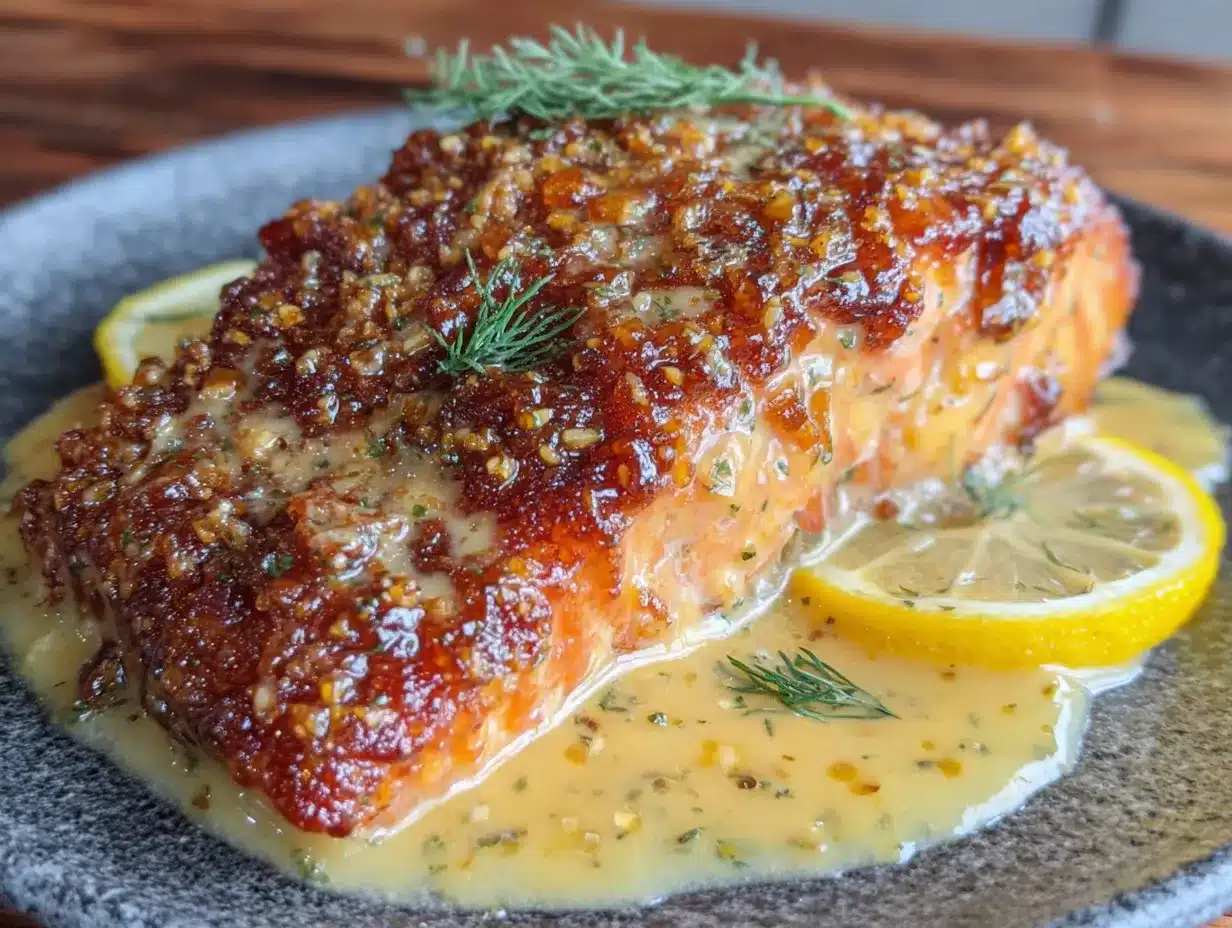
- 4 tablespoons unsalted butter — Salted butter works too, just cut back on the added salt a little. I prefer unsalted so I can control the seasoning.
- 3 cloves garlic, minced — Fresh garlic is non-negotiable here. The jarred stuff has a different flavor that doesn’t do this sauce justice.
- 2 tablespoons fresh lemon juice — About one large lemon. Please, please use fresh lemon juice. The bottled stuff tastes like regret and cleaning products.
- 1 tablespoon lemon zest — This is where the real lemon flavor lives. Don’t skip it. Zest your lemon before you juice it — trust me, trying to zest a juiced lemon is a special kind of kitchen frustration.
- 2 tablespoons fresh dill, chopped — Fresh dill is miles better than dried here. It has this delicate, almost anise-like flavor that dried dill just can’t replicate. That said, if you only have dried, use 2 teaspoons instead.
- ¼ teaspoon red pepper flakes (optional) — Adds a tiny kick that balances the richness. I add it about half the time, depending on my mood.
For Garnish (Optional but Recommended)
- Fresh dill sprigs — For that pretty restaurant look
- Lemon slices — Thin rounds arranged on top before serving
- Flaky sea salt — A sprinkle right before serving makes a surprising difference in texture
Ingredient Notes & Swaps: If you’re dairy-free, you can substitute the butter with a good quality vegan butter or ghee (which is technically dairy but has less lactose). For a lower-fat version, use half the butter and add a splash of white wine to the sauce. And if dill isn’t your thing — though I can’t imagine why — try fresh parsley or tarragon instead. Each gives a completely different but equally delicious result.
I buy my salmon from the fish counter at my local grocery store. I’ve found that the pre-packaged fillets in the freezer section are hit or miss. The fish counter staff can usually tell you which batch came in freshest, and they’ll cut the fillets to the same thickness if you ask nicely. It’s worth the extra thirty seconds of conversation.
Equipment Needed
You don’t need a professional kitchen for this recipe. Here’s what you’ll actually use:
- Sheet pan or baking dish — A rimmed baking sheet works best. The edges catch any butter that escapes, which means less mess and easier cleanup. I use a half-sheet pan that cost me twelve dollars at a restaurant supply store, and it’s still going strong five years later.
- Parchment paper or aluminum foil — Lining the pan makes cleanup almost nonexistent. Parchment is my preference because nothing sticks to it, but foil works in a pinch.
- Small saucepan — For melting and simmering the butter sauce. Any small pot will do.
- Chef’s knife and cutting board — For mincing garlic and chopping dill. A sharp knife makes this whole process faster and safer.
- Microplane or zester — For getting that lemon zest without the bitter white pith. A regular grater works too, just be careful not to grate your knuckles. Speaking from experience here.
- Measuring spoons — This recipe is forgiving, but measuring helps the first time you make it.
- Fish spatula — Not strictly necessary, but it makes flipping and serving salmon so much easier. The thin, angled blade slides right under the fillet without breaking it apart. If you don’t have one, a regular spatula works fine.
- Instant-read thermometer (optional but helpful) — Takes the guesswork out of doneness. Salmon is perfectly cooked at 125-130°F in the center.
I’ve made this recipe in a cheap apartment oven, a fancy gas range, and even a toaster oven when my main oven broke. It works everywhere. Don’t let equipment anxiety stop you from trying this.
Preparation Method
Let me walk you through this step by step. I’ve included all the little details I wish someone had told me the first time I made baked salmon.
Step 1: Preheat and Prep
Preheat your oven to 400°F (200°C). While it’s heating up, line your sheet pan with parchment paper. Take your salmon fillets out of the fridge and let them sit at room temperature for about 10 minutes. Cold salmon straight from the fridge cooks unevenly — the outside overcooks before the center is done. This little rest makes a real difference.
Step 2: Season the Salmon
Pat the salmon fillets dry with paper towels. This is important — wet salmon won’t brown properly, and you’ll end up with steamed fish instead of baked salmon. Drizzle the olive oil over both sides of the fillets, then season generously with salt, pepper, and garlic powder. Rub the seasoning in gently with your hands. Place the fillets skin-side down on the prepared baking sheet, spacing them at least an inch apart so they cook evenly.
Step 3: Make the Lemon Dill Butter Sauce
In a small saucepan over medium heat, melt the butter. Add the minced garlic and cook for about 1 minute until fragrant — you’ll smell it immediately, and that’s your cue. Stir in the lemon juice, lemon zest, chopped fresh dill, and red pepper flakes if using. Let it simmer gently for 2 minutes, stirring occasionally. The sauce should be bubbly and aromatic. Remove from heat and set aside. Don’t walk away from this — garlic burns fast, and burnt garlic tastes bitter and ruins the whole thing.
Step 4: Initial Bake
Place the sheet pan in the preheated oven and bake the salmon for 8 minutes. Set a timer. This first bake gets the salmon started without drying it out. At the 8-minute mark, the top of the salmon should look slightly opaque but still soft to the touch.
Step 5: Baste and Finish Baking
Remove the pan from the oven. Spoon about half of the lemon dill butter sauce over each fillet, making sure to coat the tops evenly. Return the pan to the oven and bake for another 5-8 minutes, depending on the thickness of your fillets. For 1-inch thick fillets, 5 more minutes is usually perfect. The salmon is done when it flakes easily with a fork and the internal temperature reaches 125-130°F (52-54°C) for medium, or 135°F (57°C) for well-done. The butter sauce should be bubbling around the edges of the fillets.
Step 6: Rest and Serve
Remove the salmon from the oven and let it rest on the pan for 3 minutes. This resting time is crucial — it lets the juices redistribute so your salmon stays moist instead of drying out when you cut into it. Drizzle the remaining butter sauce over the top. Garnish with fresh dill sprigs and lemon slices if you’re feeling fancy. Serve immediately while the butter sauce is still warm and glossy.
Visual Cue: Perfectly cooked salmon should look bright and opaque on the outside with a slightly translucent center that turns fully opaque as it rests. The butter sauce should be thick enough to coat the back of a spoon but still pourable. If the sauce looks separated, whisk in a tablespoon of cold butter off the heat to bring it back together.
Common Issues & Fixes: If your salmon is sticking to the pan, it probably wasn’t dry enough before cooking, or the pan wasn’t hot enough when it went in. Next time, pat it drier and make sure your oven is fully preheated. If the butter sauce tastes flat, add another squeeze of lemon and a pinch of salt. Acid and salt are your best friends for brightening flavors.
Cooking Tips & Techniques
I’ve made this salmon recipe probably forty times now. Here’s everything I’ve learned along the way, including the mistakes that taught me the most.
Don’t Overcook the Salmon. This is the number one mistake people make with baked salmon. The difference between perfectly cooked salmon and dry, sad salmon is about two minutes. I learned this the hard way when I made it for my in-laws for the first time and served them fish that could have doubled as cardboard. Use a thermometer if you have one. If you don’t, watch for the visual cues — the flesh should flake easily but still look moist and slightly translucent in the center. It will continue cooking slightly after you take it out of the oven, so err on the side of underdone.
Room Temperature Matters. I mentioned this in the method, but it’s worth repeating. Cold salmon straight from the fridge takes longer to cook, which means the outside dries out before the inside is done. Letting it sit out for 10-15 minutes before cooking makes everything more even. I put my salmon on the counter while I preheat the oven and prep the sauce, and by the time everything’s ready, so is the fish.
Baste Generously. Don’t be shy with the butter sauce. Spoon it over the salmon like you mean it. The butter keeps the fish moist during the second half of baking and creates this beautiful, slightly caramelized top layer. I’ve had people ask me if I broiled the salmon because of the color the butter creates. Nope — just good basting.
Fresh Dill is Non-Negotiable. I know I said you can use dried dill in a pinch, and you can. But fresh dill is what makes this recipe sing. It has this delicate, almost sweet flavor that dried dill just can’t match. I keep a bunch of fresh dill in my fridge during spring and summer specifically for this recipe. It lasts about a week if you wrap the stems in a damp paper towel and store them in a plastic bag.
Multitask Like a Pro. While the salmon is doing its initial 8-minute bake, use that time to set the table, make a quick side dish, or pour yourself a glass of wine. The active cooking time for this recipe is only about 15 minutes, but the timing works out perfectly if you use the oven time wisely. I usually throw some asparagus on the same pan for the last 10 minutes of baking — it roasts right alongside the salmon and picks up some of the butter sauce.
Variations & Adaptations
One of the reasons I keep coming back to this recipe is how adaptable it is. Here are some of my favorite variations:
Dietary Adaptations
- Dairy-Free: Swap the butter for a high-quality vegan butter or use olive oil mixed with a splash of vegetable broth. The texture will be slightly different — less rich — but still delicious. I’ve made it this way for a friend with lactose intolerance and she asked for seconds.
- Low-Carb/Keto: This recipe is already keto-friendly as written. Serve it with roasted vegetables or a big green salad instead of rice or potatoes. The butter sauce adds healthy fats that fit perfectly into a low-carb lifestyle.
- Gluten-Free: This recipe is naturally gluten-free. Just make sure your garlic powder and any other seasonings are certified gluten-free if you’re cooking for someone with celiac disease.
Flavor Variations
- Herb Swap: Replace the dill with fresh parsley, tarragon, or chives. Each gives a completely different character. Tarragon adds a subtle licorice note that’s surprisingly good with salmon. Parsley keeps it bright and fresh. Chives add a mild onion flavor that works beautifully with the lemon.
- Spicy Version: Double the red pepper flakes and add a teaspoon of smoked paprika to the seasoning mix. The smokiness pairs perfectly with the butter sauce and gives the salmon a slightly different personality — warmer, deeper, more winter-friendly.
- Citrus Twist: Use half lemon juice and half orange juice for a sweeter, more complex citrus flavor. Add a teaspoon of orange zest along with the lemon zest. This version is especially good in early spring when blood oranges are still in season.
Cooking Method Variations
- Air Fryer: Preheat your air fryer to 375°F (190°C). Season the salmon as directed, then cook for 8-10 minutes, depending on thickness. Baste with the butter sauce halfway through. The air fryer gives you an even crispier exterior while keeping the inside tender.
- Grilled: This is my favorite warm-weather variation. Grill the salmon over medium-high heat for 4-5 minutes per side, basting with the butter sauce during the last 2 minutes of cooking. The smoky char from the grill adds another layer of flavor that’s incredible.
- Pan-Seared: Cook the salmon in a hot skillet with a tablespoon of oil for 3-4 minutes per side, then add the butter sauce to the pan and spoon it over the fish as it finishes cooking. This method gives you the crispiest skin if you’re using skin-on fillets.
Serving & Storage Suggestions
This salmon is versatile enough for fancy dinner parties and casual weeknight dinners. Here’s how to make the most of it.
Serving Suggestions
Serve the salmon warm, right after it’s rested. The butter sauce should be glossy and warm — if it’s cooled down too much, give it a quick zap in the microwave for 10 seconds. I like to arrange the fillets on a platter with lemon slices and fresh dill sprigs for a beautiful presentation. For individual plates, place each fillet on a bed of something that soaks up the sauce — rice, quinoa, or crusty bread all work beautifully.
What to Serve With It: This salmon pairs perfectly with roasted asparagus (toss it in olive oil, salt, and pepper, and roast at 400°F for 10-12 minutes), a simple arugula salad with lemon vinaigrette, or garlic mashed potatoes. In spring, I love serving it with fresh peas and mint — the sweetness of the peas complements the lemon and dill perfectly. A crisp white wine like Sauvignon Blanc or Pinot Grigio is my go-to drink pairing.
Storage Instructions
Leftover salmon keeps in the refrigerator for up to 3 days in an airtight container. The flavor actually gets better as the salmon sits in the butter sauce overnight — the dill and lemon infuse deeper into the fish. I’ve been known to make extra on purpose just for leftovers.
Freezing: You can freeze cooked salmon for up to 2 months. Wrap each fillet tightly in plastic wrap, then place in a freezer-safe bag. Thaw overnight in the refrigerator before reheating. The texture will be slightly softer after freezing, but the flavor stays great.
Reheating Tips
The best way to reheat salmon is gently. Microwave it on 50% power in 30-second intervals until just warm — this prevents it from drying out. Alternatively, reheat it in a low oven (300°F) for about 10 minutes, covered with foil. I don’t recommend reheating in a hot skillet unless you add extra butter or oil, because the direct heat can dry it out quickly.
How Flavors Develop: The lemon and dill flavors are brightest on the first day. By day two, the flavors mellow and blend together more. The butter sauce thickens as it sits, almost like a glaze. Cold leftover salmon is fantastic flaked over a salad or turned into salmon cakes the next day.
Nutritional Information & Benefits
This recipe isn’t just delicious — it’s genuinely good for you. Here’s what you’re getting in each serving (based on 4 servings, using the full amount of butter sauce):
| Nutrient | Amount Per Serving |
|---|---|
| Calories | 385 |
| Protein | 34g |
| Fat | 26g |
| Saturated Fat | 10g |
| Carbohydrates | 2g |
| Fiber | 0g |
| Sugar | 1g |
| Sodium | 520mg |
| Omega-3 Fatty Acids | 2.5g |
| Vitamin D | 570 IU |
| Vitamin B12 | 2.6mcg |
Salmon is one of the best sources of omega-3 fatty acids, which support heart health, brain function, and reduce inflammation throughout the body. The lemon and dill add antioxidants and vitamin C, while the butter provides fat-soluble vitamins A, D, and E. This is a meal that nourishes you from the inside out.
Dietary Considerations: This recipe is naturally gluten-free, low-carb, and keto-friendly. It contains dairy (butter) and fish, so it’s not suitable for vegan, vegetarian, or dairy-free diets without modifications. If you’re watching your sodium intake, reduce the added salt and use unsalted butter — the lemon and dill provide plenty of flavor on their own.
I love that this recipe feels indulgent but is actually incredibly healthy. It’s the kind of meal that makes you feel good while you’re eating it and even better afterward. No food coma, no regret — just satisfaction and energy.
Conclusion
This Spring Baked Salmon with Lemon Dill Butter Sauce is the recipe that changed my brother’s mind about fish. It’s the recipe I turn to when I want something that feels special but takes almost no effort. It’s the recipe that proves healthy food doesn’t have to be boring, complicated, or tasteless.
What I love most about this recipe is how forgiving it is. You can use different herbs, swap the citrus, adjust the spice level — it all works. The basic technique of baking salmon with a flavorful butter sauce is so solid that you can customize it endlessly and still get great results. I’ve made this with tarragon instead of dill, with orange instead of lemon, with added capers for brininess. Every version has been delicious.
I hope you make this recipe and make it your own. Add more garlic if you’re a garlic lover. Use less butter if you’re watching calories. Throw in some cherry tomatoes alongside the salmon for a built-in side dish. The kitchen is your playground, and this recipe is a solid foundation to build on.
If you try this Spring Baked Salmon with Lemon Dill Butter Sauce, I’d love to hear about it. Leave a comment below and let me know how it turned out — did you make any changes? Did you serve it to a fish skeptic? Did you eat the whole thing straight off the pan at 10 PM like my brother did? No judgment here. Happy cooking, friends.
Frequently Asked Questions
Can I use frozen salmon for this recipe?
Yes, you can use frozen salmon, but you need to thaw it completely first. The best way is to transfer it from the freezer to the refrigerator the night before. If you’re in a hurry, place the sealed salmon in a bowl of cold water for about 30 minutes. Pat it very dry before seasoning — frozen salmon releases more water as it thaws, so extra drying is essential to avoid steaming instead of baking.
How do I know when the salmon is done without a thermometer?
Look for the visual cues. Perfectly cooked salmon will flake easily when you gently press it with a fork. The flesh should be opaque on the outside with a slightly translucent center that turns fully opaque as it rests. Another test: if you press the top of the fillet gently, it should feel firm but still have a little give. If it feels hard, it’s overcooked. If it feels squishy and raw, it needs more time.
Can I make the lemon dill butter sauce ahead of time?
You can make the sauce up to 2 days in advance. Store it in an airtight container in the refrigerator. When you’re ready to use it, reheat it gently on the stovetop or in the microwave in 15-second intervals, stirring between each. If the sauce separates when reheating, whisk in a tablespoon of cold butter to bring it back together. The fresh dill flavor will be slightly less bright than freshly made sauce, but it’s still delicious.
What’s the best way to get the fishy smell out of salmon?
The “fishy” smell in salmon comes from the fish breaking down as it ages. Fresh salmon should smell like the ocean — clean and mild, not strongly fishy. If your salmon has a strong odor, it’s past its prime. For fresh salmon, a quick rinse under cold water and a thorough pat-dry with paper towels removes surface bacteria that can contribute to odor. The lemon in this recipe also helps neutralize any remaining fishiness. If you’re especially sensitive to fish smells, try soaking the salmon in milk for 15 minutes before cooking — the casein in milk binds to the compounds that cause fishy odors.
Can I double this recipe for a crowd?
Absolutely. This recipe scales beautifully. For a crowd, use a larger sheet pan or two pans, making sure the fillets aren’t touching each other. You’ll need to increase the butter sauce ingredients proportionally — I usually double the sauce ingredients for 8 fillets. The baking time stays roughly the same, though you might need an extra 2-3 minutes if your oven is crowded. Just watch for the visual cues and use a thermometer if you have one.
Pin This Recipe!
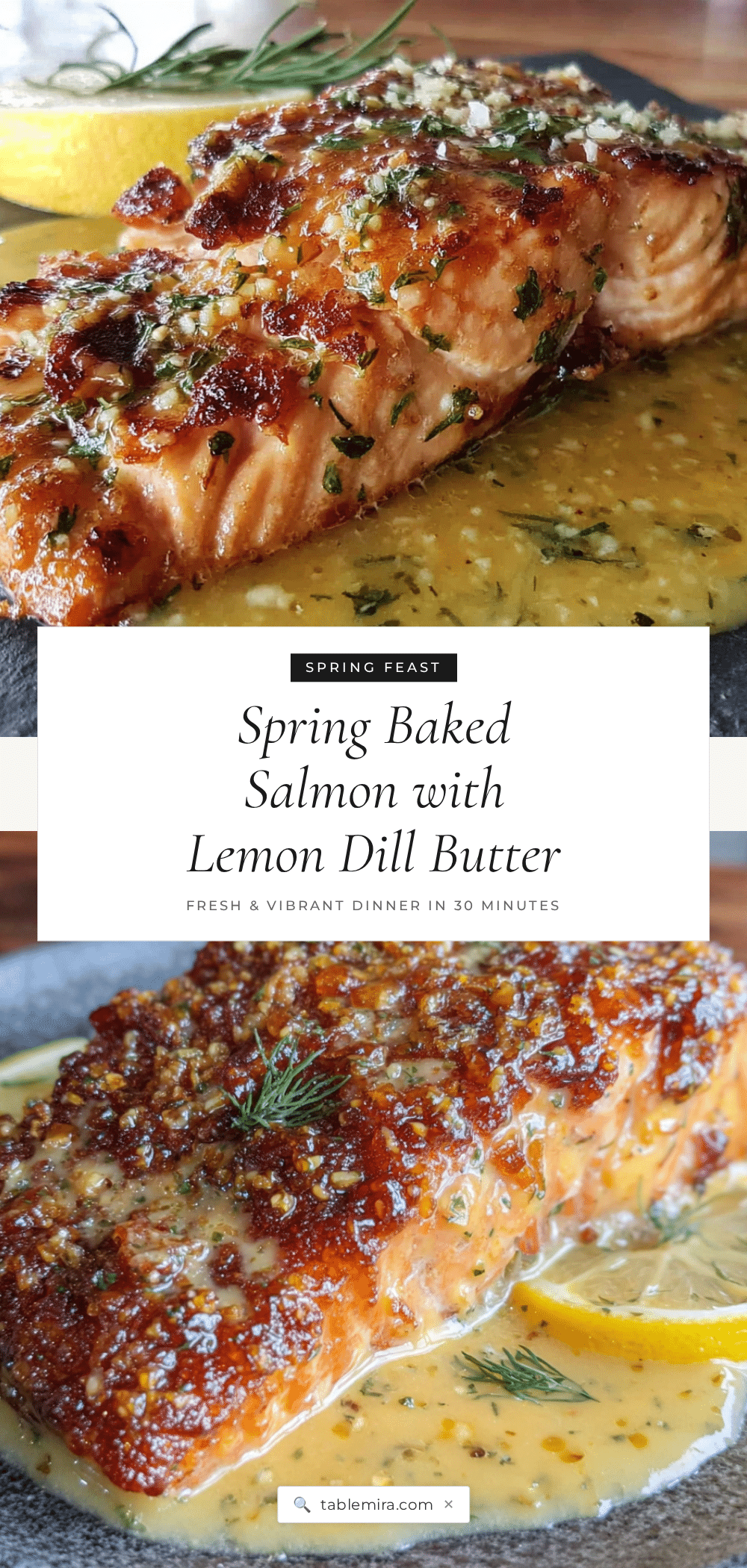
Easy Spring Baked Salmon with Lemon Dill Butter Sauce

This Spring Baked Salmon with Lemon Dill Butter Sauce is the recipe that turned a seventeen-year fish hater into a believer. It’s quick, easy, and made with simple ingredients, perfect for spring gatherings or a healthy weeknight dinner.
- Prep Time: 10 minutes
- Cook Time: 15 minutes
- Total Time: 25 minutes
- Yield: 4 servings 1x
- Category: Main Course
- Cuisine: American
Ingredients
- 4 salmon fillets (6 oz each, skin-on or skinless)
- 2 tablespoons olive oil
- 1 teaspoon fine sea salt
- ½ teaspoon black pepper, freshly ground
- 1 teaspoon garlic powder
- 4 tablespoons unsalted butter
- 3 cloves garlic, minced
- 2 tablespoons fresh lemon juice
- 1 tablespoon lemon zest
- 2 tablespoons fresh dill, chopped
- ¼ teaspoon red pepper flakes (optional)
- Fresh dill sprigs for garnish (optional)
- Lemon slices for garnish (optional)
- Flaky sea salt for garnish (optional)
Instructions
- Preheat oven to 400°F (200°C). Line a sheet pan with parchment paper. Let salmon fillets sit at room temperature for 10 minutes.
- Pat salmon fillets dry with paper towels. Drizzle olive oil over both sides, then season with salt, pepper, and garlic powder. Place skin-side down on prepared sheet pan, spaced at least 1 inch apart.
- In a small saucepan over medium heat, melt butter. Add minced garlic and cook for 1 minute until fragrant. Stir in lemon juice, lemon zest, chopped dill, and red pepper flakes (if using). Simmer for 2 minutes, then remove from heat.
- Bake salmon for 8 minutes. Remove from oven and spoon half the butter sauce over each fillet.
- Return to oven and bake for another 5-8 minutes, until salmon flakes easily and internal temperature reaches 125-130°F (52-54°C) for medium or 135°F (57°C) for well-done.
- Let salmon rest on the pan for 3 minutes. Drizzle remaining butter sauce over top. Garnish with fresh dill sprigs and lemon slices if desired. Serve immediately.
Notes
For best results, use fresh dill and fresh lemon juice. Let salmon rest at room temperature before baking for even cooking. Baste generously with butter sauce for a caramelized top. Leftovers keep in the refrigerator for up to 3 days.
Nutrition
- Serving Size: 1 fillet with sauce
- Calories: 385
- Sugar: 1
- Sodium: 520
- Fat: 26
- Saturated Fat: 10
- Carbohydrates: 2
- Protein: 34
Keywords: baked salmon, lemon dill butter sauce, spring salmon, easy salmon recipe, healthy salmon, sheet pan salmon