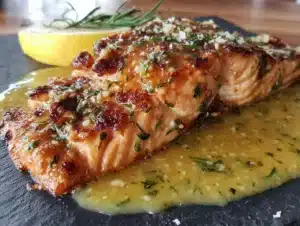
The salmon was thawing on the counter, and I had exactly zero plans for it. My husband texted that he’d be home in thirty minutes, which meant whatever I made had to be fast. I opened the fridge and found a bundle of asparagus looking a little sad, a jar of honey that was crystallizing at the edges, and some garlic cloves that were starting to sprout tiny green shoots. Not exactly inspiring.
I almost ordered takeout. Honestly, I was this close to calling it a night and grabbing my phone. But something about that salmon caught my eye—it was a nice thick filet, wild-caught from the flash-frozen batch I always keep on hand. I hate wasting good fish. So I grabbed the honey, smashed a few cloves of that sprouting garlic (it still tastes fine, don’t let anyone tell you otherwise), and started winging it.
Twenty minutes later, I had this glossy, sticky, perfectly caramelized piece of salmon sitting on a bed of bright green asparagus, and I swear the kitchen smelled like a fancy restaurant. The sauce had reduced into this syrupy glaze that coated every bite, and the asparagus was tender but still had that satisfying snap. We ate it in silence, which is our version of a standing ovation.
That’s the thing about this easy honey garlic salmon with asparagus—it doesn’t need a complicated backstory or a trip to a specialty store. It came together on a random Tuesday night when I had nothing planned and even less energy. And honestly, that’s when the best recipes are born, you know?
Why You’ll Love This Recipe
I’ve made this dish about a dozen times since that first desperate night, and it never gets old. Here’s why it keeps ending up on our dinner table:
- Ready in 20 Minutes Flat : From fridge to plate in the time it takes to watch half an episode of your favorite show. This is my go-to for those nights when hangry is a real threat.
- Pantry-Friendly Ingredients : Honey, soy sauce, garlic, and a lemon—you probably have all of this right now. No fancy shopping trips required.
- One-Pan Wonder : The salmon and asparagus cook together on a single sheet pan. Minimal dishes, maximum flavor. My sink thanks me every time.
- Restaurant-Quality Results : That glossy, caramelized glaze looks like something from a fancy seafood spot, but it’s embarrassingly simple to make.
- Naturally Gluten-Free and Low-Carb : This works for so many different eating styles without feeling like a “diet” meal.
What really sets this easy honey garlic salmon with asparagus apart is the technique. Most recipes dump everything on a pan and hope for the best, but I’ve learned that reserving some of that glaze to brush on at the end makes all the difference. It creates this thick, sticky coating that clings to the salmon instead of just pooling on the pan. That little trick came from a failed attempt where my salmon came out dry and the sauce burned—we’ve all been there, right?
This is the kind of meal that makes you feel like you have your life together, even when you absolutely don’t. It’s wholesome, satisfying, and genuinely delicious. Plus, it’s impressive enough for company but easy enough for a Tuesday.
What Ingredients You Will Need
This recipe keeps things simple, using everyday ingredients that work together to create something special. Most of these are probably already in your kitchen, which is exactly how I like it.
For the Salmon and Marinade:
- 4 salmon fillets (6 oz each) — Look for fillets that are roughly the same thickness so they cook evenly. I prefer wild-caught when I can find it, but farm-raised works great too. If using frozen, thaw completely and pat very dry with paper towels.
- 1/4 cup honey — Use a runny, liquid honey for the best glaze. If your honey is crystallized, microwave it for 10-15 seconds to loosen it up. I’ve used both clover honey and wildflower honey here, and both work beautifully.
- 3 tablespoons low-sodium soy sauce — Low-sodium is important here because the sauce reduces and concentrates. Regular soy sauce will make it too salty. For a gluten-free option, swap in tamari or coconut aminos.
- 4 cloves garlic, minced — Fresh garlic is non-negotiable here. The pre-minced stuff in a jar just doesn’t deliver the same punch. I use a microplane for the finest mince, but a sharp knife works perfectly.
- 2 tablespoons olive oil — A good extra virgin olive oil adds richness, but avocado oil works too if that’s what you have.
- 1 tablespoon fresh lemon juice — Fresh is absolutely worth it here. Bottled lemon juice has a flat, metallic taste that throws off the whole dish.
- 1/2 teaspoon black pepper — Freshly cracked is best, but pre-ground works in a pinch.
- 1/4 teaspoon red pepper flakes (optional) — I add these for a tiny kick of heat that balances the sweetness. Leave them out if you’re sensitive to spice.
For the Asparagus:
- 1 bunch asparagus (about 1 lb) — Look for spears that are bright green with firm, closed tips. Thicker spears hold up better to roasting and won’t get mushy. Snap off the woody ends—they’ll naturally break where the tough part ends.
- 1 tablespoon olive oil — Just enough to coat them lightly before roasting.
- 1/4 teaspoon salt — I use fine sea salt here.
- 1/4 teaspoon black pepper
For Garnish:
- Sesame seeds (optional) — Toasted white or black sesame seeds add a nice visual contrast and a subtle nuttiness.
- Fresh lemon wedges — A squeeze of fresh lemon right before serving brightens everything up.
- Chopped fresh parsley or green onions — For a pop of color and freshness.
A quick note on ingredient sourcing: I’ve found that the quality of the salmon really matters here. If you can, buy from a trusted fishmonger or a reputable brand at the grocery store. The quick miso glazed salmon I make uses the same principle—good fish doesn’t need much to shine.
Equipment Needed
You don’t need a fancy kitchen to pull this off. Here’s what you’ll actually use:
- Sheet pan or baking sheet — A rimmed baking sheet is ideal to catch any sauce drips. I use a half-sheet pan (18×13 inches) which fits four fillets and a full bunch of asparagus comfortably.
- Parchment paper or aluminum foil — Lining the pan makes cleanup almost nonexistent. I prefer parchment because nothing sticks to it.
- Small mixing bowl — For whisking together the honey garlic sauce.
- Whisk or fork — To combine the sauce ingredients smoothly.
- Chef’s knife and cutting board — For mincing garlic and trimming asparagus.
- Measuring spoons — Accuracy matters with the honey and soy sauce since they balance each other.
- Pastry brush (optional but helpful) — For brushing the glaze onto the salmon halfway through cooking. A spoon works too, but a brush gives you more even coverage.
- Instant-read thermometer — This is my secret weapon for perfectly cooked salmon. The fish is done at 125°F to 130°F for medium, which is my preferred doneness.
If you don’t have a pastry brush, don’t stress. I’ve used the back of a spoon more times than I can count, and it works just fine. The key is just getting that glaze onto the fish evenly.
Preparation Method
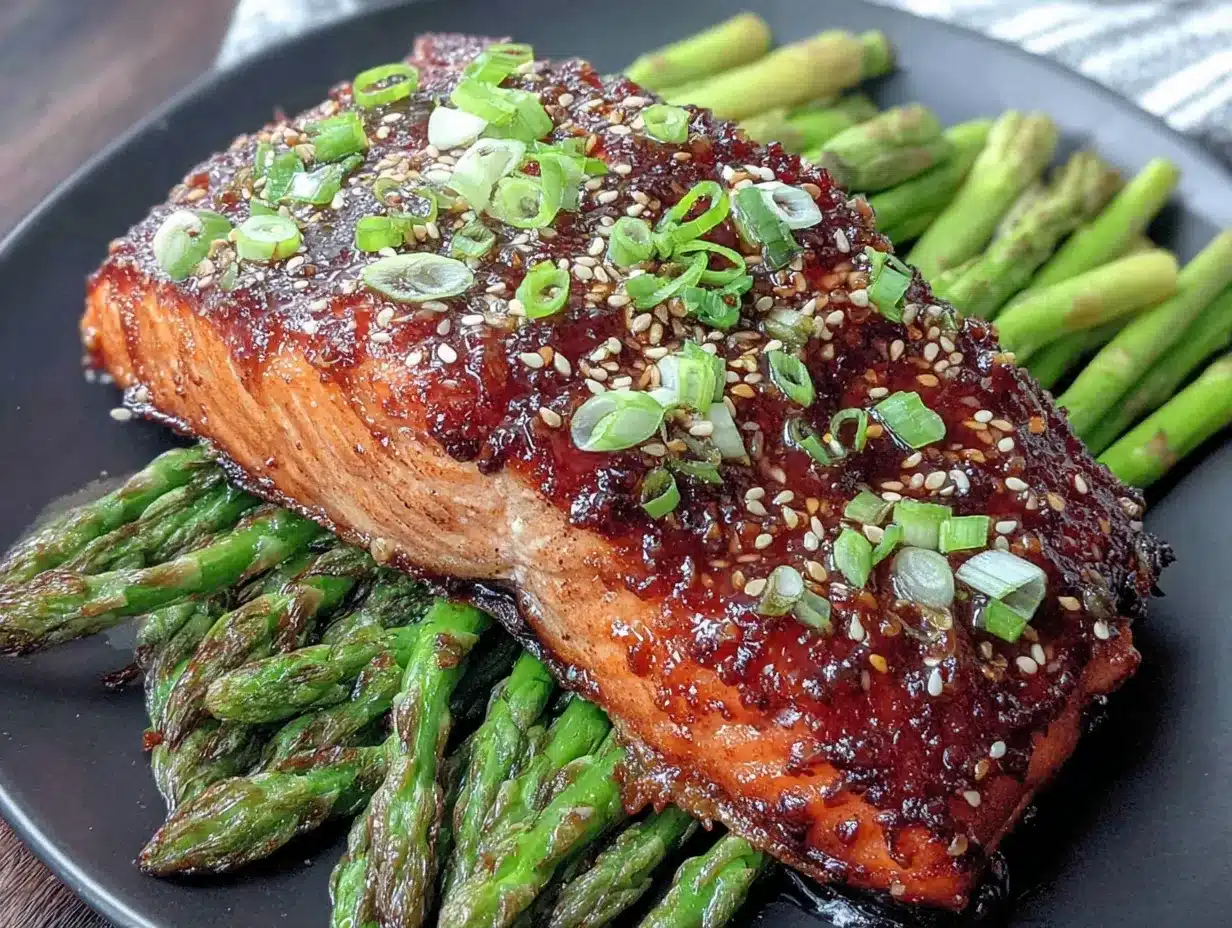
Alright, let’s get cooking. This easy honey garlic salmon with asparagus comes together fast, so I recommend reading through the steps once before you start. Trust me, it helps.
- Preheat your oven to 400°F (200°C) . Position the rack in the upper third of the oven so the salmon gets nice caramelization without drying out. Line your baking sheet with parchment paper or foil for easy cleanup.
- Make the honey garlic sauce . In your small bowl, whisk together the honey, low-sodium soy sauce, minced garlic, olive oil, lemon juice, black pepper, and red pepper flakes if using. Set aside about 2 tablespoons of this mixture in a separate small bowl—you’ll use it for brushing later. The rest will be used to marinate the salmon.
- Prep the asparagus . Rinse the asparagus and snap off the woody ends. You can do this by holding each spear near the bottom and bending until it breaks naturally—the tough part will snap right off. Toss the trimmed asparagus with 1 tablespoon olive oil, salt, and pepper directly on the baking sheet. Spread them in a single layer on one side of the pan.
- Prep the salmon . Pat the salmon fillets dry with paper towels—this is crucial for getting a good sear and helping the glaze stick. Place the fillets skin-side down (if they have skin) on the other side of the baking sheet, leaving a little space between each piece. Pour the larger portion of the honey garlic sauce over the salmon, using a spoon or brush to coat each fillet evenly. Let them sit for 5 minutes while the oven finishes preheating.
- Roast for 10 minutes . Place the sheet pan in the preheated oven and roast for 10 minutes. The asparagus should be starting to soften and the salmon should be partially cooked through.
- Brush with reserved glaze . Remove the pan from the oven and carefully brush each salmon fillet with the reserved honey garlic sauce you set aside earlier. This extra layer of glaze is what creates that beautiful, sticky caramelized finish. Return the pan to the oven.
- Finish roasting . Roast for another 5-8 minutes, depending on the thickness of your salmon. For medium-cooked salmon (my preference), the internal temperature should reach 125°F to 130°F when checked with an instant-read thermometer inserted into the thickest part. The fish should flake easily with a fork but still look slightly translucent in the center. If you prefer well-done salmon, cook to 140°F, but be careful not to overcook it—it dries out fast.
- Rest and garnish . Remove the pan from the oven and let the salmon rest for 2-3 minutes. This allows the juices to redistribute. Sprinkle with sesame seeds and fresh parsley or green onions if desired. Serve with lemon wedges on the side for squeezing over the top.
A few things I’ve learned the hard way: Don’t crowd the pan. If your fillets are touching, they’ll steam instead of roast, and you won’t get that beautiful caramelization. Also, keep an eye on the asparagus—if yours are very thin, they might cook faster than the salmon. In that case, you can add them to the pan halfway through cooking instead of at the beginning.
Cooking Tips & Techniques
I’ve messed up this recipe more times than I’d like to admit, so let me save you the trouble. Here are the things I wish someone had told me:
Pat the salmon dry. This is probably the most important tip I can give you. If your salmon is wet, the glaze will slide right off and pool on the pan. You want that glaze to cling to the fish, not the parchment paper. Use a few paper towels and really press them into the flesh to absorb as much moisture as possible.
Don’t skip the reserved glaze. I know it seems fussy to set some aside, but this step makes or breaks the recipe. If you brush the salmon with the same sauce that raw fish touched, you’re introducing bacteria back into your glaze. Plus, the reserved glaze hasn’t been diluted by raw fish juices, so it’s thicker and more concentrated. That final brush creates that gorgeous, glossy finish that makes this dish look professional.
Watch your oven like a hawk. Every oven runs differently, and salmon goes from perfectly cooked to dry in about 90 seconds. Start checking at the 12-minute mark if your fillets are on the thinner side. I’ve burned more than one batch of this easy honey garlic salmon with asparagus by walking away and trusting the timer blindly.
Use the broiler for extra caramelization. If you want that restaurant-style charred top, switch your oven to broil for the last 1-2 minutes of cooking. Watch it constantly—the honey can burn quickly under the broiler. I’ve learned this lesson the hard way, and my smoke detector has too.
Let it rest. I know you’re hungry, but those 2-3 minutes of resting time are non-negotiable. The carryover cooking will bring the internal temperature up a few more degrees, and the juices will settle back into the fish instead of running all over your plate.
For more quick and satisfying meals, you might enjoy my one skillet Cajun butter shrimp and grits—it’s another weeknight hero that comes together fast.
Variations & Adaptations
One of the best things about this recipe is how flexible it is. Here are some ways I’ve adapted it depending on what I have on hand or who I’m cooking for:
Swap the protein. This honey garlic glaze works beautifully on chicken thighs, shrimp, or even firm tofu. For chicken, increase the cooking time to about 20-25 minutes depending on thickness. For shrimp, reduce the time to 6-8 minutes total. I’ve made this with chicken thighs on nights when salmon wasn’t available, and it was just as good.
Change up the vegetables. Asparagus is my favorite here, but broccoli florets, green beans, or zucchini slices all work wonderfully. Just adjust the roasting time based on what you’re using—broccoli needs about the same time as asparagus, while zucchini might need a few minutes less. In the summer, I love using fresh green beans from the farmer’s market.
Make it spicy. If you like heat, add an extra teaspoon of sriracha or gochujang to the honey garlic sauce. The spicy-sweet combination is addictive. I sometimes add a finely chopped fresh chili pepper to the glaze for an extra kick.
Go dairy-free and gluten-free. This recipe is naturally dairy-free. For gluten-free, just swap the soy sauce for tamari or coconut aminos. I’ve tested both, and they work perfectly.
Add a citrus twist. Try using orange juice instead of lemon juice for a sweeter, milder citrus flavor. A little orange zest in the glaze takes it to another level. This variation is especially nice in the winter when citrus is at its peak.
If you’re looking for other quick and healthy options, my fresh garlic parmesan zucchini noodles make a fantastic side dish for this salmon.
Serving & Storage Suggestions
This easy honey garlic salmon with asparagus is incredibly versatile when it comes to serving. Here’s how I like to enjoy it:
Serving temperature and presentation. Serve the salmon warm, right after resting. Place a fillet on each plate alongside a generous portion of the roasted asparagus. Drizzle any remaining pan juices over the top—that’s pure gold right there. A squeeze of fresh lemon juice right before eating brightens all the flavors and cuts through the sweetness of the honey.
What to serve with it. This dish pairs beautifully with steamed jasmine rice, quinoa, or cauliflower rice to soak up the extra glaze. A simple side salad with a tangy vinaigrette also works well to balance the richness. For a heartier meal, serve it with roasted potatoes or crusty bread to mop up every last drop of that honey garlic sauce.
Storage instructions. Store leftover salmon and asparagus in an airtight container in the refrigerator for up to 3 days. The flavors actually meld together nicely overnight, so leftovers are still delicious. I don’t recommend freezing cooked salmon, as the texture becomes watery and mushy when thawed.
Reheating tips. The best way to reheat is in a low oven (300°F) for about 5-7 minutes, or in a skillet over medium-low heat with a splash of water or extra soy sauce to refresh the glaze. Avoid the microwave if you can help it—it tends to overcook the salmon and make the asparagus soggy. If you’re in a hurry, the microwave works in a pinch, just use 50% power and check frequently.
Meal prep option. You can prep the sauce and trim the asparagus up to 2 days in advance. Store them separately in the fridge, then just assemble and roast when you’re ready to eat. This makes it an even quicker weeknight dinner.
Nutritional Information & Benefits
This recipe is not just delicious—it’s actually pretty good for you too. Here’s a rough breakdown per serving (one salmon fillet plus asparagus):
- Calories: Approximately 380-420
- Protein: 35-40 grams
- Fat: 18-22 grams (mostly healthy omega-3s from the salmon)
- Carbohydrates: 20-25 grams (mostly from honey and asparagus)
- Fiber: 3-4 grams
- Sugar: 16-18 grams (natural sugars from honey)
Health benefits to note: Salmon is packed with omega-3 fatty acids, which support heart health and brain function. Asparagus is a great source of fiber, folate, and vitamins A, C, and K. Garlic offers immune-boosting properties, and honey provides antioxidants. This meal is naturally gluten-free, dairy-free, and low-carb friendly.
Dietary considerations: This recipe is suitable for gluten-free diets (with tamari), dairy-free diets, and low-carb or keto lifestyles if you adjust the honey slightly. It’s also pescatarian-friendly. The main allergens are fish and soy, so keep that in mind if cooking for others.
For a similar healthy option, try my healthy high-protein spicy tuna cucumber rice paper rolls—they’re another go-to when I want something light but satisfying.
Conclusion
This easy honey garlic salmon with asparagus has become my weeknight secret weapon for good reason. It’s fast, it’s forgiving, and it makes me feel like I actually have my act together in the kitchen. The combination of sticky-sweet glaze, tender flaky salmon, and crisp-tender asparagus is one of those perfect pairings that just works.
What I love most about this recipe is how adaptable it is. You can swap in whatever vegetables are in your crisper drawer, adjust the sweetness or spice level to your taste, and it still comes out beautifully. It’s the kind of meal that builds confidence in the kitchen—even if you’ve never cooked salmon before, you can nail this one.
I’d love to hear how this turns out for you! Drop a comment below and let me know if you tried any variations, or tag me in your photos if you share them online. Did you add extra spice? Swap in chicken? Serve it over rice? I’m always looking for new ideas to try myself.
Here’s to more effortless, delicious dinners that make us feel like we’ve got it all figured out—even when we absolutely don’t.
Frequently Asked Questions
Can I use frozen salmon for this recipe?
Yes, absolutely! Just make sure to thaw the salmon completely in the refrigerator overnight or under cold running water. Pat it very dry with paper towels before using, as frozen fish tends to hold more moisture. The rest of the recipe stays exactly the same.
How do I know when the salmon is fully cooked?
The most reliable method is using an instant-read thermometer. Insert it into the thickest part of the fillet—125°F to 130°F gives you medium-cooked salmon that’s still moist and slightly translucent in the center. For well-done, aim for 140°F. If you don’t have a thermometer, look for the fish to flake easily with a fork and appear opaque throughout.
Can I make this recipe on the stovetop instead of the oven?
Definitely! Cook the salmon in a skillet over medium-high heat with a little oil for about 4 minutes per side, brushing with the glaze as it cooks. Sauté the asparagus separately in the same pan after the salmon is done. The stovetop method gives you a nice sear on the salmon, which some people prefer.
What can I use instead of honey to make this low-carb?
You can substitute the honey with a sugar-free maple syrup alternative or a monk fruit-based honey substitute. Keep in mind that the caramelization won’t be quite the same, but the flavor will still be delicious. You could also use just a tablespoon of honey instead of a quarter cup to reduce the sugar content.
How long do leftovers last, and how should I reheat them?
Leftovers will keep in an airtight container in the refrigerator for up to 3 days. For best results, reheat in a 300°F oven for 5-7 minutes or in a skillet over medium-low heat with a splash of water. Avoid the microwave if possible, as it tends to overcook the salmon and make the asparagus mushy.
Pin This Recipe!
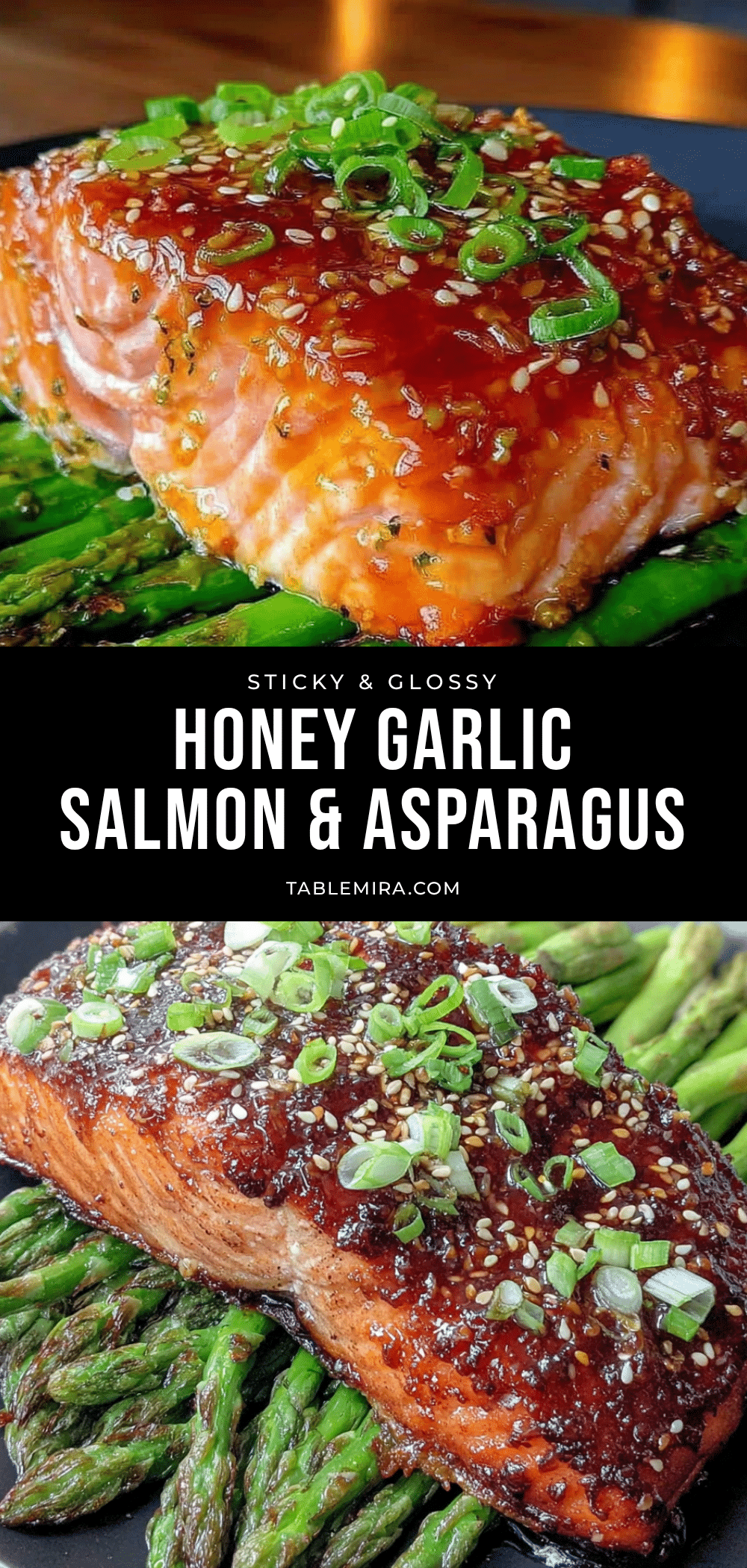
Easy Honey Garlic Salmon with Asparagus in 20 Minutes

A quick and delicious one-pan honey garlic salmon with asparagus, ready in 20 minutes. Perfect for busy weeknights, this recipe features a sticky, caramelized glaze and tender-crisp asparagus.
- Prep Time: 5 minutes
- Cook Time: 15 minutes
- Total Time: 20 minutes
- Yield: 4 servings 1x
- Category: Main Course
- Cuisine: American
Ingredients
- 4 salmon fillets (6 oz each)
- 1/4 cup honey
- 3 tablespoons low-sodium soy sauce
- 4 cloves garlic, minced
- 2 tablespoons olive oil
- 1 tablespoon fresh lemon juice
- 1/2 teaspoon black pepper
- 1/4 teaspoon red pepper flakes (optional)
- 1 bunch asparagus (about 1 lb)
- 1 tablespoon olive oil
- 1/4 teaspoon salt
- 1/4 teaspoon black pepper
- Sesame seeds (optional)
- Fresh lemon wedges
- Chopped fresh parsley or green onions
Instructions
- Preheat your oven to 400°F (200°C). Position the rack in the upper third of the oven. Line a baking sheet with parchment paper or foil.
- In a small bowl, whisk together honey, low-sodium soy sauce, minced garlic, 2 tablespoons olive oil, lemon juice, black pepper, and red pepper flakes (if using). Set aside about 2 tablespoons of this mixture for later.
- Rinse the asparagus and snap off the woody ends. Toss with 1 tablespoon olive oil, salt, and pepper directly on the baking sheet. Spread in a single layer on one side.
- Pat the salmon fillets dry with paper towels. Place skin-side down on the other side of the baking sheet. Pour the larger portion of the honey garlic sauce over the salmon, coating evenly. Let sit for 5 minutes.
- Roast for 10 minutes.
- Remove the pan from the oven and brush each salmon fillet with the reserved honey garlic sauce.
- Return to the oven and roast for another 5-8 minutes, until the internal temperature reaches 125°F to 130°F for medium, or 140°F for well-done.
- Let the salmon rest for 2-3 minutes. Sprinkle with sesame seeds and fresh parsley or green onions. Serve with lemon wedges.
Notes
Pat the salmon dry for best glaze adhesion. Reserve some glaze for brushing halfway through to create a sticky caramelized finish. Watch the oven closely as salmon can overcook quickly. For extra caramelization, broil for the last 1-2 minutes. Let the salmon rest before serving.
Nutrition
- Serving Size: 1 salmon fillet with
- Calories: 400
- Sugar: 17
- Sodium: 600
- Fat: 20
- Saturated Fat: 3
- Carbohydrates: 22
- Fiber: 3
- Protein: 37
Keywords: honey garlic salmon, salmon with asparagus, one-pan salmon, quick salmon recipe, healthy salmon dinner, gluten-free salmon, low-carb salmon