Third time in as many weeks and I finally stopped adding things. That’s the thing about a stew—you keep thinking it needs *more*. Another clove of garlic, a splash of something acidic, a handful of spinach because it’s wilting in the fridge. But this one? It snapped me out of that habit. The sausage is fatty enough, the beans are creamy enough, and the broth—honestly, the broth just needed to be left alone.
I was standing over the pot, wooden spoon in hand, watching the white beans bob against the slices of smoked sausage. The kitchen smelled like browned butter and fennel seeds. My phone was playing some old folk playlist I’d forgotten I had. And I realized I wasn’t thinking about anything else. That’s rare for me. Usually I’m scrolling, planning, mentally writing my to-do list while I stir. But this stew had me pinned to the moment.
It’s not a complicated recipe. That’s the point. It’s the kind of thing you throw together on a Tuesday when the air gets that sharp fall bite and you just want something warm that doesn’t ask much of you. The sausage does the heavy lifting. The beans get soft and starchy, thickening the broth in a way that feels almost intentional. A little rosemary, a little garlic, some onion and carrot for sweetness—and that’s it. No cream, no flour, no fuss.
The first time I made it, I added too much liquid. The second time, I rushed the browning on the sausage. This time, I let everything take its time. And that’s when it clicked. Sometimes the best cooking advice is just: step back. Let the pot do its thing.
Why You’ll Love This Recipe
I’ve tested this stew about six times now, tweaking the liquid ratio and the cooking time until it felt right. What I landed on is something that works for busy weeknights but tastes like you simmered it all afternoon. Here’s why it’s become my go-to fall dinner:
- One Pot, Minimal Mess : Everything happens in a single Dutch oven or heavy pot. No draining, no transferring, no extra pans to scrub.
- Pantry-Friendly Ingredients : Canned beans, smoked sausage, onions, garlic, and broth. You probably have most of this already.
- Ready in About 45 Minutes : The active cooking time is maybe 15 minutes. The rest is just simmering while you chop a salad or pour yourself a glass of wine.
- Deep Flavor Without Effort : Browning the sausage first creates a fond on the bottom of the pot that builds the whole flavor base. No fancy techniques required.
- Cozy and Satisfying : This is the kind of meal that makes you want to curl up on the couch with a blanket and a spoon. It’s hearty without being heavy.
What sets this apart from other sausage and bean soups I’ve tried is the texture. Most versions are either too brothy or too thick. This one lands right in the middle—the beans break down just enough to create a silky, almost creamy broth without adding any dairy. Plus, using smoked sausage (I prefer kielbasa or andouille) gives you that deep, savory flavor without needing to season much else.
I’ve made this for myself on a quiet Wednesday and for friends on a chilly Saturday night. Both times, the pot was empty. There’s something about a bowl of this stew that makes people slow down. And honestly? That’s the whole point of fall cooking.
What Ingredients You Will Need
This recipe keeps things simple. You don’t need a long grocery list or any specialty items. Most of these are staples I keep on hand during the cooler months. Let me walk you through each one and why it matters.
- Smoked Sausage (12-14 ounces) : Kielbasa, andouille, or any fully cooked smoked sausage works beautifully. I prefer a beef and pork blend for the richest flavor. Slice it into half-moons or bite-sized rounds. Don’t use raw Italian sausage here—the texture and flavor profile are different, and you’d need to cook it longer.
- White Beans (2 cans, 15 ounces each) : Cannellini beans are my first choice—they’re creamy and hold their shape well. Great Northern beans or navy beans work too. Avoid chickpeas or black beans; the texture just isn’t right for this stew. Drain and rinse them unless you want extra starch (which isn’t a bad thing if you like a thicker broth).
- Yellow Onion (1 medium) : Diced. Adds sweetness and depth. I’ve tried this with red onion and it works in a pinch, but yellow is better for that mellow, savory base.
- Carrots (2 medium) : Peeled and diced into small cubes. They add a subtle sweetness and a bit of color. Don’t skip them—they balance the richness of the sausage.
- Celery (2 ribs) : Diced. The classic aromatic trio (onion, carrot, celery) is non-negotiable here. It builds the foundation of flavor.
- Garlic (4 cloves) : Minced. I’m generous with garlic in this recipe. It mellows as it cooks and blends into the background without being sharp.
- Chicken Broth (4 cups) : Use low-sodium so you can control the salt level. Vegetable broth works too if you want to keep it vegetarian (just swap the sausage for a plant-based option).
- Diced Tomatoes (1 can, 14.5 ounces) : Fire-roasted if you can find them. They add a subtle smokiness and a little acidity that cuts through the richness. Don’t drain them—the juice goes into the pot.
- Fresh Rosemary (2 sprigs) : Whole sprigs that you remove before serving. Rosemary and white beans are a classic pair. Dried rosemary works in a pinch (use 1 teaspoon), but fresh is noticeably better here.
- Bay Leaves (2) : Adds an earthy, floral note that deepens as the stew simmers. Don’t forget to fish them out before serving.
- Olive Oil (2 tablespoons) : For sautéing the vegetables and browning the sausage. Use a good quality extra virgin if you have it.
- Salt and Black Pepper : To taste. Go easy on the salt at first—sausage and broth both contain sodium. You can always add more at the end.
- Optional Garnishes : Fresh parsley, grated Parmesan, or a drizzle of good olive oil right before serving. A squeeze of lemon juice brightens everything up too.
That’s it. Eleven ingredients (plus salt and pepper) and you’re on your way to a deeply satisfying fall stew. The beauty of this recipe is that it doesn’t hide behind a long list of spices or hard-to-find items. It relies on technique and quality ingredients.
Equipment Needed
You don’t need a fully stocked kitchen for this one. Here’s what I use:
- Dutch Oven or Heavy-Bottomed Pot (5-6 quart) : A Le Creuset or Staub is ideal, but any heavy pot with a lid works. The key is even heat distribution and enough space to brown the sausage without crowding.
- Wooden Spoon or Silicone Spatula : For stirring and scraping up the browned bits from the bottom of the pot. Those bits are pure flavor.
- Chef’s Knife : A sharp 8-inch knife makes quick work of the sausage, onions, carrots, and celery.
- Cutting Board : Preferably a large wooden or plastic board with a juice groove.
- Measuring Cups and Spoons : For the broth and seasonings.
- Can Opener : Obvious, but worth mentioning.
- Colander : For draining and rinsing the beans.
If you don’t have a Dutch oven, a large stainless steel pot or even a deep nonstick skillet with a lid will work. Just keep an eye on the heat—thin pots can scorch the bottom. I’ve made this in a cheap 5-quart stockpot before and it turned out fine. The secret is to stir occasionally and not crank the heat too high.
One tip: invest in a good wooden spoon if you don’t already have one. The flat-edged ones are perfect for scraping up fond without scratching your pot. I’ve had mine for years and it’s seasoned beautifully.
Preparation Method
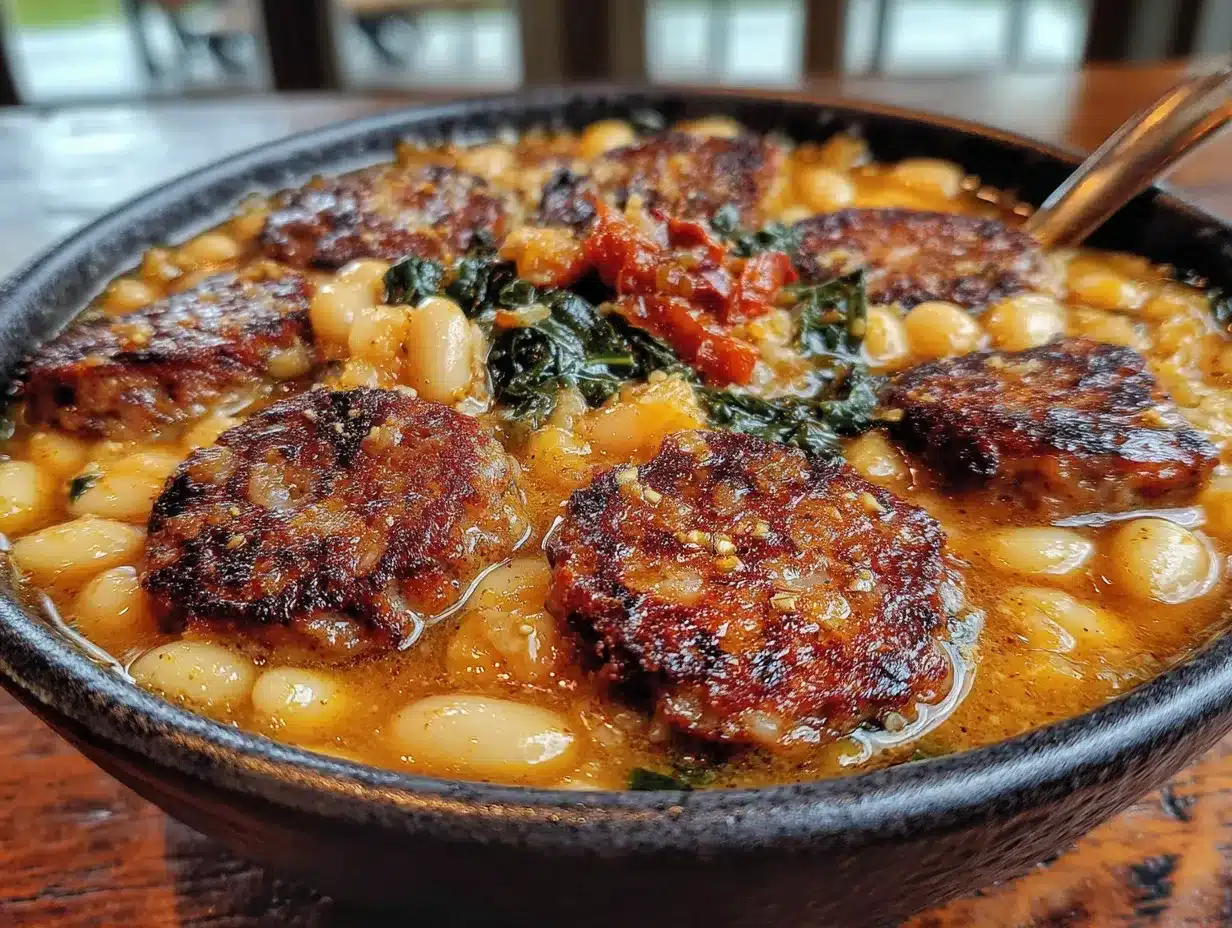
Let’s get cooking. This method is straightforward, but I’ll include all the little details I’ve learned from making it over and over. Follow these steps and you’ll have a pot of stew that tastes like it simmered for hours.
- Prep the ingredients first. Dice the onion, carrots, and celery into roughly equal-sized pieces (about ¼-inch). Mince the garlic. Slice the sausage into half-moons about ½-inch thick. Drain and rinse the white beans. Open the can of diced tomatoes. Measure the broth. Having everything ready before you start cooking makes the process smooth and prevents burning.
- Brown the sausage. Heat 1 tablespoon of olive oil in your Dutch oven over medium-high heat. Add the sliced sausage in a single layer (work in batches if needed). Let it cook undisturbed for 3-4 minutes until the bottom is deeply browned. Flip and cook another 2-3 minutes. Remove the sausage to a plate using a slotted spoon. Don’t skip this step—the browned bits left in the pot are the foundation of the stew’s flavor.
- Sauté the aromatics. Reduce the heat to medium. Add the remaining 1 tablespoon of olive oil. Add the diced onion, carrots, and celery. Cook, stirring occasionally, for 6-8 minutes until the vegetables are softened and the onion is translucent. Scrape up any browned bits from the bottom of the pot as you stir. Add the minced garlic and cook for 1 minute more, until fragrant.
- Add the liquids and seasonings. Pour in the chicken broth and the can of diced tomatoes (with their juice). Stir to combine, scraping the bottom of the pot to release any remaining fond. Add the fresh rosemary sprigs and bay leaves. Season with a pinch of salt and several grinds of black pepper.
- Simmer the base. Bring the broth to a gentle boil, then reduce the heat to low. Cover and let it simmer for 15 minutes. This allows the flavors to meld and the vegetables to soften further. The broth will reduce slightly and deepen in color.
- Add the beans and sausage. Stir in the drained white beans and the browned sausage. Return the stew to a gentle simmer. Cook uncovered for another 10-15 minutes, stirring occasionally. The beans will start to break down slightly, thickening the broth. If you prefer a thicker stew, mash about a quarter of the beans against the side of the pot with your spoon before stirring them in.
- Adjust seasoning and finish. Remove the rosemary sprigs and bay leaves. Taste the broth and adjust salt and pepper as needed. If the stew tastes flat, a squeeze of fresh lemon juice or a splash of vinegar can brighten it up. Stir in a handful of fresh parsley if you’re using it.
- Rest before serving. Let the stew sit off the heat for 5-10 minutes. This allows the flavors to settle and the broth to thicken slightly more. Serve hot, garnished with grated Parmesan or a drizzle of olive oil if desired.
A few sensory cues to watch for: when the sausage is properly browned, it should have a deep mahogany crust. The vegetables are ready when they smell sweet and the onion is translucent. The broth should look slightly opaque and creamy when the beans have broken down—not watery or thin. If it looks too thick, add a splash of broth or water. If it’s too thin, let it simmer uncovered for another 5-10 minutes.
Cooking Tips & Techniques
Over the course of testing this recipe, I made plenty of mistakes. Here’s what I learned so you don’t have to repeat them.
Don’t crowd the pan when browning the sausage. I made this error the first time. If you pile all the sausage in at once, it steams instead of browning. You lose that deep, caramelized flavor. Cook it in a single layer, even if that means doing two batches. The extra 3 minutes is worth it.
Use low-sodium broth. Sausage is already salty. If you use regular broth, the stew can end up overly salty, especially as it reduces. Low-sodium gives you control. You can always add more salt at the end.
Let the beans break down naturally. I used to puree some beans to thicken the broth, but I found that mashing a few against the pot with a wooden spoon works better. It gives you some creamy pieces and some whole beans, which creates a more interesting texture.
Don’t skip the resting period. This stew actually tastes better the next day. The flavors meld and deepen overnight. If you have time, make it a day ahead and reheat gently. The texture stays perfect.
Watch your heat. Once you add the broth, keep the stew at a gentle simmer—not a rolling boil. Boiling can make the beans mushy and the broth cloudy. Small bubbles breaking the surface is the sweet spot.
Season in layers. Add a little salt at each stage (with the vegetables, with the broth, at the end). This builds flavor gradually rather than dumping it all in at once. I learned this from a chef friend and it changed how I cook soups and stews.
One more thing: if you’re short on time, you can skip the browning step and just cook the sausage with the vegetables. The stew will still be good, but it won’t have that deep, smoky undertone. The browning is where the magic happens.
Variations & Adaptations
This recipe is flexible. Here are some ways to change it up based on what you have or what you’re craving.
Make it vegetarian. Swap the sausage for a plant-based smoked sausage (like Field Roast or Beyond) and use vegetable broth. The flavor will be slightly different, but still satisfying. Add a smoked paprika or liquid smoke to mimic that smoky depth.
Add greens. Stir in a handful of chopped kale, spinach, or Swiss chard during the last 5 minutes of cooking. The greens wilt into the broth and add color and nutrients. I’ve done this with lacinato kale and it works beautifully.
Spice it up. If you like heat, add a diced jalapeño with the vegetables or a pinch of red pepper flakes with the garlic. Andouille sausage already brings some spice, so adjust accordingly.
Use different beans. Cannellini are my favorite, but Great Northern or navy beans work. If you want a heartier texture, try chickpeas (though the broth won’t get as creamy). For a completely different vibe, use black beans and add cumin and cilantro.
Make it creamy. Stir in a splash of heavy cream or coconut milk at the end for an even richer broth. I’ve done this when I wanted something extra indulgent. It’s not necessary, but it’s lovely.
Swap the protein. Smoked turkey sausage or chicken sausage work well if you want a leaner option. I’ve also used leftover shredded chicken (add it with the beans) for a different take.
Try a different herb profile. Thyme and oregano pair beautifully with the sausage and beans. Use fresh or dried—just adjust the quantity (1 teaspoon dried for every tablespoon fresh).
One personal variation I love: adding a parmesan rind to the broth while it simmers. It adds an umami depth that’s hard to beat. Just fish it out before serving.
Serving & Storage Suggestions
This stew is best served hot, straight from the pot. Ladle it into wide bowls so you get a good ratio of broth to solids. A sprinkle of fresh parsley and a grating of Parmesan on top adds a nice finishing touch. A drizzle of good olive oil right before serving brings out the richness.
For a complete meal, serve with crusty bread for dipping—sourdough or a rustic country loaf works perfectly. I also like it with a simple side salad dressed with lemon and olive oil to cut through the richness. If you’re in the mood for something more substantial, try it alongside a caramelized onion and gruyère sourdough focaccia for dipping. The cheesy, herby bread is made for sopping up that savory broth.
For drink pairings, a light red like Pinot Noir or a hoppy IPA works well. If you prefer white, a full-bodied Chardonnay can handle the richness. For non-alcoholic options, sparkling water with a lemon wedge is refreshing.
Storage: Let the stew cool completely, then transfer to an airtight container. It keeps in the refrigerator for up to 5 days. The flavors actually improve after a day or two as the ingredients meld together.
Freezing: This stew freezes beautifully. Portion it into freezer-safe containers or zip-top bags (lay them flat for easy stacking). It will keep for up to 3 months. Thaw overnight in the refrigerator before reheating.
Reheating: Reheat gently on the stovetop over medium-low heat, stirring occasionally. Add a splash of broth or water if the stew has thickened too much. You can also microwave individual portions in 30-second bursts, stirring in between. The texture stays surprisingly good.
One note: the beans will continue to absorb liquid as the stew sits. Don’t be alarmed if it looks thicker the next day—that’s normal. Just add a little broth or water when reheating to bring it back to the right consistency.
Nutritional Information & Benefits
Here’s an approximate nutritional breakdown per serving (based on 6 servings):
| Nutrient | Amount per Serving |
|---|---|
| Calories | 385 |
| Protein | 22g |
| Fat | 18g |
| Saturated Fat | 6g |
| Carbohydrates | 35g |
| Fiber | 10g |
| Sugar | 6g |
| Sodium | 890mg |
This stew is packed with fiber thanks to the white beans, which support digestive health and keep you feeling full. The sausage provides a good amount of protein, while the carrots and tomatoes contribute vitamins A and C. Using low-sodium broth helps keep the salt in check.
If you’re watching your sodium, look for no-salt-added beans and broth. You can also use turkey sausage to reduce the saturated fat. For a lower-carb option, reduce the beans and add extra vegetables like zucchini or bell peppers.
One of the things I love about this recipe is that it feels indulgent but is actually pretty balanced. It’s the kind of meal that satisfies without weighing you down—perfect for those transitional fall days when you want comfort without the heaviness.
Conclusion
This cozy one-pot sausage and white bean stew has become my fall benchmark. It’s the recipe I turn to when the weather turns and I need something that feels like a hug in a bowl. The best part? It doesn’t ask for much. A little patience while the sausage browns, a gentle simmer, and you’re rewarded with a dinner that tastes like it’s been cooking all day.
I love how adaptable it is. Add greens, swap the beans, turn up the heat—it all works. This isn’t a rigid recipe; it’s a framework for making something warm and satisfying with what you have. And honestly, that’s the kind of cooking I value most.
If you make this stew, I’d love to hear about it. Drop a comment below and let me know what variations you tried or how it turned out. Did you add a parmesan rind? Throw in some kale? Serve it with a rosemary sea salt sourdough focaccia with sun-dried tomatoes for the ultimate fall dinner? I want to know. And if you’re looking for more cozy one-pot meals, check out the creamy slow cooker Tuscan chicken—it’s another fall favorite that practically makes itself.
Until next time, happy cooking. And remember: sometimes the best thing you can do is just let the pot simmer and step away.
Frequently Asked Questions
Can I use dried beans instead of canned?
Yes, but you’ll need to adjust the cooking time. Soak 1 cup of dried white beans overnight, then drain and rinse. Add them to the pot with the broth and simmer for 45-60 minutes before adding the tomatoes and sausage. You may need extra broth as the beans absorb liquid.
Can I make this in a slow cooker?
Absolutely. Brown the sausage and sauté the vegetables on the stovetop first, then transfer everything to the slow cooker. Cook on low for 6-8 hours or high for 3-4 hours. Add the beans during the last hour so they don’t get too mushy.
How do I prevent the stew from being too salty?
Use low-sodium broth and no-salt-added beans. Taste before adding any extra salt—sausage and canned tomatoes both contain sodium. If it’s still too salty, add a squeeze of lemon juice or a splash of vinegar to balance it out.
Can I add potatoes to this stew?
Sure. Dice 1-2 medium potatoes and add them with the broth. They’ll cook through during the simmering time and add extra heartiness. Russet or Yukon Gold potatoes work best.
How do I make this stew thicker?
Mash about a quarter of the beans against the side of the pot with a wooden spoon before stirring them in. Alternatively, let the stew simmer uncovered for an extra 10-15 minutes to reduce the broth. Both methods work well.
Pin This Recipe!
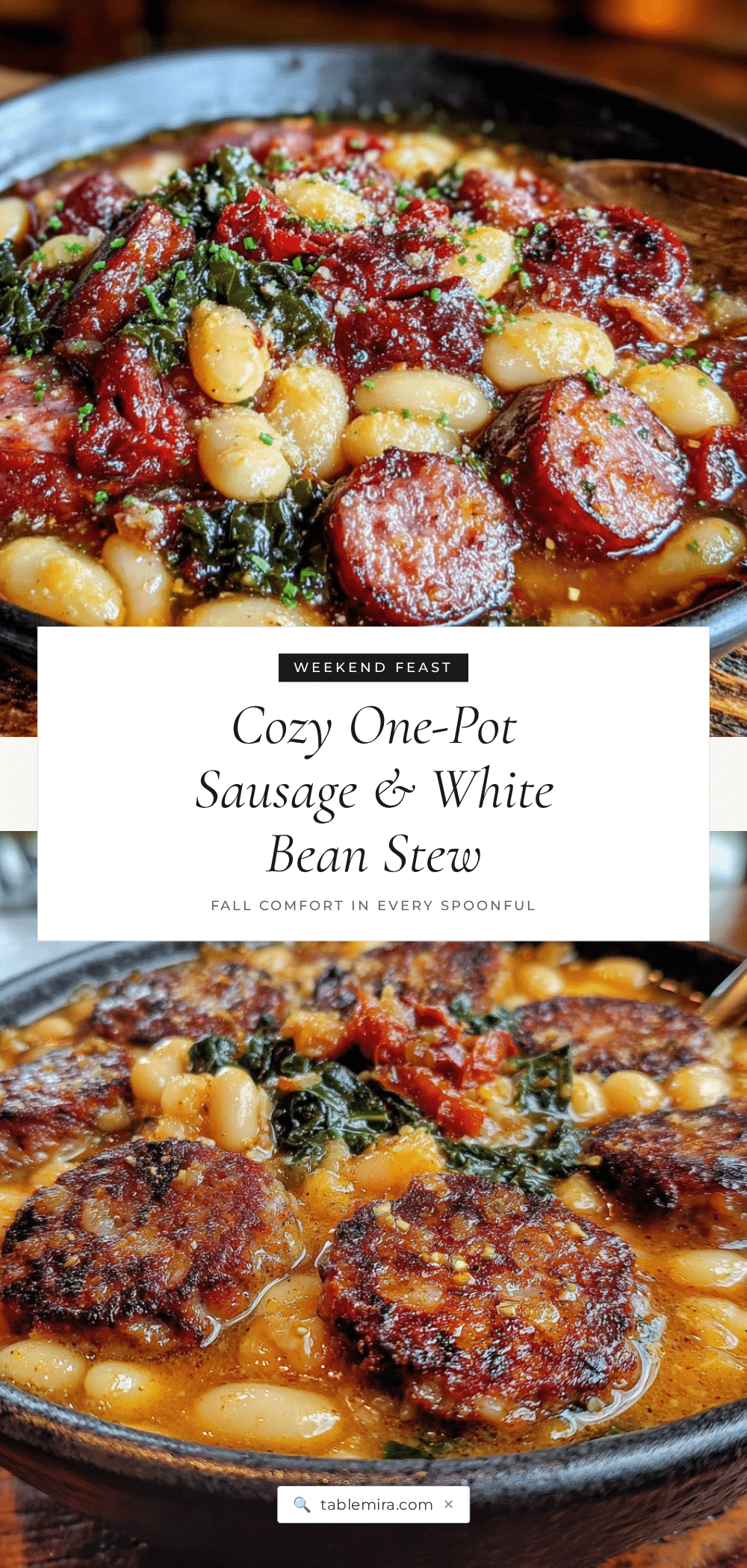
Cozy One-Pot Sausage and White Bean Stew (Easy Fall Dinner)

A hearty, comforting stew made with smoked sausage, creamy white beans, and aromatic vegetables in a rich broth. Ready in about 45 minutes, this one-pot meal is perfect for busy weeknights and tastes like it simmered all day.
- Prep Time: 15 minutes
- Cook Time: 30 minutes
- Total Time: 45 minutes
- Yield: 6 servings 1x
- Category: Main Course
- Cuisine: American
Ingredients
- 12–14 ounces smoked sausage (kielbasa or andouille), sliced into half-moons
- 2 cans (15 ounces each) white beans (cannellini, Great Northern, or navy), drained and rinsed
- 1 medium yellow onion, diced
- 2 medium carrots, peeled and diced
- 2 ribs celery, diced
- 4 cloves garlic, minced
- 4 cups low-sodium chicken broth
- 1 can (14.5 ounces) diced tomatoes (fire-roasted preferred), undrained
- 2 sprigs fresh rosemary
- 2 bay leaves
- 2 tablespoons olive oil
- Salt and black pepper to taste
- Optional garnishes: fresh parsley, grated Parmesan, olive oil drizzle, lemon juice
Instructions
- Prep the ingredients first. Dice the onion, carrots, and celery into roughly equal-sized pieces (about ¼-inch). Mince the garlic. Slice the sausage into half-moons about ½-inch thick. Drain and rinse the white beans. Open the can of diced tomatoes. Measure the broth.
- Brown the sausage. Heat 1 tablespoon of olive oil in your Dutch oven over medium-high heat. Add the sliced sausage in a single layer (work in batches if needed). Let it cook undisturbed for 3-4 minutes until the bottom is deeply browned. Flip and cook another 2-3 minutes. Remove the sausage to a plate using a slotted spoon.
- Sauté the aromatics. Reduce the heat to medium. Add the remaining 1 tablespoon of olive oil. Add the diced onion, carrots, and celery. Cook, stirring occasionally, for 6-8 minutes until the vegetables are softened and the onion is translucent. Scrape up any browned bits from the bottom of the pot as you stir. Add the minced garlic and cook for 1 minute more, until fragrant.
- Add the liquids and seasonings. Pour in the chicken broth and the can of diced tomatoes (with their juice). Stir to combine, scraping the bottom of the pot to release any remaining fond. Add the fresh rosemary sprigs and bay leaves. Season with a pinch of salt and several grinds of black pepper.
- Simmer the base. Bring the broth to a gentle boil, then reduce the heat to low. Cover and let it simmer for 15 minutes.
- Add the beans and sausage. Stir in the drained white beans and the browned sausage. Return the stew to a gentle simmer. Cook uncovered for another 10-15 minutes, stirring occasionally. For a thicker stew, mash about a quarter of the beans against the side of the pot with your spoon before stirring them in.
- Adjust seasoning and finish. Remove the rosemary sprigs and bay leaves. Taste the broth and adjust salt and pepper as needed. If the stew tastes flat, a squeeze of fresh lemon juice or a splash of vinegar can brighten it up. Stir in a handful of fresh parsley if using.
- Rest before serving. Let the stew sit off the heat for 5-10 minutes. Serve hot, garnished with grated Parmesan or a drizzle of olive oil if desired.
Notes
For best flavor, brown the sausage properly to build a fond. Use low-sodium broth to control saltiness. The stew tastes even better the next day. To thicken, mash some beans against the pot. Add a Parmesan rind during simmering for extra umami.
Nutrition
- Serving Size: 1 serving (about 1.5
- Calories: 385
- Sugar: 6
- Sodium: 890
- Fat: 18
- Saturated Fat: 6
- Carbohydrates: 35
- Fiber: 10
- Protein: 22
Keywords: one-pot stew, sausage and bean stew, fall dinner, easy weeknight dinner, comfort food, white bean stew, smoked sausage stew