My brother asked why I couldn’t just throw everything in the slow cooker and call it a day. I started to explain why that wouldn’t work—then stopped. He had a point. I mean, I was standing there with a wok, a cutting board covered in flank steak, and a bottle of soy sauce, ready to do the whole stir-fry dance. He was sixteen, hungry, and watching me with that look teenagers give you when they think you’re making things harder than they need to be. Honestly, he was right.
It was a Tuesday night, and I had promised my parents I’d handle dinner. My plan was to make beef and broccoli from scratch, the authentic way, with a screaming hot wok and all that technique I’d been perfecting for years. But my brother, with zero cooking experience, asked a simple question. “Why not just let the slow cooker do the work?” I almost laughed. Slow cookers are for pot roast and chili, not for tender strips of beef in a savory sauce, right? Wrong. Dead wrong.
I let him talk me into it, mostly because I was tired and the idea of standing over a hot stove for another thirty minutes sounded miserable. We tossed the beef in, added the broccoli later, and waited. The result? Honestly, it was better than any takeout I’d ever ordered. The beef was so tender it practically fell apart, and the sauce had this deep, rich flavor that you just can’t get from a quick stir-fry. It was a humbling moment—the know-it-all cook learned a thing or two from the kid who just wanted dinner faster. Maybe you’ve been there, too, where the simplest path turns out to be the best one.
Why You’ll Love This Recipe
This isn’t just another beef and broccoli recipe. This is the one that makes you question why you ever bothered with takeout in the first place. It’s designed for the home cook who wants big flavor without the big hassle, and it’s perfect for those nights when you’re hosting friends or family and need something that looks like you slaved away—when you really just tossed things in a pot and walked away.
- Set It and Forget It: The slow cooker does all the heavy lifting. You get that fall-apart tender beef without standing over a hot stove. It’s the ultimate hands-off meal.
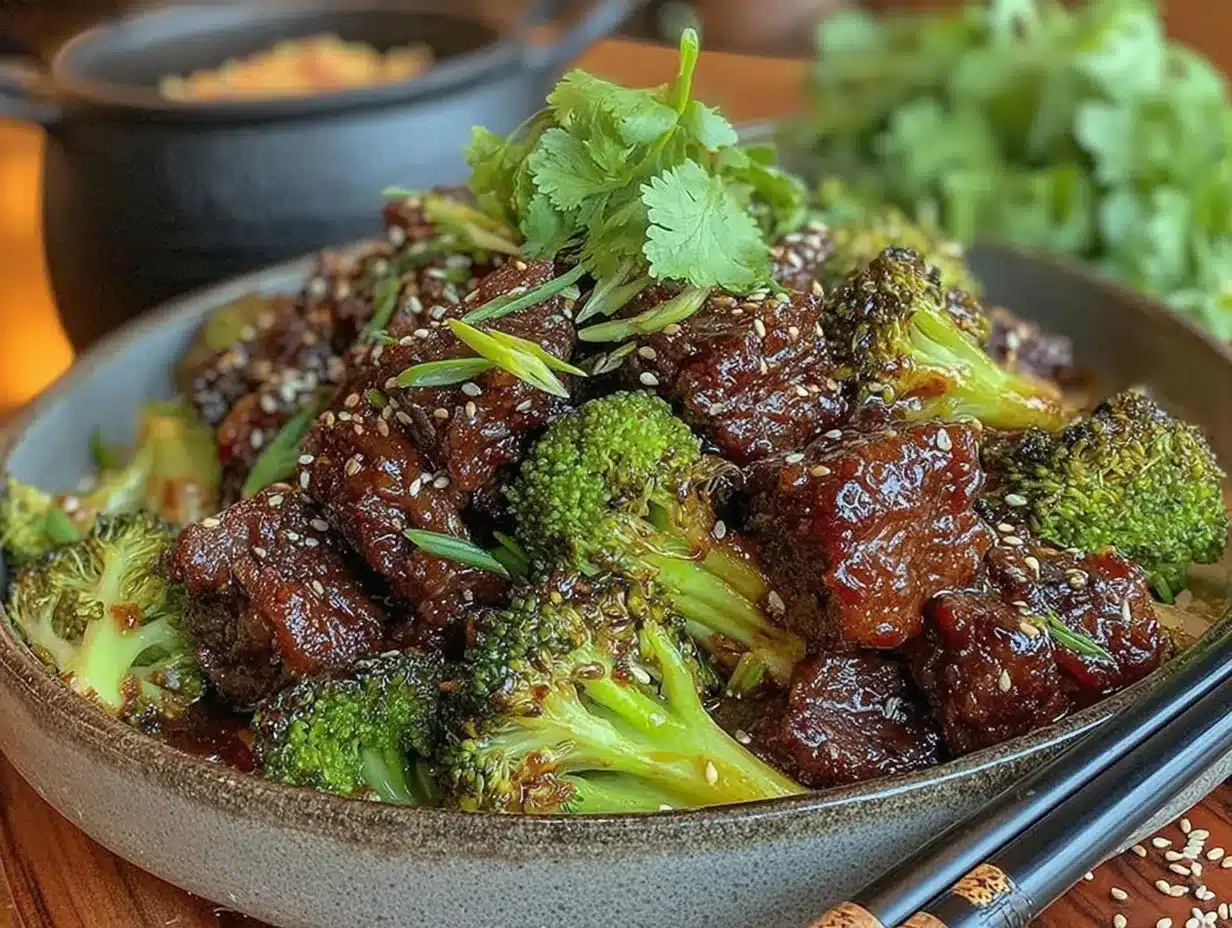
- Restaurant-Quality Flavor at Home: The sauce is deeply savory, slightly sweet, and perfectly thickened. It coats every piece of beef and every floret of broccoli in pure umami goodness. No more bland, watery takeout sauce.
- Perfect for a Crowd: Hosting a dinner party or a family get-together? This recipe scales beautifully. You can double it easily and keep it warm in the slow cooker for guests to serve themselves. It’s a stress-free showstopper.
- Simple, Pantry-Friendly Ingredients: No need for a specialty grocery run. You likely have soy sauce, brown sugar, garlic, and ginger in your kitchen right now. It’s proof that the best meals come from the simplest ingredients.
- Always a Crowd-Pleaser: I’ve served this at potlucks and family dinners, and the bowl is always scraped clean. Even the picky eaters go back for seconds. It’s that good.
This recipe is different because it respects the slow cooker’s strengths. Instead of ending up with mushy beef and overcooked broccoli, we use a smart two-step method that keeps everything perfectly textured. The beef gets impossibly tender, and the broccoli stays bright with a slight crunch. It’s comfort food that feels special enough for company, but easy enough for a busy weeknight. It’s the kind of meal that makes you close your eyes after the first bite and just smile.
What Ingredients You Will Need
This recipe relies on a handful of pantry staples and fresh ingredients to build layers of flavor. Each component plays a specific role, from tenderizing the beef to creating that glossy, addictive sauce. Here’s what you’ll need to gather.
For the Beef and Marinade
- 2 pounds flank steak or sirloin steak, thinly sliced against the grain (this is key for tenderness; look for even slices about ¼-inch thick)
- ⅓ cup low-sodium soy sauce (I prefer Kikkoman or San-J; low-sodium keeps the dish from being too salty)
- ¼ cup brown sugar, packed (light or dark works; dark gives a deeper molasses flavor)
- 3 cloves garlic, minced (fresh is non-negotiable here; jarred garlic just doesn’t have the same punch)
- 1 tablespoon fresh ginger, grated (use a microplane for the best texture; it melts right into the sauce)
- 2 tablespoons sesame oil (this adds that unmistakable nutty flavor that screams “takeout”)
- ¼ cup beef broth (helps thin the sauce and adds another layer of savory depth)
For the Sauce and Thickening
- ¼ cup cornstarch (this is your secret weapon for a glossy, thick sauce that clings to the beef)
- ¼ cup cold water (to make a slurry; always mix cornstarch with cold liquid to avoid lumps)
- 2 tablespoons oyster sauce (optional but highly recommended; it adds a complex, slightly sweet richness you can’t get from soy sauce alone)
For the Broccoli and Serving
- 4 cups broccoli florets (fresh is best; look for bright green crowns with tight clusters. Frozen works in a pinch, but add it later to prevent mushiness)
- Cooked white rice or brown rice, for serving (jasmine or basmati are my go-to choices)
- Optional garnishes: sesame seeds, sliced green onions, a drizzle of chili oil or sriracha for heat
Ingredient Selection Tips: For the most tender beef, always choose flank steak or sirloin. If you’re on a budget, chuck steak works too, but it may need a slightly longer cooking time. For the best broccoli, look for firm, bright green florets without any yellowing. And please, for the love of good food, do not skip the fresh ginger. It’s not the same from a jar.
Equipment Needed
You don’t need a professional kitchen to pull this off. Just a few basic tools that you probably already own. Here’s what you’ll need.
- Slow Cooker (4-6 quart): This is the star of the show. Any brand works—Crock-Pot, Instant Pot in slow cooker mode, even a cheaper model from a big box store. Just make sure it has a lid that fits snugly.
- Sharp Chef’s Knife: You need a good knife to slice the beef thinly against the grain. A dull knife will tear the meat and make it tough. Trust me on this—I learned the hard way with a sad, blunt knife that turned my beautiful flank steak into shredded mess.
- Cutting Board: A large wooden or plastic board gives you room to work. I prefer a wooden board for meat because it’s gentler on the knife edge.
- Small Bowl: For mixing your cornstarch slurry. A simple cereal bowl works fine.
- Measuring Cups and Spoons: Accuracy matters here, especially with the soy sauce and brown sugar. Too much salt and you’ll ruin the whole pot.
- Wooden Spoon or Silicone Spatula: For stirring the sauce and scraping down the sides of the slow cooker. Avoid metal utensils on non-stick surfaces.
- Steamer Basket or Microwave-Safe Bowl: For quickly cooking the broccoli before adding it to the slow cooker. You can also blanch it in boiling water for 2 minutes.
Budget-Friendly Tip: Don’t have a slow cooker? You can adapt this recipe for a Dutch oven on the stovetop or in the oven at 300°F for about 2 hours. The result is just as good, but you’ll need to watch the liquid levels more closely.
Preparation Method
Let’s get cooking. This recipe is simple, but following the steps in order makes all the difference. Each step builds on the last, so don’t skip ahead.
- Slice the Beef (10 minutes): Place your flank steak or sirloin in the freezer for about 20 minutes before slicing. This firms it up and makes it much easier to cut thin, even strips. Using your sharp chef’s knife, slice the beef against the grain into ¼-inch thick strips. Against the grain means cutting perpendicular to the lines of muscle fiber. This is the single most important step for tender beef. If you slice with the grain, you’ll end up with chewy, stringy meat. Pat the slices dry with paper towels—this helps them brown better.
- Make the Marinade (5 minutes): In a small bowl or directly in your slow cooker, whisk together the low-sodium soy sauce, packed brown sugar, minced garlic, grated fresh ginger, sesame oil, and beef broth. Stir until the sugar is mostly dissolved. The mixture should smell fragrant and savory. If you’re using oyster sauce, add it here too.
- Combine Beef and Marinade: Place the sliced beef into the slow cooker. Pour the marinade over the top and toss everything together with your hands or a wooden spoon until every piece of beef is coated. This isn’t a delicate operation—get in there and make sure it’s all covered. The beef will absorb the flavors as it cooks.
- Slow Cook the Beef (3-4 hours on high or 6-7 hours on low): Put the lid on the slow cooker and set it to your desired time. Low and slow is my preferred method for the most tender results, but high works in a pinch. Do not open the lid during the first 2 hours—every time you lift that lid, you release heat and add 20-30 minutes to the cooking time. I know it’s tempting to peek, but resist! The beef will release its own juices and create a beautiful braising liquid.
- Prepare the Broccoli (5 minutes): About 20 minutes before the beef is done, start your broccoli. You have two options. Option one: Steam the broccoli florets in a steamer basket over boiling water for 3-4 minutes until bright green and just tender. Option two: Place the florets in a microwave-safe bowl with 2 tablespoons of water, cover with a plate, and microwave on high for 3 minutes. Either way, you want it cooked but still firm—it will continue to cook slightly when you add it to the slow cooker.
- Make the Cornstarch Slurry (2 minutes): In a small bowl, whisk together the cold water and cornstarch until completely smooth. There should be no lumps. This slurry is what will transform your thin cooking liquid into a glossy, restaurant-quality sauce. Set it aside.
- Thicken the Sauce: When the beef is tender and cooked through—it should shred easily with a fork—turn the slow cooker to high if it isn’t already. Pour the cornstarch slurry into the pot and stir gently to combine. Let it cook for 10-15 minutes, uncovered, until the sauce thickens and becomes glossy. Stir once or twice during this time to prevent sticking. If the sauce isn’t thick enough after 15 minutes, mix another tablespoon of cornstarch with 2 tablespoons of cold water and add it in.
- Add the Broccoli: Gently fold the steamed broccoli florets into the slow cooker. Be careful not to break up the beef too much. Let it cook for another 5 minutes, just long enough for the broccoli to warm through and absorb some of that beautiful sauce. Do not let it cook longer than 10 minutes, or the broccoli will turn to mush.
- Final Taste and Adjust: Give everything a taste. Does it need more salt? A splash of soy sauce? More sweetness? A pinch of red pepper flakes for heat? This is your chance to customize it to your liking. Remember, the flavors will have concentrated as the sauce reduced, so it should be quite flavorful already.
- Serve Immediately: Spoon the beef and broccoli over a bed of hot, cooked rice. I like jasmine rice for its fragrant, slightly floral notes, but brown rice or even noodles work beautifully. Garnish with a sprinkle of sesame seeds and sliced green onions for a pop of color and freshness. If you like heat, drizzle a little chili oil or sriracha on top.
Sensory Cues: At the end of cooking, the beef should be so tender that it yields easily to a fork, almost like it’s about to fall apart. The sauce should be thick enough to coat the back of a spoon, and the broccoli should be bright green with a slight resistance when you bite into it. The aroma will be rich, savory, and slightly sweet—exactly like your favorite Chinese takeout joint, but better.
Cooking Tips & Techniques
I’ve made this recipe more times than I can count, and I’ve learned a few things along the way. Some of these lessons came from glorious successes, and others from… well, let’s call them “learning opportunities.” Here’s what I wish someone had told me from the start.
Don’t Crowd the Slow Cooker. If you’re doubling the recipe, make sure your slow cooker is large enough. A 6-quart model is ideal for a double batch. Overcrowding means the beef won’t cook evenly, and the sauce will be too thin because there’s too much liquid relative to the surface area. If your slow cooker is too full, the heat won’t circulate properly.
The Freezer Trick for Slicing Beef. This is a game-changer. I mentioned it above, but it bears repeating. Pop your steak in the freezer for 20-30 minutes before slicing. It firms up the meat just enough that you can get those paper-thin slices without the meat squishing around. I learned this after struggling through a whole flank steak with a dull knife, and it was a disaster. Now, I never skip this step.
Add Broccoli Late. This is the most common mistake I see people make. If you add the broccoli at the beginning with the beef, you’ll end up with sad, yellow, mushy florets that disintegrate into the sauce. Broccoli needs only 5-10 minutes of gentle heat to be perfectly tender-crisp. Adding it at the end preserves its texture and bright color. Trust me on this one.
Thicken the Sauce at the End. Cornstarch loses its thickening power if it’s cooked for too long. That’s why we add the slurry in the last 15 minutes. If you add it at the beginning, the sauce will stay thin and watery. The same goes for flour-based thickeners. Patience is key here.
Low and Slow vs. High and Fast. Cooking on low for 6-7 hours gives you the most tender beef. The collagen in the meat breaks down slowly, resulting in a melt-in-your-mouth texture. Cooking on high for 3-4 hours works in a pinch, but the beef won’t be quite as tender. If you’re in a hurry, high is fine. If you have the time, low is always better.
My Biggest Failure: The first time I made this, I used a cheap cut of beef (chuck roast) and didn’t trim the fat. The result was a greasy, unappealing mess. Now, I always use flank steak or sirloin, and I trim any large pieces of fat. A little fat adds flavor, but too much makes the sauce oily. Learn from my mistake.
Variations & Adaptations
One of the best things about this recipe is how easily it adapts to different tastes, diets, and what you have in your fridge. Here are some of my favorite ways to change it up.
Spicy Szechuan Version
Add 1-2 tablespoons of chili paste (like Sambal Oelek or Szechuan chili crisp) to the marinade. Toss in a couple of dried red chilies while it cooks. The heat builds slowly and pairs beautifully with the savory sauce. Garnish with extra chili oil for those who want more fire.
Gluten-Free Adaptation
Simply swap the soy sauce for tamari or coconut aminos. Tamari has a similar flavor profile but is made without wheat. Coconut aminos are slightly sweeter and less salty, so you may need to adjust the seasoning. Make sure your oyster sauce is gluten-free or substitute it with more tamari and a pinch of sugar.
Vegetarian or Vegan Version
Replace the beef with extra-firm tofu, pressed and cubed, or with portobello mushrooms sliced into thick strips. For tofu, toss it in a little cornstarch and pan-fry it before adding it to the slow cooker. For mushrooms, they’ll release their own savory liquid as they cook. Use vegetable broth instead of beef broth and a vegan oyster sauce (or skip it). The cooking time will be shorter—about 2 hours on low for tofu, 3-4 hours for mushrooms.
Add More Vegetables
This recipe is a great vehicle for whatever vegetables you have on hand. Try adding sliced bell peppers, snap peas, shredded carrots, or baby corn. Add heartier vegetables like carrots and bell peppers at the same time as the beef. Add delicate vegetables like snap peas or bok choy with the broccoli at the end.
Low-Carb / Keto Friendly
Swap the brown sugar for a keto-friendly sweetener like erythritol or monk fruit. Use tamari instead of soy sauce to keep it gluten-free if needed. Serve over cauliflower rice or zucchini noodles instead of regular rice. The sauce is naturally low in carbs if you skip the sugar.
My Personal Favorite Variation: I once added a tablespoon of orange marmalade to the marinade on a whim, and it was incredible. The citrus notes brightened up the whole dish and made it taste like something from a fancy restaurant. Now, I often add a splash of orange juice or a teaspoon of orange zest when I want something a little different. It’s a small change that makes a big impact.
Serving & Storage Suggestions
This dish is best served fresh, but it also stores beautifully. Here’s how to make the most of it.
Serving Temperature and Presentation: Serve the beef and broccoli hot, straight from the slow cooker. Spoon it over a bed of fluffy rice in a shallow bowl. For a dinner party, I like to serve it family-style in a large, beautiful bowl with the rice on the side. Garnish with a generous sprinkle of sesame seeds, sliced green onions, and maybe a few red pepper flakes for color. It looks impressive with very little effort.
What to Serve Alongside: This dish is a complete meal on its own, but it pairs beautifully with a simple cucumber salad (sliced cucumbers with rice vinegar, sesame oil, and a pinch of sugar) or a side of steamed edamame sprinkled with sea salt. For drinks, a cold beer (like a crisp lager or a light pilsner) or a glass of Riesling with a touch of sweetness cuts through the savory richness perfectly. If you’re hosting, egg rolls or spring rolls make a fantastic starter.
Storage Instructions: Store leftovers in an airtight container in the refrigerator for up to 4 days. The flavors actually deepen and meld together overnight, so leftovers might taste even better than the first serving. The broccoli will soften, but it’s still delicious.
Freezer Instructions: This recipe freezes surprisingly well. Let the dish cool completely, then transfer it to a freezer-safe container or zip-top bag. Remove as much air as possible. It will keep for up to 3 months. To thaw, place it in the refrigerator overnight. Reheat gently on the stovetop or in the microwave.
Reheating Tips: The best way to reheat is on the stovetop over medium-low heat. Add a splash of water or beef broth to loosen the sauce, and stir occasionally until heated through. The microwave works too, but the texture of the beef won’t be as good. If you’re reheating from frozen, thaw it first for the best results.
How Flavors Develop Over Time: Like many braised dishes, this one gets better after a day or two in the fridge. The garlic and ginger mellow out, and the soy sauce and brown sugar meld into a more cohesive flavor. If you’re planning ahead, this is a great make-ahead meal for a party. Just reheat it gently and add a fresh garnish before serving.
Nutritional Information & Benefits
While this dish feels indulgent, it can absolutely fit into a balanced diet. Here’s a rough breakdown per serving (based on 6 servings, served over rice).
| Nutrient | Amount Per Serving |
|---|---|
| Calories | ~420 kcal |
| Protein | 35g |
| Fat | 18g |
| Carbohydrates | 28g |
| Fiber | 4g |
| Sugar | 12g |
| Sodium | 780mg |
Health Benefits: Beef is an excellent source of high-quality protein, iron, and B vitamins, particularly B12, which is essential for energy and nerve function. Broccoli is a nutritional powerhouse, packed with vitamin C, vitamin K, fiber, and antioxidants like sulforaphane. Ginger and garlic both have anti-inflammatory properties and support immune health. While this dish is higher in sodium due to the soy sauce, using low-sodium soy sauce helps keep it in check.
Dietary Considerations: This recipe is naturally dairy-free. It can be made gluten-free with simple substitutions (see Variations). For a lower-carb option, serve over cauliflower rice. For a lower-sodium version, use reduced-sodium soy sauce and skip the added salt.
My Wellness Perspective: I believe in balance. This isn’t a “health food” in the strictest sense, but it’s made with real, whole ingredients and provides a solid amount of protein and vegetables. It’s the kind of meal that nourishes you and makes you feel good, without any of the mystery ingredients you get from takeout. That’s a win in my book.
Conclusion
So there you have it—a better-than-takeout slow cooker beef and broccoli that’s as easy as it is delicious. It’s the recipe that proved to me that sometimes the best meals come from the simplest ideas, and that a little humility in the kitchen can lead to something truly amazing. My brother still brings up that Tuesday night, and honestly, I’m glad he does. It’s a reminder that good cooking isn’t about being right—it’s about being open to new ways of doing things.
I hope you give this recipe a try, whether it’s for a quiet dinner at home or a gathering with friends. Don’t be afraid to make it your own—add more spice, throw in extra vegetables, or serve it over noodles. The beauty of this dish is its flexibility. It’s forgiving, it’s flavorful, and it’s guaranteed to impress.
When you make it, I’d love to hear how it turned out. Drop a comment below and let me know your favorite variation, or tag me in your photos if you share them online. Your feedback and creativity are what make this community so special. Happy cooking, friends!
Frequently Asked Questions
Can I use frozen broccoli instead of fresh?
Yes, you can use frozen broccoli, but you’ll need to adjust the timing. Add the frozen florets directly to the slow cooker during the last 10-15 minutes of cooking. Do not thaw them first, as they will become mushy. Frozen broccoli is already blanched, so it needs less time to cook. Keep an eye on it to avoid overcooking.
Why is my sauce not thickening?
There are a few common reasons. First, make sure you mixed the cornstarch with cold water—hot water will cause clumps. Second, the sauce needs to come to a gentle simmer to activate the cornstarch. If your slow cooker is on low, it might not be hot enough. Turn it to high for the thickening step. Finally, if the sauce is still thin after 15 minutes, mix another tablespoon of cornstarch with 2 tablespoons of cold water and stir it in. Let it cook for another 10 minutes.
Can I make this recipe in an Instant Pot?
Absolutely! For the Instant Pot, use the sauté function to sear the beef in batches (optional, but adds flavor). Then add the marinade, seal the lid, and cook on high pressure for 20 minutes. Let the pressure release naturally for 10 minutes, then quick release. Add the cornstarch slurry and use the sauté function to thicken the sauce. Stir in the steamed broccoli at the end. The cooking time is much faster, but the beef is still incredibly tender.
How do I prevent the beef from being dry?
The key to moist, tender beef is cooking it low and slow, and not overcooking it. Flank steak and sirloin are lean cuts, so they can dry out if cooked too long. Stick to the recommended cooking times (3-4 hours on high, 6-7 hours on low). Also, slicing the beef against the grain is crucial—it shortens the muscle fibers, making the meat more tender to bite into. Finally, make sure there’s enough liquid in the slow cooker. The marinade should cover most of the beef.
Can I double this recipe?
Yes, this recipe doubles beautifully. Use a 6-quart or larger slow cooker to accommodate the extra volume. You may need to increase the cooking time slightly—check for tenderness after 4 hours on high or 7 hours on low. The sauce may also need a bit more cornstarch slurry to thicken properly. Start with the same amount and add more if needed. This is a great option for parties or meal prep.
Pin This Recipe!
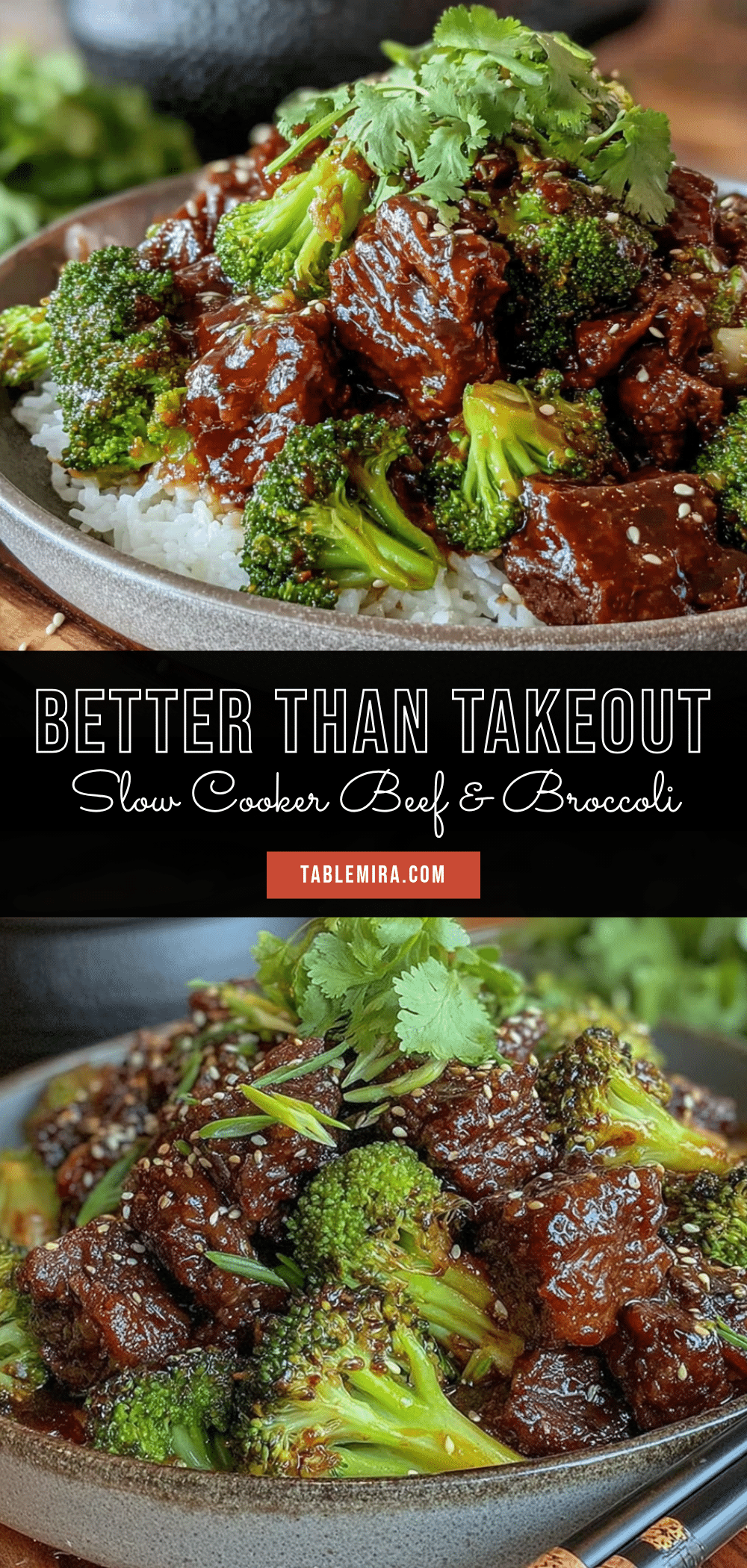
Better Than Takeout Slow Cooker Beef and Broccoli
This slow cooker beef and broccoli is incredibly tender with a rich, savory sauce that beats any takeout. It’s a hands-off meal perfect for busy weeknights or feeding a crowd.
- Prep Time: 15 minutes
- Cook Time: 3 hours 30 minutes (high) or 6 hours 30 minutes (low)
- Total Time: 3 hours 45 minutes (high) or 6 hours 45 minutes (low)
- Yield: 6 servings 1x
- Category: Main Course
- Cuisine: Chinese-American
Ingredients
- 2 pounds flank steak or sirloin steak, thinly sliced against the grain
- ⅓ cup low-sodium soy sauce
- ¼ cup brown sugar, packed
- 3 cloves garlic, minced
- 1 tablespoon fresh ginger, grated
- 2 tablespoons sesame oil
- ¼ cup beef broth
- ¼ cup cornstarch
- ¼ cup cold water
- 2 tablespoons oyster sauce (optional)
- 4 cups broccoli florets
- Cooked white rice or brown rice, for serving
- Optional garnishes: sesame seeds, sliced green onions, chili oil or sriracha
Instructions
- Slice the beef: Place flank steak in the freezer for 20 minutes to firm up. Slice against the grain into ¼-inch thick strips. Pat dry with paper towels.
- Make the marinade: In a small bowl or slow cooker, whisk together soy sauce, brown sugar, minced garlic, grated ginger, sesame oil, and beef broth. Add oyster sauce if using.
- Combine beef and marinade: Place sliced beef in the slow cooker, pour marinade over, and toss to coat evenly.
- Slow cook the beef: Cover and cook on low for 6-7 hours or on high for 3-4 hours. Do not open the lid during the first 2 hours.
- Prepare the broccoli: About 20 minutes before beef is done, steam broccoli florets for 3-4 minutes until bright green and tender-crisp, or microwave with 2 tablespoons water for 3 minutes.
- Make the cornstarch slurry: In a small bowl, whisk together cold water and cornstarch until smooth.
- Thicken the sauce: When beef is tender, turn slow cooker to high. Pour in slurry and stir gently. Cook uncovered for 10-15 minutes until sauce thickens and becomes glossy.
- Add the broccoli: Gently fold in steamed broccoli. Cook for 5 more minutes until warmed through. Do not overcook.
- Taste and adjust: Adjust seasoning with more soy sauce, sugar, or red pepper flakes if desired.
- Serve immediately: Spoon over hot cooked rice. Garnish with sesame seeds, green onions, and chili oil if desired.
Notes
For the most tender beef, slice against the grain and use low heat. Add broccoli at the end to keep it crisp. The sauce thickens best when cornstarch slurry is added in the last 15 minutes. Leftovers keep for up to 4 days in the fridge or 3 months in the freezer.
Nutrition
- Serving Size: 1 serving (about 1.5
- Calories: 420
- Sugar: 12
- Sodium: 780
- Fat: 18
- Saturated Fat: 5
- Carbohydrates: 28
- Fiber: 4
- Protein: 35
Keywords: slow cooker beef and broccoli, beef and broccoli, easy beef and broccoli, better than takeout, slow cooker recipe, flank steak, broccoli, Asian-inspired