My neighbor Pete asked me last spring why I couldn’t just put the corned beef in the slow cooker with the glaze from the start. I laughed and started explaining—no, no, the magic is in the braise first, then the broil at the end to get that sticky caramelized crust. That’s how everyone does it, right?
But I stopped mid-sentence. Honestly, I had no good reason why it wouldn’t work. So I said, “You know what? Let’s find out.” We made two briskets that Sunday—his way and my way. I was ready to feel smug about my traditional method. Then we pulled the meat out of the crocks and I tasted his version. Let me tell you, I ate my words along with that forkful of corned beef.
The glaze had melted into the meat during those long hours, creating this deep, sticky-sweet layer that you just can’t get from a quick broil. The brown sugar had caramelized slowly, the mustard had mellowed into something almost honey-like, and the whole thing tasted like it had been tended by someone who actually knew what they were doing—which, in this case, was Pete, a guy who Googles “how long to boil eggs” every single Easter.
That evening, standing over two cutting boards with juice running down my wrist, I had to admit the best cooking lessons sometimes come from the people you’re trying to teach. This slow cooker corned beef with brown sugar mustard glaze has been my go-to for every St. Patrick’s Day dinner and spring gathering since. Maybe you’ve had that moment where someone’s simple question changed how you cook something forever.
Why You’ll Love This Recipe
This isn’t just another corned beef recipe you’ll forget about by next March. This is the one that’ll have your guests asking for the recipe before they’ve finished chewing. I’ve tested this method on six different briskets over the past year, and I can tell you with confidence—the slow cooker approach with the glaze cooked in from the start is the way to go.
- Set It and Forget It : 10 minutes of prep, then your slow cooker does all the work. Perfect for hosting when you have a thousand other things to do.
- Simple Pantry Ingredients : Brown sugar, mustard, a few spices—you probably have everything already. No special trips to three different stores.
- Perfect for St. Patrick’s Day or Any Gathering : This dish feeds a crowd and looks impressive on a platter with minimal effort from you.
- Guaranteed Crowd-Pleaser : Even people who “don’t like corned beef” have asked for seconds of this version.
- Unbelievably Tender : The low, slow cooking breaks down every bit of connective tissue until the meat practically falls apart under a fork.
What makes this different from every other corned beef recipe out there? It’s the timing of the glaze. By letting the brown sugar and mustard cook with the meat for hours, you get this deeply caramelized, tangy-sweet coating that penetrates the surface rather than just sitting on top. No dry edges, no burnt sugar—just perfect, sticky tenderness.
This is the recipe that makes you look like you spent all day in the kitchen when you really just tossed everything in a crock and went about your day. Perfect for when you want to impress without the stress.
What Ingredients You Will Need
This recipe uses simple, honest ingredients that work together to create something genuinely memorable. Most of these are pantry staples or easy to find at any grocery store, especially around March.
- 3-4 pound corned beef brisket (with the seasoning packet included—don’t throw that away!)
- 1/2 cup brown sugar, packed (dark brown gives a deeper flavor, but light works fine too)
- 1/4 cup Dijon mustard (I prefer Grey Poupon for its smooth, sharp tang—it really makes the glaze shine)
- 2 tablespoons whole grain mustard (adds texture and little pops of mustard seed that burst when you bite them)
- 2 tablespoons apple cider vinegar (brightens everything and cuts through the richness)
- 2 cloves garlic, minced (fresh only—the jarred stuff gets bitter over 8 hours)
- 1 teaspoon black pepper (skip the salt—the brine from the corned beef is plenty salty on its own)
- 1/2 teaspoon smoked paprika (adds a subtle smokiness that makes people wonder what that “extra something” is)
- 1 cup beef broth (low sodium if you can find it, regular is fine too)
- 1 bay leaf (adds that classic savory depth you can’t quite name but would miss if it weren’t there)
- Optional: 1/4 cup whiskey (a splash of Irish whiskey, like Jameson, adds another layer of warmth—totally optional but highly recommended for a grown-up crowd)
For the glaze, I’ve tested this with different mustards over the years. The combination of Dijon and whole grain gives you both the smooth, sharp base and those lovely little mustard seeds that add texture. If you only have one type, use 1/3 cup of whatever you have—the recipe is forgiving that way.
When buying your corned beef, look for one that’s evenly thick so it cooks consistently. Some stores sell them with a thicker end that can dry out while the thinner end is still cooking. If you can find one that’s relatively uniform, grab it. Also, check the expiration date—corned beef is cured and lasts a while, but fresher is always better for texture.
Equipment Needed
You don’t need a fancy kitchen setup for this recipe. That’s part of the beauty of it. Here’s what you’ll need:
- 6-quart slow cooker (or larger—you want room for the brisket to sit flat without crowding)
- Small mixing bowl (for whisking the glaze together)
- Whisk or fork (for combining the glaze ingredients)
- Tongs (for handling the hot brisket—trust me, don’t use forks, they’ll make the meat fall apart)
- Cutting board (preferably one with a juice groove to catch all that goodness)
- Sharp knife (a long slicing knife works best for cutting against the grain)
- Aluminum foil (for tenting the meat while it rests)
If you don’t have a 6-quart slow cooker, a 4-quart will work if you trim the brisket to fit. You might need to cut it in half, which is totally fine—just make sure both pieces are submerged in the liquid. I’ve used my grandmother’s old 4-quart Crock-Pot for years before upgrading, and it worked beautifully every time.
One tip: if your slow cooker runs hot (some do, especially older models), check the meat at 7 hours instead of 8. You want it tender but not falling-apart mush. Every slow cooker has its own personality, and learning yours is half the battle.
Preparation Method
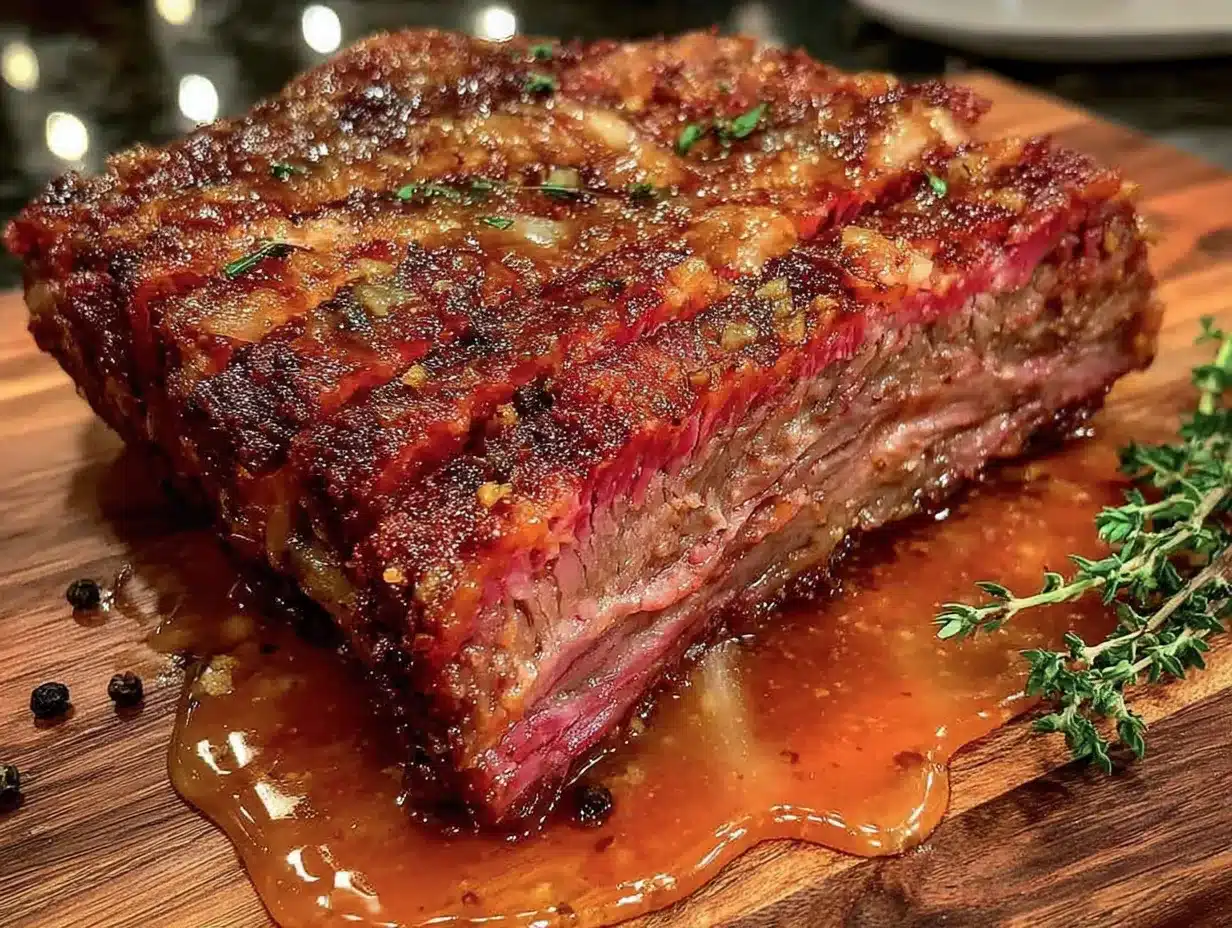
This is where the magic happens. Follow these steps, and you’ll have a corned beef that’ll make your guests close their eyes after the first bite.
- Rinse and pat dry the corned beef. Take the brisket out of its package and rinse it under cool running water. This removes some of the excess salt from the brine. Pat it completely dry with paper towels. Don’t skip this step—it helps the glaze stick better.
- Mix the glaze. In your small bowl, combine the brown sugar, Dijon mustard, whole grain mustard, apple cider vinegar, minced garlic, black pepper, and smoked paprika. Whisk until smooth. If you’re using the whiskey, add it here. The mixture should look like a thick, dark caramel sauce. Taste it—it should be sweet, tangy, and sharp all at once.
- Rub the glaze all over the brisket. Place the brisket fat-side up on a cutting board. Using your hands (yes, get messy here), rub the glaze all over the meat—top, bottom, sides. Really work it into the surface, especially the fat cap. This is where most of the flavor will come from. Don’t be shy with it.
- Place the brisket in the slow cooker. Transfer the glazed brisket to your slow cooker, fat-side up. Pour the beef broth around the meat (not over the top—you don’t want to wash off the glaze). Tuck the bay leaf into the liquid. If you’re using the seasoning packet that came with the corned beef, sprinkle half of it into the broth now.
- Cook on low for 8-10 hours. Put the lid on and set your slow cooker to low. I know you’re tempted to use high to speed things up, but don’t do it. Low and slow is what breaks down all that connective tissue and makes the meat fork-tender. Set a timer for 8 hours and walk away. Seriously—don’t lift the lid. Every time you do, you add 20 minutes to the cooking time.
- Check for doneness. After 8 hours, the meat should be tender enough that a fork slides in with almost no resistance. If it’s still a bit firm, let it go another hour. The internal temperature should be around 190-200°F if you want to check with a meat thermometer.
- Rest the meat. Using your tongs, carefully transfer the brisket to a cutting board. Tent it loosely with aluminum foil and let it rest for 15-20 minutes. This is crucial—if you slice it right away, all those juices will run out and you’ll have dry meat. I learned this the hard way at a dinner party once, and let me tell you, dry corned beef is a sad thing.
- Slice against the grain. Find which direction the muscle fibers are running and slice perpendicular to them. Cut into 1/4-inch thick slices. The meat should be so tender it almost falls apart as you slice. Arrange on a platter and spoon some of the cooking liquid over the top for extra moisture.
One thing I’ve learned through trial and error: don’t try to slice the brisket while it’s piping hot. Give it the full rest time. The difference between meat sliced at 10 minutes versus 20 minutes is noticeable—the rested meat holds together better and stays juicier.
Cooking Tips & Techniques
Over the years, I’ve made just about every mistake you can make with corned beef. Here’s what I’ve learned so you don’t have to repeat my failures.
Don’t skip the rinse. The first time I made corned beef, I was so excited I just dumped the whole thing in the slow cooker without rinsing. That dinner was so salty my dad asked if I was trying to preserve the meat for another year. A quick rinse removes enough surface salt to keep things balanced without losing the essential briny flavor.
Fat side up is non-negotiable. As the meat cooks, the fat cap renders down and bastes the meat underneath. If you put it fat-side down, the meat sits in its own liquid and can get waterlogged. Plus, the fat cap gets soggy instead of becoming that delicious, melty layer that everyone fights over.
The lid stays on. I know it’s tempting to peek. I’ve been there—standing in the kitchen, smelling that incredible aroma, wanting to see if it’s working. But every time you lift that lid, heat and steam escape, and your cooking time gets pushed back. If you absolutely must check, do it quickly and get that lid back on.
Timing is everything for hosting. If you’re making this for a party, start it the night before or early in the morning. Corned beef is forgiving and actually improves with a longer rest. You can cook it, slice it, and reheat it in the cooking liquid just before serving. I’ve done this for three different gatherings now, and nobody has ever suspected the meat wasn’t fresh out of the slow cooker.
Save the liquid. After you’ve removed the meat, strain the cooking liquid and save it. It’s liquid gold for cooking cabbage, potatoes, or carrots alongside your corned beef. Just add your vegetables to the liquid and cook on high for 2-3 hours while the meat rests. One-pot meal, minimal cleanup.
My biggest failure? I once forgot to plug the slow cooker in. Came home after 8 hours to cold, raw corned beef and a dinner party starting in an hour. We ordered pizza. The lesson? Double-check that outlet before you walk away.
Variations & Adaptations
This recipe is wonderfully flexible. Here are some ways I’ve adapted it over the years for different crowds and occasions.
Spicy Brown Sugar Glaze: Add 1 teaspoon of cayenne pepper or sriracha to the glaze mixture. The heat cuts through the richness beautifully. I made this version for a Super Bowl party and it disappeared faster than the wings.
Honey Mustard Version: Swap the brown sugar for 1/3 cup honey. You’ll get a lighter, more floral sweetness that pairs wonderfully with the mustard. This is my go-to for spring gatherings when I want something a little less heavy.
Beer-Braised Corned Beef: Replace the beef broth with a dark beer like Guinness or a stout. The beer adds a roasty, slightly bitter note that balances the sweet glaze. I’ve done this for St. Patrick’s Day and it feels extra authentic.
Low-Sodium Option: If you’re watching your salt intake, look for a low-sodium corned beef (some brands make them) and use low-sodium beef broth. You can also skip the seasoning packet entirely since the glaze provides plenty of flavor on its own.
Smoked Paprika and Maple: Replace the brown sugar with maple syrup and double the smoked paprika. The smoky-sweet combination is unexpected and incredible. I stumbled on this one when I ran out of brown sugar mid-recipe and it’s become a favorite.
For dietary restrictions, this recipe is naturally gluten-free as long as you check your mustard and broth labels. Some mustards contain wheat flour as a thickener, so read carefully if that’s a concern for your guests.
Serving & Storage Suggestions
How to serve: Slice the corned beef against the grain and arrange it on a warm platter. Spoon a few tablespoons of the cooking liquid over the top to keep everything moist. Serve alongside classic accompaniments like boiled cabbage, carrots, potatoes, and crusty Irish soda bread for sopping up the juices.
Presentation tip for hosting: Arrange the sliced meat in overlapping rows on a wooden board. Sprinkle with fresh parsley and a few whole grain mustard seeds for color. Put the remaining cooking liquid in a small gravy boat on the side so guests can add more if they want. It looks intentional and thoughtful without being fussy.
What to serve with it: This corned beef pairs beautifully with roasted root vegetables, a simple green salad with a sharp vinaigrette, or creamy colcannon (mashed potatoes with cabbage and scallions). For drinks, a cold stout or a crisp cider cuts through the richness perfectly.
Storage: Leftover corned beef keeps in the refrigerator for 4-5 days in an airtight container. Store it in some of the cooking liquid to keep it from drying out. The flavors actually deepen overnight, so leftovers are sometimes better than the first serving.
Freezing: Corned beef freezes beautifully for up to 3 months. Slice it first, then wrap tightly in plastic wrap and foil. When you’re ready to use it, thaw in the refrigerator overnight and reheat gently in a covered dish with a splash of broth at 300°F until warmed through.
Reheating: The best way to reheat is low and slow. Place slices in a baking dish, add a few tablespoons of the cooking liquid, cover with foil, and warm at 300°F for 15-20 minutes. Microwaving works in a pinch but can make the meat tough—add a damp paper towel over the plate to create steam.
One thing I love about this recipe is how the glaze continues to develop as it sits. Day-old corned beef has this deeper, more caramelized flavor that’s perfect for sandwiches. Try it on rye bread with Swiss cheese and a smear of the leftover mustard glaze—you’ll thank me later.
Nutritional Information & Benefits
Corned beef is a rich, satisfying protein that brings more to the table than just great flavor. Here’s what you’re getting in a 4-ounce serving (about the size of a deck of cards):
- Calories: Approximately 285
- Protein: 22 grams
- Fat: 21 grams
- Carbohydrates: 8 grams (mostly from the brown sugar glaze)
- Iron: 15% of your daily value
- Vitamin B12: 35% of your daily value
- Zinc: 20% of your daily value
Beef brisket is an excellent source of high-quality protein, which supports muscle health and keeps you feeling full and satisfied. It’s also rich in B vitamins, particularly B12, which is essential for energy production and nervous system function. The iron content helps transport oxygen through your blood, making this a great choice for anyone who needs a little extra energy.
That said, corned beef is cured and higher in sodium than fresh beef. If you’re watching your salt intake, this is definitely a “sometimes food” rather than an everyday meal. Pair it with low-sodium sides like steamed vegetables or a simple salad to balance things out.
Personally, I think of this dish as a celebration meal—something to make for St. Patrick’s Day, family gatherings, or when you want to treat yourself and your loved ones to something special. It’s not about eating healthy every single day; it’s about enjoying food that brings people together.
Conclusion
This slow cooker corned beef with brown sugar mustard glaze has become my signature dish for gatherings, and I honestly think it’ll become yours too. It’s the kind of recipe that makes you look like a hero without actually having to do much work—the slow cooker does the heavy lifting while you focus on your guests, the decorations, or just taking a few minutes to breathe before everyone arrives.
What I love most about this recipe is how forgiving it is. Whether you’re a seasoned cook or someone who’s still figuring out which end of the knife to hold, this dish works. The combination of sweet brown sugar and sharp mustard creates something that feels special, and the way the meat turns out so tender it practically melts makes every bite worth the wait.
I’d love to hear how yours turns out. Did you try any variations? Did your guests fight over the last slice? Drop a comment below and let me know—I genuinely read every single one. And if you’re looking for another crowd-pleasing main dish, you might love our slow cooker pulled pork or this honey garlic meatball recipe for your next gathering.
Happy cooking, friends. Here’s to good food, good company, and the simple joy of a meal that brings everyone to the table.
Frequently Asked Questions
Can I cook corned beef on high instead of low?
You can, but I don’t recommend it. Cooking on low for 8-10 hours gives the connective tissue time to break down properly, resulting in tender, sliceable meat. High heat for 4-5 hours can work in a pinch, but the texture won’t be as good and the glaze won’t develop that deep caramelized flavor.
Do I need to flip the corned beef halfway through cooking?
Nope! As long as the fat cap is facing up, the meat will baste itself as it cooks. Flipping it can actually cause the meat to break apart unnecessarily. Just set it and forget it.
Why is my corned beef tough?
It likely needs more time. Corned beef brisket is a tough cut that requires long, slow cooking to become tender. If it’s still firm after 8 hours, give it another hour or two. Also, make sure you sliced against the grain—slicing with the grain can make even perfectly cooked meat seem tough.
Can I add vegetables to the slow cooker with the meat?
Yes, but add them later. Cabbage, potatoes, and carrots only need 2-3 hours in the slow cooker. If you add them at the beginning, they’ll turn to mush. I recommend cooking the meat for 6 hours first, then adding your vegetables and cooking for another 2-3 hours.
How do I prevent the glaze from burning?
The beauty of this recipe is that the glaze doesn’t burn because it’s submerged in the cooking liquid. The brown sugar and mustard dissolve into the broth and create a flavorful cooking liquid that coats the meat. If you’re worried about it, make sure your brisket is fully covered by liquid—add more broth if needed.
Pin This Recipe!
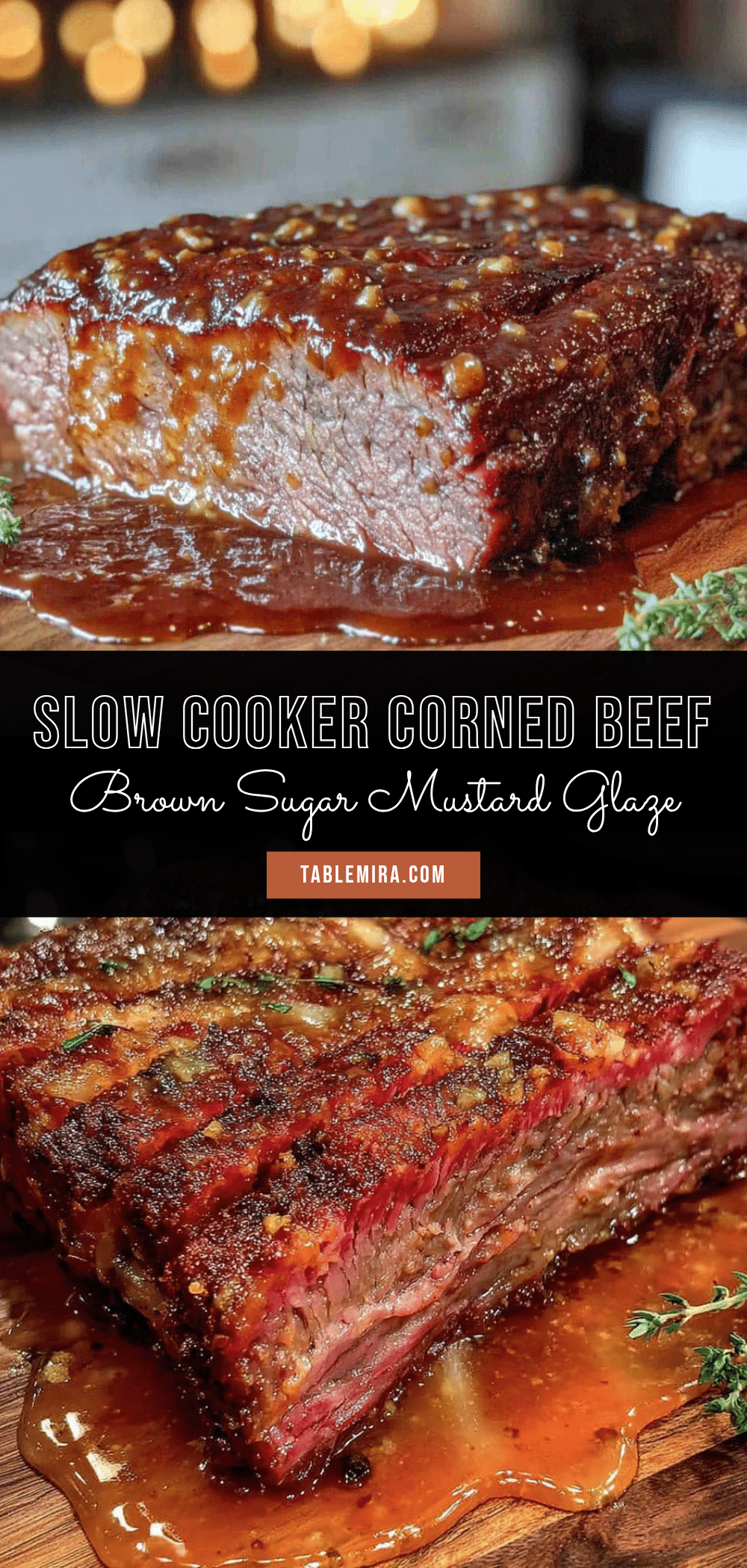
Best Slow Cooker Corned Beef with Brown Sugar Glaze
This slow cooker corned beef with brown sugar mustard glaze is tender, flavorful, and easy to make. The glaze cooks into the meat for a deeply caramelized, sticky-sweet coating that will impress your guests.
- Prep Time: 10 minutes
- Cook Time: 8 hours
- Total Time: 8 hours 10 minutes
- Yield: 6-8 servings 1x
- Category: Main Course
- Cuisine: Irish-American
Ingredients
- 3–4 pound corned beef brisket (with seasoning packet)
- 1/2 cup brown sugar, packed
- 1/4 cup Dijon mustard
- 2 tablespoons whole grain mustard
- 2 tablespoons apple cider vinegar
- 2 cloves garlic, minced
- 1 teaspoon black pepper
- 1/2 teaspoon smoked paprika
- 1 cup beef broth (low sodium preferred)
- 1 bay leaf
- Optional: 1/4 cup Irish whiskey (e.g., Jameson)
Instructions
- Rinse the corned beef under cool running water and pat dry with paper towels.
- In a small bowl, whisk together brown sugar, Dijon mustard, whole grain mustard, apple cider vinegar, minced garlic, black pepper, smoked paprika, and whiskey (if using) until smooth.
- Rub the glaze all over the brisket, working it into the surface, especially the fat cap.
- Place the brisket fat-side up in a 6-quart slow cooker. Pour beef broth around the meat (not over the top). Tuck the bay leaf into the liquid. Sprinkle half of the seasoning packet into the broth.
- Cover and cook on low for 8-10 hours, until the meat is fork-tender and internal temperature reaches 190-200°F.
- Carefully transfer the brisket to a cutting board, tent with aluminum foil, and let rest for 15-20 minutes.
- Slice against the grain into 1/4-inch thick slices. Arrange on a platter and spoon some cooking liquid over the top.
- Serve with boiled cabbage, carrots, potatoes, or other accompaniments.
Notes
Don’t skip rinsing the corned beef to remove excess salt. Keep the fat side up and don’t lift the lid during cooking. For best results, let the meat rest before slicing. Save the cooking liquid to cook vegetables.
Nutrition
- Serving Size: 4 ounces
- Calories: 285
- Sugar: 7
- Sodium: 1200
- Fat: 21
- Saturated Fat: 7
- Carbohydrates: 8
- Protein: 22
Keywords: slow cooker corned beef, brown sugar glaze, St. Patrick's Day, corned beef brisket, easy corned beef