It was 11:47 PM on a drizzly Wednesday in March, and I had a sudden, inexplicable craving for something dense, slightly sweet, and deeply caraway-scented. I didn’t have any yeast—who does at nearly midnight?—but I had buttermilk, a bag of flour, and a jar of raisins that were looking a little lonely. I also had a half-empty bottle of caraway seeds from a failed attempt at making rye bread two months prior. Honestly, I was just tired. Tired and hungry and unwilling to wait for dough to rise. So, I did what any slightly unhinged person would do: I grabbed a bowl, dumped in the flour, and prayed the chemistry of baking soda would save me. And you know what? It did. That first loaf came out lopsided and a little too dark on one side—my ancient oven has a hot spot—but the flavor was pure magic. It tasted like a cozy pub in the countryside, the kind of place where you go to escape the rain. I’ve made it at least a dozen times since, tweaking the ratios until it felt just right. Maybe you’ve been there, standing in your kitchen at a weird hour, just needing something that feels like a hug in bread form. This one’s for you.
Why You’ll Love This Recipe
This isn’t just another quick bread recipe. After testing this about seven times (someone had to eat all that bread, right?), I can confidently say this is the version you’ll come back to again and again. It hits that perfect sweet spot between rustic and tender, and it comes together faster than you can preheat an oven.
- Quick & Easy: From mixing bowl to cooling rack in under an hour. No kneading, no rising, no fuss. It’s the ultimate last-minute bread.
- Simple Ingredients: You probably have everything already. Flour, buttermilk, baking soda, salt, sugar, raisins, and caraway seeds. That’s it.
- Perfect for St. Patrick’s Day or a Cozy Weekend: It brings that festive, hearty feel without any green food coloring. Great for brunch, soup dipping, or just slathering with butter.
- Crowd-Pleaser: My neighbor, who swears she hates caraway, ate three slices. The raisins keep it sweet enough for kids, while the caraway gives adults something interesting to chew on.
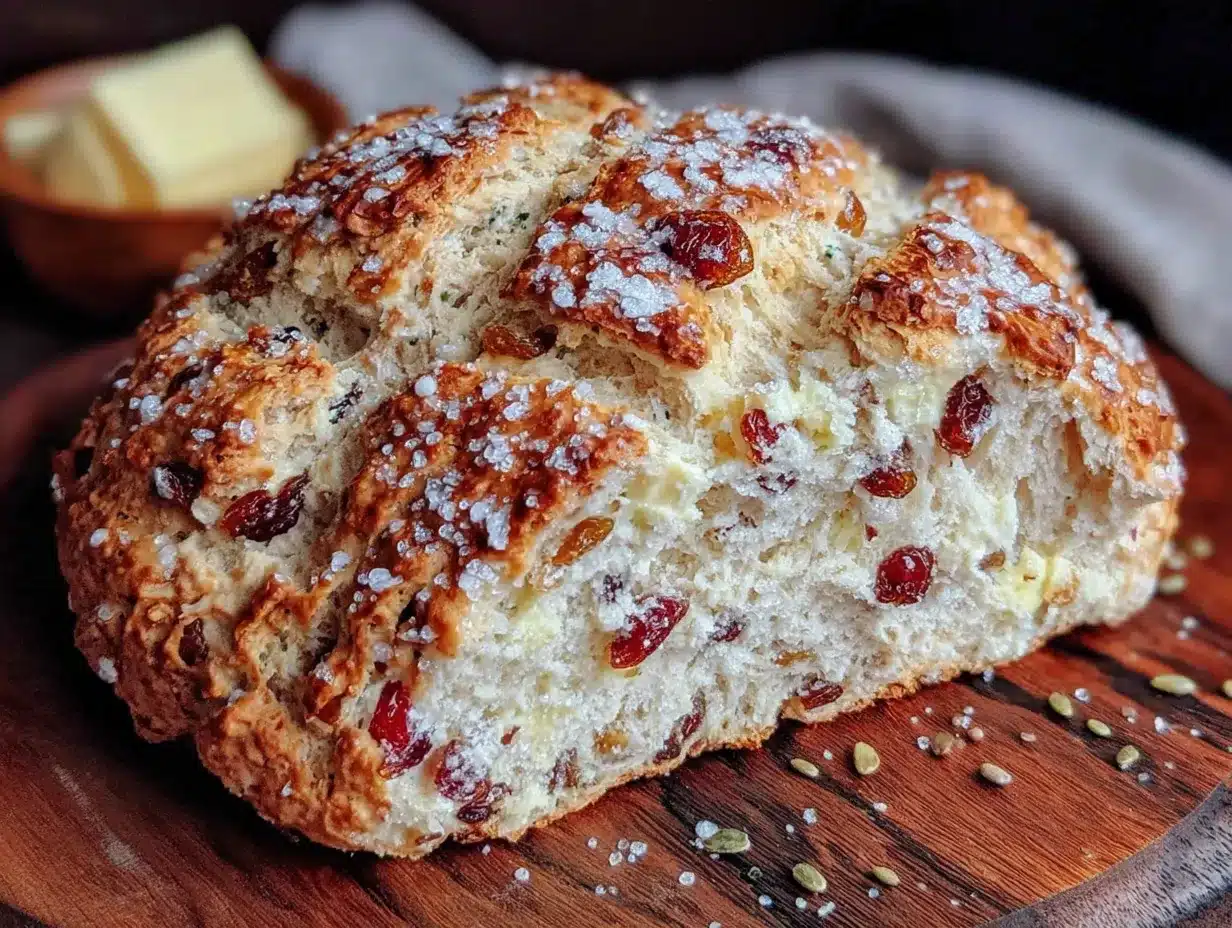
- Unbelievably Delicious: The crust is crackly and golden, the inside is soft and tender. That first bite with salted butter? Close your eyes, honestly. It’s that good.
What makes this recipe different is the technique of scalding the raisins. It sounds fancy, but it’s dead simple. Pouring hot water over them before mixing plumps them up so they stay juicy in the baked bread, rather than turning into sad, shriveled little dots. It’s a small step that makes a huge difference. This is comfort food reimagined—simpler, faster, but with the same soul-soothing satisfaction that makes you want to curl up on the couch with a thick slice.
What Ingredients You Will Need
This recipe relies on a handful of pantry staples to deliver that classic, hearty Irish soda bread flavor. The magic is in the balance of sweet raisins and aromatic caraway, all held together by a tender, crumbly crumb.
- All-Purpose Flour (3 ½ cups / 440g): The backbone of the bread. I use Gold Medal or King Arthur Flour for consistent results. Do not use bread flour here; it will make the bread too tough.
- Granulated Sugar (3 tablespoons / 36g): Just enough to balance the tang of the buttermilk and the slight bitterness of the caraway. It also helps with browning.
- Baking Soda (1 teaspoon): The sole leavening agent. Make sure it’s fresh! If it doesn’t fizz when you drop a pinch in vinegar, toss it and buy a new box.
- Salt (1 teaspoon): I use fine sea salt. It’s crucial for flavor—don’t skip it.
- Unsalted Butter (4 tablespoons / 57g), cold and cubed: This adds richness and tenderness. If you only have salted butter, reduce the added salt to ¾ teaspoon.
- Buttermilk (1 ½ cups / 360ml), cold: The acid in buttermilk reacts with the baking soda to create lift. It also gives the bread its signature tangy flavor. In a pinch, you can make a quick substitute: add 1 ½ tablespoons of lemon juice or white vinegar to a measuring cup, then fill with regular milk to the 1 ½ cup line. Let it sit for 5 minutes.
- Raisins (1 cup / 150g): I prefer golden raisins for their milder, fruitier flavor, but dark raisins work beautifully too. For the best texture, scald them first (see method below).
- Caraway Seeds (1 ½ tablespoons): This is the soul of Irish soda bread. It has a slightly peppery, anise-like flavor that is absolutely iconic. If you really can’t stand it, you can leave it out, but you’ll be missing the whole point.
- Optional: 1 large egg (for egg wash): Brushing the top with a beaten egg before baking gives the crust a beautiful, glossy sheen. Totally optional, but pretty.
Equipment Needed
You don’t need a stand mixer or any fancy gadgets for this one. A few basic tools will get the job done perfectly.
- Large Mixing Bowl: Big enough to get your hands in there to mix the dough.
- Whisk or Fork: For combining the dry ingredients.
- Pastry Blender or Two Forks: To cut the cold butter into the flour. Your fingertips work too—just work quickly so the butter doesn’t warm up.
- Bench Scraper or Spatula: For folding the dough and scraping it out of the bowl.
- Baking Sheet: Line it with parchment paper for easy cleanup. I use a standard half-sheet pan.
- Sharp Knife or Lame: To score the top of the loaf. A serrated knife works best to cut through the dough without dragging.
- Wire Cooling Rack: Essential for letting the bread cool so the steam doesn’t make the bottom soggy.
I made my first few loaves with a cheap baking sheet that warped in the oven. It still worked, just looked a little sad. Don’t stress about having the perfect equipment—use what you have.
Preparation Method
Let’s get baking. Preheat your oven to 425°F (220°C) and line a baking sheet with parchment paper. This bread comes together fast, so have everything measured and ready to go.
- Scald the Raisins: Place the raisins in a small heatproof bowl. Cover them with boiling water and let them sit for 10 minutes. This plumps them up so they stay soft and juicy in the bread. Drain them well and pat them dry with a paper towel. Don’t skip this—it’s the secret to not having dry, hard raisins in your final loaf.
- Mix Dry Ingredients: In your large mixing bowl, whisk together the flour, sugar, baking soda, and salt. Make sure the baking soda is evenly distributed—nobody wants a bitter bite of unmixed soda.
- Cut in the Butter: Add the cold, cubed butter to the flour mixture. Using a pastry blender or your fingertips, cut the butter into the flour until it resembles coarse meal with some pea-sized butter pieces remaining. It should look like damp sand. If the butter gets too warm, pop the bowl in the fridge for 5 minutes.
- Add the Seeds and Raisins: Stir in the caraway seeds and the drained, dried raisins. Toss them gently to coat them in the flour mixture. This helps prevent them from sinking to the bottom of the bread.
- Add the Buttermilk: Make a well in the center of the dry ingredients. Pour in the cold buttermilk all at once. Using a spatula or your hands, mix just until the dough comes together. It will be shaggy, sticky, and a little messy—that’s exactly what you want. Do not overmix, or the bread will be tough. A few dry spots are fine.
- Shape the Loaf: Turn the dough out onto a lightly floured surface. With floured hands, gently gather it into a rough ball. Don’t knead it! Just shape it into a round loaf about 6-7 inches in diameter. The surface should look a little rough and craggy—that’s where the “crusty” texture comes from.
- Transfer and Score: Place the loaf on your prepared baking sheet. Using a sharp knife, cut a deep “X” across the top of the loaf, about ½ inch deep. This isn’t just for looks—it’s the “blessing” that lets the fairies out (old Irish legend) and, more practically, allows the bread to expand evenly as it bakes. Brush the top with the beaten egg if you’re using it.
- Bake: Bake for 35-45 minutes, or until the loaf is deep golden brown and sounds hollow when you tap the bottom. The internal temperature should reach about 200°F (93°C). If the top is browning too quickly, tent it loosely with foil for the last 10 minutes.
- Cool: Transfer the bread to a wire rack and let it cool completely before slicing. I know, the smell is torture. But slicing it warm will make it gummy. Let it rest for at least an hour. The flavor actually develops as it cools.
Cooking Tips & Techniques
I’ve messed up this bread more times than I care to admit. Here are the lessons I learned the hard way so you don’t have to.
The biggest mistake is overmixing the dough. The first time I made this, I treated it like regular bread and kneaded it for five minutes. The result was a hockey puck. Soda bread relies on a chemical reaction, not gluten development. Mix until it just comes together, then stop. A shaggy dough is a good dough.
Buttermilk temperature matters. Use it cold straight from the fridge. The cold butter pieces need to stay solid until they hit the oven. If you use room-temperature buttermilk, the butter will melt into the flour, and you’ll lose that tender, flaky texture. I once left my buttermilk out for an hour before baking—the bread was dense and greasy. Never again.
Don’t skip the scoring. That deep “X” isn’t just tradition. It creates a weak point in the crust so the bread can expand upward instead of cracking randomly on the sides. I forgot to score a loaf once, and it exploded out the side like a volcanic eruption. It still tasted good, but it looked like a science experiment gone wrong.
Multitasking tip: While the raisins are scalding, measure out your dry ingredients. While the butter is being cut in, preheat the oven. This whole process is so fast that having everything ready before you start mixing is key.
Variations & Adaptations
This recipe is a fantastic base for experimentation. Here are a few ways I’ve played with it over the years.
- Whole Wheat Irish Soda Bread: Swap 1 cup of the all-purpose flour for whole wheat flour. The bread will be denser and nuttier. You may need to add an extra tablespoon of buttermilk, as whole wheat flour absorbs more liquid. I made this for a friend who only eats “healthy” bread, and she asked for the recipe.
- Savory Soda Bread: Omit the sugar and raisins. Add 1 cup of shredded sharp cheddar cheese, ¼ cup of chopped fresh chives, and a pinch of black pepper. Fold the cheese in with the buttermilk. This version is incredible with a bowl of tomato soup.
- Dried Cherry & Orange: Swap the raisins for dried tart cherries. Add the zest of one orange to the flour mixture. The tartness of the cherries and the bright citrus note are a fantastic twist on the classic. This was my Christmas morning loaf last year—huge hit.
- Gluten-Free Option: I’ve had decent success using a 1:1 gluten-free baking flour blend (like Bob’s Red Mill). The texture will be more crumbly, so handle it gently. Add an extra tablespoon of buttermilk to help it bind.
Serving & Storage Suggestions
This bread is best enjoyed the day it’s made, but it still has plenty of life in it after that.
Serving: Serve it warm or at room temperature. The classic way is sliced thick, toasted, and slathered with good salted butter. It’s also fantastic with a generous smear of Irish butter and a drizzle of honey. For a savory pairing, serve it alongside a hearty bowl of Irish stew, corned beef and cabbage, or a simple lentil soup. The bread is sturdy enough to hold up to dipping without falling apart.
Storage: Store the completely cooled loaf wrapped tightly in plastic wrap or in a bread box at room temperature for up to 3 days. Do not refrigerate it—the fridge will dry it out and make it stale faster. If the crust gets a little soft, just pop a slice in the toaster.
Freezing: This bread freezes beautifully. Wrap the cooled loaf tightly in a layer of plastic wrap, then a layer of aluminum foil. Freeze for up to 3 months. To thaw, leave it on the counter overnight. To reheat, unwrap it and pop it in a 350°F (175°C) oven for 10-15 minutes. The flavors actually seem to meld together more after freezing.
Reheating: For a single slice, the toaster is your best friend. For the whole loaf, wrap it in foil and warm it in a 300°F (150°C) oven for about 10 minutes. It brings back that just-baked softness.
Nutritional Information & Benefits
Let’s be real—this is bread. It’s not a health food, but it’s made with simple, recognizable ingredients, and that counts for something. Here’s an estimated breakdown per slice (based on 12 slices).
| Nutrient | Amount per Slice |
|---|---|
| Calories | 210 |
| Fat | 5g |
| Saturated Fat | 3g |
| Carbohydrates | 38g |
| Fiber | 1.5g |
| Sugar | 12g |
| Protein | 5g |
| Sodium | 320mg |
Key Benefits: Raisins are a good source of fiber and antioxidants. Caraway seeds have been used for digestive health for centuries. Using buttermilk adds a bit of calcium and probiotics (if using cultured buttermilk). This bread is also lower in fat and sugar than many store-bought loaves. It’s a wholesome treat, not a guilty pleasure.
Dietary Considerations: This recipe is vegetarian. For a lower-sugar version, reduce the sugar to 1 tablespoon. It is not gluten-free, but a GF variation is provided above. It contains dairy (butter, buttermilk) and gluten (wheat flour).
Conclusion
This Irish soda bread has become my go-to for those moments when I need a little bit of comfort without a lot of effort. It’s the bread I make when I’m having a rough week, when friends pop over unexpectedly, or when I just want my kitchen to smell amazing. The crusty exterior, the soft interior, the bursts of sweet raisin, and that unmistakable hint of caraway—it’s a simple combination, but it’s so, so good. I honestly think you’re going to love it. Don’t be afraid to make it your own—tweak the add-ins, serve it with your favorite jam, or just eat it plain straight off the cutting board (no judgment here).
I’d love to hear how yours turns out. Did you try a variation? Did you use golden raisins or dark? Drop a comment below and let me know. And if you share a photo on Pinterest, tag me—I want to see your beautiful, craggy loaf!
Frequently Asked Questions
Why did my soda bread turn out so dense?
The most common reason is overmixing the dough. When you overmix, you develop too much gluten, which makes the bread tough and heavy. Mix just until the dough comes together—it should look shaggy and a little messy. Also, make sure your baking soda is fresh. Old baking soda loses its potency and won’t give the bread proper lift.
Can I use regular milk instead of buttermilk?
Yes, but you need to acidify it first. Pour 1 ½ tablespoons of lemon juice or white vinegar into a measuring cup, then fill it with regular milk to the 1 ½ cup line. Let it sit for 5 minutes. It will curdle slightly—that’s exactly what you want. The acid is crucial for reacting with the baking soda to create the bread’s rise and tender texture.
Do I have to use caraway seeds?
No, but it won’t be traditional Irish soda bread without them. Caraway seeds give the bread its signature flavor. If you really don’t like them, you can leave them out, but consider adding a teaspoon of fennel seeds or an extra handful of raisins for more flavor. Some people also use dried currants or a mix of seeds.
How do I know when the bread is fully baked?
There are two good tests. First, the bread should be a deep golden brown all over. Second, tap the bottom of the loaf—it should sound hollow. For the most accurate result, use an instant-read thermometer. The internal temperature should reach 200°F (93°C). If you’re unsure, it’s better to bake it a few minutes longer than to underbake it.
Can I freeze the dough and bake it later?
I don’t recommend it. The chemical reaction between the buttermilk and baking soda starts as soon as you mix them. If you freeze the dough, the reaction will continue slowly, and you’ll end up with a flat, dense loaf. It’s much better to bake the bread fully, let it cool, and then freeze the finished loaf. It thaws and reheats beautifully.
Pin This Recipe!
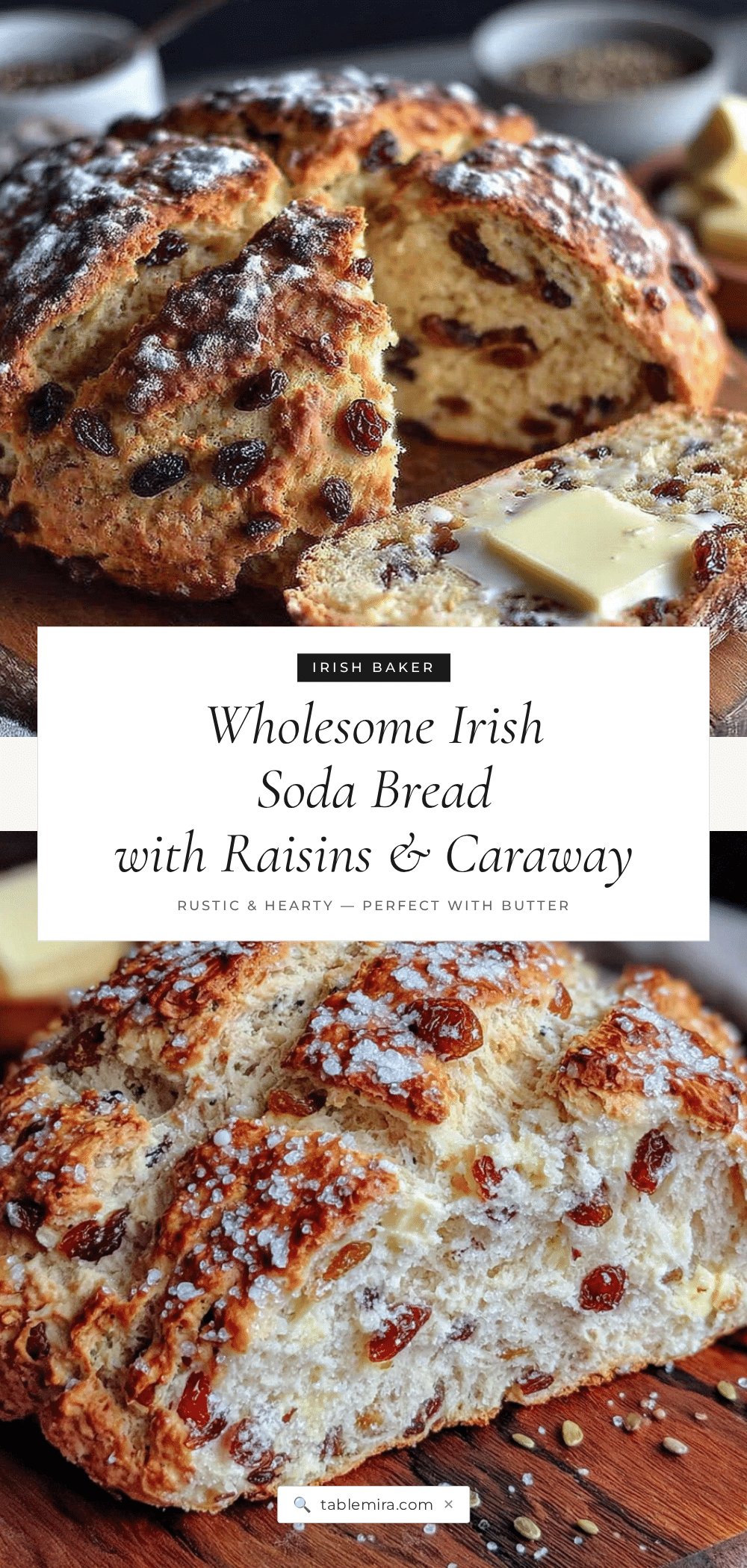
Best Easy Irish Soda Bread with Raisins and Caraway
This quick and easy Irish soda bread comes together in under an hour with no kneading or rising. It features a crackly golden crust, a tender crumb, and bursts of sweet raisins and aromatic caraway seeds.
- Prep Time: 15 minutes
- Cook Time: 40 minutes
- Total Time: 55 minutes
- Yield: 12 servings 1x
- Category: Bread
- Cuisine: Irish
Ingredients
- 3 ½ cups (440g) all-purpose flour
- 3 tablespoons (36g) granulated sugar
- 1 teaspoon baking soda
- 1 teaspoon fine sea salt
- 4 tablespoons (57g) unsalted butter, cold and cubed
- 1 ½ cups (360ml) cold buttermilk
- 1 cup (150g) raisins (golden or dark)
- 1 ½ tablespoons caraway seeds
- 1 large egg (for egg wash, optional)
Instructions
- Preheat oven to 425°F (220°C). Line a baking sheet with parchment paper.
- Scald the raisins: Place raisins in a small heatproof bowl, cover with boiling water, and let sit for 10 minutes. Drain well and pat dry with a paper towel.
- In a large mixing bowl, whisk together flour, sugar, baking soda, and salt.
- Add cold cubed butter to the flour mixture. Using a pastry blender or fingertips, cut in the butter until the mixture resembles coarse meal with some pea-sized butter pieces remaining.
- Stir in the caraway seeds and drained raisins, tossing gently to coat in the flour mixture.
- Make a well in the center of the dry ingredients. Pour in the cold buttermilk all at once. Mix with a spatula or your hands just until the dough comes together. It will be shaggy and sticky. Do not overmix.
- Turn the dough out onto a lightly floured surface. With floured hands, gently shape it into a round loaf about 6-7 inches in diameter. Do not knead.
- Place the loaf on the prepared baking sheet. Using a sharp knife, cut a deep ‘X’ across the top, about ½ inch deep. Brush with beaten egg if using.
- Bake for 35-45 minutes, until deep golden brown and the loaf sounds hollow when tapped on the bottom. Internal temperature should reach about 200°F (93°C). If browning too quickly, tent loosely with foil for the last 10 minutes.
- Transfer to a wire rack and cool completely before slicing (at least 1 hour).
Notes
Scalding the raisins plumps them so they stay juicy. Do not overmix the dough or the bread will be tough. The ‘X’ score allows the bread to expand evenly. For best texture, let the bread cool completely before slicing.
Nutrition
- Serving Size: 1 slice
- Calories: 210
- Sugar: 12
- Sodium: 320
- Fat: 5
- Saturated Fat: 3
- Carbohydrates: 38
- Fiber: 1.5
- Protein: 5
Keywords: Irish soda bread, quick bread, raisin bread, caraway bread, St. Patrick's Day, easy bread, no yeast bread