I wasn’t expecting baking advice from my accountant, but there I was, knee-deep in tax receipts and feeling sorry for myself, when he started describing exactly how to make the lightest apple cider donut he’d ever eaten. It was April, not exactly peak apple season, and I was just trying to survive tax season without losing my mind. But he insisted this recipe was different—baked, not fried, and somehow fluffier than any donut had a right to be.
Honestly, I almost didn’t write it down. I mean, who takes baking tips from someone who spends their days staring at spreadsheets? But there was something about the way he described the texture—”like a cloud that tastes like autumn,” he said—that made me pull a sticky note from the bottom of my bag. I scribbled his instructions on the back of a receipt while he talked about reducing apple cider and the magic of buttermilk. The whole thing felt a little absurd.
That sticky note sat on my fridge for three weeks before I finally gave it a shot. Let me tell you, I was skeptical. I’ve made plenty of baked donuts that turned out dense and disappointing, more like hockey pucks than anything worth celebrating. But this? The first batch came out of the oven and I actually laughed out loud. They were golden, tender, and smelled like a cider mill had exploded in my kitchen. My neighbor, who happened to be walking her dog past my open window, knocked on my door to ask what I was baking. That never happens to me.
These Baked Apple Cider Donut Muffins have become my secret weapon for everything from lazy Sunday mornings to fall brunches where I want to impress without stress. They have that classic donut shop flavor—the warm cinnamon-sugar coating, the tangy apple cider kick—but they’re light enough that you don’t feel like you need a nap after eating one. Or two. Maybe you’ve been there, searching for that perfect balance between indulgence and something you can feel good about eating for breakfast. These muffins are exactly that.
What kept me coming back to this recipe, even after tax season ended and I had no reason to think about my accountant’s baking advice, was how reliably perfect they turned out. Every single time. No fuss, no specialty equipment, no deep fryer required. Just a bowl, a whisk, and about thirty minutes until you’re biting into something that tastes like it came from a fancy bakery. I’ve made them for book club, for my kid’s soccer team, and for that moment when you just need a little comfort on a rainy afternoon. They never disappoint.
Why You’ll Love This Recipe
Let’s be honest—there are a lot of apple cider recipes out there, and not all of them deliver on their promises. These muffins are different. I’ve tested this recipe more times than I care to count, tweaking the flour ratio, the amount of cider, the baking temperature. What I landed on is something I’m genuinely proud to share.
- Quick & Easy: From mixing bowl to cooling rack in under 35 minutes. No yeast, no proofing, no complicated techniques. Perfect for those mornings when you want something special but don’t have two hours to spend in the kitchen.
- Simple Ingredients: You probably have most of these in your pantry right now. Butter, sugar, flour, eggs, buttermilk—the usual suspects. The star is apple cider, which is easy to find at any grocery store, especially in the fall.
- Perfect for Fall Gatherings: These muffins disappear fast at brunches, potlucks, and Thanksgiving morning breakfasts. They’re portable, they’re crowd-pleasing, and they make your whole kitchen smell incredible.
- Crowd-Pleaser: I’ve served these to kids who swear they don’t like “fruit stuff” and adults who claim they’re watching their carbs. Everyone reaches for seconds. The texture is so light and tender that even picky eaters can’t resist.
- Unbelievably Delicious: The secret is reducing the apple cider before adding it to the batter, which concentrates the flavor without adding extra liquid. It’s a simple trick that makes a huge difference. The result is a muffin that tastes intensely of apples without being heavy or wet.
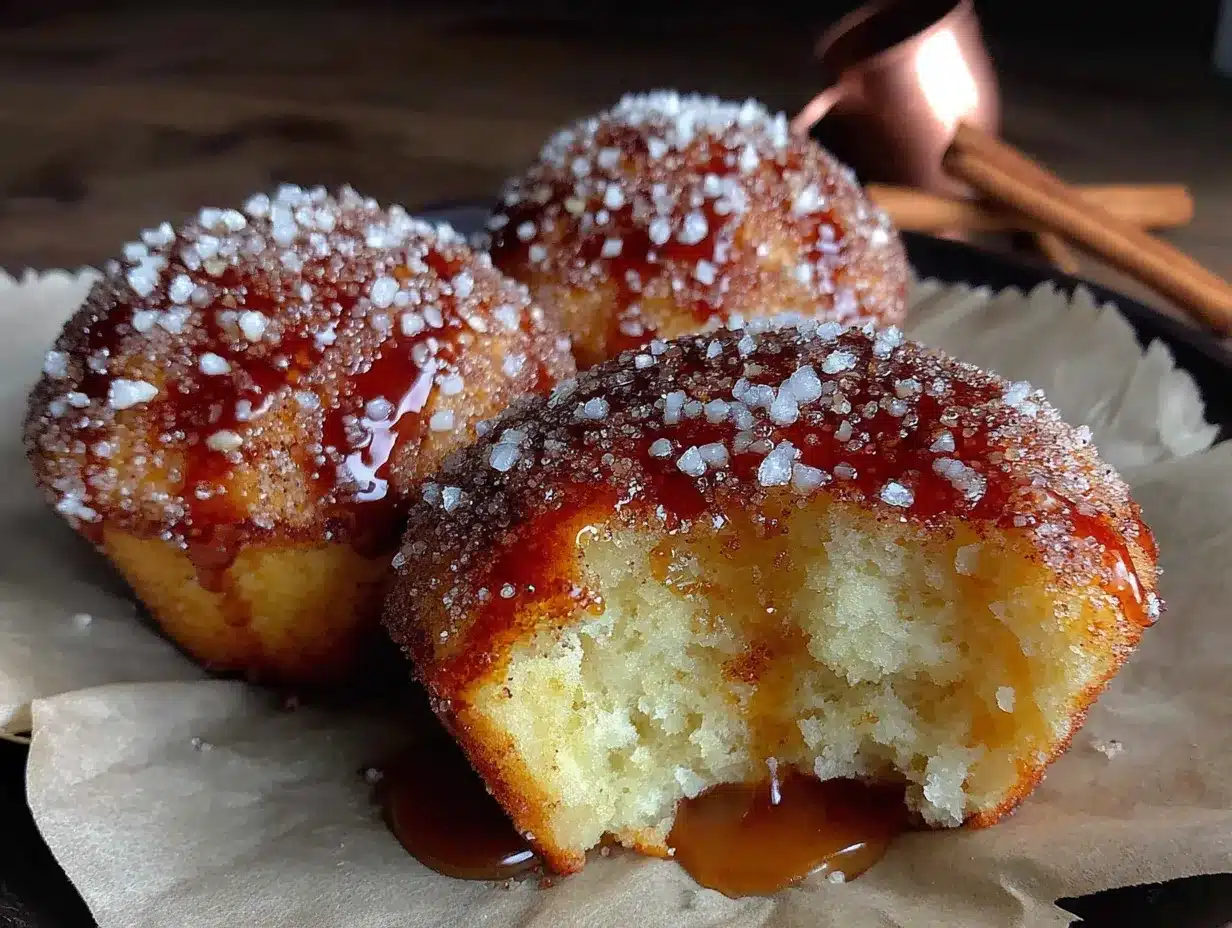
This isn’t just another muffin recipe. The combination of reduced cider, buttermilk, and a specific mixing technique creates a crumb that’s almost ethereal. It’s the kind of muffin that makes you close your eyes after the first bite. Seriously. I’ve watched people do it. There’s something about the way the cinnamon-sugar coating cracks slightly when you bite into it, giving way to that pillowy interior—it’s comfort food reimagined. Lighter, faster, but with the same soul-soothing satisfaction as a classic fried donut.
What Ingredients You Will Need
This recipe uses simple, wholesome ingredients to deliver bold apple flavor and that signature light texture. Most of these are pantry staples, which makes these muffins perfect for spontaneous baking sessions.
For the Muffins
- 2 cups apple cider (fresh, unfiltered if possible—it has more flavor)
- 2 cups all-purpose flour (I use King Arthur for consistent results)
- 1 teaspoon baking powder
- 1/2 teaspoon baking soda
- 1/2 teaspoon salt
- 1 1/2 teaspoons ground cinnamon
- 1/4 teaspoon ground nutmeg (freshly grated is amazing, but pre-ground works fine)
- 1/8 teaspoon ground cloves
- 1/2 cup unsalted butter, softened to room temperature
- 1/2 cup granulated sugar
- 1/2 cup packed light brown sugar
- 2 large eggs, room temperature
- 1 teaspoon vanilla extract
- 1/2 cup buttermilk, room temperature (see substitution note below)
For the Cinnamon-Sugar Coating
- 1/2 cup granulated sugar
- 1 tablespoon ground cinnamon
- 1/4 cup unsalted butter, melted
Ingredient Tips & Substitutions:
- Apple Cider: Don’t use apple juice—it’s not the same. Cider has that tangy, complex flavor that makes these muffins special. If you can’t find cider, use a good quality unfiltered apple juice, but the flavor won’t be as intense.
- Buttermilk: If you don’t have buttermilk, make a quick substitute by adding 1 tablespoon of lemon juice or white vinegar to 1/2 cup of regular milk. Let it sit for 5 minutes before using. It works perfectly.
- Butter: I recommend salted butter if that’s what you have, just reduce the added salt to 1/4 teaspoon. For the best texture, make sure your butter is truly softened—not melted, not rock hard.
- Flour: You can substitute up to half the all-purpose flour with whole wheat pastry flour for a slightly nuttier flavor. Don’t use regular whole wheat flour—it will make the muffins dense.
Equipment Needed
You don’t need a fancy bakery setup for these muffins. Here’s what you’ll need:
- Muffin tin: A standard 12-cup muffin tin works perfectly. I recommend a non-stick pan for easy release.
- Muffin liners: Paper liners make cleanup a breeze, but you can grease the pan directly if you prefer.
- Medium saucepan: For reducing the apple cider. A 2-quart saucepan is ideal.
- Large mixing bowl: For the dry ingredients.
- Medium mixing bowl: For the wet ingredients.
- Whisk: For combining dry ingredients and for mixing the batter.
- Electric mixer: A hand mixer or stand mixer works for creaming the butter and sugars. You can do it by hand with a wooden spoon, but it takes more elbow grease.
- Cooling rack: Essential for letting the muffins cool properly after their butter bath.
- Pastry brush: For brushing the melted butter onto the warm muffins. A silicone brush works great.
- Small bowl: For the cinnamon-sugar coating mixture.
If you don’t have a pastry brush, you can dip the tops of the muffins directly into the melted butter. It’s a little messier but works just as well. I’ve done it both ways, and honestly, the dipping method is actually faster when I’m making a double batch.
Preparation Method
Let’s get baking! This recipe moves quickly once you start, so I recommend reading through all the steps before you begin. Trust me, I learned the hard way that you don’t want to be scrambling to reduce cider while your butter and sugar are already creamed.
- Reduce the apple cider: Pour the 2 cups of apple cider into a medium saucepan. Bring it to a boil over medium-high heat, then reduce the heat to medium-low and let it simmer. You want it to reduce down to about 1/2 cup. This takes about 15-20 minutes. The cider will thicken slightly and smell intensely of apples. Set it aside to cool while you prepare the rest of the ingredients. Don’t skip this step—it’s what gives these muffins their concentrated apple flavor without making the batter too wet.
- Preheat and prepare: Preheat your oven to 350°F (175°C). Line your muffin tin with paper liners or grease the cups thoroughly. I’ve found that even with non-stick pans, liners make life easier.
- Mix dry ingredients: In a large bowl, whisk together the flour, baking powder, baking soda, salt, cinnamon, nutmeg, and cloves. Make sure everything is evenly distributed. I like to use a whisk for this—it aerates the flour and ensures no clumps of baking powder hide in the batter.
- Cream butter and sugars: In a separate medium bowl, beat the softened butter, granulated sugar, and brown sugar together until light and fluffy. This takes about 3 minutes with an electric mixer on medium speed. You want the mixture to look pale and slightly increased in volume. Scrape down the sides of the bowl halfway through.
- Add eggs and vanilla: Beat in the eggs one at a time, making sure each is fully incorporated before adding the next. Add the vanilla extract and mix until combined. The mixture might look a little curdled at this point—that’s normal, especially if your eggs were cold. Don’t worry, it will come together in the next step.
- Combine wet ingredients: Stir in the cooled reduced apple cider and the buttermilk. Mix on low speed until just combined. The batter will look thin and slightly lumpy—that’s okay.
- Add dry ingredients: Gradually add the dry ingredients to the wet mixture, mixing on low speed until just combined. Be careful not to overmix! Stop as soon as you no longer see streaks of flour. A few small lumps are fine. Overmixing will make your muffins tough, and we want them light and fluffy.
- Fill the muffin cups: Divide the batter evenly among the 12 muffin cups. Each cup should be about 3/4 full. I use a cookie scoop for this—it makes the process neat and ensures even-sized muffins.
- Bake: Bake for 16-20 minutes, or until a toothpick inserted into the center of a muffin comes out clean or with a few moist crumbs. The tops should be golden brown and spring back when lightly touched. My oven runs hot, so I start checking at 16 minutes.
- Cool slightly: Let the muffins cool in the pan for 5 minutes. This is important—if you try to remove them too soon, they might fall apart. After 5 minutes, transfer them to a cooling rack.
- Coat the muffins: While the muffins are still warm (but not hot), brush the tops with melted butter. Then dip each muffin into the cinnamon-sugar mixture, turning to coat evenly. The warmth of the muffins helps the coating stick. I like to do this while they’re still on the cooling rack over a piece of parchment paper to catch any mess.
Cooking Tips & Techniques
After making these muffins more times than I can count, I’ve picked up a few tricks that make a real difference. Here’s what I’ve learned:
Don’t rush the cider reduction. I know it’s tempting to crank up the heat to speed things along, but low and slow is the way to go. If you boil it too aggressively, the cider can burn and develop a bitter taste. Keep an eye on it and stir occasionally. You’ll know it’s done when it’s thick enough to coat the back of a spoon and has reduced to about 1/2 cup. Let it cool completely before adding it to the batter. I’ve made the mistake of adding warm cider once, and it partially cooked the eggs in the batter. Not ideal.
Room temperature ingredients matter. I cannot stress this enough. Cold eggs and cold buttermilk will seize up your creamed butter mixture, leaving you with a lumpy batter that doesn’t bake evenly. Take your eggs and buttermilk out of the fridge about 30 minutes before you start baking. If you forget (which I do, constantly), place the eggs in a bowl of warm water for 5 minutes and microwave the buttermilk for 10-15 seconds.
The muffin scoop method. Using a cookie scoop or ice cream scoop to fill your muffin cups ensures even baking and professional-looking results. It also prevents you from overfilling or underfilling the cups. I use a #20 scoop (about 3 tablespoons) for standard muffins.
Check for doneness with your finger. The toothpick test is reliable, but I also like to gently press the top of a muffin. If it springs back, it’s done. If your finger leaves an indent, give it another minute or two. This method is especially useful for muffins with lots of mix-ins where a toothpick might hit a pocket of fruit and come out looking wet.
Timing is everything for the coating. The muffins need to be warm for the butter to soak in and the sugar to stick, but not so hot that the butter melts into a puddle. I find the sweet spot is about 5-7 minutes after they come out of the oven. If you wait too long, the tops won’t be sticky enough and the coating will fall off.
My biggest failure: The first time I made these, I forgot to reduce the cider. I just dumped the full 2 cups into the batter. The muffins were a disaster—flat, soggy, and they took forever to bake. I almost gave up on the recipe entirely. But I’m glad I tried again because getting that reduction right transforms everything.
Variations & Adaptations
One of the best things about this recipe is how adaptable it is. Here are some variations I’ve tried and loved:
Gluten-Free Version: Substitute the all-purpose flour with a good quality 1:1 gluten-free baking flour blend. I’ve had great results with King Arthur Measure for Measure. Add 1/2 teaspoon of xanthan gum if your blend doesn’t already include it. The texture will be slightly more tender, but still delicious.
Dairy-Free Version: Use vegan butter sticks (like Earth Balance) and replace the buttermilk with 1/2 cup of unsweetened almond milk mixed with 1 tablespoon of apple cider vinegar. The flavor is slightly different, but the texture holds up beautifully.
Apple Cider Donut Holes: Use a mini muffin tin and reduce the baking time to 10-12 minutes. You’ll get about 24 mini muffins. They’re perfect for snacking and even more portable than the full-sized version.
Maple Glaze Variation: Instead of the cinnamon-sugar coating, whisk together 1 cup of powdered sugar, 2 tablespoons of maple syrup, and 1-2 tablespoons of milk until smooth. Drizzle over the cooled muffins. This version is less messy to eat and has a lovely fall flavor.
Add-In Options: Fold in 1/2 cup of finely chopped pecans or walnuts before baking for some crunch. You can also add 1/2 cup of dried cranberries or chopped dried apples for extra texture and flavor.
Spice It Up: If you love warm spices, add 1/4 teaspoon of cardamom or allspice along with the other spices. I tried this on a whim one rainy afternoon and it was fantastic—the cardamom adds an unexpected floral note that pairs beautifully with the apple.
Serving & Storage Suggestions
These muffins are best enjoyed warm, when the cinnamon-sugar coating is still slightly crackly and the interior is tender and soft. But they’re pretty wonderful at room temperature too.
Serving Temperature: I like to serve them slightly warm. If you’re making them ahead, pop them in a 300°F oven for 5 minutes to re-crisp the coating. Microwaving works in a pinch, but it can make the coating soggy.
Presentation Ideas: Arrange the muffins on a wooden board or a pretty cake stand for brunch. They look beautiful nestled on a bed of fall leaves or alongside a bowl of fresh apples. For a cozy touch, serve them with warm mugs of spiced cider or coffee.
Storage: Store leftover muffins in an airtight container at room temperature for up to 3 days. Place a paper towel at the bottom of the container to absorb excess moisture, and another paper towel on top. Change the paper towels if they become damp. This helps maintain that perfect texture.
Freezing Instructions: These muffins freeze beautifully. Place them in a single layer on a baking sheet and freeze until solid (about 2 hours). Then transfer to a freezer-safe bag or container. They’ll keep for up to 3 months. To thaw, leave them at room temperature for about an hour, then warm in a 300°F oven for 5-7 minutes. The coating might lose a bit of its crunch, but the flavor is still amazing.
Flavor Development: Honestly, these muffins taste even better the next day. The spices have time to meld, and the apple flavor becomes more pronounced. If you can resist eating them all fresh, try saving a couple for the next morning. You won’t be disappointed.
Nutritional Information & Benefits
While these muffins are definitely a treat, they’re lighter than traditional fried donuts and made with real, wholesome ingredients. Here’s the estimated nutritional breakdown per muffin (based on 12 servings):
- Calories: Approximately 285
- Fat: 12g
- Carbohydrates: 42g
- Protein: 4g
- Fiber: 1g
- Sugar: 26g
Health Benefits: Apple cider is rich in antioxidants and polyphenols, which may support immune health. Cinnamon has anti-inflammatory properties and can help regulate blood sugar. While these muffins aren’t health food, they’re made with real butter and eggs, providing some protein and healthy fats to keep you satisfied.
Dietary Considerations: This recipe contains gluten, dairy, and eggs. See the variations section for adaptations. Each muffin has about 26g of sugar, so they’re best enjoyed as an occasional treat rather than an everyday breakfast.
I believe in balance—enjoying food that makes you happy while being mindful of what you’re eating. These muffins fit perfectly into that philosophy. They’re indulgent enough to feel special, but made with ingredients you can feel good about.
Conclusion
These Baked Apple Cider Donut Muffins have become a fall staple in my kitchen, and I have a feeling they’ll become one in yours too. They capture everything I love about autumn baking—warm spices, cozy flavors, and that unmistakable apple cider tang—in a package that’s surprisingly easy to make.
What I love most about this recipe is how forgiving it is. You don’t need to be a pastry chef to nail it. You just need good ingredients, a little patience with the cider reduction, and the willingness to get your hands messy with that cinnamon-sugar coating. The result is something that tastes like you spent hours in the kitchen, when really, you were done in under an hour.
I’d love to hear how these turn out for you! Did you try any of the variations? Did you come up with your own twist? Drop a comment below and let me know. And if you share a photo on Pinterest or Instagram, tag me—I love seeing your baking adventures. Happy fall baking, friends!
Frequently Asked Questions
Can I use apple juice instead of apple cider?
You can, but the flavor won’t be as rich or tangy. Apple juice is sweeter and more one-dimensional. If you’re in a pinch, use unfiltered apple juice and add an extra 1/4 teaspoon of cinnamon to boost the flavor.
Why did my muffins turn out dense?
The most common culprit is overmixing the batter. Once you add the dry ingredients, mix only until the flour disappears. Overmixing develops gluten, which makes muffins tough. Another possibility is that your baking powder or baking soda is old—check the expiration dates.
Can I make these ahead for a party?
Absolutely! Bake them the day before, but wait to coat them in the cinnamon-sugar until just before serving. Store the uncoated muffins in an airtight container, then warm them slightly, brush with melted butter, and coat with the cinnamon-sugar mixture right before you’re ready to serve.
How do I get the coating to stick better?
The key is warm muffins and melted butter. Make sure the muffins are still warm (but not hot) when you brush them with butter. Don’t skimp on the butter—it acts as the glue for the cinnamon-sugar. If the coating still falls off, try dipping the muffin top directly into the melted butter instead of brushing.
Can I double this recipe?
Yes! This recipe doubles beautifully. Just make sure you have two muffin tins and enough room in your oven to bake them at the same time. If your oven has hot spots, rotate the pans halfway through baking. You’ll need to reduce the cider in two batches or use a larger saucepan.
Pin This Recipe!
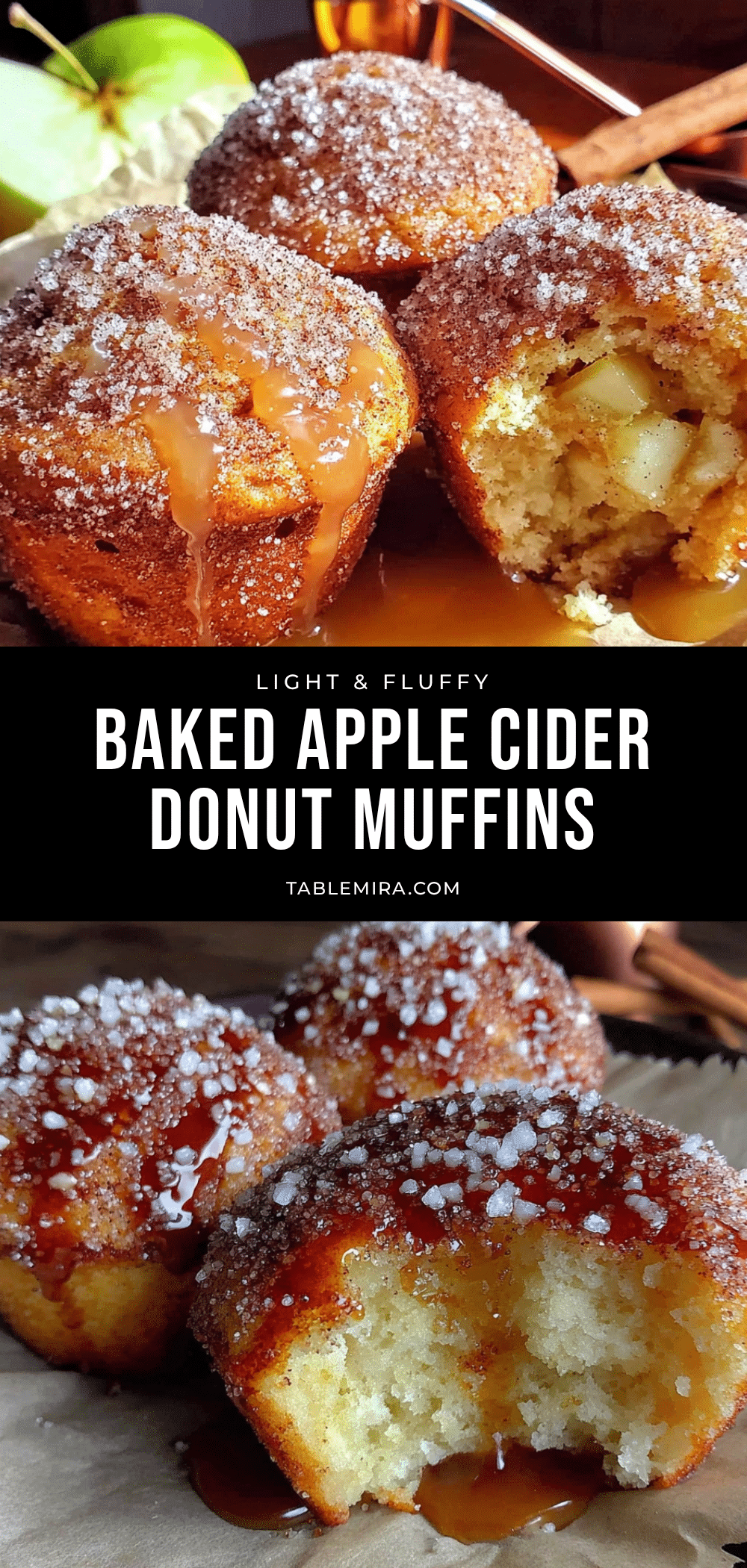
Baked Apple Cider Donut Muffins: Easy, Light & Fluffy

These baked apple cider donut muffins are light, fluffy, and full of concentrated apple flavor. Made with reduced apple cider and a cinnamon-sugar coating, they’re a quick and easy fall treat that tastes like a cloud of autumn.
- Prep Time: 15 minutes
- Cook Time: 20 minutes
- Total Time: 35 minutes
- Yield: 12 servings 1x
- Category: Dessert
- Cuisine: American
Ingredients
- 2 cups apple cider (fresh, unfiltered if possible)
- 2 cups all-purpose flour
- 1 teaspoon baking powder
- 1/2 teaspoon baking soda
- 1/2 teaspoon salt
- 1 1/2 teaspoons ground cinnamon
- 1/4 teaspoon ground nutmeg
- 1/8 teaspoon ground cloves
- 1/2 cup unsalted butter, softened to room temperature
- 1/2 cup granulated sugar
- 1/2 cup packed light brown sugar
- 2 large eggs, room temperature
- 1 teaspoon vanilla extract
- 1/2 cup buttermilk, room temperature
- 1/2 cup granulated sugar (for coating)
- 1 tablespoon ground cinnamon (for coating)
- 1/4 cup unsalted butter, melted (for coating)
Instructions
- Reduce the apple cider: Pour the 2 cups of apple cider into a medium saucepan. Bring to a boil over medium-high heat, then reduce heat to medium-low and simmer until reduced to about 1/2 cup, about 15-20 minutes. Set aside to cool.
- Preheat oven to 350°F (175°C). Line a 12-cup muffin tin with paper liners or grease the cups.
- In a large bowl, whisk together the flour, baking powder, baking soda, salt, cinnamon, nutmeg, and cloves.
- In a separate medium bowl, beat the softened butter, granulated sugar, and brown sugar together until light and fluffy, about 3 minutes with an electric mixer on medium speed.
- Beat in the eggs one at a time, then add the vanilla extract and mix until combined.
- Stir in the cooled reduced apple cider and the buttermilk, mixing on low speed until just combined.
- Gradually add the dry ingredients to the wet mixture, mixing on low speed until just combined. Do not overmix.
- Divide the batter evenly among the 12 muffin cups, filling each about 3/4 full.
- Bake for 16-20 minutes, or until a toothpick inserted into the center comes out clean or with a few moist crumbs.
- Let the muffins cool in the pan for 5 minutes, then transfer to a cooling rack.
- While the muffins are still warm, brush the tops with melted butter, then dip each muffin into the cinnamon-sugar mixture to coat evenly.
Notes
Don’t skip reducing the apple cider—it concentrates the flavor without adding extra liquid. Room temperature ingredients are important for a smooth batter. For best results, coat the muffins while they are still warm but not hot.
Nutrition
- Serving Size: 1 muffin
- Calories: 285
- Sugar: 26
- Sodium: 220
- Fat: 12
- Saturated Fat: 7
- Carbohydrates: 42
- Fiber: 1
- Protein: 4
Keywords: apple cider donut muffins, baked donut muffins, fall muffins, apple cider recipe, easy muffin recipe