“So, how do I not mess up the prime rib this year?” My brother-in-law Mark asked me this every single Christmas Eve for about five years straight. He’d call, voice a little tight, and I could practically see him standing in his kitchen, phone wedged between his ear and shoulder, staring at this expensive hunk of beef like it was a ticking time bomb. And honestly? I got it. Prime rib is the centerpiece. It’s the thing everyone remembers. It’s also the thing that costs a small fortune and can go from perfect to ruined in about four minutes flat if you’re not careful. That question — that genuine panic in his voice — is exactly why this recipe exists.
I spent a good two years testing, tweaking, and yes, occasionally butchering (pun intended) prime rib roasts until I landed on this method. The rosemary garlic crust isn’t just for show. It forms this incredible, fragrant, almost crunchy exterior that seals in all the juices while the inside stays butter-soft and perfectly pink. No fancy equipment, no complicated techniques. Just a few smart moves that make all the difference between a roast that’s just okay and one that has people going quiet at the table because they’re too busy enjoying it. This is the recipe I finally sent to Mark. He hasn’t called me in a panic since.
Why You’ll Love This Recipe
Let’s be real for a second. Prime rib can be intimidating. It’s expensive, it’s often reserved for special occasions, and the internet is full of conflicting advice about how to cook it. But this recipe cuts through all that noise. It’s built on a few key principles that I’ve tested over and over, so you don’t have to stress.
- Foolproof Method : This uses a high-heat sear followed by a low-and-slow roast. It’s the most forgiving technique I’ve found, and it delivers consistent results every single time.
- Simple, Flavorful Crust : The rosemary and garlic aren’t just sprinkled on top. They’re blended into a paste that gets rubbed all over the roast, creating a deeply aromatic, savory crust that complements the beef perfectly.
- Perfect for Celebrations : Whether it’s Christmas dinner, a New Year’s Eve feast, or just a Sunday dinner that feels special, this roast is the star. It’s impressive without being overly complicated.
- Crowd-Pleaser : There’s something about a perfectly cooked prime rib that brings people together. It’s hearty, satisfying, and somehow feels both luxurious and comforting at the same time.
- Restaurant-Quality at Home : You know that prime rib you order at a steakhouse and think, “I could never make this”? You absolutely can. And honestly, this version might be better because you control the quality of the ingredients and the doneness.
This isn’t just another recipe you’ll find online. The key here is the resting time and the reverse sear concept (though we do it a little differently). It ensures the roast cooks evenly from edge to center, so you don’t end up with a ring of well-done meat around a rare center. It’s the kind of meal that makes you slow down, take a breath, and actually enjoy the moment. And honestly, isn’t that what special occasions are all about?
What Ingredients You Will Need
This recipe relies on a handful of high-quality ingredients. The beauty is that there’s nowhere to hide — each component plays a crucial role, so using good stuff matters here.
For the Prime Rib Roast
- 1 (5-7 pound) bone-in prime rib roast – This is the star of the show. Look for a roast with good marbling (those little white flecks of fat throughout the meat). A bone-in roast cooks more evenly and has better flavor. I personally prefer a roast from a trusted butcher or a high-quality grocery store. Don’t be afraid to ask your butcher to trim the fat cap to about 1/4 inch.
- 2 tablespoons kosher salt – Use a coarse salt here. It sticks to the meat better and seasons more evenly. I use Diamond Crystal kosher salt. If you’re using Morton’s, use a little less because it’s denser.
- 1 tablespoon black pepper – Freshly cracked is non-negotiable here. The pre-ground stuff just doesn’t have the same punch.
For the Rosemary Garlic Crust
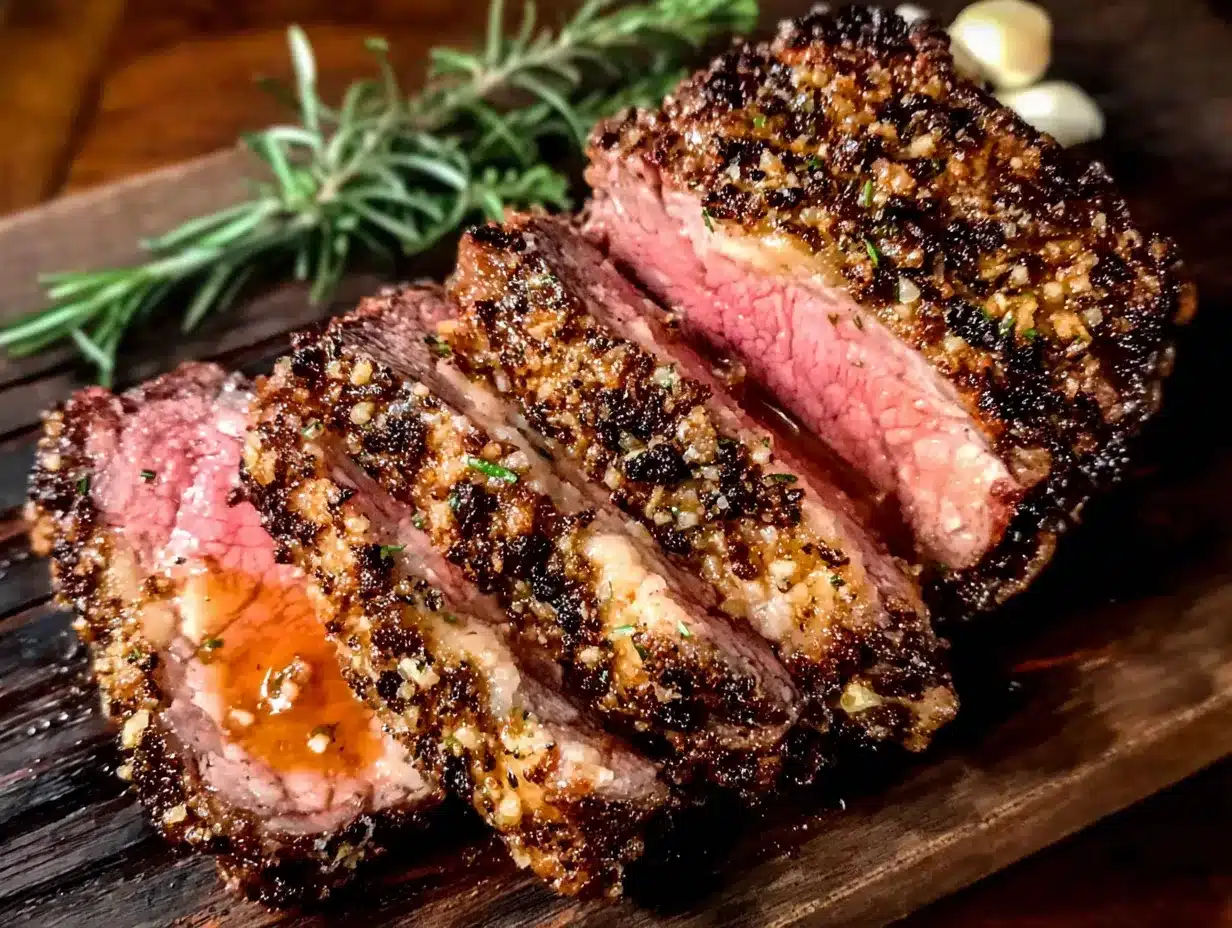
- 1/4 cup fresh rosemary leaves – Do not even think about using dried rosemary here. Fresh rosemary is essential for that vibrant, piney, aromatic flavor that makes this crust so special. Strip the leaves from the woody stems.
- 8 cloves garlic – Yes, eight. Trust me. The garlic roasts and mellows as the beef cooks, becoming sweet and nutty rather than sharp and pungent.
- 3 tablespoons olive oil – Use a good quality extra virgin olive oil. It helps bind the paste and helps the crust get beautifully golden.
- 1 tablespoon Dijon mustard – This is my little secret. The mustard adds a subtle tang and helps the crust adhere to the meat. You won’t taste it in the final dish, I promise.
For the Aromatic Base (Optional but Recommended)
- 1 large onion, quartered – This sits in the roasting pan and adds flavor to the drippings.
- 2 carrots, roughly chopped – Same as the onion. They’re not for eating, they’re for flavoring the pan juices.
- 2 celery stalks, roughly chopped – The classic mirepoix. It creates a flavorful base for any pan sauce you might want to make.
- 1 cup beef broth – For deglazing the pan after roasting. This is optional but makes a quick, delicious jus.
Ingredient Tips: Let your roast sit out at room temperature for at least 2 hours before cooking. This is critical for even cooking. A cold roast will cook unevenly, and you’ll end up with a raw center and overcooked edges. I learned this the hard way my first time making prime rib — it was a disaster. Also, if you can, buy your roast a few days in advance and dry-brine it in the fridge. Just salt it and leave it uncovered on a wire rack in the fridge for 24-48 hours. It makes a world of difference in flavor and texture.
Equipment Needed
You don’t need a lot of fancy gear for this recipe, but a few key tools will make your life much easier.
- Roasting Pan – A heavy-duty roasting pan with a rack is ideal. The rack keeps the roast elevated so air can circulate, promoting even cooking and a better crust. If you don’t have a rack, you can use a bed of chopped vegetables (like the onion, carrots, and celery listed above) to lift the roast.
- Instant-Read Meat Thermometer – This is absolutely essential. Do not guess the temperature. A good digital thermometer takes the guesswork out of cooking prime rib. I use a Thermapen, but any reliable instant-read thermometer will work.
- Chef’s Knife – A sharp knife is crucial for trimming the fat cap and slicing the finished roast. A dull knife will tear the meat and make a mess.
- Food Processor or Mortar and Pestle – For making the rosemary garlic paste. A food processor is faster and easier, but a mortar and pestle gives you a more rustic, textured paste. Both work great.
- Kitchen Twine – You’ll use this to tie the roast between the bones. This helps it cook more evenly and maintain its shape.
- Cutting Board – A large, sturdy cutting board is essential for resting and carving the roast. I like to use a wooden board with a groove to catch the juices.
Budget-Friendly Tip: If you don’t have a roasting pan, a large, heavy-duty rimmed baking sheet works in a pinch. Just make sure it can handle the heat. You might need to use a wire rack set inside the baking sheet to elevate the roast.
Preparation Method
Alright, let’s get to it. Follow these steps carefully, and you’ll have a prime rib that will make you the hero of any dinner table.
Step 1: Prep the Roast (At Least 2 Hours Before Cooking)
- Remove the prime rib roast from the refrigerator and unwrap it. Pat it completely dry with paper towels. Moisture is the enemy of a good crust.
- Using a sharp knife, trim the fat cap to about 1/4 inch thick. Leave a thin layer of fat to baste the meat as it cooks, but remove any thick, hard chunks.
- Tie the roast between the bones with kitchen twine. This helps the roast cook evenly and keeps it from flopping around. Tie it snugly, but not so tight that you squeeze the meat.
- Place the roast on a wire rack set over a baking sheet. This allows air to circulate around the roast, helping it dry out slightly, which promotes better browning.
- Let the roast sit at room temperature for at least 2 hours. This is non-negotiable. A cold roast will not cook evenly.
Step 2: Make the Rosemary Garlic Crust
- While the roast is coming to room temperature, make the crust. Combine the fresh rosemary leaves, garlic cloves, olive oil, and Dijon mustard in a food processor.
- Pulse until the mixture forms a coarse paste. You want it to be spreadable, not a puree. If it’s too thick, add another tablespoon of olive oil. If it’s too thin, add a few more rosemary leaves.
- Set the paste aside at room temperature. Don’t refrigerate it, or it will be too hard to spread.
Step 3: Season and Crust the Roast
- About 30 minutes before you plan to cook, preheat your oven to 450°F (230°C).
- Generously season the entire roast with the kosher salt and black pepper. Don’t be shy. You want a nice, even coating on all sides, including the ends.
- Now, spread the rosemary garlic paste all over the roast. Use your hands to rub it in, making sure it gets into all the nooks and crannies. Don’t forget the ends and the underside.
- Place the seasoned roast on the rack in your roasting pan. If you’re using the aromatic vegetables, scatter them in the bottom of the pan around the roast.
Step 4: The High-Heat Sear
- Place the roasting pan in the preheated oven and roast for 20 minutes at 450°F (230°C). This high-heat blast creates that beautiful, golden-brown crust on the outside.
- After 20 minutes, reduce the oven temperature to 325°F (160°C). Do not open the oven door while reducing the temperature. Just turn the dial and let the oven do its thing.
Step 5: The Low-and-Slow Roast
- Continue roasting the prime rib at 325°F (160°C) until the internal temperature reaches your desired doneness. Use your instant-read thermometer inserted into the thickest part of the meat, away from the bone.
- Here are the target temperatures. Remember, the temperature will continue to rise by about 5-10°F while the roast rests, so pull it out a few degrees early.
- Rare: 120-125°F (49-52°C) – Pull at 115-120°F
- Medium-Rare: 130-135°F (54-57°C) – Pull at 125-130°F
- Medium: 140-145°F (60-63°C) – Pull at 135-140°F
- Medium-Well: 150-155°F (66-68°C) – Pull at 145-150°F
- The total cooking time will vary depending on the size of your roast and your oven, but a general rule of thumb is about 15-20 minutes per pound after the initial sear. For a 6-pound roast, this usually takes about 1.5 to 2 hours.
Step 6: The Essential Rest
- Once the roast reaches your target temperature, remove it from the oven. Transfer it to a cutting board and tent it loosely with aluminum foil.
- Let the roast rest for at least 20-30 minutes. This is the most important step. The resting period allows the juices to redistribute throughout the meat. If you cut into it too early, all those beautiful juices will run out onto the cutting board, and you’ll be left with dry meat.
- While the roast rests, you can make a quick pan sauce or jus. Place the roasting pan over two burners on your stovetop over medium heat. Add the beef broth and scrape up all the browned bits from the bottom of the pan. Let it simmer for a few minutes until slightly reduced. Strain the liquid through a fine-mesh sieve and serve it alongside the roast.
Step 7: Carve and Serve
- After the roast has rested, remove the kitchen twine. Place the roast on a clean cutting board, bone-side down.
- Using a sharp carving knife, slice the meat between the bones to separate the roast from the bone rack. You can then either serve the meat attached to the bones or slice it off into individual portions.
- Slice the prime rib against the grain into 1/2-inch to 3/4-inch thick slices. This ensures each slice is tender and easy to chew.
- Arrange the slices on a warm platter and serve immediately with the pan jus on the side.
Cooking Tips & Techniques
I’ve made more prime rib roasts than I can count, and I’ve definitely had my share of learning experiences. Here are the biggest lessons I’ve learned along the way.
Don’t Skip the Dry Brine. If you have the time, salting the roast 24-48 hours in advance is a game-changer. It seasons the meat all the way through, not just on the surface. Plus, it helps dry out the exterior, which leads to an even better crust. I once skipped this step because I was short on time, and the crust just wasn’t as good. It’s worth the extra planning.
The Thermometer is Your Best Friend. I cannot stress this enough. Do not rely on cooking times alone. Every oven is different, and every roast is different. The only way to guarantee perfect doneness is to use a reliable instant-read thermometer. I’ve ruined a few roasts by trusting a timer over the thermometer. Learn from my mistakes.
The Resting Period is Not Optional. I know it’s tempting to carve into that beautiful roast as soon as it comes out of the oven. But resist the urge. The resting period is when the magic happens. The juices, which have been driven to the center of the meat by the heat, need time to redistribute evenly. If you cut too early, you’ll have a pool of juice on your cutting board and dry meat on your plate. Let it rest, I promise it’s worth it.
Use a Probe Thermometer if You Have One. A probe thermometer that stays in the roast while it cooks and connects to a monitor outside the oven is a lifesaver. You can set an alarm for your target temperature and not have to keep opening the oven door to check it. Every time you open the door, you lose heat and extend the cooking time.
Don’t Overcrowd the Pan. If you’re making a large roast, make sure it has plenty of room in the pan. If the roast is touching the sides of the pan, it won’t cook evenly. If you’re cooking a very large roast (over 8 pounds), consider using two smaller roasts instead of one giant one. They’ll cook more evenly and faster.
For a Better Crust, Pat It Dry. Before you apply the salt and the rosemary garlic paste, make sure the roast is as dry as possible. Use paper towels to pat it dry. Any moisture on the surface will steam instead of sear, and you won’t get that beautiful, crispy crust.
Variations & Adaptations
This recipe is fantastic as written, but it’s also incredibly versatile. Here are a few ways to make it your own.
Herb Crust Variation: Swap out the rosemary for a different herb blend. Thyme, oregano, and sage all work beautifully. Try a combination of fresh thyme and cracked black pepper for a classic, peppery crust. Or use a blend of fresh parsley, chives, and tarragon for a lighter, more herbaceous flavor.
Spicy Crust Variation: Add a teaspoon of red pepper flakes or a minced chipotle pepper in adobo sauce to the rosemary garlic paste for a subtle kick of heat. The smokiness of the chipotle pairs surprisingly well with the richness of the beef.
Garlic and Herb Butter Variation: Instead of the olive oil-based paste, use softened unsalted butter as the base for the crust. Combine 1/2 cup of softened butter with the rosemary, garlic, salt, and pepper. This creates an incredibly rich, flavorful crust that bastes the roast as it melts. This is my go-to for special occasions.
Wine and Mushroom Jus: Instead of using just beef broth for the pan sauce, add 1/2 cup of dry red wine and a handful of sliced cremini mushrooms to the pan while the roast rests. Simmer until the mushrooms are tender and the sauce has reduced slightly. This creates a deeply savory, complex sauce that elevates the entire dish.
Dietary Adaptations: This recipe is naturally gluten-free and low-carb. Just make sure your beef broth is certified gluten-free if that’s a concern. For a dairy-free version, use the olive oil-based crust instead of the butter-based one.
Serving & Storage Suggestions
Prime rib is a meal in itself, but the right sides can turn it into a feast.
Serving Suggestions: Serve the prime rib slices on a warm platter with the pan jus on the side. For sides, you can’t go wrong with classic pairings. Creamy mashed potatoes or a crockpot green bean casserole with crispy onions are always a hit. A simple roasted vegetable medley, like roasted carrots and parsnips, adds color and sweetness. For a lighter option, a crisp green salad with a tangy vinaigrette cuts through the richness of the beef. And don’t forget the Yorkshire puddings — they’re practically mandatory for a British-style roast dinner. This roast also pairs beautifully with a honey glazed turkey breast with rosemary potatoes if you’re looking for a smaller, equally impressive main dish.
Storage Instructions: Leftover prime rib is a gift. Allow the roast to cool completely before storing. Wrap it tightly in plastic wrap or aluminum foil, or place it in an airtight container. It will keep in the refrigerator for 3-4 days.
Reheating Tips: The key to reheating prime rib is to do it gently. You don’t want to overcook it and turn it into shoe leather. The best method is to place the slices in a single layer in a baking dish, add a splash of beef broth or water, cover the dish with foil, and warm it in a 300°F (150°C) oven for 10-15 minutes, or until just heated through. You can also reheat slices in a skillet over low heat with a little butter or beef broth. Avoid using the microwave, as it will make the meat tough and dry.
Freezing Instructions: Prime rib freezes surprisingly well. Wrap the cooled roast tightly in plastic wrap, then in a layer of aluminum foil, and place it in a freezer-safe bag. It will keep for up to 3 months. To thaw, place it in the refrigerator overnight. Reheat using the gentle oven method described above.
How Flavors Develop: The flavors of the rosemary and garlic actually deepen and meld together overnight. Leftover prime rib, especially when sliced thin and used in sandwiches or salads, is often even more flavorful than the first serving. I love making prime rib sandwiches with leftover slices, a little horseradish sauce, and some arugula on a crusty roll.
Nutritional Information & Benefits
Prime rib is a rich, indulgent dish, but it also offers some nutritional benefits when enjoyed in moderation.
Estimated Nutritional Values (per 6-ounce serving, excluding sides):
| Nutrient | Amount |
|---|---|
| Calories | 450-550 |
| Protein | 45-50g |
| Fat | 30-40g |
| Saturated Fat | 12-15g |
| Iron | 15-20% DV |
| Vitamin B12 | 100%+ DV |
| Zinc | 30-40% DV |
Health Benefits: Beef is an excellent source of high-quality protein, which is essential for muscle building and repair. It’s also rich in iron, which is crucial for carrying oxygen in the blood, and vitamin B12, which supports nerve function and energy production. The rosemary and garlic in the crust aren’t just for flavor. Rosemary contains antioxidants and anti-inflammatory compounds, while garlic has been linked to immune-boosting and heart-health benefits.
Dietary Considerations: This recipe is naturally gluten-free, low-carb, and keto-friendly. It is not suitable for vegetarians or vegans. The fat content is high, so it’s best enjoyed as an occasional treat rather than a daily meal. If you’re watching your sodium intake, use a salt-free seasoning blend or reduce the amount of salt you use.
Personal Wellness Perspective: I’ve always believed that food is about more than just nutrition. A meal like this, shared with people you love, is good for the soul. It’s about slowing down, celebrating, and enjoying the moment. So while I wouldn’t recommend eating prime rib every day, I absolutely believe it has a place in a balanced, joyful life.
Conclusion
This perfect prime rib roast with rosemary garlic crust is more than just a recipe. It’s a centerpiece, a tradition, and a way to bring people together. It’s the kind of meal that makes you feel like you’ve accomplished something special, even though the method is surprisingly simple. The rosemary and garlic crust creates a beautiful, fragrant exterior, while the low-and-slow roasting method ensures the inside is perfectly tender and juicy every single time.
I encourage you to make this recipe your own. Experiment with different herb combinations, try the butter-based crust, or play around with the pan sauce. The beauty of a good recipe is that it’s a starting point, not a rigid set of rules. And if you’re looking for a show-stopping dessert to follow this roast, you can’t go wrong with a decadent maple bourbon pecan pie brownies or some creamy peppermint bark fudge with white chocolate swirl for a festive touch. For a cozy starter, a bowl of cozy slow cooker chicken tortilla soup is a great way to begin a special meal.
I’d love to hear how your prime rib turns out. Did you try a different herb blend? Did your family love it as much as mine does? Leave a comment below and share your experience. And if you have any questions, don’t hesitate to ask. Happy cooking!
Frequently Asked Questions
Can I use a boneless prime rib roast for this recipe?
Yes, you can absolutely use a boneless roast. The cooking time will be slightly shorter because there’s no bone to act as an insulator. I recommend starting to check the temperature about 10-15 minutes earlier than the recipe suggests. The flavor is still fantastic, but many people find the bone-in version has slightly more flavor and cooks more evenly.
How do I know when my prime rib is done without a thermometer?
Honestly, I really recommend using a thermometer. It’s the only reliable way to know. But if you absolutely don’t have one, you can use the “hand test” method. Touch the fleshy part of your palm below your thumb, then touch your thumb to your index finger. The firmness of that muscle is roughly what medium-rare feels like. But again, a thermometer is so much more accurate and takes the guesswork out.
My prime rib came out too rare. Can I fix it?
Yes, you can. If your roast is undercooked, simply return it to a 350°F (175°C) oven for another 10-15 minutes, checking the temperature frequently. The key is to do it gently so you don’t overcook the outer edges. If it’s only slightly under, you can also slice it and sear the slices quickly in a hot skillet for a minute per side.
Can I prepare the rosemary garlic crust in advance?
Absolutely. You can make the crust up to 2 days in advance. Just store it in an airtight container in the refrigerator. Let it come to room temperature for about 30 minutes before you plan to spread it on the roast, as it will be too firm to spread when cold.
What’s the best way to slice prime rib for serving?
Always slice against the grain. Look at the lines of muscle fiber running through the meat. Slice perpendicular to those lines. This shortens the muscle fibers, making each slice more tender and easier to chew. Slice the meat about 1/2 to 3/4 inch thick for a nice, substantial serving.
Pin This Recipe!
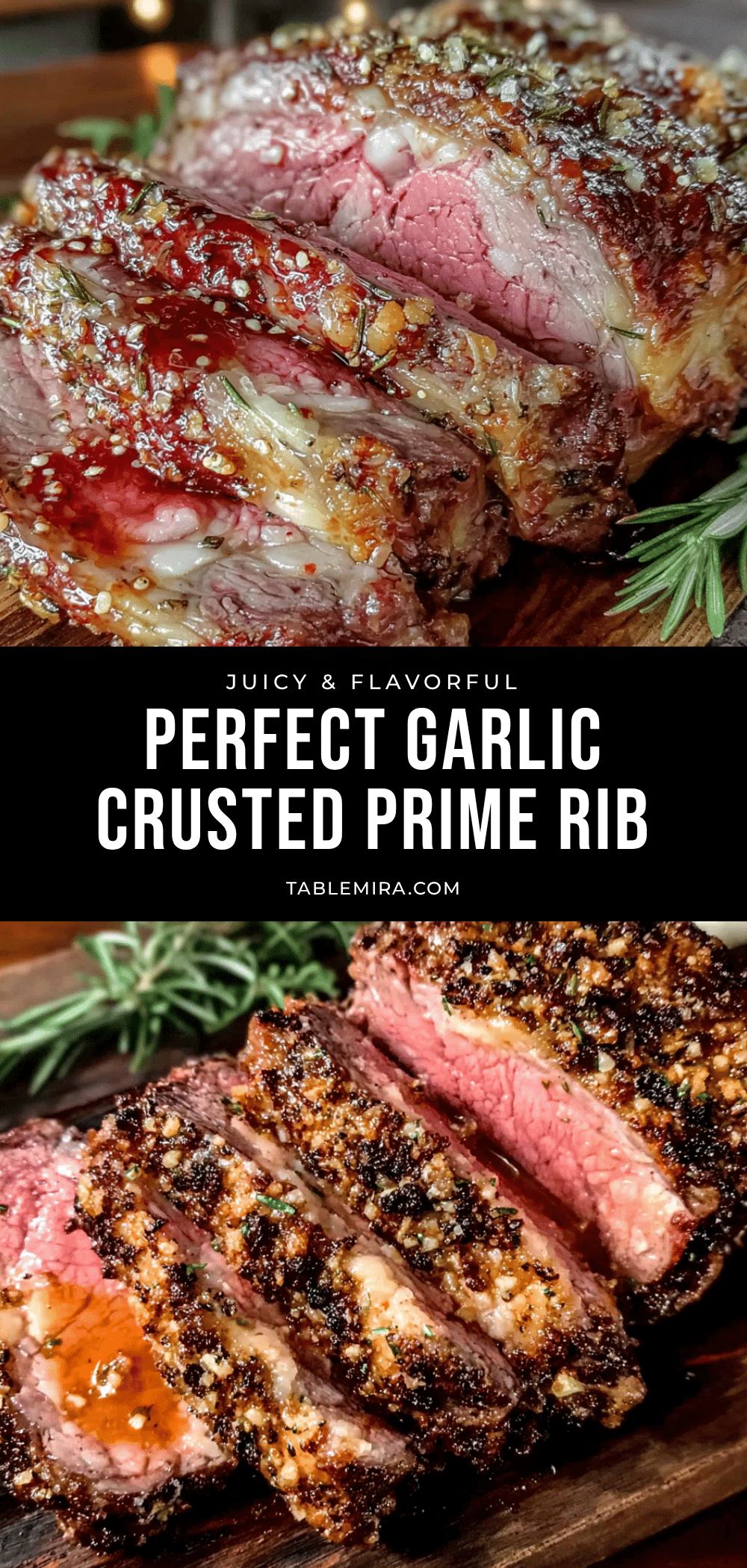
Perfect Prime Rib Roast with Rosemary Garlic Crust
A foolproof method for a perfectly cooked prime rib roast with a fragrant rosemary garlic crust. This recipe ensures a butter-soft, juicy interior and a beautifully browned exterior, making it the star of any special occasion.
- Prep Time: 2 hours 30 minutes
- Cook Time: 1 hour 50 minutes
- Total Time: 4 hours 20 minutes
- Yield: 8 servings 1x
- Category: Main Course
- Cuisine: American
Ingredients
- 1 (5-7 pound) bone-in prime rib roast
- 2 tablespoons kosher salt
- 1 tablespoon black pepper, freshly cracked
- 1/4 cup fresh rosemary leaves
- 8 cloves garlic
- 3 tablespoons olive oil
- 1 tablespoon Dijon mustard
- 1 large onion, quartered (optional)
- 2 carrots, roughly chopped (optional)
- 2 celery stalks, roughly chopped (optional)
- 1 cup beef broth (optional)
Instructions
- Remove the prime rib roast from the refrigerator and unwrap it. Pat it completely dry with paper towels.
- Using a sharp knife, trim the fat cap to about 1/4 inch thick.
- Tie the roast between the bones with kitchen twine.
- Place the roast on a wire rack set over a baking sheet. Let it sit at room temperature for at least 2 hours.
- While the roast is coming to room temperature, combine the fresh rosemary leaves, garlic cloves, olive oil, and Dijon mustard in a food processor. Pulse until the mixture forms a coarse paste. Set aside at room temperature.
- About 30 minutes before cooking, preheat the oven to 450°F (230°C).
- Generously season the entire roast with the kosher salt and black pepper.
- Spread the rosemary garlic paste all over the roast, rubbing it in with your hands.
- Place the seasoned roast on the rack in your roasting pan. If using, scatter the aromatic vegetables in the bottom of the pan around the roast.
- Roast for 20 minutes at 450°F (230°C).
- Reduce the oven temperature to 325°F (160°C) without opening the oven door.
- Continue roasting until the internal temperature reaches your desired doneness: Rare: 120-125°F (pull at 115-120°F), Medium-Rare: 130-135°F (pull at 125-130°F), Medium: 140-145°F (pull at 135-140°F), Medium-Well: 150-155°F (pull at 145-150°F). Total cooking time is about 15-20 minutes per pound after the initial sear.
- Remove the roast from the oven and transfer it to a cutting board. Tent loosely with aluminum foil and let rest for at least 20-30 minutes.
- While the roast rests, make a quick pan sauce: place the roasting pan over two burners on medium heat, add the beef broth, and scrape up the browned bits. Simmer until slightly reduced, then strain.
- After resting, remove the kitchen twine. Slice the meat between the bones to separate the roast from the bone rack.
- Slice the prime rib against the grain into 1/2-inch to 3/4-inch thick slices. Serve immediately with the pan jus.
Notes
Let the roast sit at room temperature for at least 2 hours before cooking for even cooking. For best results, dry-brine the roast by salting it and leaving it uncovered in the fridge for 24-48 hours. Use a probe thermometer to monitor the temperature without opening the oven. The resting period is essential for juicy meat.
Nutrition
- Serving Size: 6 ounces
- Calories: 500
- Sodium: 800
- Fat: 35
- Saturated Fat: 13.5
- Carbohydrates: 2
- Protein: 47
Keywords: prime rib, roast beef, Christmas dinner, holiday roast, rosemary garlic crust, bone-in prime rib, special occasion