There used to be a tiny bakery on Essex Street in Manhattan’s Lower East Side called Kugel & Crumb that made the most incredible Hanukkah sufganiyot I’d ever tasted. When they closed their doors in 2018—the landlord tripled the rent, a classic New York story—I honestly felt a little lost. For three years, I’d made the trek downtown every December, standing in line with folks who looked like they’d been getting their sufganiyot there since the 1950s. The first bite of those pillowy, raspberry-filled donuts was, I’m not exaggerating, a spiritual experience. The dough was somehow both substantial and ethereal, like a cloud that decided to become a donut. After they disappeared, I spent two whole Hanukkah seasons trying to recreate that magic. My first attempts were, let me tell you, disasters—dense, oily, or just plain sad. But after 12 tries—my kitchen counter looked like a flour bomb went off—I finally got it.
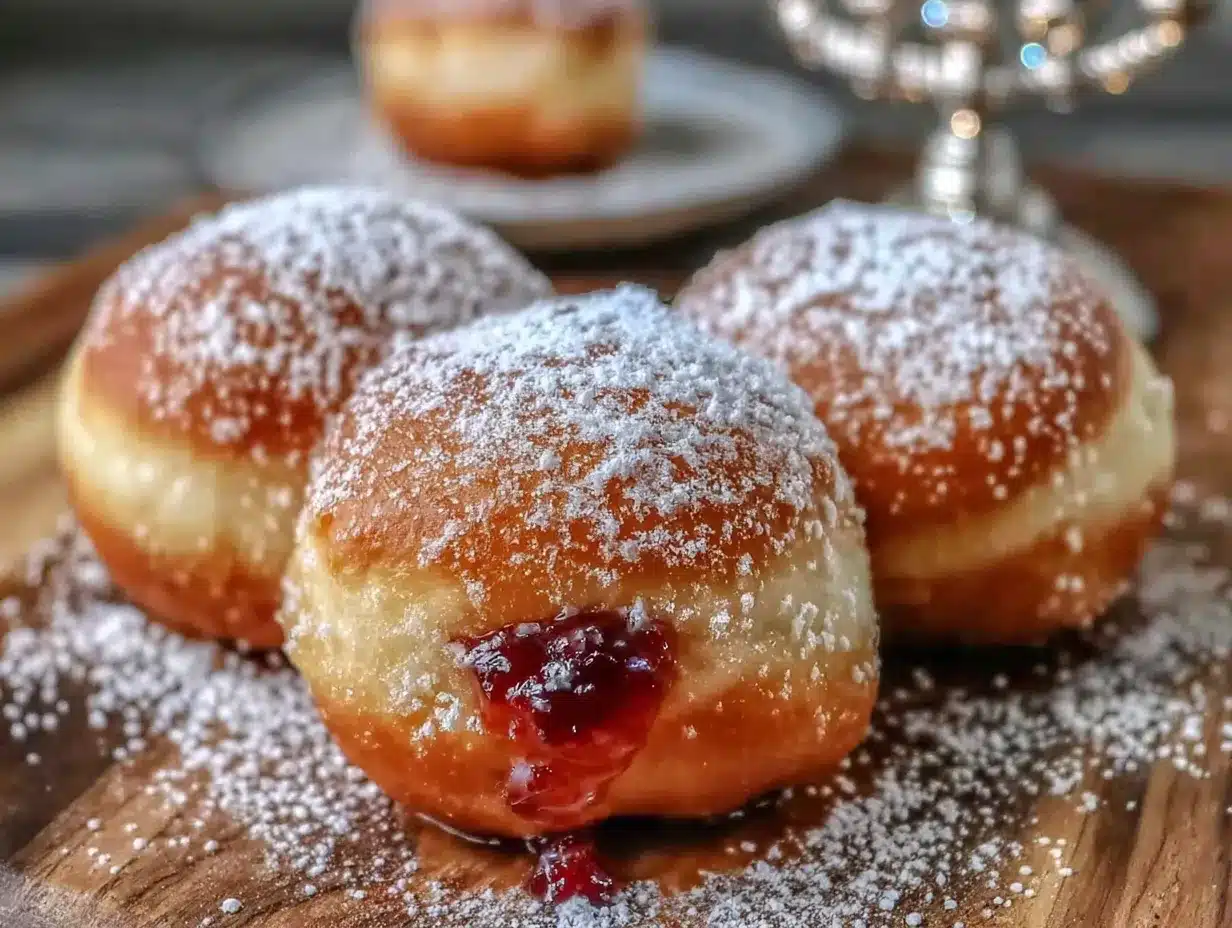
These homemade Hanukkah sufganiyot are the result of that obsession. They’re fluffy, golden, and bursting with jam in that perfect, soul-satisfying way. You know that feeling when you bite into a donut and the filling squirts out just a little, and you have to catch it with your tongue so it doesn’t land on your shirt? That’s what we’re going for here. I’ve tested this recipe with different flours, different proofing times, and different frying temperatures until I landed on the exact combination that gives you that light, airy interior with a delicate, shatteringly crisp exterior. The secret, I discovered, is in the temperature of the milk and the patience during the second rise—two things I learned the hard way after a particularly disastrous batch that tasted more like fried bread than donuts.
This recipe stays with me because it captures something essential about Hanukkah itself—the miracle of oil, yes, but also the miracle of gathering around a table with people you love, sharing something that took time and care to make. And honestly, there’s nothing quite like the look on someone’s face when they bite into a warm, freshly fried sufganiyah that you made yourself. It’s worth every bit of flour on your counter and every minute of standing by the stove.
Why You’ll Love This Recipe
After all those failed attempts, I can tell you with confidence—this is the version that works. Here’s why these homemade sufganiyot are different from anything you’ve tried before:
- Foolproof Fluffiness : The dough comes together with a technique I developed after lots of trial and error. Using room-temperature eggs and just-warm milk creates the perfect environment for the yeast to do its thing. You’ll get donuts that are light as air, not heavy or greasy.
- Simple Pantry Ingredients : No weird specialty items here. Flour, sugar, eggs, butter, milk, yeast, and jam. You probably have most of this stuff in your kitchen right now. The only thing you might need to grab is the jam, and honestly, any good-quality preserve works beautifully.
- Perfect for Hanukkah Gatherings : These sufganiyot are the star of any holiday spread. They’re traditional, they’re celebratory, and they disappear fast. I’ve brought them to family gatherings and potlucks, and people always ask for the recipe before they’ve even finished eating.
- Crowd-Pleaser for All Ages : Kids go crazy for these, and adults get that nostalgic look in their eyes. There’s something about a freshly fried donut that cuts through all the fussiness and just makes people happy.
- Unbelievably Delicious : The combination of the tender, slightly sweet dough with the bright, fruity jam and the dusting of powdered sugar is honestly next-level. It’s comfort food at its finest, but elevated just enough to feel special.
What makes this recipe different from the dozens of others I tested is the double-proofing method and the specific frying temperature. Most recipes rush the second rise, but that extra 20 minutes makes all the difference in creating that pillowy texture. And I fry at 350°F, not 375°F—trust me on this. The lower temperature gives the inside time to cook through without the outside burning. It’s a small adjustment that changes everything.
These aren’t just donuts—they’re the kind that make you close your eyes after the first bite. They’re Hanukkah in edible form, reimagined for home cooks who want something truly special without a culinary degree.
What Ingredients You Will Need
This recipe uses simple, wholesome ingredients to deliver that perfect sufganiyah texture and flavor. Most of these are standard baking staples, so you probably won’t need a special trip to the store. Let me walk you through each one and why it matters.
For the Dough
- 3 ½ cups (440g) all-purpose flour – I prefer King Arthur Flour for its consistent protein content, but any good all-purpose flour works. Spoon and level your flour—don’t scoop directly from the bag, or you’ll end up with dense donuts.
- ¼ cup (50g) granulated sugar – Just enough sweetness to balance the dough without making it dessert-like. The jam and powdered sugar handle the sweetness.
- 2 ¼ teaspoons (1 packet) active dry yeast – I use Red Star or Fleischmann’s. Make sure your yeast is fresh—check the expiration date! Old yeast is the number one reason donuts don’t rise.
- ½ teaspoon salt – Don’t skip this. Salt controls the yeast activity and enhances the overall flavor. Without it, your donuts will taste flat.
- 2 large eggs, room temperature – Cold eggs will shock the dough and slow down the rise. Leave them on the counter for 30 minutes before you start. If you forget, place them in a bowl of warm water for 5 minutes.
- ¼ cup (60ml) whole milk, warm (110°F) – Whole milk gives the richest flavor, but 2% works in a pinch. The temperature is crucial—too hot kills the yeast, too cold won’t activate it. Test it on your wrist like you would for a baby’s bottle.
- ¼ cup (60g) unsalted butter, melted and cooled slightly – Salted butter works too, just reduce the added salt to ¼ teaspoon. The butter adds richness and tenderness to the crumb.
- 1 teaspoon vanilla extract – Pure vanilla extract, please. Imitation works, but the flavor won’t be as warm and complex.
- 1 tablespoon brandy or vodka – This is my secret ingredient! The alcohol inhibits gluten formation slightly, making the donuts more tender. It also helps the dough absorb less oil during frying. You can skip it, but don’t say I didn’t warn you.
For Frying and Filling
- 6 cups (1.5 liters) vegetable oil, for frying – Use a neutral oil with a high smoke point. Canola, sunflower, or peanut oil are all excellent choices. Don’t use olive oil—it’s too flavorful and burns easily.
- 1 cup (320g) raspberry jam or strawberry preserves – Seedless jam gives the smoothest filling, but I personally love the little crunch of seeds. Bonne Maman and Smucker’s are both great. You can also use apricot, blueberry, or even chocolate-hazelnut spread.
- ½ cup (60g) powdered sugar, for dusting – Confectioners’ sugar, sifted if you want that gorgeous snowy look. I don’t always sift, and honestly, it still looks beautiful.
Ingredient Selection Tips
For the best results, use room-temperature ingredients. I know it’s tempting to pull everything straight from the fridge, but cold ingredients will make your dough stiff and slow to rise. Trust me, I learned this the hard way after a particularly frustrating batch that refused to puff up.
If you’re using a different jam, make sure it’s not too watery. Some cheaper jams have a lot of extra syrup, which can make your donuts soggy from the inside. Look for preserves or jam that hold their shape on a spoon.
Equipment Needed
You don’t need a professional bakery setup for these sufganiyot, but having the right tools makes everything easier. Here’s what I use:
- Stand mixer with dough hook – This is a lifesaver for kneading. You can absolutely knead by hand, but it takes about 10 minutes of good, steady work. The mixer does it in 6 minutes without breaking a sweat.
- Large mixing bowl – For the dough to rise. Glass or ceramic works best because they don’t react with the dough.
- Plastic wrap or a clean kitchen towel – To cover the dough while it rises. A damp towel works better than plastic wrap, in my experience—it creates a slightly humid environment that prevents the dough from drying out.
- Rolling pin – For rolling out the dough evenly. Nothing fancy needed.
- 3-inch round cookie cutter or a drinking glass – For cutting the donut rounds. A glass works perfectly if you don’t have a cutter. Just make sure the edges are sharp.
- Baking sheet lined with parchment paper – For the cut donuts to rise. The parchment prevents sticking.
- Deep, heavy-bottomed pot – For frying. A Dutch oven is ideal because it holds heat well. Avoid nonstick pans—they don’t conduct heat evenly for deep frying.
- Candy or deep-fry thermometer – Non-negotiable! Guessing the oil temperature is how you end up with greasy or burnt donuts. I’ve used the same Taylor thermometer for years.
- Slotted spoon or spider strainer – For removing the donuts from the oil. A spider strainer is my favorite because it lets the oil drain quickly.
- Paper towel-lined plate or wire rack – For draining the fried donuts. A wire rack is better because it lets air circulate, keeping the donuts crisp.
- Piping bag with a round tip – For filling the donuts with jam. A small round tip (like a #230) works perfectly. If you don’t have a piping bag, a zip-top bag with the corner snipped off works just fine.
- Fine-mesh sieve – For dusting powdered sugar evenly. A tea strainer works in a pinch.
Budget-friendly tip: If you don’t have a stand mixer, you can knead by hand. It takes a bit more effort, but there’s something satisfying about working the dough yourself. And a drinking glass works beautifully as a cookie cutter—just make sure it’s clean!
Preparation Method
Let’s get to the fun part. I’ve broken this down into clear steps with all the little details I wish someone had told me when I started. Take your time, and don’t rush the rises—that’s where the magic happens.
Step 1: Activate the Yeast
In the bowl of your stand mixer, combine the warm milk (110°F—test it on your wrist!) with 1 tablespoon of the sugar and the packet of yeast. Give it a gentle stir and let it sit for 5-10 minutes until it becomes foamy and smells like bread. If it doesn’t foam, your yeast might be dead. Start over with fresh yeast—trust me, it’s worth it.
Step 2: Make the Dough
Add the remaining sugar, the room-temperature eggs, melted butter, vanilla extract, and brandy (if using) to the yeast mixture. Mix on low speed with the dough hook until combined. In a separate bowl, whisk together the flour and salt. Gradually add the flour mixture to the wet ingredients, mixing on low until a shaggy dough forms. Increase the speed to medium and knead for 6-7 minutes (or 10 minutes by hand) until the dough is smooth, elastic, and slightly tacky but not sticky. It should pull away from the sides of the bowl cleanly. If it’s too sticky, add a tablespoon of flour at a time. Too dry? Add a teaspoon of warm milk.
Step 3: First Rise
Shape the dough into a ball and place it in a lightly greased bowl, turning once to coat. Cover with plastic wrap or a damp kitchen towel and let it rise in a warm, draft-free place for 1-1.5 hours, or until doubled in size. I like to put mine in the oven with the light on—it’s the perfect cozy environment. The dough should feel puffy and spring back slowly when poked.
Step 4: Shape the Donuts
Gently punch down the dough to release the air. Turn it out onto a lightly floured surface. Roll the dough to about ½-inch thickness. Use your 3-inch cutter to cut out rounds, dipping the cutter in flour between cuts to prevent sticking. Re-roll the scraps once and cut more rounds—try not to overwork the dough. You should get about 16-18 rounds. Place them on a parchment-lined baking sheet, leaving about 2 inches between each one. Cover loosely with a clean towel.
Step 5: Second Rise
This is the step most people rush, and it’s where the magic happens. Let the cut donuts rise for 30-40 minutes until they’re puffy and almost doubled in size. They should feel very light and airy when you gently touch them. The donuts will look almost like little pillows. Don’t skip this—it’s what gives you that ethereal, fluffy interior.
Step 6: Heat the Oil
While the donuts are rising, pour the vegetable oil into your heavy-bottomed pot. The oil should be about 2 inches deep. Heat it over medium heat until it reaches 350°F. Use your thermometer to monitor the temperature—it will fluctuate, so keep an eye on it. If you don’t have a thermometer, drop a small cube of bread into the oil; it should brown in about 60 seconds.
Step 7: Fry the Donuts
Carefully slide 3-4 donuts into the hot oil, making sure not to overcrowd the pot. They’ll expand as they cook, so give them room. Fry for 60-90 seconds per side, until deeply golden brown. Use your slotted spoon to gently flip them. The first side usually takes a few seconds longer than the second. The donuts should puff up beautifully and develop that signature crackled surface. Transfer to a paper towel-lined plate or wire rack to drain. Repeat with the remaining donuts, letting the oil come back to 350°F between batches.
Step 8: Fill the Donuts
Let the donuts cool for about 5 minutes—they need to be cool enough to handle but still warm. While they cool, spoon your jam into a piping bag fitted with a round tip. Insert the tip into the side of each donut and gently squeeze until you feel the donut expand slightly. Don’t overfill, or the jam will squirt out the other side. You’ll get a feel for it after the first few. The donut should feel heavier but not bursting.
Step 9: Dust and Serve
Place the powdered sugar in a fine-mesh sieve and dust generously over the filled donuts. Serve immediately while they’re still warm. The contrast between the crisp exterior, the soft interior, and the cool jam is absolutely heavenly.
Cooking Tips & Techniques
I’ve made plenty of mistakes with sufganiyot, and I want you to learn from them so you don’t have to repeat my failures. Here are the things that really matter:
Temperature control is everything. I once got distracted while the oil was heating and let it climb to 400°F. The donuts browned in about 30 seconds but were completely raw in the middle. Keep that thermometer clipped to the pot and check it frequently. If the oil gets too hot, remove the pot from the heat for a minute. Too cold, and the donuts will absorb oil like sponges and turn greasy.
Don’t skip the second rise. I know it’s tempting to rush, especially when you’re hungry and the kitchen smells amazing. But that second rise is what creates the airy, pillowy texture that makes these sufganiyot special. I once skipped it because I was in a hurry, and the donuts came out dense and doughy—more like hockey pucks than donuts.
Use a spider strainer, not tongs. Tongs can squish the delicate donuts and deflate them. A spider strainer lets you lift them gently without damaging the shape. It’s a small thing, but it makes a big difference in the final texture.
Let the donuts cool slightly before filling. If you fill them while they’re too hot, the jam will melt and soak into the dough, making it soggy. But if you wait too long, they’ll be cold and the jam won’t spread as nicely. About 5 minutes is the sweet spot.
Work in small batches. Frying too many donuts at once drops the oil temperature, and you’ll end up with greasy, unevenly cooked donuts. Three or four at a time is perfect. Be patient—the results are worth it.
Keep a baking sheet nearby. After you drain the donuts on paper towels, transfer them to a baking sheet. This keeps them from getting soggy on the bottom while you finish frying the rest.
Variations & Adaptations
One of the best things about sufganiyot is how versatile they are. Here are some of my favorite ways to switch things up:
Flavor Variations: While raspberry is the classic, I’ve made these with strawberry, apricot, and even a decadent chocolate-hazelnut filling. For a grown-up twist, try a boozy jam—stir a tablespoon of bourbon or Grand Marnier into your jam before filling. My personal favorite is a blackberry jam with a hint of lemon zest mixed in. The brightness cuts through the richness of the fried dough beautifully.
Dietary Adaptations: For a dairy-free version, substitute the whole milk with almond milk and use vegan butter. The texture will be slightly different—a bit less tender—but still delicious. For a gluten-free option, use a 1:1 gluten-free flour blend. I’ve tested this with Bob’s Red Mill, and while the donuts are a bit denser, they’re still light years better than anything you’d buy at a store.
Different Cooking Methods: If you’re nervous about deep frying, you can bake these at 375°F for 10-12 minutes. They won’t have that signature crispy exterior, but they’ll still be fluffy and delicious. Brush them with melted butter after baking to get a bit of that golden color. Alternatively, try an air fryer at 350°F for 5-6 minutes, flipping halfway through. They come out surprisingly good—crisp on the outside, tender on the inside.
Seasonal Twists: In the summer, I love filling these with fresh berry compote instead of jam. In the fall, a spiced apple butter filling is incredible. For Hanukkah, you could even do a sufganiyah bar with multiple fillings and toppings—let everyone customize their own!
Serving & Storage Suggestions
These sufganiyot are at their absolute best served warm, within an hour of frying. The contrast between the crisp exterior and the soft, jam-filled interior is something you have to experience fresh. I like to arrange them on a beautiful platter, dusted generously with powdered sugar, with a few extra bowls of jam on the side for dipping.
For a Hanukkah spread, they pair beautifully with crispy potato latkes with applesauce and a cup of hot tea or coffee. The savory-sweet combination is pure comfort. If you’re serving them for dessert, a scoop of vanilla ice cream on the side is never a bad idea.
Storage: Sufganiyot are best eaten the day they’re made. If you have leftovers (unlikely, but possible), store them in an airtight container at room temperature for up to 2 days. Don’t refrigerate them—the cold will dry them out and make the texture rubbery.
Reheating: To revive day-old sufganiyot, pop them in a 350°F oven for 5 minutes. This will crisp up the exterior and warm the jam. You can also microwave them for 10 seconds, but they’ll lose that crispy texture. Honestly, they’re still delicious the next day, even at room temperature—just not quite as magical.
Freezing: You can freeze unfilled, unfried donut rounds after the second rise. Place them on a baking sheet in the freezer until solid, then transfer to a zip-top bag. When you’re ready to fry, let them thaw in the refrigerator overnight, then fry as directed. The texture is remarkably close to fresh.
Nutritional Information & Benefits
Let’s be real—sufganiyot are a treat, and they’re not pretending to be health food. But knowing what’s in them helps you enjoy them mindfully. Here’s the breakdown per donut (assuming 18 donuts):
- Calories: Approximately 220-250
- Fat: 12g (mostly from frying oil)
- Carbohydrates: 28g
- Protein: 4g
- Fiber: 1g
- Sugar: 12g (including jam)
While these aren’t exactly a health food, there are a few bright spots. The eggs provide high-quality protein and essential vitamins like B12 and D. The jam, if you use a good-quality one, contains some fruit antioxidants. And honestly, there’s something to be said for the mental health benefits of sharing a homemade treat with people you love. Food is about more than just nutrients—it’s about connection, tradition, and joy.
Dietary Considerations: This recipe contains gluten, dairy, and eggs. For a dairy-free version, see the variations section above. For gluten-free, use a 1:1 gluten-free flour blend. These are not low-fat or low-calorie, but they’re meant to be a special occasion indulgence. Enjoy them without guilt!
Conclusion
These homemade Hanukkah sufganiyot are more than just a recipe—they’re a labor of love that brings the spirit of the holiday right into your kitchen. After all those failed attempts and flour-covered counters, I can tell you with absolute certainty that this version is worth every minute of effort. The first time you pull a perfect, golden donut from the hot oil and fill it with jam, you’ll understand why I was so obsessed.
I’d love to hear how yours turn out! Did you try a different filling? Did you bake them instead of frying? Drop a comment below and let me know—I read every single one and I love seeing your creations. And if you share them on social media, tag me so I can cheer you on. There’s nothing quite like the feeling of making something this special from scratch.
So go ahead, get your hands a little floury, and make some magic. Your Hanukkah table will thank you. And honestly, you might just start a new tradition that lasts for generations.
Frequently Asked Questions
Can I make the dough ahead of time?
Absolutely! After the first rise, punch down the dough, wrap it tightly in plastic wrap, and refrigerate for up to 24 hours. When you’re ready to shape, let it sit at room temperature for 30 minutes before rolling. The cold fermentation actually develops more flavor.
Why did my donuts come out greasy?
This usually happens when the oil isn’t hot enough. If the oil is below 340°F, the donuts absorb too much oil before they cook through. Make sure your oil is at a steady 350°F, and don’t overcrowd the pot. Also, let the donuts drain properly on paper towels or a wire rack.
Can I use a different type of jam?
Yes! Any seedless jam or preserve works beautifully. Strawberry, apricot, blackberry, and blueberry are all excellent choices. For a truly decadent treat, try a chocolate-hazelnut spread or a lemon curd. Just make sure the filling isn’t too runny.
How do I know when the oil is at the right temperature without a thermometer?
Drop a small cube of bread into the oil. If it browns in about 60 seconds, the oil is at 350°F. If it browns faster, the oil is too hot. If it takes longer, the oil is too cool. A thermometer is much more reliable, but this trick works in a pinch.
Can I freeze the fried donuts?
You can, but they won’t be as good as fresh. Freeze unfilled, un-dusted donuts in a single layer on a baking sheet, then transfer to a zip-top bag. To serve, reheat in a 350°F oven for 5-7 minutes, then fill and dust with powdered sugar. They’ll be about 80% as good as fresh—still delicious, but not quite the same magic.
Pin This Recipe!
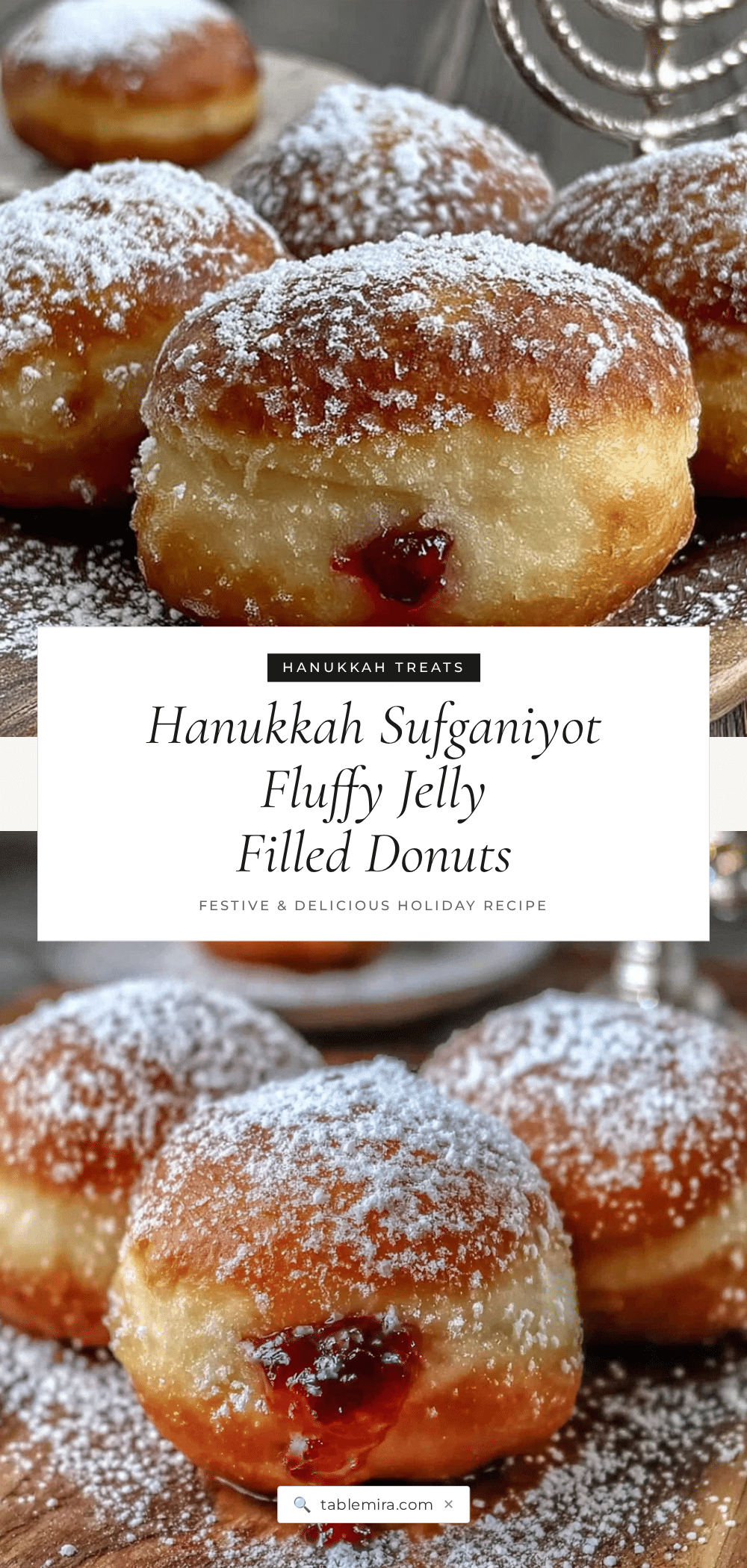
Best Homemade Hanukkah Sufganiyot – Easy Jelly Donuts

Fluffy, golden, and bursting with jam, these homemade sufganiyot are the perfect Hanukkah treat. After 12 tries, this foolproof recipe delivers light, airy donuts with a delicate, crisp exterior.
- Prep Time: 30 minutes
- Cook Time: 20 minutes
- Total Time: 2 hours 30 minutes
- Yield: 16-18 servings 1x
- Category: Dessert
- Cuisine: Jewish
Ingredients
- 3 ½ cups (440g) all-purpose flour
- ¼ cup (50g) granulated sugar
- 2 ¼ teaspoons (1 packet) active dry yeast
- ½ teaspoon salt
- 2 large eggs, room temperature
- ¼ cup (60ml) whole milk, warm (110°F)
- ¼ cup (60g) unsalted butter, melted and cooled slightly
- 1 teaspoon vanilla extract
- 1 tablespoon brandy or vodka
- 6 cups (1.5 liters) vegetable oil, for frying
- 1 cup (320g) raspberry jam or strawberry preserves
- ½ cup (60g) powdered sugar, for dusting
Instructions
- In the bowl of a stand mixer, combine warm milk (110°F) with 1 tablespoon sugar and yeast. Let sit 5-10 minutes until foamy.
- Add remaining sugar, eggs, melted butter, vanilla, and brandy (if using) to yeast mixture. Mix on low with dough hook until combined.
- Whisk flour and salt together. Gradually add to wet ingredients, mixing on low until a shaggy dough forms. Increase speed to medium and knead 6-7 minutes (10 minutes by hand) until smooth, elastic, and slightly tacky.
- Shape dough into a ball, place in a lightly greased bowl, turning once to coat. Cover and let rise in a warm place for 1-1.5 hours until doubled.
- Punch down dough. Roll to ½-inch thickness on a lightly floured surface. Cut rounds with a 3-inch cutter. Re-roll scraps once. Place on parchment-lined baking sheet, 2 inches apart. Cover and let rise 30-40 minutes until puffy.
- Heat oil in a deep, heavy-bottomed pot to 350°F. Fry 3-4 donuts at a time for 60-90 seconds per side until deeply golden. Drain on paper towels or a wire rack.
- Let donuts cool 5 minutes. Fill a piping bag fitted with a round tip with jam. Insert tip into side of each donut and gently squeeze until donut expands slightly.
- Dust generously with powdered sugar. Serve immediately while warm.
Notes
Temperature control is crucial. Keep oil at a steady 350°F. Don’t skip the second rise for pillowy texture. Let donuts cool slightly before filling to prevent soggy dough. Work in small batches to maintain oil temperature.
Nutrition
- Serving Size: 1 donut
- Calories: 235
- Sugar: 12
- Sodium: 95
- Fat: 12
- Saturated Fat: 3
- Carbohydrates: 28
- Fiber: 1
- Protein: 4
Keywords: sufganiyot, Hanukkah, jelly donuts, homemade donuts, fried donuts, holiday dessert