I was standing in the frozen foods aisle of a grocery store last December when the smell of someone’s shrimp cocktail hit me—and suddenly I was seven years old at my great-aunt Rosa’s tiny kitchen table in Brooklyn.
The memory came rushing back so fast it almost knocked me sideways. The way her gold bracelets clanked against the counter. The sound of garlic hitting hot olive oil. The steam fogging up the windows while snow piled up on the fire escape outside. And that linguine—slick with olive oil, studded with clams and shrimp, flecked with parsley she’d snipped from the pot on her windowsill.
I hadn’t thought about that kitchen in years. Aunt Rosa passed when I was fifteen, and nobody in my family really makes her Christmas Eve feast anymore. We scattered. Traditions got lost somewhere between moving trucks and busy schedules. But standing there holding a bag of frozen shrimp, I felt this desperate need to get it back.
Honestly, I almost cried in the frozen foods aisle. Let’s just say it was one of those weeks.
So I grabbed the shrimp. Then some clams. Then some mussels because why not. I called my mom for the rough outline of Aunt Rosa’s recipe—because of course nobody wrote it down—and I spent the next three evenings in my own kitchen trying to recreate that feeling. That warmth. That specific brand of comfort that only comes from a bowl of seafood linguine on a cold night.
This is what I ended up with. It’s not exactly Aunt Rosa’s—I added a splash of white wine she never used and a pinch of red pepper flakes she would’ve called “too fancy.” But it’s close. Close enough that when I took the first bite, I swear I could hear those bracelets clanking.
Maybe you’ve got a memory like that. A dish you’re trying to get back to. If seafood linguine is part of your story too, this one’s for you.
Why You’ll Love This Recipe
Let me tell you—this isn’t just another seafood pasta recipe. I tested this thing six times before I got it right. Six times of overcooked shrimp and rubbery clams and linguine that turned into a gluey mess. But now? This version is the one I’d serve to anyone who walked through my door on Christmas Eve.
- One-Pan Wonder : Everything comes together in a single skillet. Less cleanup means more time actually enjoying your evening.
- Under 40 Minutes : From start to finish, you’re looking at about 35 minutes. Perfect for when you’re juggling a dozen other holiday tasks.
- Simple Ingredients : Nothing weird here. No truffle oil, no obscure fish you have to special order. Just good seafood, garlic, wine, and pasta.
- Feels Fancy, Isn’t : This looks like something you’d order at a nice Italian restaurant, but it’s genuinely hard to mess up once you know the tricks.
- Crowd-Pleaser : I’ve served this to picky eaters, seafood skeptics, and my uncle who “doesn’t do pasta.” Empty plates all around.
- Christmas Eve Magic : If you’re carrying on the Feast of the Seven Fishes tradition or just want something special for the holiday, this fits right in.
What makes this different from the dozens of other seafood linguine recipes out there? Two things. First, I cook the linguine directly in the broth instead of boiling it separately. Sounds weird, I know. But the starch from the pasta thickens the sauce naturally, and the noodles soak up all that briny, garlicky goodness. Second, I add the seafood in stages so nothing gets overcooked. Shrimp goes in first, then clams and mussels, then the squid at the very end. Each piece comes out perfectly tender.
This recipe isn’t just good—it’s the kind that makes you close your eyes after the first bite. It’s comfort food with a little bit of elegance. The kind of meal that makes a cold December night feel warm again.
What Ingredients You Will Need
This recipe relies on a handful of quality ingredients working together. Nothing complicated here—just good seafood, aromatics, and pasta. Here’s what you’ll need:
For the Pasta & Base
- 12 ounces linguine (I prefer De Cecco or Barilla for the right texture)
- 3 tablespoons extra-virgin olive oil (use something you’d actually dip bread in)
- 4 cloves garlic, thinly sliced (not minced—thin slices melt into the oil without burning)
- 1/2 teaspoon red pepper flakes (optional but recommended for a gentle warmth)
- 1/2 cup dry white wine (Pinot Grigio or Sauvignon Blanc—nothing sweet)
- 2 cups low-sodium chicken or seafood broth
- 1 (14-ounce) can diced tomatoes, drained (San Marzano if you can find them)
- Salt and black pepper (to taste)
For the Seafood
- 12 large shrimp, peeled and deveined (tails on or off—your call)
- 12 littleneck clams, scrubbed clean (discard any that won’t close when tapped)
- 12 mussels, scrubbed and debearded (same rule—if they’re open and won’t close, toss ’em)
- 4 ounces squid rings and tentacles (fresh or frozen, thawed)
For Finishing
- 1/4 cup fresh parsley, chopped
- Zest of 1 lemon
- Juice of 1/2 lemon
- Grated Parmesan or Pecorino Romano (for serving, though some purists skip cheese with seafood—I say do what makes you happy)
Ingredient Tips: For the clams and mussels, I usually buy them the day I’m cooking. If you need to store them, put them in a bowl covered with a damp towel in the fridge—never in a sealed bag or they’ll suffocate. For the shrimp, look for wild-caught if you can. The texture is noticeably better than farmed.
Substitutions: No clams? Use extra mussels or just skip them. Don’t like squid? Double the shrimp. Need it gluten-free? Use a good-quality gluten-free linguine and watch the cooking time closely—they tend to get mushy fast. For a dairy-free finish, skip the cheese and add a drizzle of good olive oil instead.
Equipment Needed
You don’t need a fancy kitchen for this one. Here’s what you’ll want:
- Large, deep skillet or Dutch oven (12-inch with a lid is ideal—something wide enough to fit the pasta and deep enough to hold the broth)
- Wooden spoon or silicone spatula (for stirring without scratching your pan)
- Sharp knife and cutting board
- Measuring cups and spoons
- Colander or strainer (for rinsing clams and mussels)
- Small bowl (for holding the chopped parsley and lemon zest)
- Tongs (for turning the pasta and seafood)
Budget-Friendly Tip: If you don’t have a Dutch oven, a deep non-stick skillet works fine. Just make sure it’s at least 12 inches across so everything fits without crowding. I’ve also made this in a large stainless steel pot in a pinch—worked great, just had to stir a little more often.
Personal Experience: I used my mom’s old cast iron Dutch oven for this. It’s chipped and stained and probably fifty years old, but it holds heat like nothing else. If you’ve got a heavy-bottomed pan, use it. The even heat makes a real difference with the seafood.
Preparation Method
Alright, let’s cook. Take a deep breath—this moves faster than you think once you start.
- Prep your seafood first. Rinse the clams and mussels under cold water. Scrub any grit off the shells. If a clam or mussel is open, tap it on the counter—if it doesn’t close, toss it. Pull the beards off the mussels (that fuzzy string sticking out). Pat the shrimp dry with paper towels. Cut the squid rings into smaller pieces if they’re large. Keep everything in the fridge until you’re ready.
- Heat the olive oil in your large skillet or Dutch oven over medium heat. Add the sliced garlic and red pepper flakes. Cook for about 1 minute, stirring constantly. You want the garlic to soften and get fragrant, not brown. If it starts turning golden, your heat is too high—pull the pan off for a second.
- Add the wine. Pour it in and let it bubble for 2 minutes, scraping up any browned bits from the bottom of the pan. This is where the flavor lives. The alcohol will cook off, leaving behind that lovely acidity.
- Add the broth and tomatoes. Pour in the broth and the drained diced tomatoes. Stir to combine. Season with a pinch of salt and a few grinds of black pepper. Bring this to a gentle simmer.
- Add the linguine. Break the pasta in half if you want it easier to fit (I do—I’m not here to wrestle with long noodles). Drop it into the simmering liquid. Stir immediately to prevent sticking. Cook for about 8 minutes, stirring occasionally. The pasta will absorb most of the liquid and release starch that thickens everything into a light sauce. If it looks too dry before the pasta is done, add a splash more broth or water.
- Add the shrimp first. Nestle them into the pasta. Cook for 2 minutes, then flip them over. They should be starting to turn pink.
- Add the clams and mussels. Arrange them on top of the pasta, hinge-side down. Cover the pan with the lid. Cook for 4-5 minutes. The clams and mussels will steam open. Don’t peek too often—you want the steam to stay in. After 4 minutes, check. Any that haven’t opened after 6 minutes total? Discard them. They’re not safe to eat.
- Add the squid last. Scatter the squid rings and tentacles over the top. Stir gently to combine. Squid cooks in about 1-2 minutes—any longer and it turns rubbery. So watch it carefully.
- Finish with parsley, lemon zest, and lemon juice. Turn off the heat. Sprinkle the parsley and lemon zest over everything. Squeeze the lemon juice over the top. Give it one gentle stir to distribute everything.
- Let it rest for 2 minutes before serving. This lets the flavors settle and the sauce thicken just a bit more.
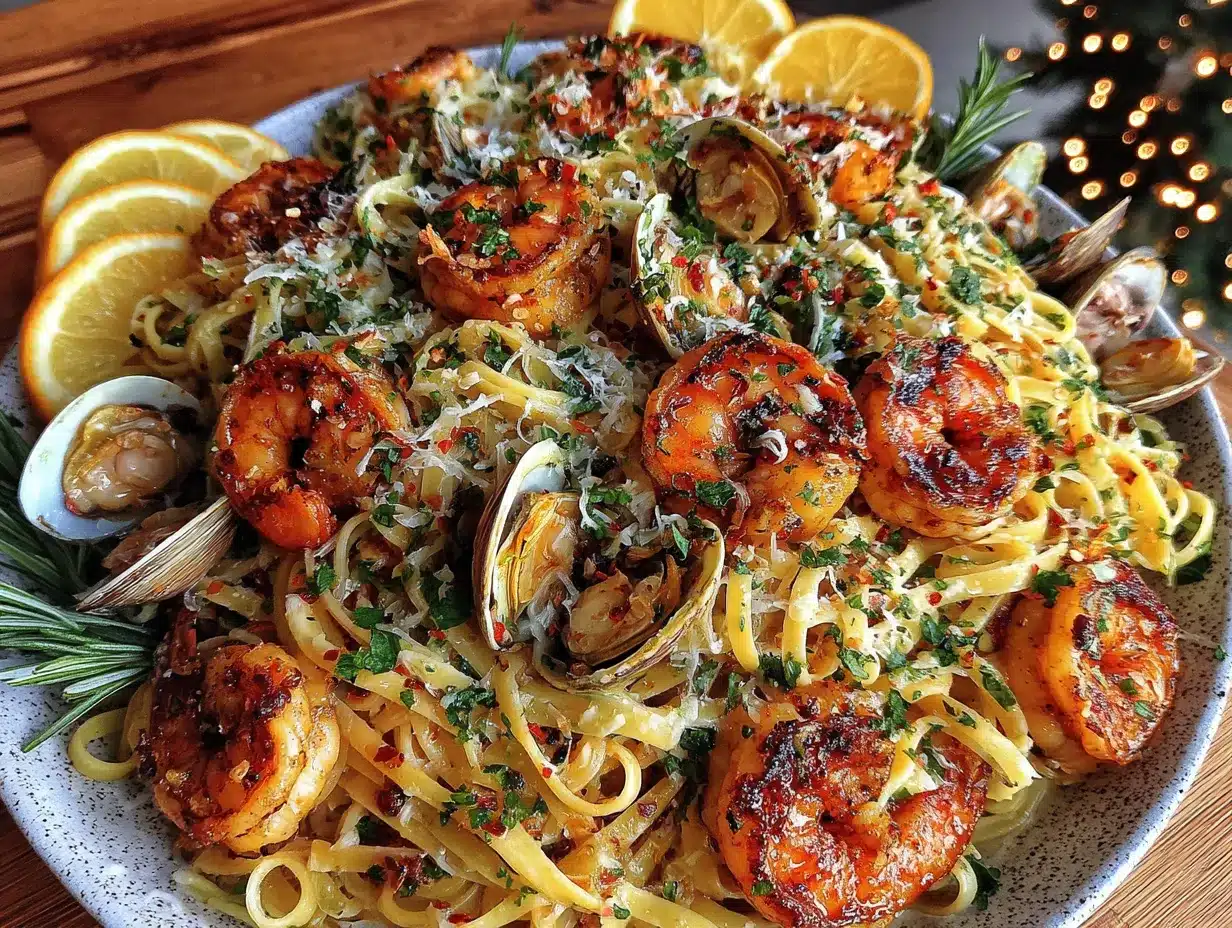
Visual Cue: At the end, you should have a pan full of tender linguine coated in a light, brothy sauce. The clams and mussels will be gaping open, showing off their plump meat. The shrimp will be curled into pink crescents. The parsley and lemon zest will be scattered like confetti. It should smell like garlic, sea, and comfort.
Cooking Tips & Techniques
I messed up this recipe so many times so you don’t have to. Here’s what I learned:
Don’t overcook the garlic. This was my biggest mistake early on. I’d get distracted and let the garlic go too long, and suddenly my whole dish tasted bitter and burnt. Garlic goes from perfect to ruined in about 30 seconds. Keep it moving in the pan. When it smells amazing and looks just barely golden, you’re there.
Timing is everything with seafood. This is not a dish you can walk away from. Set a timer for each step. Shrimp goes rubbery in seconds. Squid turns into tire treads if you blink. Clams and mussels are more forgiving, but even they get tough if you boil them too long. Stay in the kitchen. Put your phone down. Focus on the pan.
Trust the pasta-in-broth method. I know it feels weird not boiling pasta separately. I was skeptical too. But here’s the thing: the starch from the linguine thickens the broth into a silky sauce that clings to every strand. You don’t need cream or butter or any of that. The pasta does the work for you. Just make sure you stir it every couple minutes so it doesn’t stick to the bottom.
One more thing— taste the broth before you add the seafood. It should be well-seasoned but not salty, because the clams and mussels will release their own briny liquid as they cook. That natural saltiness will season the whole dish. So go easy on the salt at the beginning. You can always add more at the end.
Variations & Adaptations
This recipe is flexible. Here are some ways to change it up:
Make It Spicier
Double the red pepper flakes, or add a chopped Calabrian chili with the garlic. My brother-in-law does this and calls it “the one that clears your sinuses.” Not for the faint of heart, but definitely memorable.
Go All-Clam
If you’re not a fan of mixed seafood, just use 2 pounds of clams and skip everything else. It’s simpler and honestly just as delicious. I’ve done this on nights when I couldn’t find good shrimp at the store.
Add Greens
Toss in a handful of baby spinach or chopped kale when you add the squid. It wilts into the sauce and adds color and nutrients without changing the flavor much. My sister does this and swears it makes the dish “healthy.” I’m not sure about that, but it does look pretty.
Dairy-Free Version
Skip the Parmesan at the end. Instead, finish with a drizzle of really good olive oil and a sprinkle of toasted breadcrumbs for texture. I tried this once when I ran out of cheese, and honestly? I almost liked it better.
Swap the Protein
This works beautifully with chunks of firm white fish like cod or halibut. Add them at the same time as the shrimp. Or go completely vegetarian by using mushrooms and artichoke hearts instead of seafood—it’s a different dish, but a good one.
Serving & Storage Suggestions
Serving: Serve this straight from the pan if you can. There’s something about bringing a big skillet to the table that feels right for Christmas Eve. Ladle the linguine into wide, shallow bowls so everyone gets plenty of broth. Arrange a few clams and mussels on top for presentation. Sprinkle with extra parsley and a grating of cheese if you’re using it.
I like to serve this with crusty bread for sopping up the leftover broth. A simple green salad with lemon vinaigrette on the side balances out the richness. For drinks? A crisp Pinot Grigio or a light Italian beer works perfectly. If you’re doing a full Christmas Eve spread, this pairs nicely with roasted vegetables or a simple antipasto platter to start.
Storage: This is one of those dishes that’s truly best the day you make it. The pasta keeps absorbing liquid as it sits, and the seafood gets tougher in the fridge. But if you have leftovers, store them in an airtight container for up to 2 days.
Reheating: The gentle way is best. Put the leftovers in a skillet with a splash of broth or water. Warm over low heat, stirring gently, until everything is heated through. Don’t use the microwave—it’ll turn the shrimp into little rubber pellets. Trust me on this one.
Flavor Note: The broth actually gets more flavorful overnight as the seafood juices meld with the tomatoes and wine. So if you don’t mind slightly softer pasta, the leftovers are still pretty great. Just don’t expect the same texture as fresh.
Nutritional Information & Benefits
Here’s an approximate breakdown per serving (based on 4 servings):
| Nutrient | Amount |
|---|---|
| Calories | 485 |
| Protein | 32g |
| Carbohydrates | 52g |
| Fat | 14g |
| Saturated Fat | 2.5g |
| Fiber | 4g |
| Sodium | 890mg |
Health Benefits: This dish is packed with lean protein from the mixed seafood, which keeps you full without weighing you down. Clams and mussels are excellent sources of iron and vitamin B12—great for energy levels during the holiday rush. The garlic and olive oil bring anti-inflammatory properties, and the tomatoes provide lycopene, an antioxidant that supports heart health.
Dietary Considerations: This recipe is naturally dairy-free if you skip the cheese. It’s also relatively low in saturated fat compared to cream-based pasta dishes. For a lower-carb option, serve the seafood and broth over zucchini noodles or spaghetti squash instead of linguine. If you’re watching sodium, use low-sodium broth and go easy on the added salt—the clams and mussels bring their own.
Allergen Note: This recipe contains shellfish (shrimp, clams, mussels, squid) and gluten (pasta). Not suitable for shellfish allergies. For gluten-free needs, use certified gluten-free pasta.
Conclusion
This seafood linguine is more than just a recipe—it’s a way to bring a little warmth and tradition into your kitchen, especially on a cold December night. Whether you’re carrying on a family tradition or starting a new one, this dish delivers comfort without a lot of fuss.
I’ve made this for Christmas Eve dinners, for quiet Tuesday nights when I needed a pick-me-up, and for friends who’d never cooked seafood before and were nervous to try. Every single time, it works. It’s forgiving. It’s flexible. And it tastes like something special without requiring a culinary degree.
So here’s my invitation to you: make this your own. Use whatever seafood looks good at the market. Add extra garlic if that’s your thing. Skip the wine and use extra broth. The beauty of this recipe is that it bends to fit you.
If you try it, I’d love to hear how it goes. Drop a comment below and tell me about your Christmas Eve traditions, or how you made this recipe your own. And if you’re feeling generous, share a photo—I genuinely love seeing these dishes come to life in other people’s kitchens.
From my kitchen to yours, have a warm and wonderful holiday. You’ve got this.
Frequently Asked Questions
Can I use frozen seafood for this recipe?
Absolutely. I’ve used frozen shrimp, squid, and even frozen clams (though fresh clams are better). Just thaw everything in the fridge overnight or under cold running water before you start. Pat the shrimp dry so they sear instead of steam.
What if I can’t find littleneck clams?
Use whatever small clams your store has—manila clams, cockles, or even steamer clams work. Just adjust cooking time based on size. Smaller clams cook faster. And always discard any that don’t open after cooking.
Can I make this ahead of time?
You can prep everything ahead—clean the seafood, slice the garlic, chop the parsley—but I don’t recommend cooking this in advance. The pasta absorbs the broth and gets mushy, and the seafood loses its texture. It’s a 35-minute dish best made fresh.
Is the wine necessary? Can I substitute it?
The wine adds acidity and depth, but you can skip it. Use an extra 1/2 cup of broth and a squeeze of lemon juice to mimic the brightness. Or use a splash of dry vermouth if you have it—it keeps forever in the pantry and works great in recipes like this.
How do I clean mussels properly?
Rinse them under cold water and scrub any grit off the shells with a stiff brush. The “beard” (those fuzzy threads) pulls off easily with a quick tug toward the hinge of the shell. If a mussel is open before cooking, tap it—if it doesn’t close, throw it away. After cooking, discard any that stayed closed.
Pin This Recipe!
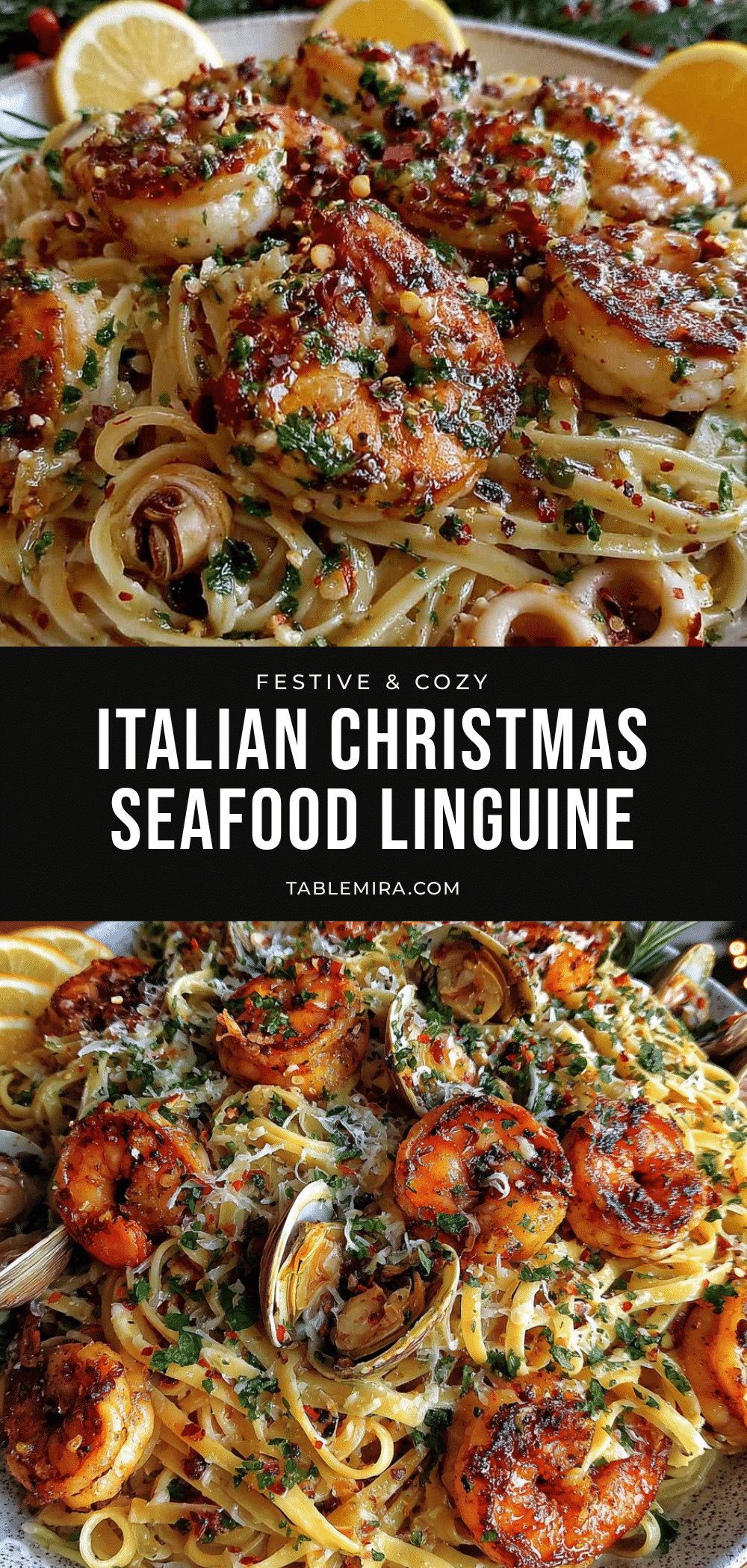
Easy One-Pan Seafood Linguine for Christmas Eve
A comforting and elegant one-pan seafood linguine that comes together in under 40 minutes. Perfect for Christmas Eve or any special occasion, this dish features shrimp, clams, mussels, and squid in a garlicky white wine broth.
- Prep Time: 15 minutes
- Cook Time: 20 minutes
- Total Time: 35 minutes
- Yield: 4 servings 1x
- Category: Main Course
- Cuisine: Italian
Ingredients
- 12 ounces linguine
- 3 tablespoons extra-virgin olive oil
- 4 cloves garlic, thinly sliced
- 1/2 teaspoon red pepper flakes (optional)
- 1/2 cup dry white wine (Pinot Grigio or Sauvignon Blanc)
- 2 cups low-sodium chicken or seafood broth
- 1 (14-ounce) can diced tomatoes, drained
- Salt and black pepper to taste
- 12 large shrimp, peeled and deveined
- 12 littleneck clams, scrubbed clean
- 12 mussels, scrubbed and debearded
- 4 ounces squid rings and tentacles
- 1/4 cup fresh parsley, chopped
- Zest of 1 lemon
- Juice of 1/2 lemon
- Grated Parmesan or Pecorino Romano for serving
Instructions
- Prep your seafood first. Rinse the clams and mussels under cold water. Scrub any grit off the shells. If a clam or mussel is open, tap it on the counter—if it doesn’t close, toss it. Pull the beards off the mussels. Pat the shrimp dry with paper towels. Cut the squid rings into smaller pieces if they’re large. Keep everything in the fridge until you’re ready.
- Heat the olive oil in your large skillet or Dutch oven over medium heat. Add the sliced garlic and red pepper flakes. Cook for about 1 minute, stirring constantly, until the garlic is fragrant but not browned.
- Add the wine. Pour it in and let it bubble for 2 minutes, scraping up any browned bits from the bottom of the pan.
- Add the broth and tomatoes. Pour in the broth and the drained diced tomatoes. Stir to combine. Season with a pinch of salt and a few grinds of black pepper. Bring this to a gentle simmer.
- Add the linguine. Break the pasta in half if you want it easier to fit. Drop it into the simmering liquid. Stir immediately to prevent sticking. Cook for about 8 minutes, stirring occasionally. If it looks too dry before the pasta is done, add a splash more broth or water.
- Add the shrimp first. Nestle them into the pasta. Cook for 2 minutes, then flip them over.
- Add the clams and mussels. Arrange them on top of the pasta, hinge-side down. Cover the pan with the lid. Cook for 4-5 minutes. After 4 minutes, check. Any that haven’t opened after 6 minutes total? Discard them.
- Add the squid last. Scatter the squid rings and tentacles over the top. Stir gently to combine. Cook for 1-2 minutes.
- Finish with parsley, lemon zest, and lemon juice. Turn off the heat. Sprinkle the parsley and lemon zest over everything. Squeeze the lemon juice over the top. Give it one gentle stir to distribute everything.
- Let it rest for 2 minutes before serving.
Notes
Don’t overcook the garlic—it goes from perfect to burnt in 30 seconds. Timing is everything with seafood; set timers for each step. Trust the pasta-in-broth method; the starch thickens the sauce naturally. Taste the broth before adding seafood; clams and mussels release briny liquid. This dish is best served fresh.
Nutrition
- Serving Size: 1 serving
- Calories: 485
- Sodium: 890
- Fat: 14
- Saturated Fat: 2.5
- Carbohydrates: 52
- Fiber: 4
- Protein: 32
Keywords: seafood linguine, Christmas Eve, one-pan, shrimp, clams, mussels, squid, Feast of the Seven Fishes