I was wrestling a twenty-pound ham into my shopping cart, trying not to drop my keys and my toddler at the same time, when an older woman in a sensible cardigan stopped me. She watched me struggle for a moment, then just smiled and said, “You know, honey, that ham doesn’t need all that fuss you’re planning.” I blinked at her, confused. She leaned in closer and told me about her mother’s glaze—just brown sugar, pineapple, and a little patience. No fancy ingredients, no complicated steps. She walked away before I could even thank her, but I stood there in the middle of the grocery aisle, holding that ham like it was a secret weapon.
Honestly, I’d been dreading the holiday ham for weeks. Every recipe I found online called for things like Dijon mustard, cloves, or bourbon—stuff I either didn’t have or couldn’t justify buying for a single meal. But that woman’s words stuck with me. So I went home, grabbed a can of pineapple rings from the pantry, and decided to trust the simplicity. The result? A ham so tender and caramelized that my brother-in-law—who never compliments anything—asked for the recipe before he even finished his plate. I mean, that’s the kind of win you don’t forget.
Maybe you’ve been there too, standing in the kitchen wondering if you’re overcomplicating things. This brown sugar pineapple glazed ham is proof that you don’t need a dozen ingredients or a culinary degree to feed a crowd something spectacular. It’s the recipe that keeps showing up at my table every Easter and Christmas, not because it’s fancy, but because it works. And honestly, isn’t that what we all want?
Why You’ll Love This Recipe
Let’s be real—feeding a crowd is stressful enough without worrying about a dry, disappointing ham. This recipe takes the pressure off completely. It’s practically foolproof, and here’s why it’s become my go-to for every holiday gathering:
- Budget-Friendly Feast: Ham is one of the most affordable ways to feed a large group. A single bone-in ham can easily serve 12-16 people, and the leftovers stretch even further. You’ll get sandwiches, soups, and breakfast hash for days.
- Simple Ingredients: You probably already have brown sugar in your pantry. Pineapple rings and maraschino cherries are cheap and easy to find. No special trips to gourmet shops required.
- Picky Eater Approved: The sweet, caramelized glaze appeals to kids and adults alike. Even my nephew who “doesn’t like ham” cleaned his plate. Twice.
- Make-Ahead Friendly: You can prep the glaze and score the ham the night before. On the big day, just pop it in the oven and forget about it. More time for family, less time in the kitchen.
- Leftovers That Shine: This ham reheats beautifully. The glaze keeps the meat moist, and the flavor actually deepens overnight. You’ll be fighting over the last slice.
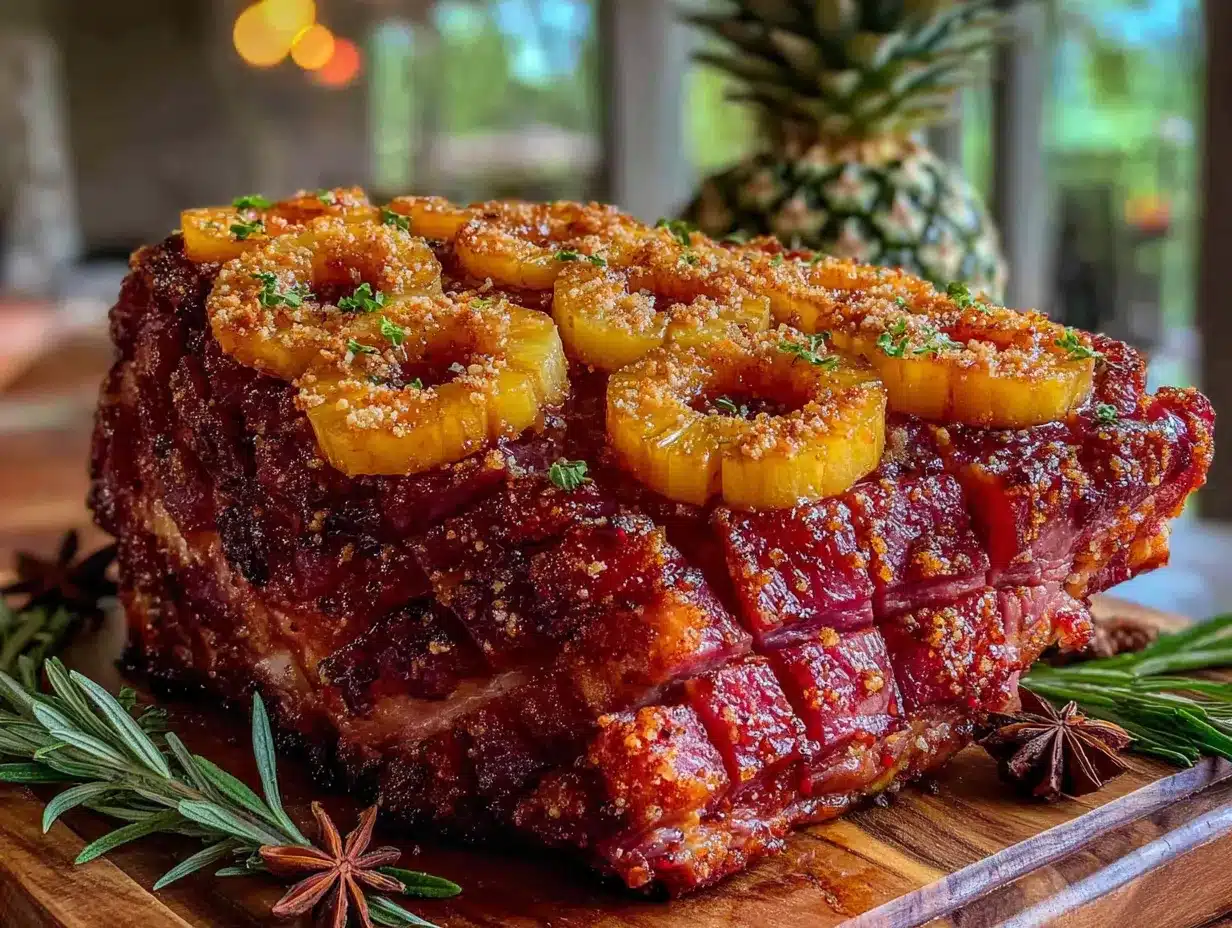
What makes this version different from all the others? It’s the caramelization. Most glazed hams end up with a sticky, runny coating that slides right off. But by layering the pineapple rings directly on the ham and basting every 20 minutes, you get a deep, golden crust that locks in moisture. The brown sugar melts into the pineapple juice, creating a syrup that thickens into a glossy, almost candied finish. It’s not just a glaze—it’s armor for your ham.
This is the kind of recipe that makes you look like a hero without breaking a sweat. The ham comes out so tender it practically falls apart, and the sweet-savory flavor is absolutely addictive. Every time I serve it, someone asks for the recipe. And I always smile and say, “It’s easier than you think.”
What Ingredients You Will Need
This recipe relies on simple, pantry-friendly ingredients that work together to create something truly special. The magic is in the layering and the basting, not in expensive or hard-to-find items.
- 1 (8-10 lb) bone-in fully cooked ham, spiral-cut or whole — Spiral-cut hams are easier to serve, but whole hams work just as well. Look for a ham labeled “fully cooked” or “ready to eat.” I prefer a shank portion for easier carving, but a butt portion is fine too. (Costco’s Kirkland brand spiral ham is my go-to for consistent quality.)
- 1 cup packed light brown sugar — Light brown sugar has a milder molasses flavor that doesn’t overpower the pineapple. Dark brown sugar works too, but the flavor will be deeper and slightly more smoky. Make sure it’s packed firmly into the measuring cup for accurate sweetness.
- 1 (20 oz) can pineapple rings in juice, drained, juice reserved — The juice is just as important as the rings. Don’t use pineapple in syrup—it’s too sweet and won’t caramelize properly. The natural acidity of the juice helps balance the sugar and tenderizes the ham.
- 1/4 cup pineapple juice (reserved from the can) — This thins the brown sugar into a paste and provides the liquid base for basting. If your ham is particularly large, you might need a little extra juice.
- 1/4 cup honey or maple syrup — Honey adds floral notes and helps the glaze stick to the ham. Maple syrup gives a slightly earthier sweetness. Either works beautifully. (I use local honey when I can find it.)
- 2 tablespoons Dijon mustard — This is the secret ingredient that cuts through the sweetness. Don’t skip it—it adds a subtle tang that keeps the glaze from being cloying. Yellow mustard works in a pinch, but Dijon is smoother.
- 1 teaspoon ground cloves — Cloves add warmth and depth. They’re traditional with ham for a reason. If you don’t have ground cloves, you can use 1/2 teaspoon of allspice or simply omit them.
- 1/2 teaspoon ground cinnamon (optional) — Cinnamon adds a cozy, holiday-like warmth. It’s not essential, but it pairs beautifully with the pineapple. I add it when I’m feeling festive.
- Whole cloves for studding (optional) — These are purely decorative. If you’re short on time, skip them. The flavor difference is minimal.
- Maraschino cherries for garnish (optional) — The classic red-and-gold look is iconic for holidays. Use them if you want that picture-perfect presentation. Otherwise, leave them off.
For the Glaze
- 1/2 cup packed light brown sugar — This is reserved for the final glaze layer. Sprinkling it on during the last 30 minutes creates that crackly, caramelized crust.
- 2 tablespoons unsalted butter, melted — Butter adds richness and helps the glaze brown evenly. Use salted butter if that’s all you have, but reduce the added salt elsewhere.
Equipment Needed
You don’t need a fancy kitchen to pull off this ham. Most of these tools are probably already in your cabinets.
- Large roasting pan with a rack — The rack lifts the ham off the bottom of the pan, allowing heat to circulate evenly. If you don’t have a rack, crumple aluminum foil into coils and place the ham on top. A disposable aluminum pan works fine for one-time use.
- Sharp carving knife — A long, thin knife makes slicing the ham much easier. A serrated knife works too, but it tends to tear the meat. I use a 10-inch chef’s knife for clean cuts.
- Basting brush or spoon — A silicone basting brush is ideal for spreading the glaze evenly. A regular spoon works, but it’s messier. A pastry brush also does the job.
- Aluminum foil — You’ll need this to tent the ham during the first part of cooking. Heavy-duty foil is best—it won’t tear when you’re handling the hot pan.
- Meat thermometer — Even though the ham is fully cooked, you want to heat it to 140°F for food safety and optimal texture. An instant-read thermometer is quick and accurate. (I use a ThermoPro digital thermometer—it’s under $15 and has never let me down.)
- Toothpicks — These are for securing the pineapple rings in place. Regular wooden toothpicks work fine. Soak them in water for 10 minutes first to prevent burning.
- Large cutting board — You’ll need space to carve the ham. A wooden or plastic board with a juice groove is ideal. If you don’t have one, place a towel under your cutting board to keep it from slipping.
Preparation Method
Follow these steps carefully, and you’ll have a ham that looks like it came from a fancy holiday buffet. The key is patience and regular basting.
- Preheat your oven to 325°F (163°C). Position the oven rack in the lower third so the ham sits in the center. This ensures even heat distribution.
- Remove the ham from its packaging. Discard any plastic coverings, flavor packets, or netting. Rinse the ham under cool water and pat it completely dry with paper towels. (If the ham has a thick layer of skin, trim it off, leaving about 1/4 inch of fat.)
- Score the ham in a diamond pattern. Using a sharp knife, make shallow cuts about 1/4 inch deep in a crisscross pattern across the entire surface. Space the cuts about 1 inch apart. This allows the glaze to seep into the meat and creates those beautiful caramelized edges. Don’t cut too deep—you want to score the fat, not the meat.
- Place the ham flat-side down on the rack in your roasting pan. If your ham is spiral-cut, position it so the cut sides are facing down. This helps the slices stay together during cooking.
- Make the glaze. In a medium bowl, combine 1 cup packed brown sugar, 1/4 cup reserved pineapple juice, 1/4 cup honey, 2 tablespoons Dijon mustard, 1 teaspoon ground cloves, and 1/2 teaspoon cinnamon (if using). Whisk until smooth and the sugar is mostly dissolved. The mixture will be thick—that’s perfect.
- Brush the glaze all over the ham. Use your basting brush to coat every surface, including the sides and the cut edges. Don’t be shy—use all of the glaze. It will seem like a lot, but it will thin out as it heats.
- Arrange the pineapple rings on the ham. Place the rings in a single layer over the top of the ham, overlapping slightly if needed. Secure each ring with a toothpick pushed into the ham. This keeps them in place during cooking. If you’re using maraschino cherries, place one in the center of each pineapple ring and secure with a toothpick.
- Pour the remaining pineapple juice into the bottom of the roasting pan. Don’t pour it over the ham—you’ll wash off the glaze. The juice in the pan creates steam that keeps the ham moist. Add about 1/2 cup of water if the pan looks dry.
- Cover the ham loosely with aluminum foil. Tent the foil so it doesn’t touch the pineapple rings. This traps steam and prevents the glaze from burning before the ham is heated through.
- Bake for 10 minutes per pound, or about 1 hour 20 minutes for an 8-pound ham. For a 10-pound ham, bake for about 1 hour 40 minutes. Start checking at the minimum time. The internal temperature should reach 140°F (60°C) when measured in the thickest part of the ham, away from the bone.
- Remove the foil for the last 30 minutes. Increase the oven temperature to 375°F (190°C). Brush the ham with the pan juices, then sprinkle the reserved 1/2 cup brown sugar over the top. Drizzle with melted butter. Return the ham to the oven, uncovered, and bake until the glaze is bubbly and caramelized, about 30 minutes more. Baste every 10 minutes with the pan juices for maximum flavor.
- Let the ham rest for 15-20 minutes before carving. This allows the juices to redistribute throughout the meat. Don’t skip this step—a rested ham is a juicy ham. Tent it loosely with foil while it rests.
- Remove the toothpicks before serving. Carefully pull out each toothpick. The pineapple rings should stay in place. If they slide off, just arrange them on the platter around the ham.
- Carve and serve. For a spiral-cut ham, simply follow the pre-cut lines. For a whole ham, slice against the grain into thin, even pieces. Arrange on a platter with the pineapple rings and any remaining glaze drizzled on top.
Cooking Tips & Techniques
I’ve made this ham more times than I can count, and I’ve learned a few things the hard way. Here’s what I wish someone had told me the first time.
Don’t overcook it. Since the ham is already fully cooked, you’re really just reheating it and building flavor. Overcooking dries out the meat, no matter how much glaze you use. Use a meat thermometer and pull it out at exactly 140°F. The temperature will rise another 5 degrees while it rests.
Baste, baste, baste. I know it’s annoying to open the oven every 10 minutes, but that’s what creates the glossy, caramelized crust. The pan juices concentrate as they cook, becoming thicker and more flavorful with each basting. Set a timer on your phone so you don’t forget. Trust me, it’s worth the effort.
Watch the sugar. Brown sugar burns easily at high temperatures. That’s why we start at 325°F and only increase the heat for the final 30 minutes. If you notice the glaze getting too dark too quickly, tent the ham with foil again. Burnt sugar tastes bitter, and there’s no fixing it.
Use the pan drippings. Don’t throw away those incredible pan juices after you’re done. Strain them into a small saucepan and simmer until thickened. You’ll have a delicious pineapple-ham jus that’s perfect for drizzling over slices or spooning onto mashed potatoes. It’s like liquid gold.
Let the ham come to room temperature. Take the ham out of the refrigerator 30-45 minutes before you start. A cold ham takes longer to heat through, which can dry out the outer layers. Room temperature meat cooks more evenly. Just don’t leave it out for more than 2 hours total.
One time, I forgot to score the ham before applying the glaze. The glaze just slid right off into the pan, and I ended up with a pale, unimpressive ham. It still tasted fine, but it wasn’t the showstopper I wanted. Now I always double-check before I start brushing. Learn from my mistake!
Variations & Adaptations
This recipe is incredibly flexible. Here are some ways to make it your own.
Spicy Pineapple Ham: Add 1 teaspoon of red pepper flakes or a minced jalapeño to the glaze. The heat cuts through the sweetness beautifully and adds a surprising kick. My brother-in-law requests this version every year.
Maple Bourbon Glaze: Replace the honey with 1/4 cup maple syrup and add 2 tablespoons of bourbon. The bourbon adds a smoky warmth that pairs perfectly with the pineapple. Cook the glaze on the stovetop for 5 minutes to burn off the alcohol before brushing it on. This one is strictly for adults.
Honey Mustard Version: Omit the cloves and cinnamon. Increase the Dijon mustard to 1/4 cup and add 2 tablespoons of whole-grain mustard. The result is a tangier, more savory ham that’s perfect for Easter brunch. I serve this one with a side of scalloped potatoes.
Slow Cooker Method: If your oven is already full of side dishes, you can make this ham in a slow cooker. Cut the ham to fit your cooker, brush with glaze, and cook on low for 4-5 hours. For the caramelized crust, transfer the ham to a baking sheet and broil for 3-5 minutes before serving. It won’t be quite as glossy, but it’s still delicious.
Gluten-Free Adaptation: This recipe is naturally gluten-free as written. Just double-check your Dijon mustard—some brands contain wheat-based vinegar. Most are fine, but it’s worth a quick label read. Serve with gluten-free dinner rolls and roasted vegetables for a completely celiac-safe meal.
Pineapple-Free Version: If someone in your family doesn’t like pineapple, you can substitute canned peach halves or apricot halves. The flavor will be different but just as delicious. Use the juice from the canned fruit in place of pineapple juice. I’ve done this for a neighbor who had a pineapple allergy, and it worked beautifully.
Serving & Storage Suggestions
This ham is the centerpiece of a holiday meal, so treat it like one. Here’s how to serve and store it properly.
Serving Temperature: Serve the ham warm, straight from the oven. Let it rest for 15-20 minutes first, then carve and arrange on a large platter. If you’re not serving immediately, keep it tented with foil in a warm oven (200°F) for up to 30 minutes. Don’t leave it out at room temperature for more than 2 hours.
Presentation Tips: Arrange the carved slices on a platter with the pineapple rings on top. Spoon some of the pan juices over the slices for extra shine. Garnish with fresh parsley or rosemary sprigs for a pop of green. If you’re feeling fancy, add a few whole cranberries around the edges for color contrast.
Complementary Dishes: This ham pairs beautifully with classic sides. Serve it with creamy mashed potatoes, green bean casserole, roasted carrots, or a simple salad with vinaigrette. The sweet glaze also goes well with tangy dishes like coleslaw or pickled vegetables. For drinks, a crisp white wine like Riesling or a sparkling cider balances the richness.
Storage Instructions: Remove the meat from the bone and store it in an airtight container. Refrigerate for up to 5 days. The ham can also be frozen for up to 3 months. Slice it before freezing for easier portioning. Wrap tightly in plastic wrap, then aluminum foil, and place in a freezer bag. Thaw overnight in the refrigerator before reheating.
Reheating Methods: The best way to reheat ham is in a covered dish with a splash of pineapple juice or chicken broth. Bake at 300°F for 15-20 minutes, or until warmed through. You can also reheat slices in a skillet over medium heat with a little butter. For sandwiches, cold ham is perfectly fine—layer it on bread with Swiss cheese and a smear of Dijon mustard for a quick lunch.
Flavor Development: The ham actually tastes better the next day. As it sits in the refrigerator, the glaze continues to penetrate the meat, making it even more flavorful. I always make extra just for leftovers. Ham sandwiches, ham and cheese quiche, ham fried rice—the possibilities are endless.
Nutritional Information & Benefits
While ham is a treat, it does offer some nutritional benefits. Here’s what you need to know.
Estimated Nutritional Values (per 3-ounce serving, without glaze):
| Nutrient | Amount |
|---|---|
| Calories | 180 |
| Protein | 18g |
| Fat | 10g |
| Saturated Fat | 3.5g |
| Carbohydrates | 5g (with glaze) |
| Sodium | 800mg |
| Potassium | 280mg |
Health Benefits: Ham is an excellent source of high-quality protein, which is essential for muscle repair and growth. It also provides important minerals like potassium (for heart health), zinc (for immune function), and B vitamins (for energy metabolism). Pineapple contains bromelain, an enzyme that may aid digestion and reduce inflammation.
Dietary Considerations: This recipe is naturally gluten-free and dairy-free (if you skip the butter in the final glaze). It’s also low-carb if you go easy on the glaze. However, ham is high in sodium, so it’s not suitable for low-sodium diets. If you’re watching your salt intake, look for a low-sodium ham and reduce the added salt in your sides.
Potential Allergens: Ham itself is free of common allergens, but the glaze contains honey (which some people avoid) and mustard (which can be an allergen for some). The pineapple and cherries are generally safe, but always check labels if you’re serving someone with severe allergies.
I personally love that this ham is a protein-packed centerpiece that doesn’t require a ton of extra ingredients. It’s a satisfying meal that leaves everyone feeling full and happy, without the guilt of ultra-processed foods. Moderation is key, of course, but for a holiday celebration, this ham is a wonderful choice.
Conclusion
This brown sugar pineapple glazed ham is more than just a recipe—it’s a tradition in the making. It’s the dish that brings everyone to the table, the one that sparks conversations and creates memories. Every time I make it, I think of that woman in the grocery store who shared her mother’s secret. I wonder if she knows how many families she’s helped feed.
What I love most about this ham is how forgiving it is. You don’t have to be a perfect cook to pull it off. You just need a little patience, a willingness to baste, and the confidence to trust simple ingredients. The result is a showstopper that makes you look like a hero, even if you’re juggling a dozen other dishes at the same time.
So go ahead and give it a try. Customize the glaze to your taste, add your own twist, and make it yours. I’d love to hear how it turns out—drop a comment below and let me know what variations you tried. Did you add extra spice? Swap the pineapple for peaches? I’m always looking for new ideas. And if you’re looking for more crowd-pleasing recipes, check out my honey glazed carrots or make-ahead mashed potatoes to complete your holiday spread.
Happy cooking, and may your table always be full of good food and great company!
Frequently Asked Questions
Can I use a boneless ham for this recipe?
Yes, you can use a boneless ham, but the cooking time will be shorter. Boneless hams are typically smaller and more uniform in shape. Start checking the temperature at 10 minutes per pound. The glaze and basting instructions remain the same.
Do I need to soak the ham to remove salt?
No, most modern hams are processed to have a mild salt level. If you’re using a country ham or a heavily cured ham, you might want to soak it in cold water for 4-6 hours, changing the water every hour. But for standard grocery store hams, this step isn’t necessary.
Can I prepare the glaze ahead of time?
Absolutely! The glaze can be made up to 3 days in advance. Store it in an airtight container in the refrigerator. Let it come to room temperature before brushing it on the ham. If it’s too thick, stir in a tablespoon of pineapple juice to loosen it.
What if my ham is frozen?
Thaw the ham completely in the refrigerator before cooking. A frozen ham will take 24-48 hours to thaw, depending on its size. Never cook a frozen ham—it will cook unevenly and may not reach a safe internal temperature in the center.
Can I use fresh pineapple instead of canned?
Fresh pineapple works, but it’s trickier. Canned pineapple is more consistent in sweetness and moisture content. Fresh pineapple contains an enzyme (bromelain) that can break down the ham’s proteins, making it mushy if left on too long. If you use fresh, blanch the rings in boiling water for 1 minute first to deactivate the enzyme.
Pin This Recipe!
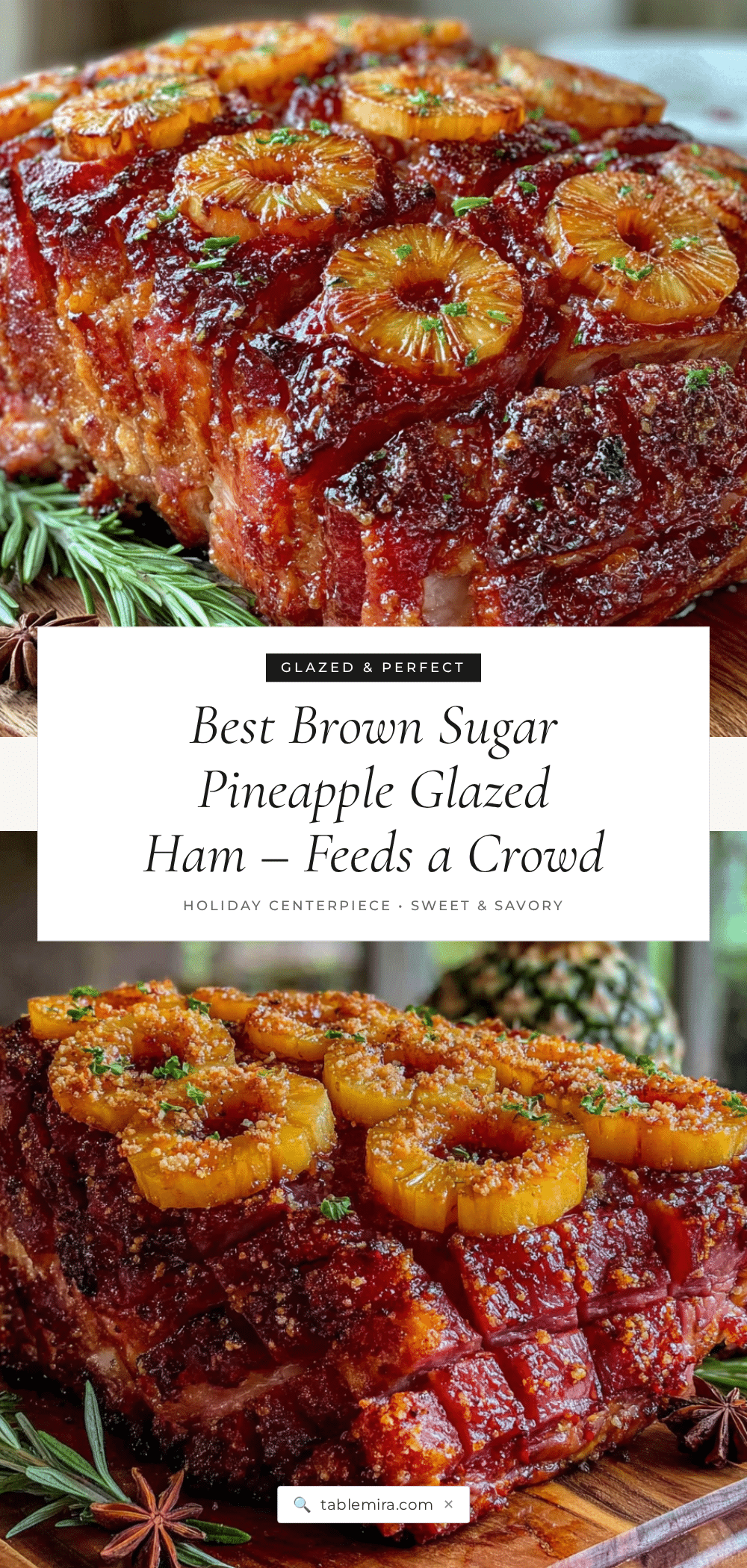
Best Brown Sugar Pineapple Glazed Ham: Easy Holiday Recipe
This brown sugar pineapple glazed ham is a foolproof holiday centerpiece made with simple ingredients. The sweet, caramelized glaze locks in moisture and creates a stunning presentation that will impress your guests.
- Prep Time: 15 minutes
- Cook Time: 1 hour 40 minutes
- Total Time: 1 hour 55 minutes
- Yield: 12-16 servings 1x
- Category: Main Course
- Cuisine: American
Ingredients
- 1 (8-10 lb) bone-in fully cooked ham, spiral-cut or whole
- 1 cup packed light brown sugar
- 1 (20 oz) can pineapple rings in juice, drained, juice reserved
- 1/4 cup pineapple juice (reserved from the can)
- 1/4 cup honey or maple syrup
- 2 tablespoons Dijon mustard
- 1 teaspoon ground cloves
- 1/2 teaspoon ground cinnamon (optional)
- Whole cloves for studding (optional)
- Maraschino cherries for garnish (optional)
- 1/2 cup packed light brown sugar (for final glaze)
- 2 tablespoons unsalted butter, melted
Instructions
- Preheat your oven to 325°F (163°C). Position the oven rack in the lower third.
- Remove the ham from its packaging. Discard any plastic coverings, flavor packets, or netting. Rinse the ham under cool water and pat it completely dry with paper towels. If the ham has a thick layer of skin, trim it off, leaving about 1/4 inch of fat.
- Score the ham in a diamond pattern. Using a sharp knife, make shallow cuts about 1/4 inch deep in a crisscross pattern across the entire surface. Space the cuts about 1 inch apart.
- Place the ham flat-side down on the rack in your roasting pan. If your ham is spiral-cut, position it so the cut sides are facing down.
- Make the glaze. In a medium bowl, combine 1 cup packed brown sugar, 1/4 cup reserved pineapple juice, 1/4 cup honey, 2 tablespoons Dijon mustard, 1 teaspoon ground cloves, and 1/2 teaspoon cinnamon (if using). Whisk until smooth and the sugar is mostly dissolved.
- Brush the glaze all over the ham. Use your basting brush to coat every surface, including the sides and the cut edges.
- Arrange the pineapple rings on the ham. Place the rings in a single layer over the top of the ham, overlapping slightly if needed. Secure each ring with a toothpick pushed into the ham. If you’re using maraschino cherries, place one in the center of each pineapple ring and secure with a toothpick.
- Pour the remaining pineapple juice into the bottom of the roasting pan. Add about 1/2 cup of water if the pan looks dry.
- Cover the ham loosely with aluminum foil. Tent the foil so it doesn’t touch the pineapple rings.
- Bake for 10 minutes per pound, or about 1 hour 20 minutes for an 8-pound ham. For a 10-pound ham, bake for about 1 hour 40 minutes. The internal temperature should reach 140°F (60°C) when measured in the thickest part of the ham, away from the bone.
- Remove the foil for the last 30 minutes. Increase the oven temperature to 375°F (190°C). Brush the ham with the pan juices, then sprinkle the reserved 1/2 cup brown sugar over the top. Drizzle with melted butter. Return the ham to the oven, uncovered, and bake until the glaze is bubbly and caramelized, about 30 minutes more. Baste every 10 minutes with the pan juices.
- Let the ham rest for 15-20 minutes before carving. Tent it loosely with foil while it rests.
- Remove the toothpicks before serving.
- Carve and serve. For a spiral-cut ham, follow the pre-cut lines. For a whole ham, slice against the grain into thin, even pieces. Arrange on a platter with the pineapple rings and any remaining glaze drizzled on top.
Notes
Don’t overcook the ham; use a meat thermometer and pull it out at exactly 140°F. Baste every 10 minutes during the last 30 minutes for a glossy, caramelized crust. Watch the sugar to prevent burning. Use the pan drippings to make a delicious jus. Let the ham come to room temperature for 30-45 minutes before cooking for even heating.
Nutrition
- Serving Size: 3 ounces
- Calories: 180
- Sugar: 5
- Sodium: 800
- Fat: 10
- Saturated Fat: 3.5
- Carbohydrates: 5
- Protein: 18
Keywords: brown sugar pineapple glazed ham, holiday ham, Easter ham, Christmas ham, glazed ham recipe, easy ham recipe