The family Christmas dinner was in 8 hours and I’d completely lost my mind. I’d volunteered to host—and cook the main course—without really thinking it through. Everyone else was bringing their signature dishes: Aunt Carol’s twice-baked potatoes that take two days, my sister’s homemade rolls that require a proofing schedule, and my brother-in-law’s showstopping chocolate torte. I had a 5-pound prime rib roast sitting in my fridge and absolutely no game plan. Honestly, I’d been so busy with work that week I’d forgotten to even look up a recipe. Panic doesn’t even begin to cover it.
I remember standing in my kitchen at 9 AM, still in my pajamas, staring at this beautiful hunk of beef and thinking, “Well, you’ve really done it this time.” The roast was thawed, which was something, but I had maybe six hours to figure out how to cook it without ruining Christmas. I’d seen those complicated prime rib recipes—the ones with overnight dry brines and intricate herb crusts and precise temperature ramping. I didn’t have overnight. I barely had afternoon.
So I did what any reasonable person in a panic would do: I called my friend Marco, who used to work in a steakhouse. “Marco,” I said, “I need the fastest, most foolproof prime rib recipe you’ve got. And I mean foolproof. I’m talking me-proof.” He laughed, and then he gave me the simplest set of instructions I’ve ever heard for a roast that looks like you spent all day on it. I scribbled them on a napkin. And you know what? That roast ended up being the star of the meal. Everyone asked for the recipe. No one believed me when I said it took less than two hours of actual work. That’s the story I’m sharing with you today—my quick garlic herb prime rib roast, the one that saved Christmas and made me look like an accidental overachiever. Maybe you’ve been there, staring at an expensive cut of meat with no plan. Let me tell you, this method works.
Why You’ll Love This Recipe
Let’s be real for a second. Prime rib has a reputation. It’s the fancy roast you order at a steakhouse for a special occasion. It’s the centerpiece of holiday dinners that someone’s grandma spent all day preparing. It feels intimidating. But this quick garlic herb prime rib roast? It’s the opposite of intimidating. It’s the recipe that makes you look like a hero without the stress.
- Fast & Foolproof: This isn’t a 6-hour project. From prep to plate, you’re looking at about 2.5 hours, with most of that being hands-off oven time. Perfect for a busy weeknight when you want something special or a holiday when you’re juggling a million other things.
- Simple Ingredients: You don’t need a specialty butcher or a list of exotic herbs. Garlic, fresh rosemary, thyme, olive oil, salt, and pepper—that’s it. Stuff you probably already have or can grab in two minutes at the store.
- Perfect for Impressing: Whether it’s a Sunday dinner, a birthday, or a holiday, pulling this roast out of the oven is a guaranteed showstopper. The golden-brown crust and the fragrant garlic-herb aroma fill the whole house. People will think you slaved away. You don’t have to tell them otherwise.
- Crowd-Pleaser: Prime rib is universally loved. It’s tender, juicy, and satisfies both the kids who just want “meat” and the adults who appreciate a perfectly cooked roast. Leftovers (if there are any) make incredible sandwiches.
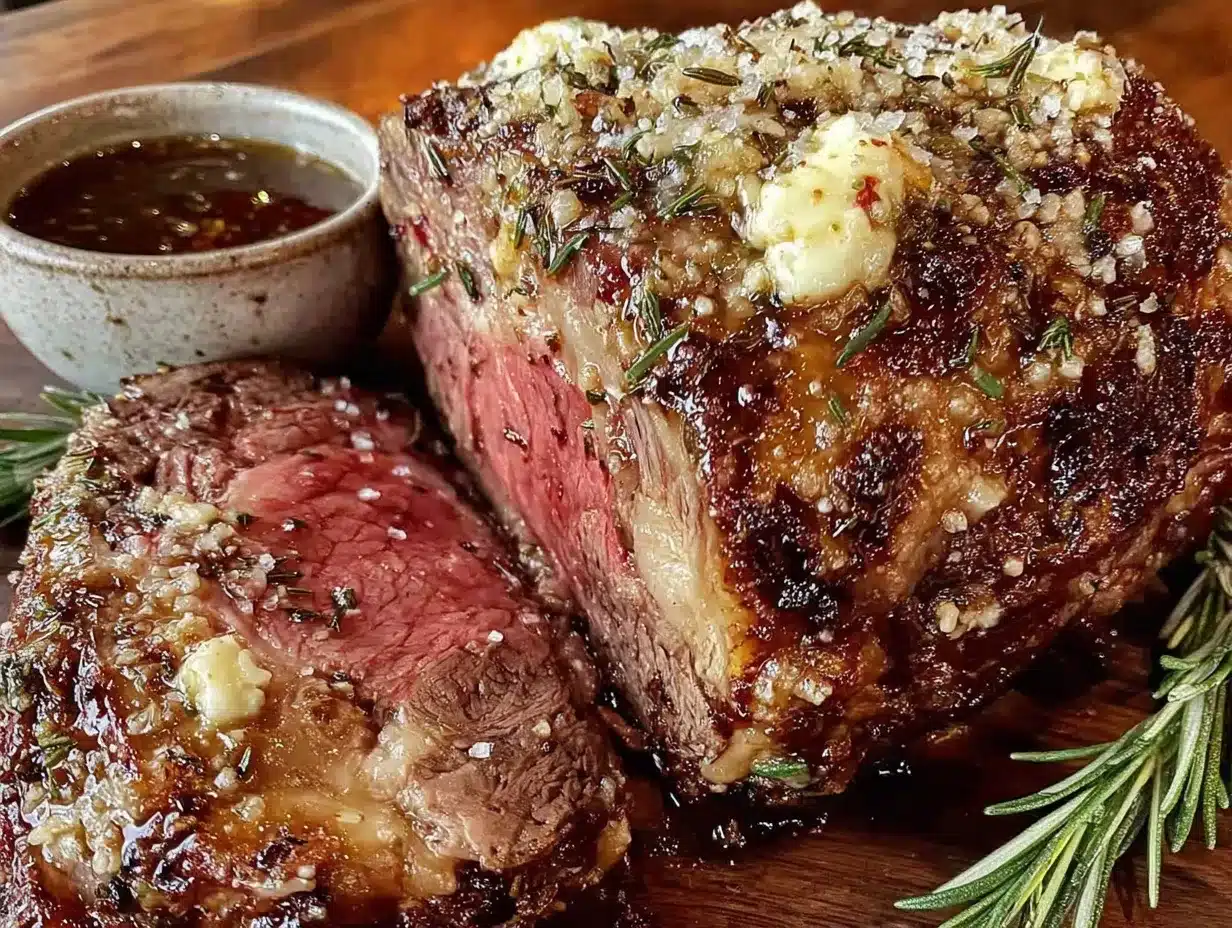
- Unbelievably Delicious: The secret is the high-heat sear followed by a low-and-slow finish. It creates a beautiful crust on the outside while keeping the inside perfectly rosy and tender. The garlic and herbs infuse the meat with flavor that tastes complex, but it’s embarrassingly simple to achieve.
This isn’t just another prime rib recipe. It’s the one that uses a simple butter-and-herb paste instead of a complicated rub, and it relies on your oven’s heat, not a bunch of fussy techniques. It’s comfort food that feels luxurious, but it’s made for real people with real schedules. That first bite—warm, juicy, perfectly seasoned—is the kind that makes you close your eyes for a second and just enjoy it. It’s that good.
What Ingredients You Will Need
This recipe uses a handful of high-impact ingredients to deliver maximum flavor with minimal effort. The beauty of a prime rib is that the meat itself does most of the heavy lifting. Your job is just to dress it up a little.
- Prime Rib Roast (bone-in or boneless, 4-5 pounds): This is the star. A bone-in roast has more flavor and a built-in roasting rack (the bones), but boneless is easier to slice. For a 4-5 pound roast, you’re feeding about 6-8 people. Look for a roast with good marbling—those little white streaks of fat running through the meat. That fat is what keeps it juicy. I usually grab mine from Costco or a local butcher. If you’re using a frozen roast, thaw it in the fridge for 2-3 days before cooking. (No rushing that part!)
- Fresh Garlic (6-8 cloves, minced): Don’t even think about using the jarred stuff. Fresh garlic is non-negotiable here. It gets rubbed all over the roast and creates that incredible savory crust. I like to use a microplane to mince it super fine—it almost turns into a paste and sticks to the meat better. You’ll need about two tablespoons of minced garlic.
- Fresh Rosemary (2 tablespoons, finely chopped): Rosemary and beef are a classic pairing. The piney, slightly floral flavor cuts through the richness of the meat. Use the leaves only—the stems are too woody. If you only have dried rosemary, use 2 teaspoons, but fresh really is better here.
- Fresh Thyme (1 tablespoon, leaves only): Thyme adds a subtle earthy, lemony note that complements the garlic and rosemary. Run your fingers down the stem to strip the leaves off. No need to chop them further—they’re small enough.
- Unsalted Butter (4 tablespoons, softened): The butter is the vehicle for all that flavor. It helps the garlic and herbs stick to the roast, and it browns in the oven, creating a gorgeous crust. Make sure it’s at room temperature so it spreads easily. I leave mine out on the counter for about 30 minutes before I start.
- Olive Oil (2 tablespoons): A little olive oil helps the butter spread and adds another layer of richness. Plus, it helps the salt and pepper adhere to the meat. Use a good quality extra-virgin olive oil if you have it.
- Coarse Sea Salt or Kosher Salt (1-2 tablespoons): This is crucial. You need to season the roast generously. Think of it this way: if you can see the salt, you’ve used enough. Kosher salt is ideal because its large crystals dissolve evenly and season the meat perfectly. Don’t use table salt—it’s too fine and can make the roast overly salty.
- Freshly Ground Black Pepper (1-2 teaspoons): Freshly ground pepper has a much better flavor than pre-ground. Give it a good crack over the whole roast. It adds a subtle heat that balances the herbs.
Ingredient Selection Tips: For the best results, I recommend using a prime or choice grade roast. Prime has more marbling and will be more tender, but choice is still excellent and more budget-friendly. If you’re using a boneless roast, you might need to tie it with kitchen twine to help it hold its shape while cooking—ask your butcher to do this for you.
Substitution Guidance: No fresh herbs? You can use 2 teaspoons each of dried rosemary and dried thyme. The flavor will be a little less bright, but it’ll still be delicious. For a dairy-free option, you can substitute the butter with a good quality vegan butter or use all olive oil. The crust won’t be quite as rich, but it will still be tasty.
Equipment Needed
You don’t need a professional kitchen to make this quick garlic herb prime rib roast. A few basic tools are all it takes. Here’s what you’ll need:
- Roasting Pan: A sturdy roasting pan is essential. It needs to be large enough to hold the roast without crowding. I use a 13×9-inch metal roasting pan. A disposable aluminum pan works in a pinch, but it can be flimsy when you’re lifting a heavy roast.
- Wire Rack: Placing the roast on a wire rack inside the pan allows hot air to circulate all around the meat, ensuring even cooking and a crispy crust all over. If you don’t have one, you can use a few rolled-up balls of aluminum foil to lift the roast off the bottom of the pan.
- Instant-Read Meat Thermometer: This is non-negotiable. Guessing the doneness of a prime rib is a recipe for disaster. An instant-read thermometer takes the guesswork out. I have a Thermapen that I love, but any reliable digital thermometer will do.
- Chef’s Knife: A sharp chef’s knife is needed for mincing the garlic and chopping the herbs. A dull knife is a dangerous knife—it’s more likely to slip.
- Cutting Board: You’ll need one for prepping the herbs and garlic, and a separate one (or a clean one) for resting and slicing the cooked roast. A wooden or plastic board works fine.
- Small Bowl: For mixing the butter, garlic, and herbs together.
- Kitchen Twine (optional): If you have a boneless roast that isn’t tied, you’ll want some twine to tie it into a uniform shape. This helps it cook evenly.
- Aluminum Foil: You’ll need this to tent the roast while it rests after cooking. This is a crucial step for keeping it juicy.
Budget-Friendly Tip: If you don’t own a roasting pan, a heavy-duty rimmed baking sheet works great. Just watch for any drips, as it’s shallower. And if you don’t have a wire rack, you can place the roast directly on a bed of thickly sliced onions and carrots. They’ll flavor the drippings and keep the meat from sitting in its own juices.
Preparation Method
Alright, let’s get cooking. This method is designed to be straightforward, but I’ll walk you through every step so you feel confident. Remember, the key to a great prime rib is patience—especially during the resting phase. Don’t rush it.
- Take the Roast Out of the Fridge (1 hour before cooking): This is the most important step you can’t skip. A cold roast straight from the fridge will cook unevenly. Remove the roast from its packaging and pat it completely dry with paper towels. Place it on a plate or cutting board and let it sit at room temperature for at least 1 hour, up to 2 hours. This allows the internal temperature to come up, so it cooks more evenly. I usually do this while I prep the rest of my ingredients.
- Preheat Your Oven (30 minutes before cooking): About 30 minutes before you’re ready to cook, preheat your oven to 500°F (260°C). Yes, you read that right. This high heat is what creates that beautiful, crackling crust. Make sure your oven rack is in the middle position.
- Make the Garlic Herb Butter: While the oven is heating, make the flavor paste. In a small bowl, combine the 4 tablespoons of softened unsalted butter, the 2 tablespoons of minced garlic, the 2 tablespoons of chopped fresh rosemary, and the 1 tablespoon of fresh thyme leaves. Use a fork to mash everything together until it forms a uniform, fragrant paste. Set it aside.
- Season the Roast Generously: Place the room-temperature roast on your cutting board. Drizzle the 2 tablespoons of olive oil all over the meat and rub it in with your hands. This helps the seasoning stick. Now, season the entire roast—top, bottom, and sides—with the coarse salt and freshly ground black pepper. Be generous. Don’t be shy. I use about 1 tablespoon of salt for a 4-pound roast.
- Apply the Herb Butter: Take your garlic herb butter and use your hands to rub it all over the seasoned roast. Make sure it’s evenly coated. The butter will seem like a lot, but it will melt and baste the meat as it cooks, creating an incredible crust. Don’t forget the ends!
- Place the Roast in the Pan: If using a bone-in roast, place it bone-side down on the wire rack in your roasting pan. The bones act as a natural rack. If using a boneless roast, place it fat-side up on the rack. This allows the fat to render and baste the meat as it cooks.
- The High-Heat Sear (15 minutes): Carefully place the roasting pan in the preheated 500°F oven. Roast for 15 minutes. Do not open the oven door. During this time, the intense heat will sear the outside of the roast, locking in the juices and creating that gorgeous brown crust. Your kitchen will smell amazing.
- Reduce the Heat and Roast (about 1 hour 15 minutes for medium-rare): After 15 minutes, without opening the oven door, reduce the oven temperature to 325°F (165°C). Continue roasting for about 12-15 minutes per pound for medium-rare. For a 4-pound roast, that’s about 50-60 minutes more. For medium, add about 5-10 minutes more per pound. The most accurate way to check doneness is with your meat thermometer. Start checking the internal temperature about 30 minutes into the low-heat cooking phase.
- Check the Temperature (Crucial Step!): Insert your instant-read thermometer into the thickest part of the roast, making sure it’s not touching any bone. For medium-rare, you’re looking for an internal temperature of 125°F (52°C). For medium, aim for 135°F (57°C). Remember, the temperature will rise another 5-10 degrees while it rests, so pull it out when it’s about 5 degrees below your target. I pull mine at 120°F for a perfect medium-rare.
- Rest the Roast (20-30 minutes): This is the hardest part—waiting. Once the roast reaches your desired temperature, remove it from the oven. Carefully transfer it to a cutting board (or a clean plate). Loosely tent it with a piece of aluminum foil. Let it rest for at least 20 minutes, up to 30 minutes. Do not skip this step! Resting allows the juices to redistribute throughout the meat. If you cut into it right away, all those beautiful juices will run out onto the cutting board, leaving you with a dry roast. Use this time to make a quick pan sauce or warm up your side dishes.
- Carve and Serve: After resting, remove the foil. If your roast is bone-in, use your knife to cut along the bones to remove them in one piece. Then, slice the roast against the grain into ½-inch to ¾-inch thick slices. The slices should be perfectly rosy and incredibly tender. Arrange them on a warm platter and serve immediately.
Sensory Cues: When you open the oven after the high-heat sear, you should see a deep, golden-brown crust. The aroma will be intensely garlicky and herbal. When you insert the thermometer, you should feel minimal resistance—a perfectly cooked prime rib is very tender. If the thermometer slides in easily, you’re in good shape.
Personal Tip for Efficiency: While the roast is resting, I like to deglaze the roasting pan. Place the pan over two burners on your stovetop on medium heat. Add a cup of beef broth or red wine and scrape up all the browned bits from the bottom. Let it simmer for a few minutes, then strain it into a small saucepan. Add a tablespoon of butter and whisk until melted. You’ve just made a simple, delicious au jus in under 5 minutes!
Cooking Tips & Techniques
I’ve made this quick garlic herb prime rib roast more times than I can count, and I’ve learned a few things the hard way. Let me share some of those lessons so you don’t have to repeat my mistakes.
The Biggest Mistake: Not Letting the Roast Rest. I did this once. I was hungry, the guests were hungry, and I thought, “It’s been 10 minutes, that’s enough.” I carved into it, and a pool of red juice flooded the cutting board. The meat was still good, but it was noticeably drier than it should have been. The 20-minute rest is not optional—it’s the secret to a juicy roast. Set a timer if you have to.
Timing and Multitasking: The beauty of this recipe is that most of the cooking time is hands-off. While the roast is in the oven, you have plenty of time to prepare your sides. Roasted vegetables, mashed potatoes, or a simple green salad all work perfectly. I usually start my sides about 30 minutes before the roast is done, so everything finishes at the same time. The resting period is also great for making gravy or au jus.
Dealing with a Smoky Oven: That 500°F sear can sometimes create a bit of smoke, especially if there’s a little fat dripping. It’s normal. To minimize it, make sure your pan isn’t overcrowded and that the fat isn’t pooling too much. If you have a sensitive smoke alarm, you might want to open a window or turn on your range hood.
How to Get a Perfect Crust Every Time: Two things are key: a very dry roast and a very hot oven. Patting the roast dry with paper towels before seasoning is crucial. Any moisture on the surface will steam instead of sear, preventing that crust from forming. Also, don’t be tempted to skip the high-heat initial sear. It’s what makes the crust so good.
What to Do If Your Roast Is Cooking Too Fast: Every oven is different. If you check the temperature and it’s climbing faster than expected, don’t panic. You can simply turn the oven down to 300°F (150°C) to slow it down. The most important thing is the final internal temperature, not the time it takes to get there.
My Personal Failure: The first time I made this, I used salted butter for the herb paste. The roast came out incredibly salty—almost inedible. Learn from my mistake: always use unsalted butter so you can control the salt level yourself. You can always add more salt at the table, but you can’t take it away.
Variations & Adaptations
This recipe is a fantastic base, and it’s easy to adapt to your tastes or dietary needs. Here are a few variations I’ve tried and loved.
- Spicy Herb Crust: For a little kick, add 1 teaspoon of red pepper flakes or ½ teaspoon of cayenne pepper to the herb butter. It pairs beautifully with the garlic and rosemary. I did this for a New Year’s Eve dinner once, and it was a huge hit with the spice lovers in the crowd.
- Horseradish Crust: Mix 2 tablespoons of prepared horseradish (drained) into the butter along with the herbs. The heat of the horseradish mellows in the oven, leaving behind a subtle, earthy flavor that’s classic with prime rib. This is my husband’s favorite version.
- Herb-Free Version: Not a fan of rosemary and thyme? No problem. You can replace the herbs with 2 tablespoons of your favorite steak seasoning blend. A Montreal steak seasoning works great. Or, keep it simple with just garlic, salt, and pepper. It’s still delicious.
- Different Cooking Method: If you want to use a smoker, you absolutely can. Prepare the roast the same way, but instead of the high-heat oven sear, smoke it at 225°F (110°C) until it reaches an internal temperature of 120°F for medium-rare. Then, sear it in a hot cast-iron skillet or on a grill for 1-2 minutes per side to create the crust. This adds a wonderful smoky flavor.
- Dietary Adaptation (Dairy-Free): As I mentioned earlier, swap the butter for a high-quality vegan butter or use all olive oil. The crust won’t be quite as rich, but the flavor will still be fantastic. I’ve made it this way for friends with dairy sensitivities, and they’ve raved about it.
Personal Variation I Love: Sometimes, I’ll add the zest of one lemon to the herb butter. It sounds weird, but the bright citrus note cuts through the richness of the beef in a way that’s really surprising and lovely. Don’t tell anyone, but I usually keep this version just for myself!
Serving & Storage Suggestions
How you serve and store your prime rib can make a big difference in your overall experience. Here’s what I’ve found works best.
Serving Temperature and Presentation: Prime rib should be served warm, not piping hot. After its rest, it will be the perfect temperature. Arrange the slices on a warm platter. I like to fan them out slightly so everyone can see the beautiful rosy center. Spoon a little of the pan juices or au jus over the top for extra moisture and shine. Garnish with a few fresh sprigs of rosemary for a pretty presentation.
Complementary Dishes: This roast is a star, so keep the sides simple. Creamy mashed potatoes or roasted fingerling potatoes are a classic choice. A bright, acidic side like a horseradish cream sauce or a simple arugula salad with lemon vinaigrette cuts through the richness beautifully. For vegetables, roasted asparagus, green beans, or roasted carrots are all excellent. And don’t forget the Yorkshire puddings if you’re feeling traditional!
Beverage Pairings: A full-bodied red wine is the classic pairing. A Cabernet Sauvignon, Merlot, or a Syrah/Shiraz all work wonderfully. The tannins in the wine help cut through the fat of the meat. For a non-alcoholic option, a sparkling water with a squeeze of lemon or a rich, unsweetened iced tea is a great choice.
Storage Instructions: Let any leftover roast cool completely to room temperature. Then, wrap it tightly in plastic wrap or aluminum foil, or place it in an airtight container. It will keep in the refrigerator for 3-4 days. The flavor actually gets even better as it sits!
Reheating Methods: The key to reheating prime rib is to do it gently so you don’t dry it out. The best method is to place the slices in a baking dish with a tablespoon or two of beef broth or au jus. Cover the dish with foil and warm it in a 300°F (150°C) oven for about 10-15 minutes, or until heated through. You can also reheat slices in a skillet over medium-low heat with a little butter or broth. I avoid the microwave—it tends to make the meat tough and rubbery.
How Flavors Develop: Leftover prime rib is a gift. The flavors meld together overnight, making cold prime rib sandwiches the next day an absolute treat. Slice it thin, pile it on some crusty bread with a smear of horseradish sauce, and you have a meal that’s almost better than the original dinner.
Nutritional Information & Benefits
While prime rib is an indulgence, it does have some nutritional benefits—especially when you consider the quality of the ingredients. Here’s a breakdown for a standard serving (about 6 ounces of cooked meat).
Estimated Nutritional Values (per serving):
- Calories: 450-550
- Protein: 45-50g
- Fat: 30-35g (mostly monounsaturated and saturated)
- Carbohydrates: 0g
- Fiber: 0g
- Sugar: 0g
- Sodium: 600-800mg (varies based on salt used)
Health Benefits of Key Ingredients: Beef is an excellent source of high-quality protein, which is essential for muscle building and repair. It’s also rich in iron, which helps carry oxygen in your blood, and zinc, which supports your immune system. Garlic is known for its anti-inflammatory and immune-boosting properties. Rosemary and thyme are packed with antioxidants, which help protect your cells from damage. So, while it’s not a health food, it does offer some real nutritional value.
Dietary Considerations: This recipe is naturally gluten-free, low-carb, and keto-friendly. It contains no added sugars. The main allergens to be aware of are dairy (from the butter) and, obviously, beef. For a dairy-free version, use the substitution I mentioned earlier. If you’re watching your sodium intake, you can reduce the amount of salt you use to season the roast.
Personal Wellness Perspective: I believe in balance. I’m not someone who eats prime rib every day, but when I do, I enjoy it fully. I pair it with a big, fresh salad or roasted vegetables to add some fiber and nutrients to the meal. This approach lets me savor the indulgence without feeling guilty. It’s about making the special occasion meal truly special, and then getting right back to my regular healthy eating habits.
Conclusion
This quick garlic herb prime rib roast is more than just a recipe—it’s a confidence booster. It’s the dish that proves you don’t need to spend all day in the kitchen or have a culinary degree to create something truly impressive. It’s for the busy parent who wants a special Sunday dinner, the nervous host hosting their first holiday, or the weeknight cook who just wants to feel a little bit fancy.
I love this recipe because it’s honest. It doesn’t pretend to be something it’s not. It’s simple, it’s straightforward, and it delivers every single time. The garlic and herbs are a classic pairing, the high-heat method is foolproof, and the result is a tender, juicy, flavorful roast that makes everyone at the table happy. It’s the recipe I turn to when I want to feel like a hero without the stress.
Now, I want to hear from you! Have you tried making prime rib before? Are you going to give this quick version a shot? Let me know in the comments below—I love hearing about your kitchen victories. And if you come up with your own variation, please share it! Don’t forget to pin this recipe for later and share it with a friend who needs a little dinner confidence boost. You’ve got this. Go make that roast!
Frequently Asked Questions
Can I use a frozen prime rib roast for this recipe?
It’s not recommended to cook a prime rib roast from frozen. The outside will overcook before the inside is done. You need to thaw it completely in the refrigerator for 2-3 days before cooking. This is one step you really can’t rush.
What if I don’t have an instant-read thermometer?
Honestly, I strongly recommend getting one—it’s the only way to guarantee perfect doneness. If you don’t have one, you can use the “touch test” (comparing the firmness of the meat to the fleshy part of your palm), but it’s very unreliable with a large roast. A thermometer is a small investment that will save you from overcooking a very expensive piece of meat.
My roast is smaller (2-3 pounds). How do I adjust the cooking time?
The high-heat sear time stays the same (15 minutes). For the low-heat phase, use the same guideline of 12-15 minutes per pound. A 3-pound roast will take about 35-45 minutes at 325°F. Always rely on your thermometer over the clock.
Can I prepare the herb butter ahead of time?
Absolutely! You can make the garlic herb butter up to 3 days in advance. Store it in an airtight container in the refrigerator. Let it come to room temperature for about 30 minutes before you plan to use it so it’s spreadable.
What’s the best way to get clean slices without shredding the meat?
A sharp knife is the most important tool. Use a long, thin-bladed slicing knife or a very sharp chef’s knife. Let the roast rest completely. Slice against the grain (perpendicular to the direction of the muscle fibers) in smooth, even strokes. Don’t saw back and forth—that will shred the meat.
Pin This Recipe!
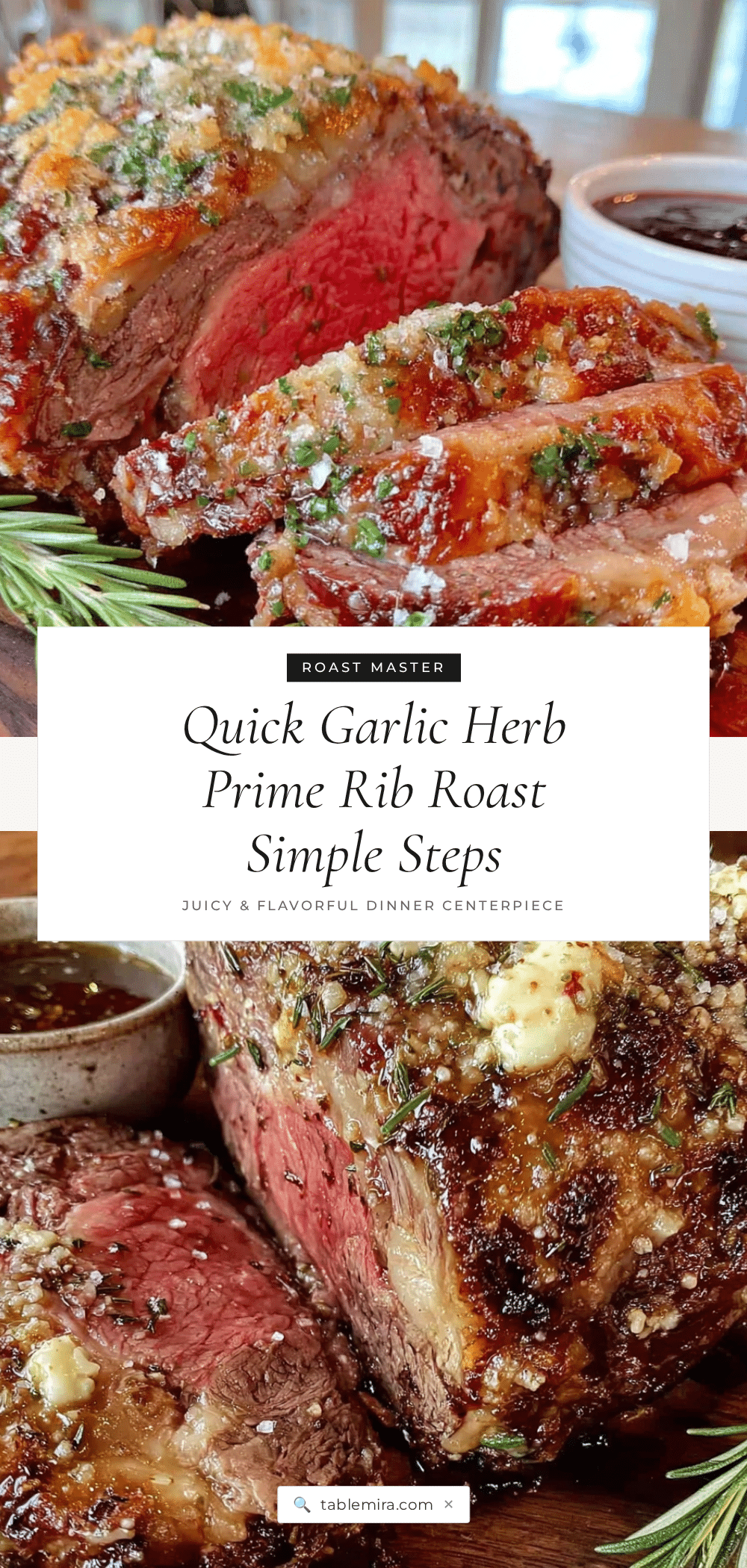
Best Easy Garlic Herb Prime Rib Roast Recipe
A quick and foolproof prime rib roast recipe that delivers a tender, juicy, and flavorful centerpiece with a beautiful garlic herb crust, perfect for holidays or special dinners.
- Prep Time: 15 minutes
- Cook Time: 1 hour 15 minutes
- Total Time: 2 hours 30 minutes
- Yield: 6-8 servings
- Category: Main Course
- Cuisine: American
Ingredients
- Prime rib roast (bone-in or boneless, 4-5 pounds)
- Fresh garlic (6-8 cloves, minced)
- Fresh rosemary (2 tablespoons, finely chopped)
- Fresh thyme (1 tablespoon, leaves only)
- Unsalted butter (4 tablespoons, softened)
- Olive oil (2 tablespoons)
- Coarse sea salt or kosher salt (1-2 tablespoons)
- Freshly ground black pepper (1-2 teaspoons)
Instructions
- Take the roast out of the fridge 1 hour before cooking. Pat dry with paper towels and let sit at room temperature.
- Preheat oven to 500°F (260°C) 30 minutes before cooking.
- Make the garlic herb butter: In a small bowl, combine softened butter, minced garlic, chopped rosemary, and thyme leaves. Mash into a paste.
- Season the roast: Drizzle olive oil over the roast and rub it in. Season generously with salt and pepper.
- Apply the herb butter: Rub the garlic herb butter all over the seasoned roast.
- Place the roast on a wire rack in a roasting pan, bone-side down (or fat-side up if boneless).
- Sear at 500°F for 15 minutes. Do not open the oven door.
- Reduce oven temperature to 325°F (165°C) and continue roasting for about 12-15 minutes per pound for medium-rare (about 50-60 minutes for a 4-pound roast).
- Check internal temperature with an instant-read thermometer: 125°F (52°C) for medium-rare, 135°F (57°C) for medium. Pull the roast when it’s 5°F below target.
- Rest the roast: Transfer to a cutting board, tent loosely with foil, and let rest for 20-30 minutes.
- Carve and serve: Remove bones if bone-in, slice against the grain into ½-inch to ¾-inch slices, and serve.
Notes
Let the roast come to room temperature before cooking for even cooking. Use unsalted butter to control salt level. Resting is crucial for juicy meat. For a dairy-free version, substitute butter with vegan butter or olive oil.
Nutrition
- Serving Size: 6 ounces cooked meat
- Calories: 500
- Sodium: 700
- Fat: 32
- Saturated Fat: 14
- Protein: 48
Keywords: prime rib, garlic herb prime rib, easy prime rib, holiday roast, beef roast, Christmas dinner