Jen wasn’t trying to impress anyone. I’d stopped by to grab a book she’d promised to lend me, and this smell—this incredible, garlicky, roasty smell—hit me before I even got past her front door. She just shrugged when I asked what was for dinner, like it was no big deal. “Oh, just some chicken and potatoes,” she said, waving a hand. “It’s the easiest thing.”
I stood there in her hallway, honestly a little offended. How dare something that smelled that good be described as “the easiest thing”? I’ve spent years in the kitchen, tweaking and perfecting, and my dinners rarely smell that good without a serious fight. Jen, meanwhile, had thrown this together in the time it takes me to decide which podcast to listen to. She wasn’t showing off. She was just feeding her family on a Tuesday. And that, let me tell you, made it even more impressive.
Maybe you’ve been there—standing in someone else’s kitchen, watching them cook without a recipe in sight, wondering why your own meals feel like a production. That’s exactly how this recipe for quick one-pan chicken thighs with rosemary potatoes came into my life. It wasn’t taught to me by a chef or found in a cookbook. It was witnessed, in a slightly messy kitchen, by someone who didn’t know they were doing anything special. And honestly, that’s why I keep making it. Because it’s not about perfection. It’s about getting a genuinely delicious dinner on the table with almost no cleanup and zero stress. That smell stayed with me for days, and now it’s the smell of a good weeknight in my own home.
Why You’ll Love This Recipe
Let’s be real for a second. Weeknight cooking can feel like a chore you didn’t sign up for. You’re tired, the day was long, and the last thing you want is a sink full of pans. This recipe solves that problem. It’s the kind of meal that makes you feel like you’ve got your life together, even when you definitely don’t.
- Quick & Easy: From start to table in about 45 minutes. Most of that time is hands-off, letting the oven do the work. Perfect for those nights when you’re running on fumes.
- Simple Ingredients: Chicken thighs, potatoes, rosemary, garlic, olive oil, salt, and pepper. That’s it. No fancy grocery store trips, no obscure spices you’ll use once.
- One-Pan Cleanup: This is the real hero. Everything cooks on a single sheet pan. You eat, you rinse the pan, you’re done. Minimal cleanup is a beautiful thing.
- Crowd-Pleaser: The chicken comes out juicy with crispy skin, and the potatoes soak up all those delicious pan juices. Kids and adults both go back for seconds. I’ve never had leftovers.
- Unbelievably Delicious: Don’t let the simplicity fool you. The combination of crispy chicken skin, tender potatoes, and fragrant rosemary is pure comfort. It’s the kind of meal that makes you close your eyes after the first bite.
This isn’t just another sheet pan dinner. It’s the best version because it’s built for real life. The technique is foolproof—high heat gets the skin crackling, and cutting the potatoes small ensures they cook through in the same time as the chicken. No soggy potatoes, no dry chicken. Just a perfect, stress-free meal that tastes like you spent hours on it. You didn’t, and that’s the whole point.
What Ingredients You Will Need
This recipe uses simple, wholesome ingredients that work together to create something truly satisfying. You probably have most of these in your kitchen right now, which is exactly the point. Let’s break down what you need and why each ingredient matters.
- Bone-in, skin-on chicken thighs (4-6 thighs, about 1.5 lbs): This is non-negotiable for the best results. The bone keeps the meat juicy, and the skin gets beautifully crispy under high heat. Boneless, skinless thighs will work in a pinch, but you’ll lose that crackling skin and the meat may dry out faster. I always buy a pack of 6—they reheat well for lunch the next day.
- Baby potatoes or Yukon Gold potatoes (1.5 lbs): Baby potatoes are perfect because they’re small and you don’t need to peel them—just halve or quarter them. Yukon Golds are my second choice; they hold their shape well and have a buttery texture. Avoid russets here, as they can get mealy. Look for potatoes that are roughly the same size so they cook evenly.
- Fresh rosemary (2-3 sprigs, about 2 tablespoons chopped): Fresh is best here. Dried rosemary can be woody and overpowering. The fresh stuff brings a piney, aromatic flavor that infuses the oil and coats every potato and piece of chicken. I buy a bunch and keep it in the fridge; it lasts for weeks.
- Garlic cloves (4-5 cloves, smashed): Smashed, not minced. Smashing releases the flavor slowly without burning, which is crucial since we’re roasting at a high temperature. Burnt garlic is bitter and will ruin the dish. Leave the cloves whole and smash them with the flat side of your knife.
- Extra-virgin olive oil (3-4 tablespoons): A good quality olive oil makes a difference here. It’s the base of the flavor. Don’t skimp—you need enough to coat everything well. I use a medium-priced bottle for roasting and save the fancy stuff for salads.
- Kosher salt (1 teaspoon): I prefer Diamond Crystal kosher salt for its consistency. If you’re using table salt, use about half the amount. Salt is crucial for drawing out moisture and helping the skin crisp up.
- Black pepper (½ teaspoon, freshly ground): Freshly ground pepper has more punch than pre-ground. It adds a subtle heat that balances the rosemary.
- Optional: Lemon wedges, for serving: A squeeze of fresh lemon juice right before eating brightens everything up. It cuts through the richness of the chicken and adds a fresh note. I never skip it.
For the best texture, I recommend using small, firm baby potatoes. If you can only find large ones, cut them into 1-inch chunks. And if you’re out of fresh rosemary, dried will work—just use 1 tablespoon and crush it between your fingers to release the oils before adding.
Equipment Needed
You don’t need a fully stocked kitchen for this one. That’s the beauty of it. Here’s what you’ll need:
- Large rimmed baking sheet (18×13 inches or similar): A rimmed sheet is essential to catch the juices. A flat cookie sheet will let the fat spill over and make a mess in your oven. I use a half-sheet pan, which is the standard size. If yours is non-stick, even better for cleanup.
- Parchment paper or aluminum foil: This is optional but highly recommended for easy cleanup. Line the pan with parchment or foil, and you can practically throw the whole thing away after dinner. I use parchment paper because it doesn’t react with the acid from the lemon.
- Chef’s knife and cutting board: For halving the potatoes and smashing the garlic. A sharp knife makes this job take about 2 minutes.
- Large mixing bowl: For tossing everything together. You can also do this directly on the baking sheet, but a bowl ensures even coating without making a mess.
- Measuring spoons: For the olive oil, salt, and pepper. Eyeballing is fine, but measuring helps you get consistent results every time.
- Tongs: For arranging the chicken skin-side up on the pan. Tongs give you better control than a spatula.
If you don’t have a rimmed baking sheet, a large cast-iron skillet or a 9×13-inch baking dish will work. Just be aware that a deeper dish may trap steam and prevent the skin from getting as crispy. I’ve used my cast iron before and it works great, but the chicken doesn’t brown quite as evenly.
Preparation Method
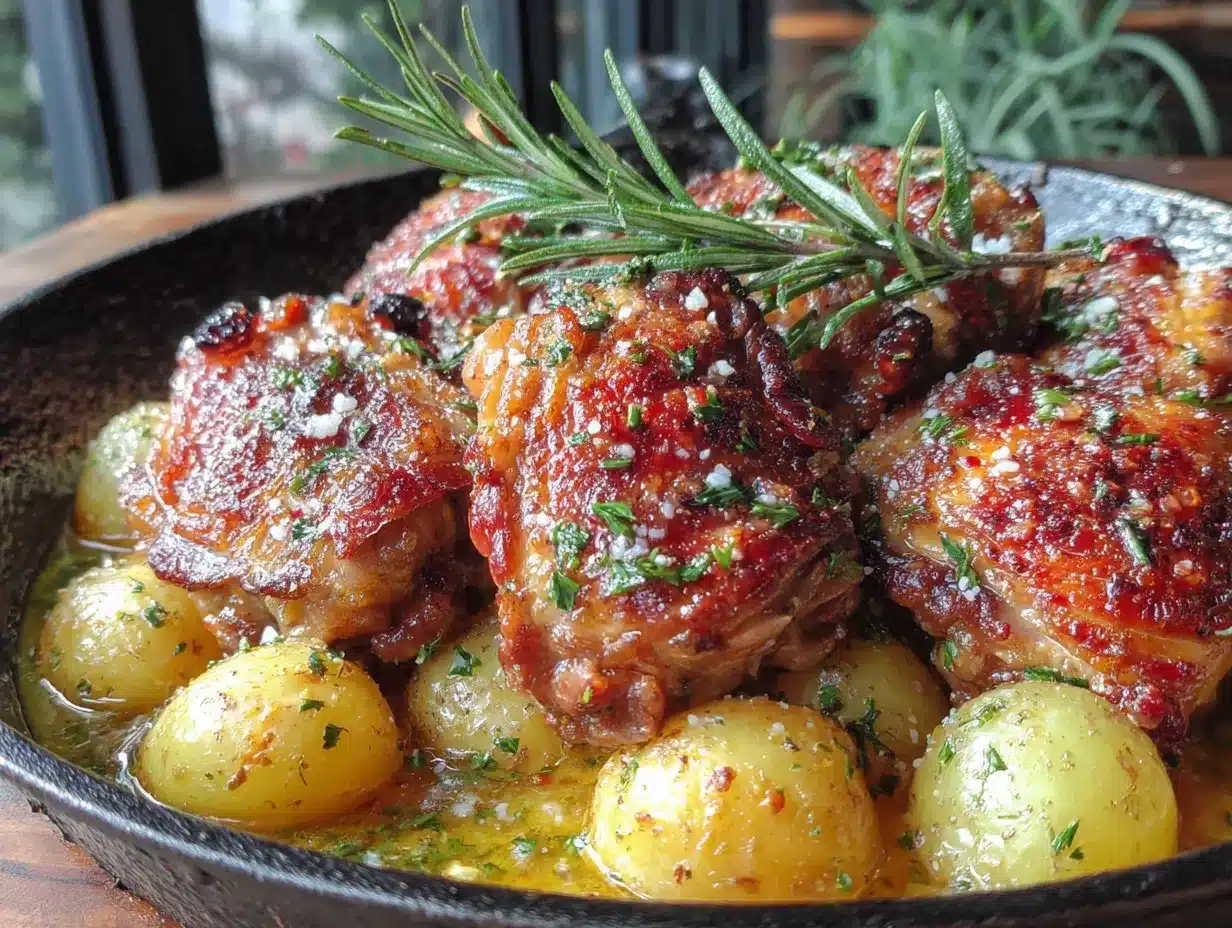
Alright, let’s get cooking. This is straightforward, but I’ll walk you through every step so you nail it on the first try.
- Preheat your oven to 425°F (220°C). This is important. The high heat is what gives the chicken its crispy skin and roasts the potatoes quickly. Don’t skip the preheat—putting food in a cold oven will result in soggy skin and unevenly cooked potatoes. Give it a full 15-20 minutes to come to temperature.
- Prepare your potatoes. Wash and dry the baby potatoes. No need to peel them—the skin gets wonderfully crispy. Cut any larger ones in half or quarter them so they’re all about 1-inch pieces. If you’re using Yukon Golds, cut them into 1-inch cubes. Keep them uniform in size for even cooking. Place them in a large mixing bowl.
- Smash the garlic. Take 4-5 garlic cloves and smash them with the flat side of your chef’s knife. The peel will loosen, and you can easily remove it. Leave the cloves whole but slightly crushed. This releases their flavor slowly without burning. Add them to the bowl with the potatoes.
- Prep the rosemary. Strip the leaves from 2-3 sprigs of fresh rosemary. You can do this by running your fingers down the stem from top to bottom. Chop the leaves coarsely. You want about 2 tablespoons. Add to the bowl.
- Season the potatoes. Drizzle 2 tablespoons of olive oil over the potatoes, garlic, and rosemary. Add ½ teaspoon of kosher salt and ¼ teaspoon of black pepper. Toss everything together with your hands until the potatoes are well coated. Spread them out on your prepared baking sheet in a single layer. Don’t crowd them—they need space to roast, not steam.
- Prep the chicken. Pat the chicken thighs dry with paper towels. This is a crucial step—dry skin equals crispy skin. Don’t skip it. Place the chicken thighs in the same bowl (no need to wash it) and drizzle with the remaining 1-2 tablespoons of olive oil. Season with the remaining ½ teaspoon of salt and ¼ teaspoon of pepper. Rub the seasoning all over, getting under the skin if you can.
- Arrange everything on the pan. Place the chicken thighs skin-side up on the baking sheet, nestled among the potatoes. Don’t cover the potatoes completely—leave some exposed so they can brown. The chicken should be in a single layer, not touching each other. If they’re too close, they’ll steam instead of roast.
- Roast for 35-40 minutes. Place the pan on the middle rack of your preheated oven. Roast without disturbing for 35 minutes. At 35 minutes, check the internal temperature of the chicken using an instant-read thermometer. It should read 165°F (74°C) at the thickest part. If it’s not there yet, give it another 5 minutes. The potatoes should be golden and tender when pierced with a fork.
- Rest before serving. Remove the pan from the oven and let it rest for 5 minutes. This allows the juices in the chicken to redistribute. If you cut into it immediately, those juices will run out and leave you with dry meat. Patience, my friend.
- Serve with lemon. Transfer the chicken and potatoes to a platter or serve directly from the pan. Squeeze fresh lemon juice over everything right before eating. The acidity cuts through the richness and makes the flavors pop.
A quick sensory check: Your kitchen should smell like a rustic Italian restaurant by now. The chicken skin should be deep golden brown and crackling when you press it. The potatoes should have crispy edges and soft, fluffy centers. If the garlic cloves look dark brown, don’t worry—they’ll be sweet and mellow, almost like roasted garlic butter. Mash them into a potato for a real treat.
Cooking Tips & Techniques
I’ve made this recipe more times than I can count, and I’ve learned a few things along the way. Some of these lessons came from mistakes—like the time I used too much garlic and it burned, or the time I crowded the pan and ended up with steamed chicken. Here’s what I know now.
Pat the chicken dry. I cannot stress this enough. Moisture is the enemy of crispy skin. Use paper towels and really press them into the skin to absorb any excess moisture. Let the chicken sit uncovered in the fridge for 30 minutes if you have time—this dries out the skin even more and guarantees crunch.
Don’t overcrowd the pan. If your chicken thighs are touching or overlapping, they’ll steam in their own juices. The skin will be flabby, not crispy. Give them space. If you’re cooking for a crowd, use two pans or cook in batches. It’s worth the extra effort.
Cut potatoes evenly. This is the most common mistake I see. If your potato pieces are different sizes, the small ones will burn while the big ones are still raw. Take the extra 30 seconds to make sure they’re all about 1 inch. Your future self will thank you.
Use an instant-read thermometer. Guessing doneness by color or time is risky. Chicken thighs are safe at 165°F, but they’re actually better at 175-180°F—the extra heat breaks down the connective tissue and makes them more tender. I pull mine at 175°F for the juiciest results.
Let it rest. I know you’re hungry. I know it smells amazing. But cutting into that chicken right out of the oven will release all the juices and leave you with dry meat. Five minutes. Set a timer if you have to. It makes a real difference.
One failure I’ll share: I once tried to save time by skipping the paper towel step. I thought, “It’s fine, the oven will dry it out.” It wasn’t fine. The skin was rubbery, and I spent the whole meal wishing I’d taken the extra 30 seconds. Learn from my laziness.
Variations & Adaptations
This recipe is a fantastic base, and you can tweak it to suit your mood or what’s in your fridge. Here are some variations I’ve tried and loved.
Lemon Herb Variation: Add the zest of one lemon to the olive oil mixture, and swap the rosemary for fresh thyme or oregano. The lemon zest adds a bright, citrusy note that pairs beautifully with the chicken. I do this in the spring when I want something a little lighter.
Spicy Version: Add ½ teaspoon of smoked paprika and ¼ teaspoon of cayenne pepper to the seasoning mix. The smoked paprika adds a deep, smoky flavor, and the cayenne brings gentle heat. This is my go-to when I’m craving something with a kick. My husband loves this version.
Vegetable Medley: Add other vegetables to the pan along with the potatoes. Carrots cut into 1-inch chunks, red onion wedges, or bell pepper strips all work well. Just make sure they’re cut to a similar size so they cook evenly. I’ve added zucchini before, but I add it halfway through cooking so it doesn’t get mushy.
Dairy-Free and Gluten-Free: This recipe is naturally both, which makes it perfect for guests with dietary restrictions. Just double-check that your olive oil is pure and not blended with other oils. That’s it—no substitutions needed.
Herb Swap: If you don’t have rosemary, try fresh thyme, oregano, or even sage. Each herb brings a different personality to the dish. Thyme is more subtle, oregano is bolder, and sage is earthy and warm. I’ve used all three at different times, and they all work beautifully.
One personal variation I love: I sometimes add a handful of whole cherry tomatoes to the pan during the last 10 minutes of cooking. They burst and release their juices, creating a little pan sauce that’s incredible spooned over the chicken and potatoes. It’s a small addition that feels fancy without any extra work.
Serving & Storage Suggestions
This dish is best served hot, straight from the oven. The contrast between the crispy chicken skin and the tender potatoes is at its peak when everything is fresh and hot. But it’s also pretty forgiving, so don’t stress if you need to keep it warm for a bit.
Serving Temperature: Serve immediately after the 5-minute rest. If you’re making this for a family dinner, let everyone serve themselves from the pan—it keeps the rustic, no-fuss vibe. A squeeze of fresh lemon juice and a sprinkle of flaky sea salt right before serving takes it over the top.
What to Serve With It: This is a complete meal on its own, but I often add a simple green salad with a lemon vinaigrette to balance the richness. A side of steamed green beans or roasted asparagus also works beautifully. For a heartier meal, serve with crusty bread to soak up the pan juices. I’ve also been known to pair it with a glass of crisp white wine, like a Sauvignon Blanc or a Pinot Grigio.
Storage Instructions: Store leftovers in an airtight container in the refrigerator for up to 4 days. The chicken will lose some of its crispiness, but the flavor will actually deepen overnight. I love this dish even more the next day—the potatoes soak up all the juices and become incredibly flavorful.
Reheating Tips: The best way to reheat is in the oven or an air fryer. Preheat to 375°F (190°C) and spread the chicken and potatoes on a baking sheet. Heat for 10-12 minutes, or until warmed through and the skin crisps back up. Avoid the microwave—it will make the skin rubbery and the potatoes soggy. If you’re in a hurry, a hot skillet on the stovetop works better than the microwave.
Freezing: You can freeze the cooked dish for up to 3 months. Let it cool completely, then transfer to a freezer-safe container. To reheat, thaw overnight in the fridge and then reheat in the oven as described above. The texture won’t be quite as good as fresh, but it’s still a solid meal for a busy night.
One note: The flavors actually develop and meld together over time. I’ve found that leftovers from this dish taste even better the next day. The rosemary infuses the potatoes more deeply, and the chicken becomes incredibly tender. It’s a rare recipe that improves with age.
Nutritional Information & Benefits
Here’s an approximate nutritional breakdown for one serving (based on 4 servings, using 6 chicken thighs and 1.5 lbs of potatoes):
| Nutrient | Amount per Serving |
|---|---|
| Calories | 520 |
| Protein | 35g |
| Fat | 28g |
| Saturated Fat | 7g |
| Carbohydrates | 32g |
| Fiber | 4g |
| Sugar | 2g |
| Sodium | 680mg |
This meal is a great source of protein, which keeps you full and satisfied. Chicken thighs are higher in healthy fats than breasts, which makes them more flavorful and moist. Potatoes often get a bad rap, but they’re actually a good source of vitamin C, potassium, and fiber, especially when you eat the skin. The olive oil provides heart-healthy monounsaturated fats, and rosemary is packed with antioxidants.
This recipe is naturally gluten-free and dairy-free, making it suitable for many dietary needs. If you’re watching your sodium, reduce the salt to ¾ teaspoon total. And if you’re looking for a lower-carb option, swap the potatoes for cauliflower florets or broccoli—just keep an eye on them as they may cook faster.
From a personal wellness perspective, I love that this meal feels indulgent but is actually quite balanced. It’s real food—nothing processed, nothing artificial. It’s the kind of dinner that nourishes you without making you feel heavy or sluggish. And honestly, knowing that it’s good for me makes it taste even better.
Conclusion
This quick one-pan chicken thighs with rosemary potatoes has become a staple in my kitchen for good reason. It’s the recipe I turn to when I’m tired, when I’m busy, and when I just want something that tastes like a hug. It’s proof that you don’t need a dozen ingredients or complicated techniques to make a meal that feels special.
I love that this recipe came from a casual Tuesday night at a friend’s house. It reminds me that the best food doesn’t come from fancy restaurants or complicated cookbooks—it comes from real people cooking for the people they love. Jen wasn’t trying to be impressive. She was just feeding her family. And that’s the kind of cooking I want to do.
I encourage you to make this recipe your own. Swap the herbs, add some vegetables, or crank up the spice. The beauty of a simple dish like this is that it welcomes adaptation. Don’t be afraid to experiment. And when you find a version you love, I hope you share it with someone you care about.
If you make this, I’d love to hear how it turned out. Drop a comment below and let me know what variations you tried. Did you add lemon? Did you go spicy? Did your family ask for seconds? Share your wins—I read every single comment. And if you’re looking for more easy weeknight dinners, check out my recipe for crispy garlic chicken or these simple herb roasted vegetables for another no-fuss meal. Happy cooking, friends!
Frequently Asked Questions
Can I use chicken breasts instead of thighs?
Yes, but you’ll need to adjust the cooking time. Boneless, skinless chicken breasts will cook faster—check for doneness at 25-30 minutes. Bone-in breasts will take about 35-40 minutes. Just be aware that breasts can dry out more easily than thighs, so use an instant-read thermometer and pull them at 160°F (they’ll carry over to 165°F while resting).
Do I have to use fresh rosemary?
Fresh is best, but dried rosemary works in a pinch. Use 1 tablespoon of dried rosemary (crushed between your fingers) instead of 2 tablespoons fresh. Keep in mind that dried rosemary can be a bit woody, so I recommend crushing it well to release the flavor.
Can I prep this ahead of time?
Absolutely. You can chop the potatoes, smash the garlic, and strip the rosemary up to a day in advance. Store them in separate containers in the fridge. When you’re ready to cook, just toss everything together and roast. You can even season the chicken and keep it covered in the fridge for up to 8 hours before cooking.
Why are my potatoes not crispy?
This usually happens for one of three reasons: the potatoes are too crowded on the pan, the oven wasn’t hot enough, or you didn’t use enough oil. Make sure your potatoes are in a single layer with space between them, your oven is fully preheated to 425°F, and you’ve coated them well with oil. If they’re still not crispy after roasting, try broiling them for 2-3 minutes at the end.
Can I add other vegetables to the pan?
Yes! Carrots, red onions, bell peppers, and broccoli all work well. Just cut them to a similar size as the potatoes (about 1-inch pieces). Keep in mind that softer vegetables like zucchini or cherry tomatoes should be added halfway through cooking to prevent them from getting mushy. I love adding halved Brussels sprouts—they get wonderfully caramelized.
Pin This Recipe!
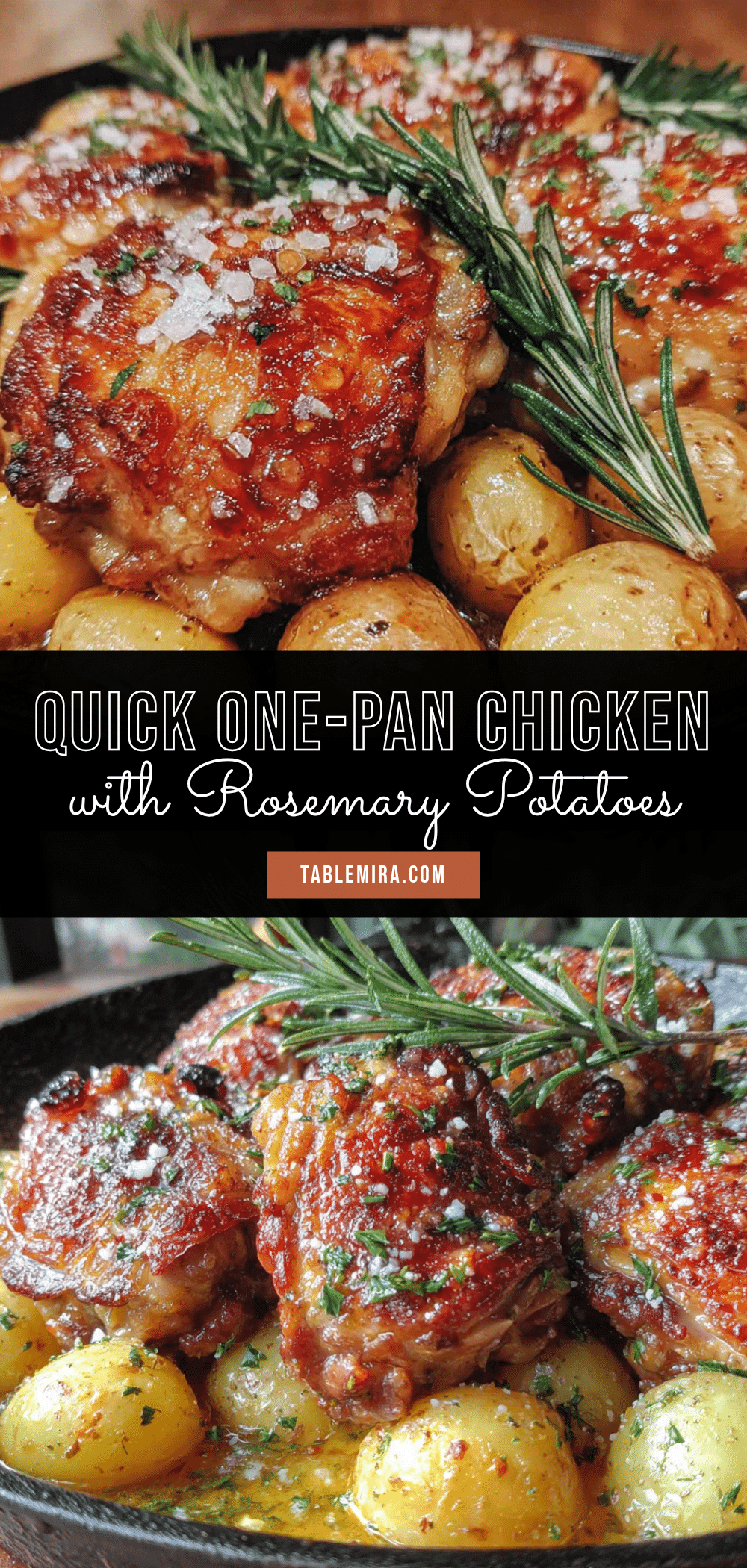
Quick One-Pan Chicken Thighs with Easy Rosemary Potatoes

Juicy, crispy-skinned chicken thighs and tender rosemary potatoes roasted together on a single sheet pan. This easy, one-pan meal is perfect for busy weeknights and requires minimal cleanup.
- Prep Time: 15 minutes
- Cook Time: 35-40 minutes
- Total Time: 50-55 minutes
- Yield: 4 servings 1x
- Category: Main Course
- Cuisine: American
Ingredients
- 4–6 bone-in, skin-on chicken thighs (about 1.5 lbs)
- 1.5 lbs baby potatoes or Yukon Gold potatoes, halved or quartered into 1-inch pieces
- 2–3 sprigs fresh rosemary, chopped (about 2 tablespoons)
- 4–5 garlic cloves, smashed
- 3–4 tablespoons extra-virgin olive oil
- 1 teaspoon kosher salt
- ½ teaspoon freshly ground black pepper
- Lemon wedges, for serving (optional)
Instructions
- Preheat your oven to 425°F (220°C).
- Wash and dry the baby potatoes. Cut any larger ones in half or quarter them so they’re all about 1-inch pieces. Place them in a large mixing bowl.
- Smash the garlic cloves with the flat side of a chef’s knife, remove the peel, and add to the bowl with the potatoes.
- Strip the leaves from the rosemary sprigs and chop coarsely. Add to the bowl.
- Drizzle 2 tablespoons of olive oil over the potatoes, garlic, and rosemary. Add ½ teaspoon of kosher salt and ¼ teaspoon of black pepper. Toss everything together until well coated. Spread the potatoes in a single layer on a rimmed baking sheet.
- Pat the chicken thighs dry with paper towels. Place them in the same bowl and drizzle with the remaining 1-2 tablespoons of olive oil. Season with the remaining ½ teaspoon of salt and ¼ teaspoon of pepper. Rub the seasoning all over the chicken.
- Arrange the chicken thighs skin-side up on the baking sheet, nestled among the potatoes, in a single layer without touching.
- Roast for 35-40 minutes, until the chicken reaches an internal temperature of 165°F (74°C) and the potatoes are golden and tender.
- Remove from the oven and let rest for 5 minutes before serving.
- Serve with lemon wedges for squeezing over the top.
Notes
Pat the chicken dry for crispy skin. Don’t overcrowd the pan—give the chicken and potatoes space to roast. Cut potatoes evenly for uniform cooking. Let the chicken rest for 5 minutes before serving to retain juices. For extra crispy potatoes, broil for 2-3 minutes at the end. Leftovers can be stored in an airtight container in the refrigerator for up to 4 days. Reheat in the oven or air fryer at 375°F for 10-12 minutes to restore crispiness.
Nutrition
- Serving Size: 1 serving (based on
- Calories: 520
- Sugar: 2
- Sodium: 680
- Fat: 28
- Saturated Fat: 7
- Carbohydrates: 32
- Fiber: 4
- Protein: 35
Keywords: one-pan chicken, sheet pan dinner, rosemary chicken, crispy chicken thighs, easy weeknight dinner, roasted potatoes, gluten-free, dairy-free