This was supposed to be a straightforward batch of gingerbread men. I had the recipe memorized, the butter was softening on the counter, and I was feeling pretty good about myself. Then I grabbed the molasses jar without looking, realized halfway through mixing that I’d used blackstrap instead of the mild stuff, and the kitchen smelled less like a holiday bakery and more like a campfire. The dough was darker than midnight, and honestly, I almost threw it out. But I was already in too deep, the kids were watching, and I needed something to show for the mess I’d made. So I pressed on, rolled the sticky dough, and cut out my cookies. What came out of the oven was nothing like the plan — and better.
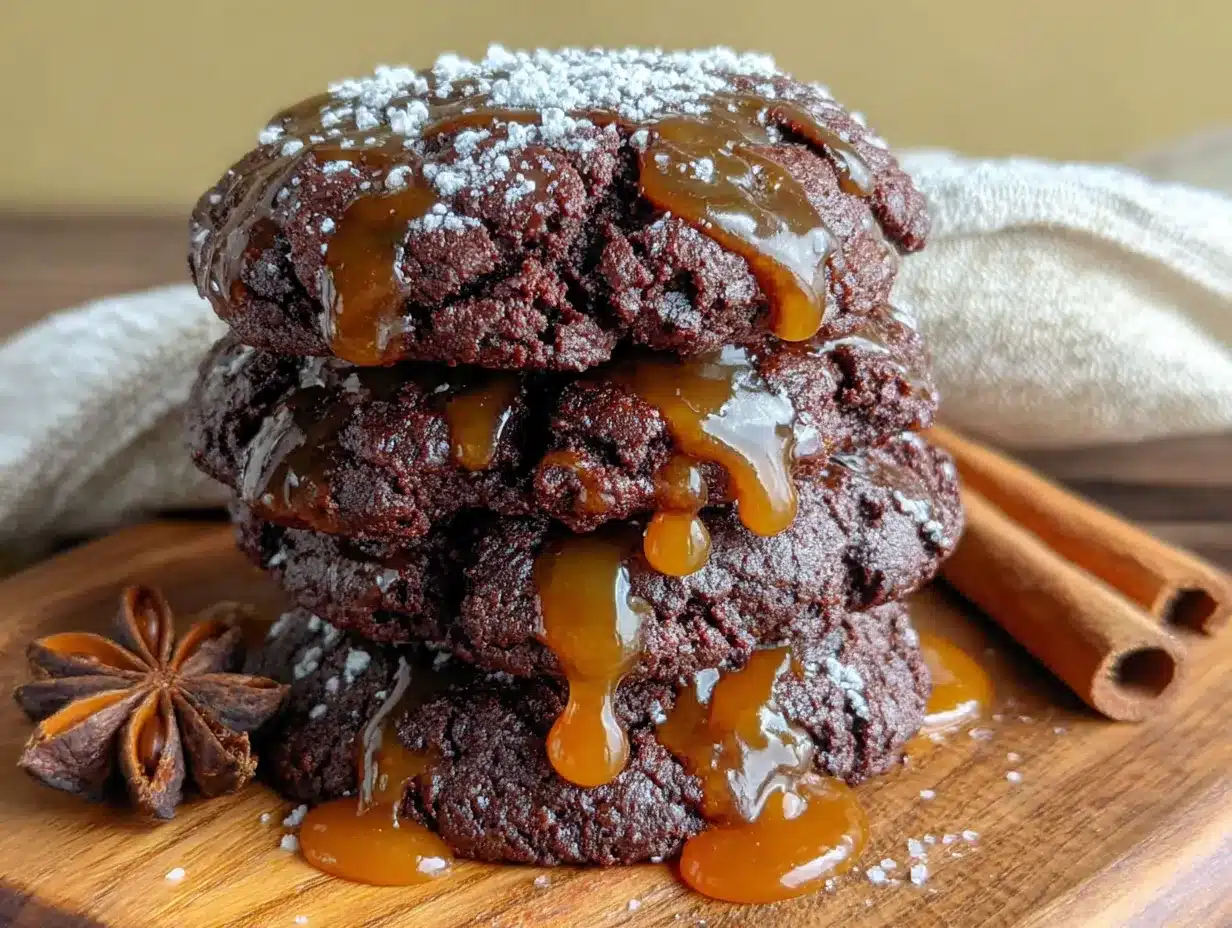
Those cookies had this deep, almost smoky sweetness that the usual recipe just doesn’t deliver. The blackstrap molasses gave them a chewiness I couldn’t replicate with the lighter stuff, and the spice blend felt bolder, more grown-up. I drizzled a simple molasses glaze on top — partly to salvage the look, partly because I had extra molasses to use up — and something clicked. The glaze added this glossy, crackly top that made the cookies look like they belonged in a bakery window. My neighbor, Sarah, knocked on the door later that day (the smell had drifted through the wall, apparently) and asked for the recipe. I had to admit it was a mistake. She didn’t care. She ate three.
Now I make these cozy gingerbread cookies with molasses glaze every year when the weather turns cold. They’ve become my go-to for holiday cookie swaps, lazy Sunday baking sessions, and those evenings when you just want the house to smell like December. The glaze is optional, but honestly, don’t skip it. It’s what makes these cookies feel special — that little bit of extra sweetness on top of the deep, spiced base. If you’ve ever had a baking disaster turn into something you actually prefer, you know that feeling. This is that recipe. It’s the happy accident I keep coming back to.
Why You’ll Love This Recipe
These are not your average gingerbread cookies. I’ve tested this recipe at least a dozen times — tweaking the spice ratio, swapping flours, trying different glazes — and this version is the one that gets the most requests. Here’s why you’ll love it too:
- Deep, Complex Flavor: The blackstrap molasses gives these cookies a rich, almost caramelized taste that regular gingerbread just doesn’t have. It’s cozy in a way that feels like a warm blanket.
- Perfectly Chewy: These cookies come out soft in the center with slightly crisp edges. No dry, crumbly disappointments here.
- Simple Ingredients: You probably have most of these in your pantry right now. No fancy extracts or hard-to-find spices.
- Easy Molasses Glaze: This glaze comes together in under two minutes with just powdered sugar and molasses. It sets beautifully and adds that bakery-style finish.
- Great for the Holidays: These cookies are perfect for cookie exchanges, gifting, or just keeping on the counter for snacking. They also freeze beautifully, so you can make them ahead.
- Crowd-Pleaser: I’ve brought these to potlucks, family dinners, and office parties. They disappear fast. Kids love the sweetness, and adults appreciate the depth of flavor.
What makes this recipe different is the glaze. Most gingerbread cookies get a royal icing or a simple dusting of powdered sugar. The molasses glaze adds another layer of that same warm flavor, tying the whole cookie together. It’s not just decoration — it’s part of the experience. And honestly, it’s the part people remember. I’ve had friends text me weeks after Christmas asking for “those cookies with the shiny top.” That’s the molasses glaze doing its thing.
What Ingredients You Will Need
This recipe uses simple, wholesome ingredients to deliver bold flavor and satisfying texture without the fuss. Most of these are pantry staples, especially if you do a lot of holiday baking. Here’s what you’ll need:
For the Cookies
- Unsalted butter, softened (1 cup / 2 sticks) — Make sure it’s at room temperature so it creams properly with the sugar. I use Land O’Lakes for consistent results.
- Brown sugar, packed (1 cup / 200g) — Light or dark brown sugar works. Dark brown sugar adds more molasses flavor, which pairs nicely with the blackstrap.
- Blackstrap molasses (¾ cup / 240ml) — This is the star ingredient. Don’t use mild or light molasses here — the blackstrap gives the cookies their deep, complex flavor. Grandma’s brand is my go-to.
- Large egg (1, at room temperature) — Helps bind the dough and adds richness.
- All-purpose flour (3 cups / 360g) — Spoon and level your flour for accuracy. Too much flour makes cookies dry.
- Baking soda (2 teaspoons) — Helps the cookies spread slightly and gives them a tender crumb.
- Ground ginger (2 teaspoons) — Freshly ground ginger from a spice shop is amazing, but standard grocery store ground ginger works fine.
- Ground cinnamon (1½ teaspoons) — I prefer Saigon cinnamon for its warm, slightly sweet flavor.
- Ground cloves (½ teaspoon) — A little goes a long way. Cloves add that classic holiday spice note.
- Salt (½ teaspoon) — Balances the sweetness and enhances the spices.
For the Molasses Glaze
- Powdered sugar (1½ cups / 180g) — Sift it if it’s clumpy for a smoother glaze.
- Blackstrap molasses (2 tablespoons) — Same molasses you used for the cookies. This keeps the flavor consistent.
- Milk or water (2-3 tablespoons) — Milk makes the glaze creamier; water keeps it lighter. Adjust for your preferred consistency.
- Vanilla extract (½ teaspoon) — Optional but adds a nice warmth.
Ingredient Tips
For the best texture, make sure your butter and egg are at room temperature. Cold ingredients don’t cream together properly, which can make the cookies dense. If you’re in a rush, you can soften the butter in the microwave for about 10 seconds, but keep an eye on it — you want it soft, not melted.
If you don’t have blackstrap molasses, you can use regular molasses, but the flavor will be milder. The cookies will still be good, just not as deep and complex. I’ve also tried using honey instead of molasses in the glaze, and it works in a pinch, but the molasses glaze really is better.
Equipment Needed
- Large mixing bowl — For creaming the butter and sugar and mixing the dough.
- Electric mixer (hand or stand) — A hand mixer works fine, but a stand mixer with the paddle attachment makes creaming easier.
- Whisk — For combining the dry ingredients.
- Rolling pin — I use a standard wooden rolling pin. If you don’t have one, a wine bottle works in a pinch (just chill the dough well first).
- Cookie cutters — Gingerbread men are classic, but stars, trees, or circles work great too.
- Baking sheets (2) — Line them with parchment paper or silicone baking mats for easy cleanup.
- Cooling rack — Essential for letting the cookies cool completely before glazing.
- Small bowl — For mixing the glaze.
- Pastry brush or spoon — For applying the glaze. A brush gives a thinner, more even coat; a spoon works for a thicker drizzle.
I’ve made these cookies with just a bowl and a wooden spoon when my mixer was on the fritz, and they still turned out great. The dough is forgiving. But if you have a mixer, use it — it makes the creaming step much faster and gives you a smoother dough.
Preparation Method
This recipe makes about 24 medium-sized cookies, depending on your cookie cutter size. The total time is about 2 hours, including chilling time. Here’s how to do it:
- Cream the butter and sugar: In a large mixing bowl, beat the softened butter and brown sugar together until light and fluffy, about 3-4 minutes with an electric mixer on medium speed. You want the mixture to look pale and airy. Scrape down the sides of the bowl once or twice.
- Add the molasses and egg: Pour in the blackstrap molasses and add the egg. Beat on low speed until combined. The mixture will look darker and smell amazing at this point. Don’t overmix — just until it’s smooth.
- Combine the dry ingredients: In a separate bowl, whisk together the flour, baking soda, ginger, cinnamon, cloves, and salt. This ensures the spices are evenly distributed throughout the dough.
- Mix the dough: Gradually add the dry ingredients to the wet mixture, mixing on low speed or stirring with a wooden spoon. The dough will be stiff and slightly sticky. If it feels too sticky to handle, add an extra tablespoon of flour.
- Chill the dough: Divide the dough into two discs, wrap each in plastic wrap, and refrigerate for at least 1 hour. This step is crucial — the dough needs to firm up so you can roll it without it sticking everywhere. I’ve skipped this step before, and the cookies spread into sad, shapeless blobs. Learn from my mistake.
- Preheat the oven: About 15 minutes before you’re ready to bake, preheat your oven to 350°F (175°C). Line your baking sheets with parchment paper.
- Roll and cut: On a lightly floured surface, roll out one disc of dough to about ¼-inch thickness. Use your cookie cutters to cut out shapes, and transfer them to the prepared baking sheets, spacing them about 2 inches apart. Re-roll the scraps and cut more cookies.
- Bake: Bake for 8-10 minutes, or until the edges are just set and the centers look slightly puffed. The cookies will continue to firm up as they cool. For chewier cookies, bake on the shorter side — 8 minutes is usually perfect in my oven.
- Cool: Let the cookies cool on the baking sheet for 5 minutes, then transfer them to a cooling rack to cool completely. Don’t skip this step — the cookies are fragile when hot and can break easily.
- Make the glaze: While the cookies cool, whisk together the powdered sugar, blackstrap molasses, vanilla extract, and 2 tablespoons of milk or water in a small bowl. Add more liquid a teaspoon at a time until the glaze is thin enough to drizzle but thick enough to hold its shape on the cookie.
- Glaze the cookies: Once the cookies are completely cool, brush or drizzle the glaze over the tops. Let the glaze set for about 30 minutes before serving or storing. The glaze will harden slightly but stay a bit soft — that’s the texture you want.
A quick note: The dough can be sticky when you’re rolling it out. Don’t be shy with the flour on your rolling surface. I keep a small bowl of flour nearby and dust as needed. Also, if the dough starts to soften and get sticky again, pop it back in the fridge for 10 minutes.
Cooking Tips & Techniques
I’ve made this recipe enough times to know where things can go wrong. Here are the tips I’ve picked up along the way:
Don’t overbake. This is the number one mistake people make with gingerbread cookies. They look underdone when you take them out, but they continue to cook on the hot baking sheet. If you wait until the edges are brown, you’ll end up with dry, hard cookies. Pull them when the edges are just set and the centers look slightly soft.
Chill the dough thoroughly. I know it’s tempting to skip the chilling step when you’re in a hurry, but it makes a huge difference. Chilled dough is easier to roll, holds its shape better during baking, and produces cookies with a better texture. If you’re really pressed for time, you can chill the dough for 30 minutes in the freezer instead of 1 hour in the fridge.
Use a light hand with the flour. When rolling out the dough, use just enough flour to prevent sticking. Too much flour on the surface can dry out the cookies. I dust my rolling pin and surface lightly, and if the dough starts sticking, I add a little more flour to the dough itself rather than the surface.
Glaze at the right time. The cookies need to be completely cool before you add the glaze. If they’re even slightly warm, the glaze will melt and run off. I usually let them cool for at least 30 minutes on a rack. If I’m in a rush, I pop them in the fridge for 10 minutes to speed things up.
Double the batch. These cookies disappear fast. I always make a double batch during the holidays — one to eat now, one to freeze for later. The dough freezes beautifully for up to 3 months, so you can bake fresh cookies whenever you want.
Variations & Adaptations
This recipe is flexible. Here are some ways to make it your own:
Gluten-Free Version: Substitute the all-purpose flour with a 1:1 gluten-free baking flour blend. I’ve used Bob’s Red Mill Gluten-Free 1-to-1 Baking Flour with great results. The texture is slightly more crumbly, but the flavor is still fantastic.
Vegan Version: Replace the butter with vegan butter (I like Earth Balance) and the egg with a flax egg (1 tablespoon ground flaxseed mixed with 3 tablespoons water, let sit for 5 minutes). The cookies will be a bit denser but still delicious.
Spice Variations: Add ½ teaspoon of cardamom or nutmeg for a different spice profile. I once made a batch with extra ginger and a pinch of black pepper for a spicier kick, and it was surprisingly good.
No Cookie Cutters?: Roll the dough into a log, chill it, and slice it into rounds. They won’t look like gingerbread men, but they’ll taste the same. I’ve done this when I couldn’t find my cookie cutters after a move.
Different Glaze Options: If you’re not a fan of molasses glaze, try a simple powdered sugar glaze with lemon juice, or a cream cheese glaze for a tangy twist. The molasses glaze is my favorite, but the cookies are good with any topping.
Serving & Storage Suggestions
These cookies are best served at room temperature with a glass of cold milk or a hot cup of coffee. They’re perfect for holiday cookie platters, afternoon snacks, or dessert after a cozy dinner.
Storage: Store the glazed cookies in an airtight container at room temperature for up to 1 week. Layer them between sheets of parchment paper to prevent the glaze from sticking. If you live in a humid climate, the glaze might get slightly sticky — that’s normal.
Freezing: You can freeze the baked cookies (unglazed) for up to 3 months. Wrap them tightly in plastic wrap and then foil. When you’re ready to serve, thaw them at room temperature and add the glaze fresh. The glaze doesn’t freeze well — it can get grainy when thawed.
Make-Ahead Tip: The dough can be refrigerated for up to 3 days before baking. I often make the dough on a Sunday and bake cookies throughout the week when the craving hits. The flavor actually develops a bit more as the dough sits.
Flavor Development: These cookies actually taste better the next day. The spices mellow and meld together, and the texture softens slightly. If you can resist eating them all on day one, you’ll be rewarded on day two.
Nutritional Information & Benefits
Here’s the approximate nutritional breakdown for one cookie (based on 24 cookies with glaze):
| Nutrient | Amount per cookie |
|---|---|
| Calories | 185 |
| Total Fat | 8g |
| Saturated Fat | 5g |
| Cholesterol | 25mg |
| Sodium | 120mg |
| Total Carbohydrates | 27g |
| Dietary Fiber | 1g |
| Sugars | 16g |
| Protein | 2g |
Blackstrap molasses is actually a good source of iron, calcium, and potassium — more so than other sweeteners. So while these are still a treat, you’re getting a little nutritional boost from the molasses. The ginger and cinnamon also have anti-inflammatory properties, which is a nice bonus during cold and flu season.
These cookies contain gluten, dairy, and eggs. For allergen-friendly versions, check the variations section above.
Conclusion
These cozy gingerbread cookies with molasses glaze are the kind of recipe that makes you glad you messed up in the kitchen. They’re proof that sometimes the best things come from mistakes — a wrong jar of molasses, a distracted moment, a leap of faith. The deep, spiced flavor and glossy glaze make them feel special, but they’re simple enough to whip up on a random Tuesday.
I hope you give this recipe a try, and I hope you make it your own. Maybe you’ll add extra ginger, or skip the glaze, or cut them into stars instead of men. That’s the beauty of baking — you get to decide. And if something goes wrong, don’t panic. It might just turn into your new favorite recipe.
I’d love to hear how these turn out for you. Drop a comment below and let me know if you made any changes, or share a photo of your cookies on Pinterest. Happy baking, and here’s to happy accidents!
Frequently Asked Questions
Can I use regular molasses instead of blackstrap?
Yes, you can. The cookies will be milder and sweeter, but they’ll still taste good. I prefer blackstrap for the deeper, more complex flavor, but regular molasses works in a pinch.
Why did my cookies spread too much?
This usually happens when the dough isn’t chilled enough, or the butter was too soft. Make sure to chill the dough for at least 1 hour, and don’t skip the step. Also, check that your baking soda isn’t expired — old baking soda can cause spreading.
Can I freeze the baked cookies?
Yes, but freeze them without the glaze. Wrap the cooled cookies tightly in plastic wrap and foil, and freeze for up to 3 months. Thaw at room temperature and add the glaze fresh.
How do I make the glaze thicker or thinner?
For a thicker glaze, add more powdered sugar a tablespoon at a time. For a thinner glaze, add more milk or water a teaspoon at a time. The consistency should be like thin honey — pourable but not runny.
Can I use this dough for a gingerbread house?
I wouldn’t recommend it. This dough is designed for soft, chewy cookies, not structural pieces. For a gingerbread house, you’ll want a stiffer dough that bakes up harder and holds its shape better.
Pin This Recipe!
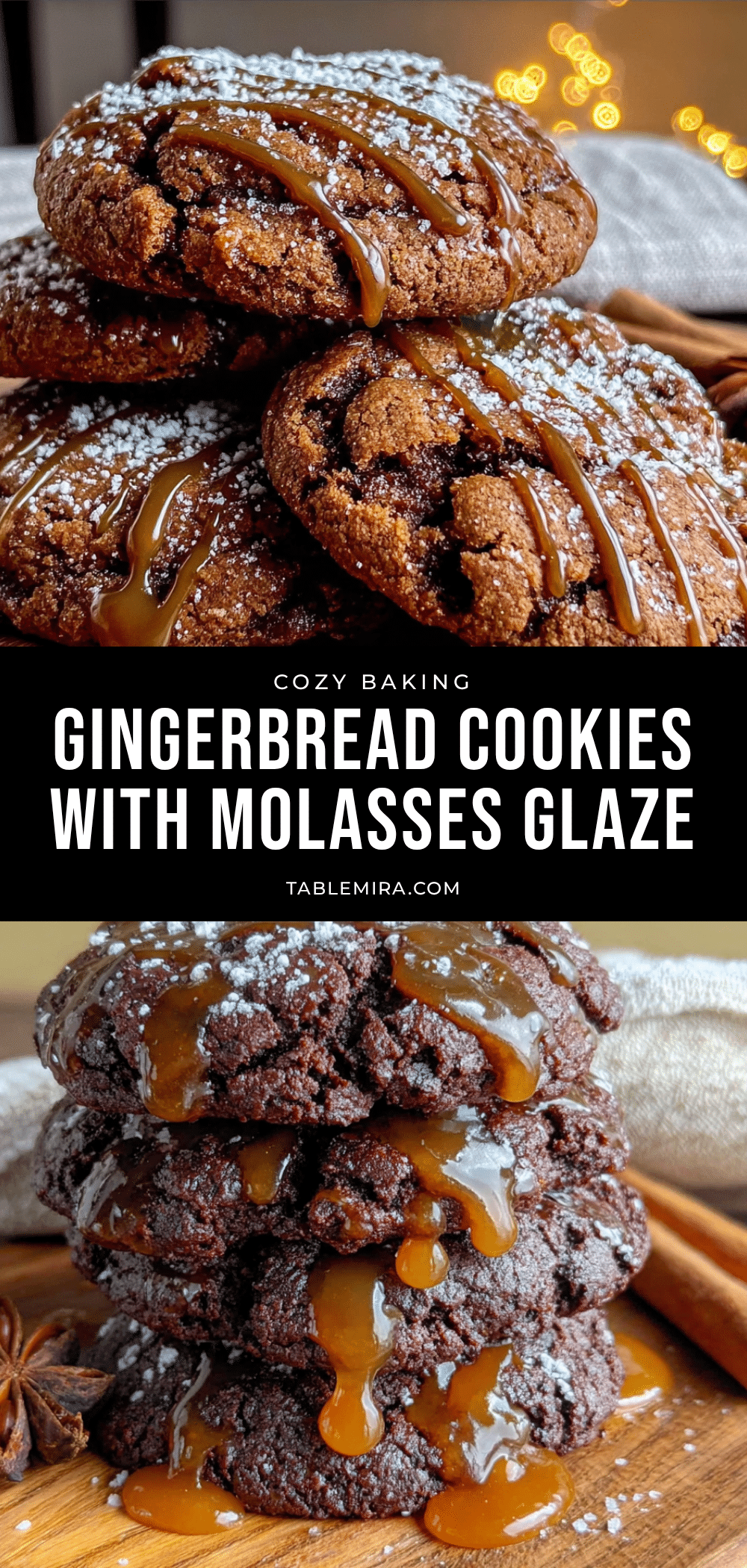
Cozy Gingerbread Cookies with Easy Molasses Glaze
These deep, spiced gingerbread cookies with a glossy molasses glaze are a happy accident turned holiday favorite. Made with blackstrap molasses for a rich, complex flavor and perfectly chewy texture, they’re simple enough for a Tuesday but special enough for cookie swaps.
- Prep Time: 20 minutes
- Cook Time: 10 minutes
- Total Time: 2 hours (includes 1 hour chilling time)
- Yield: 24 cookies 1x
- Category: Dessert
- Cuisine: American
Ingredients
- 1 cup (2 sticks) unsalted butter, softened
- 1 cup (200g) brown sugar, packed
- ¾ cup (240ml) blackstrap molasses
- 1 large egg, at room temperature
- 3 cups (360g) all-purpose flour
- 2 teaspoons baking soda
- 2 teaspoons ground ginger
- 1½ teaspoons ground cinnamon
- ½ teaspoon ground cloves
- ½ teaspoon salt
- 1½ cups (180g) powdered sugar
- 2 tablespoons blackstrap molasses
- 2–3 tablespoons milk or water
- ½ teaspoon vanilla extract (optional)
Instructions
- Cream the butter and sugar: In a large mixing bowl, beat the softened butter and brown sugar together until light and fluffy, about 3-4 minutes with an electric mixer on medium speed. Scrape down the sides of the bowl once or twice.
- Add the molasses and egg: Pour in the blackstrap molasses and add the egg. Beat on low speed until combined and smooth.
- Combine the dry ingredients: In a separate bowl, whisk together the flour, baking soda, ginger, cinnamon, cloves, and salt.
- Mix the dough: Gradually add the dry ingredients to the wet mixture, mixing on low speed or stirring with a wooden spoon until a stiff, slightly sticky dough forms. If too sticky, add an extra tablespoon of flour.
- Chill the dough: Divide the dough into two discs, wrap each in plastic wrap, and refrigerate for at least 1 hour.
- Preheat the oven: About 15 minutes before baking, preheat oven to 350°F (175°C). Line baking sheets with parchment paper.
- Roll and cut: On a lightly floured surface, roll out one disc of dough to about ¼-inch thickness. Cut into shapes with cookie cutters and transfer to prepared baking sheets, spacing 2 inches apart. Re-roll scraps and repeat.
- Bake: Bake for 8-10 minutes, until edges are just set and centers look slightly puffed. For chewier cookies, bake 8 minutes.
- Cool: Let cookies cool on baking sheet for 5 minutes, then transfer to a cooling rack to cool completely.
- Make the glaze: In a small bowl, whisk together powdered sugar, 2 tablespoons blackstrap molasses, vanilla extract (if using), and 2 tablespoons milk or water. Add more liquid a teaspoon at a time until glaze is thin enough to drizzle but thick enough to hold its shape.
- Glaze the cookies: Once cookies are completely cool, brush or drizzle glaze over tops. Let set for about 30 minutes before serving or storing.
Notes
Don’t overbake—cookies continue to cook on hot sheet. Chill dough thoroughly for best shape and texture. Use a light hand with flour when rolling. Glaze only when cookies are completely cool. Cookies taste even better the next day. Dough can be refrigerated up to 3 days or frozen up to 3 months.
Nutrition
- Serving Size: 1 cookie
- Calories: 185
- Sugar: 16
- Sodium: 120
- Fat: 8
- Saturated Fat: 5
- Carbohydrates: 27
- Fiber: 1
- Protein: 2
Keywords: gingerbread cookies, molasses cookies, holiday cookies, Christmas cookies, chewy gingerbread, molasses glaze, blackstrap molasses, easy cookie recipe