It was 11:47 PM on a random Wednesday in October, and I had a very specific craving for deviled eggs. Not just any deviled eggs—I wanted the ones my aunt used to bring to every Halloween party, the ones with the creepy spider web design piped on top. The problem? I didn’t have the full-fat mayo, the heavy cream, or frankly, the energy to make the traditional version. But I had six hard-boiled eggs from earlier in the week, some Greek yogurt that was about to expire, and this wild idea that maybe—just maybe—I could make a lighter version that didn’t taste like a compromise.
So there I was, standing in my dimly lit kitchen at nearly midnight, piping Greek yogurt mixture onto egg whites and trying not to wake up my roommate. I messed up the first spider web completely—it looked more like a confused scribble than a web. But you know that feeling when you’re too tired to care about perfection, so you just keep going? That’s when the magic happened. The smoked paprika I’d bought on a whim last month added this incredible depth that the classic recipe never had. And the Greek yogurt? Honestly, it made the filling creamier than I remembered the original being.
I kept making them that night, tweaking the ratios until the spider webs actually looked intentional. By the time I finished, it was past 1 AM, and I was eating deviled eggs in my pajamas, feeling like I’d discovered some secret shortcut to indulgence. These lighter spider web deviled eggs with smoked paprika have been my go-to ever since. Maybe you’ve been there—wanting something festive and delicious but not wanting to undo a week of healthy eating. This recipe is for those moments.
Why You’ll Love This Recipe
Let me tell you why these lighter spider web deviled eggs have completely replaced the traditional version in my kitchen. I’ve tested this recipe at three different parties now, and every single time, people grab one, pause, and say, “Wait, these are actually good?” before reaching for a second.
- Quick & Easy: You can whip these up in under 30 minutes, and most of that time is just waiting for the eggs to boil. Perfect for last-minute Halloween parties or when you need a showstopper appetizer without the stress.
- Simple Ingredients: No fancy grocery trips needed. You probably have Greek yogurt, eggs, and paprika in your kitchen right now. The spider web design uses ingredients you already have on hand.
- Perfect for Halloween Gatherings: These are the star of any spooky spread. Kids love the creepy web design, and adults appreciate the sophisticated smoked paprika flavor.
- Crowd-Pleaser: I’ve served these to picky eaters, health-conscious friends, and traditional deviled egg purists. The lighter version wins everyone over because it’s genuinely delicious, not just “good for being healthy.”
- Unbelievably Delicious: The smoked paprika adds this warm, slightly smoky depth that regular paprika just can’t match. Combined with the tangy Greek yogurt filling, every bite is perfectly balanced.
What makes this recipe different from all the other deviled egg recipes out there? It’s the technique of blending Greek yogurt with just a touch of mayo to get that ultra-creamy texture without the heavy fat content. Plus, the spider web design looks incredibly impressive but takes about 30 seconds per egg once you get the hang of it. This isn’t just another version—it’s the version I’ve perfected after countless midnight experiments and party test runs.
These lighter spider web deviled eggs are the kind of appetizer that makes you close your eyes after the first bite. They’re comfort food reimagined—healthier, faster, but with the same soul-soothing satisfaction that makes deviled eggs an all-time favorite. Perfect for impressing guests without stress, or turning a simple Halloween snack into something memorable.
What Ingredients You Will Need
This recipe uses simple, wholesome ingredients to deliver bold flavor and satisfying texture without the fuss. Most of these are pantry staples you probably already have, which makes this recipe perfect for spontaneous cravings or last-minute party planning.
For the Filling
- 6 large eggs, hard-boiled and peeled (look for eggs that are at least a week old—they peel much easier)
- 3 tablespoons plain Greek yogurt (I recommend Fage 2% for the best texture; full-fat works too)
- 1 tablespoon light mayonnaise (adds just enough richness without going overboard)
- 1 teaspoon Dijon mustard (adds subtle tang and helps emulsify the filling)
- ½ teaspoon smoked paprika (this is non-negotiable for that signature flavor—I use McCormick’s smoked paprika)
- ¼ teaspoon garlic powder
- ¼ teaspoon salt
- ⅛ teaspoon black pepper
- 1 teaspoon apple cider vinegar (brightens everything up without adding calories)
For the Spider Web Design

- 2 tablespoons plain Greek yogurt (thicker is better here—strain regular yogurt through cheesecloth for 10 minutes if needed)
- 1 tablespoon black sesame seeds or poppy seeds (for the spiders—black sesame seeds look more dramatic)
- Extra smoked paprika for dusting
I’ve tested this with different yogurts, and here’s what I’ve learned: regular non-fat Greek yogurt works fine, but the 2% version gives you that silky mouthfeel that makes these taste indulgent. If you’re dairy-free, coconut-based yogurt works surprisingly well—just make sure it’s unsweetened and plain. The smoked paprika is really the star here, so don’t skip it or try to substitute regular paprika. Trust me, I made that mistake once, and the flavor was flat and disappointing. Smoked paprika adds this incredible depth that makes people think you spent hours developing the recipe.
For the spider web design, you can use any small, dark seed to create the little spiders. Black sesame seeds are my favorite because they look like tiny spiders crawling across the eggs. Poppy seeds work too, but they’re smaller and less visible. If you want to get really creative, you can even use tiny pieces of black olive for a more dramatic effect.
Equipment Needed
You don’t need a professional kitchen to make these lighter spider web deviled eggs look like they came from a fancy catering company. Here’s what you’ll need:
- Medium saucepan: For boiling the eggs. Any pot works, but a wider bottom helps the eggs cook evenly.
- Sharp knife: A serrated knife works best for cutting the eggs cleanly without tearing the whites.
- Cutting board: Preferably one that won’t stain from the paprika.
- Small mixing bowl: For combining the filling ingredients.
- Fork or potato masher: For mashing the egg yolks until smooth.
- Piping bag or zip-top bag: For piping the filling and creating the spider web design. A zip-top bag works perfectly if you don’t have a piping bag.
- Small round piping tip: A Wilton #3 or #4 tip creates clean lines for the spider web. If you’re using a zip-top bag, just snip a tiny corner off.
- Serving platter: Something with a bit of contrast so the spider webs pop visually.
I’ve made these with just a zip-top bag and a pair of scissors when I couldn’t find my piping tips. The spider webs came out a bit thicker, but they still looked fantastic. Don’t let missing equipment stop you—improvise! The most important tool is patience when it comes to piping the design.
Preparation Method
Let me walk you through exactly how I make these lighter spider web deviled eggs. I’ve included all the little tricks I’ve learned from making these dozens of times.
Step 1: Perfect Hard-Boiled Eggs (10 minutes)
Place your eggs in a single layer in a medium saucepan and cover them with cold water by about an inch. Bring the water to a rolling boil over high heat. Once boiling, cover the pot, remove it from heat, and let it sit for exactly 9 minutes. While the eggs cook, prepare an ice bath by filling a bowl with cold water and ice cubes. After 9 minutes, transfer the eggs to the ice bath using a slotted spoon. Let them cool completely for at least 5 minutes. This method gives you perfectly cooked yolks that are firm but not chalky, with no green ring around the yolk.
Step 2: Peel and Halve the Eggs (3 minutes)
Gently tap each egg on the counter to crack the shell all over, then roll it between your palms to loosen the shell. Start peeling from the wider end where the air pocket is—the membrane comes off easier there. Rinse the peeled eggs under cold water to remove any shell fragments. Using a sharp knife, slice each egg lengthwise. Wipe your knife between cuts for clean edges. Gently pop out the yolks into a small bowl and arrange the white halves on your serving platter.
Step 3: Make the Filling (5 minutes)
To the bowl with the yolks, add the Greek yogurt, light mayonnaise, Dijon mustard, smoked paprika, garlic powder, salt, pepper, and apple cider vinegar. Mash everything together with a fork until smooth. I like to press the mixture through a fine-mesh strainer for the silkiest texture—it removes any lumps from the yolks. Taste and adjust seasoning. You want the filling to be slightly tangy with a warm, smoky finish. If it seems too thick, add another teaspoon of yogurt. Too thin? Add another yolk if you have one, or just refrigerate for 10 minutes to firm it up.
Step 4: Pipe the Filling (5 minutes)
Spoon the filling into a piping bag fitted with a small round tip, or into a zip-top bag with a tiny corner snipped off. Pipe the filling into each egg white, mounding it slightly above the edge. You want enough filling so the spider web has room to be visible. I usually fill each egg white about three-quarters full, then go back and add a bit more to even them out.
Step 5: Create the Spider Web Design (10 minutes)
This is where the magic happens. In a separate small piping bag or zip-top bag, add the 2 tablespoons of Greek yogurt. Snip off the tiniest possible corner—you want a very thin line. Starting from the center of each filled egg, pipe a small dot. Then pipe 4-5 concentric circles around the dot, spacing them about ¼ inch apart. Using a toothpick or a thin skewer, drag lines from the center dot outward through all the circles, creating the web effect. Start at the center and pull outward, then repeat at 45-degree angles until you have a complete web. Wipe your toothpick clean between each line for the cleanest design. Practice on a plate first—I ruined my first three eggs before I got the hang of it!
Step 6: Add the Spiders and Finish (2 minutes)
Place a tiny dot of yogurt on top of each spider web, then press a black sesame seed or poppy seed onto it. Arrange 2-3 seeds close together to look like a spider body, then add tiny legs using the toothpick dipped in yogurt. Dust the edges of the platter with extra smoked paprika for a dramatic effect. Refrigerate for at least 30 minutes before serving to let the flavors meld and the filling firm up.
Cooking Tips & Techniques
I’ve made these lighter spider web deviled eggs more times than I care to count, and I’ve learned a few things the hard way. Let me save you from my mistakes.
Use older eggs for easier peeling: Fresh eggs are a nightmare to peel—the shells stick like glue. Eggs that are at least a week old have a slightly higher pH, which makes the membrane separate from the shell more easily. If you’re buying eggs specifically for this recipe, buy them a week ahead.
Don’t overcook the eggs: I know it’s tempting to boil them longer to make sure they’re done, but 9 minutes is perfect. Any longer and the yolks develop that unappealing gray-green ring and a sulfurous smell. Trust the timing.
Keep the filling cold: Warm filling is runny filling. After you make the filling, pop it in the fridge for 10 minutes before piping. This makes it thick enough to hold its shape when you pipe the spider web design.
Practice the spider web technique: The first time I tried this, my webs looked like tangled spaghetti. Pipe a few practice webs on a plate before you start on the eggs. The key is using very thin yogurt and dragging the toothpick from center outward in one smooth motion. Don’t overthink it—the imperfections actually make them look more organic and creepy.
Make ahead for better flavor: These actually taste better after sitting in the fridge for a few hours. The flavors meld together, and the smoked paprika becomes more pronounced. I often make the filling and boil the eggs the day before, then assemble everything an hour before serving.
Variations & Adaptations
One of the best things about this recipe is how adaptable it is. Here are some variations I’ve tried and loved:
Spicy Chipotle Version
Replace the smoked paprika with ½ teaspoon chipotle powder and add 1 tablespoon of finely chopped chipotle peppers in adobo sauce. The smoky heat is incredible, and the red color makes the spider webs look even more dramatic. This version is my personal favorite for adult parties.
Herb Garden Version
Add 1 tablespoon of finely chopped fresh chives and 1 teaspoon of fresh dill to the filling. The bright, fresh herbs contrast beautifully with the smoky paprika. This version feels lighter and more spring-like, perfect for Easter or garden parties.
Dairy-Free Version
Use dairy-free plain yogurt (I like Kite Hill’s unsweetened plain) and vegan mayonnaise. The texture is slightly less creamy, but the flavor is still fantastic. Add an extra teaspoon of apple cider vinegar to brighten it up. I’ve served this version to dairy-free friends and they couldn’t tell the difference.
Extra Spooky Version
Add a few drops of red food coloring to the filling for a bloody effect, or use black food coloring to make the spider webs truly dark. You can also create tiny tombstones out of sliced black olives to place on the platter. My niece absolutely loves this version for Halloween.
Serving & Storage Suggestions
These lighter spider web deviled eggs are best served cold, straight from the refrigerator. Arrange them on a dark platter or a black serving board to make the spider webs really pop. I like to sprinkle extra smoked paprika around the edges of the platter and add a few fake spider rings for a fun touch.
For a complete Halloween spread, serve these alongside other spooky appetizers like mummy hot dogs, ghost-shaped cheese slices, or pumpkin hummus with pita chips. They also pair beautifully with a crisp white wine or a sparkling apple cider.
Storage: Store leftover deviled eggs in an airtight container in the refrigerator for up to 2 days. The spider web design may blur slightly as the yogurt absorbs moisture, but they’ll still look and taste great. Do not freeze deviled eggs—the texture of the whites becomes rubbery and the filling separates.
Make ahead: You can boil and peel the eggs up to 3 days in advance. Store them in a covered container in the refrigerator with a damp paper towel to keep them from drying out. The filling can be made 2 days ahead and stored in a piping bag in the fridge. Assemble the spider web design no more than 4 hours before serving for the cleanest look.
Nutritional Information & Benefits
Each lighter spider web deviled egg (one half) contains approximately:
- Calories: 45
- Protein: 5g
- Fat: 2.5g
- Carbohydrates: 1g
- Fiber: 0g
- Sugar: 0.5g
Compared to traditional deviled eggs that use full-fat mayonnaise and heavy cream, this version saves about 30 calories and 4 grams of fat per serving. The Greek yogurt adds protein and probiotics, while the smoked paprika provides antioxidants and anti-inflammatory compounds. Eggs themselves are a complete protein source, containing all nine essential amino acids.
This recipe is naturally gluten-free and can be made dairy-free with simple substitutions. The only potential allergen is eggs, so be mindful if serving to someone with egg allergies. The lighter version is also suitable for those watching their saturated fat intake or following a Mediterranean-style eating pattern.
I love that I can serve these at Halloween parties without feeling like I’m completely derailing my healthy eating habits. They’re indulgent enough to satisfy cravings but light enough to fit into a balanced diet. That’s the sweet spot this recipe hits perfectly.
Conclusion
These lighter spider web deviled eggs with smoked paprika have become my signature party dish, and I think they deserve a spot in your recipe rotation too. They’re proof that you don’t need heavy cream and full-fat mayo to create something creamy, indulgent, and absolutely delicious. The spider web design adds that wow factor that makes people think you spent hours in the kitchen, when really, it takes just a few minutes once you get the hang of it.
I love how this recipe brings together the best of both worlds: the nostalgic comfort of classic deviled eggs and a lighter, more modern approach that doesn’t sacrifice flavor. The smoked paprika adds this warmth that makes every bite feel special, and the Greek yogurt keeps things light without tasting like a compromise.
I’d love to hear how your spider web deviled eggs turn out! Did you try any of the variations? Did your guests freak out over the spider web design? Drop a comment below and share your photos—I honestly get so excited seeing your creations. And if you’re looking for more Halloween appetizer ideas, don’t forget to check out my other spooky recipes. Happy Halloween, and happy cooking!
Frequently Asked Questions
Can I make these spider web deviled eggs the day before?
Yes, but with a caveat. You can boil and peel the eggs and make the filling up to 2 days in advance. However, I recommend piping the spider web design no more than 4 hours before serving. The yogurt lines can blur as they absorb moisture from the filling overnight. If you must assemble completely the day before, use a thicker yogurt (Greek yogurt strained through cheesecloth) for the web design.
Why did my spider web design turn out messy?
This happens to everyone their first time! The most common mistake is using yogurt that’s too thin. Make sure your yogurt is thick—strain it through a cheesecloth for 10 minutes if needed. Also, use the smallest possible piping tip or snip the tiniest corner off your bag. Practice on a plate first, and remember that imperfect webs actually look more authentic and creepy!
Can I use regular paprika instead of smoked paprika?
You can, but I really don’t recommend it. Smoked paprika adds this incredible depth and warmth that regular paprika simply can’t match. The flavor of these deviled eggs is built around that smoky note. If you absolutely have to substitute, use half regular paprika and half cumin to approximate the smoky flavor. But honestly, smoked paprika is worth picking up—it’s inexpensive and transforms so many dishes.
How do I get my hard-boiled eggs to peel easily?
Use eggs that are at least a week old—fresh eggs are notoriously difficult to peel. After boiling, immediately transfer them to an ice bath and let them cool completely. Gently crack the shell all over by tapping the egg on the counter, then roll it between your palms. Start peeling from the wider end where the air pocket is. Running the eggs under cold water while peeling helps loosen the shell.
Can I freeze deviled eggs?
I don’t recommend freezing deviled eggs. The egg whites become rubbery and watery when thawed, and the filling separates and becomes grainy. If you need to make them ahead, your best bet is to freeze the cooked egg yolks separately, then thaw and mix with fresh yogurt and seasonings when you’re ready to serve. But honestly, these come together so quickly that it’s better to make them fresh.
Pin This Recipe!
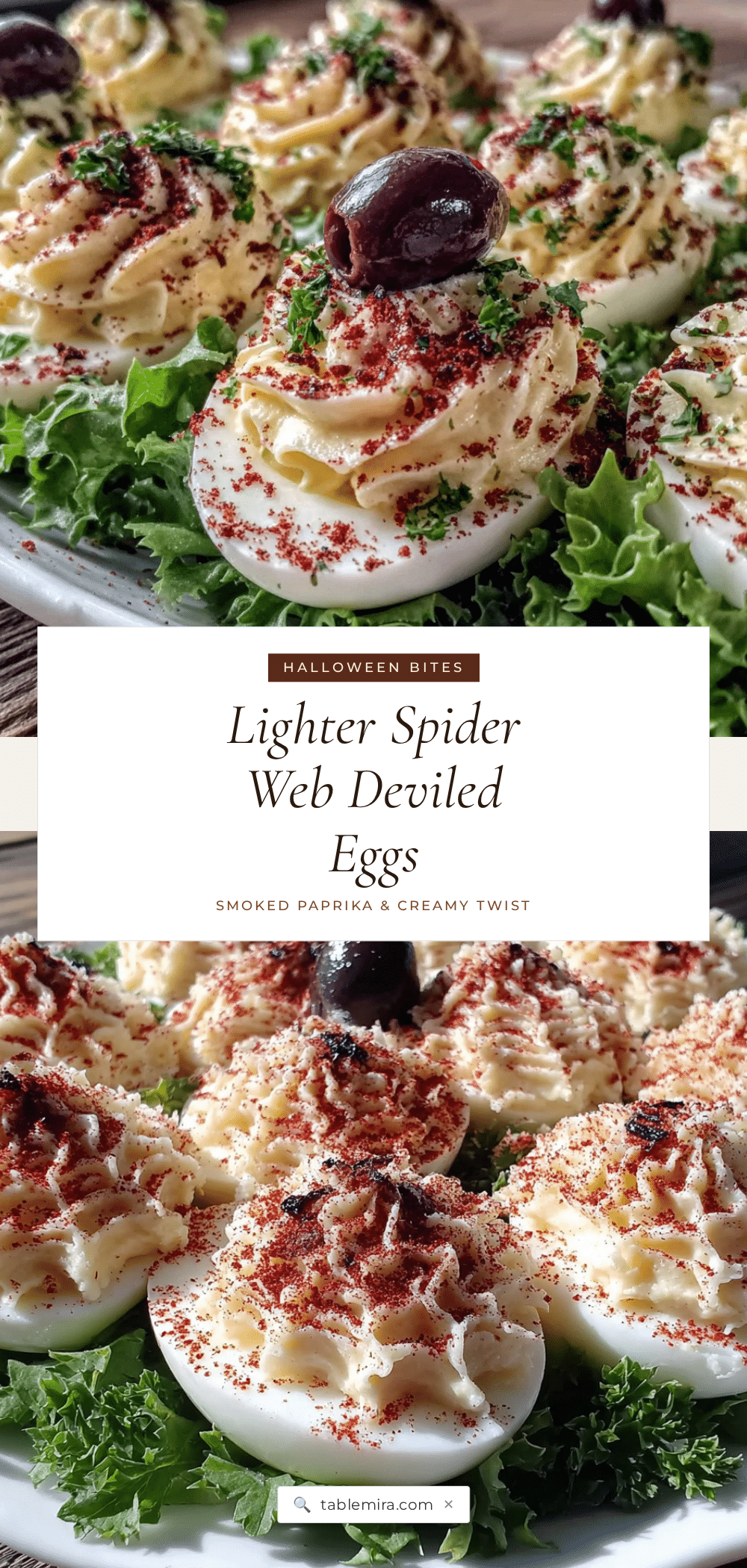
Lighter Spider Web Deviled Eggs with Smoked Paprika

A lighter version of classic deviled eggs featuring a creamy Greek yogurt filling and a creepy spider web design, perfect for Halloween parties. Smoked paprika adds incredible depth, making these a guilt-free indulgence that doesn’t compromise on flavor.
- Prep Time: 20 minutes
- Cook Time: 10 minutes
- Total Time: 30 minutes
- Yield: 12 servings (6 eggs, halved) 1x
- Category: Appetizer
- Cuisine: American
Ingredients
- 6 large eggs, hard-boiled and peeled
- 3 tablespoons plain Greek yogurt (2% recommended)
- 1 tablespoon light mayonnaise
- 1 teaspoon Dijon mustard
- ½ teaspoon smoked paprika
- ¼ teaspoon garlic powder
- ¼ teaspoon salt
- ⅛ teaspoon black pepper
- 1 teaspoon apple cider vinegar
- 2 tablespoons plain Greek yogurt (for spider web design)
- 1 tablespoon black sesame seeds or poppy seeds (for spiders)
- Extra smoked paprika for dusting
Instructions
- Place eggs in a single layer in a medium saucepan and cover with cold water by about an inch. Bring to a rolling boil over high heat. Once boiling, cover the pot, remove from heat, and let sit for exactly 9 minutes. Meanwhile, prepare an ice bath. Transfer eggs to ice bath using a slotted spoon and let cool completely for at least 5 minutes.
- Gently tap each egg on the counter to crack the shell all over, then roll between palms to loosen. Start peeling from the wider end. Rinse peeled eggs under cold water. Using a sharp knife, slice each egg lengthwise. Pop out yolks into a small bowl and arrange white halves on a serving platter.
- To the bowl with yolks, add 3 tablespoons Greek yogurt, light mayonnaise, Dijon mustard, smoked paprika, garlic powder, salt, pepper, and apple cider vinegar. Mash together with a fork until smooth. For silkiest texture, press mixture through a fine-mesh strainer. Taste and adjust seasoning.
- Spoon filling into a piping bag fitted with a small round tip, or into a zip-top bag with a tiny corner snipped off. Pipe filling into each egg white, mounding slightly above the edge.
- In a separate small piping bag or zip-top bag, add 2 tablespoons Greek yogurt. Snip off the tiniest possible corner. Starting from the center of each filled egg, pipe a small dot. Pipe 4-5 concentric circles around the dot, spacing about ¼ inch apart. Using a toothpick or thin skewer, drag lines from the center dot outward through all circles, creating a web effect. Repeat at 45-degree angles until complete. Wipe toothpick clean between each line.
- Place a tiny dot of yogurt on top of each spider web, then press a black sesame seed or poppy seed onto it. Arrange 2-3 seeds close together to look like a spider body, then add tiny legs using toothpick dipped in yogurt. Dust edges of platter with extra smoked paprika. Refrigerate for at least 30 minutes before serving.
Notes
Use eggs that are at least a week old for easier peeling. Keep filling cold before piping for better consistency. Practice spider web design on a plate first. For best results, assemble spider web design no more than 4 hours before serving. Store leftovers in an airtight container in the refrigerator for up to 2 days. Do not freeze.
Nutrition
- Serving Size: 1 deviled egg half
- Calories: 45
- Sugar: 0.5
- Sodium: 120
- Fat: 2.5
- Saturated Fat: 0.8
- Carbohydrates: 1
- Protein: 5
Keywords: deviled eggs, spider web, Halloween, appetizer, healthy, Greek yogurt, smoked paprika, party food, spooky, light