It was 10:47 PM on a random Thursday, and I had a serious hankering for something briny and tangy. You know that feeling when only a specific flavor will do? I wanted a Mediterranean pasta salad—the kind with feta, kalamata olives, and a zesty vinaigrette. The problem? My kids were asleep, and the fridge held leftovers from three nights ago, a half-empty jar of olives, and a block of feta that was staring at me with quiet judgment.
I didn’t have the fancy orzo I usually use, but I had a box of rotini and a vague memory of a pasta salad my neighbor brought to a block party last summer. So, standing there in my pajamas, I started boiling water. I tossed in the rotini, crumbled the feta, and chopped the olives with a little too much enthusiasm—honestly, I might have woken the dog. I mixed it all with a simple lemon-oregano dressing, took one bite, and froze. This was it. This was the version my kids would actually eat.
That late-night experiment turned into our family’s most-requested summer meal. My picky eater, who once declared olives “disgusting eyeballs,” now asks for this pasta salad in his lunchbox. The secret? A few smart swaps and a whole lot of tasting as you go. Maybe you’ve been there—needing a dish that feels grown-up but passes the kid test every single time. This one does. It’s become our go-to for busy weeknights, backyard barbecues, and the kind of dinners where everyone actually finishes their plate.
Why You’ll Love This Recipe
I’ve tested this pasta salad more times than I care to admit—once with sun-dried tomatoes (kids hated it), once with too much red wine vinegar (I cried a little), and once with a full cup of olives (surprisingly, a hit). This version is the one that finally got a standing ovation from my family. Here’s why it works:
- Quick & Easy: Comes together in under 30 minutes, perfect for those nights when you forgot to plan dinner until 5:30 PM.
- Simple Ingredients: No fancy grocery trips needed. You likely have the pasta, lemon, and olive oil in your kitchen right now.
- Perfect for Family Meals: Great for meal prep, lunchboxes, potlucks, and casual dinners. It’s the dish that keeps giving.
- Crowd-Pleaser: Always gets rave reviews from kids and adults alike. My nephew, who only eats beige food, asked for seconds.
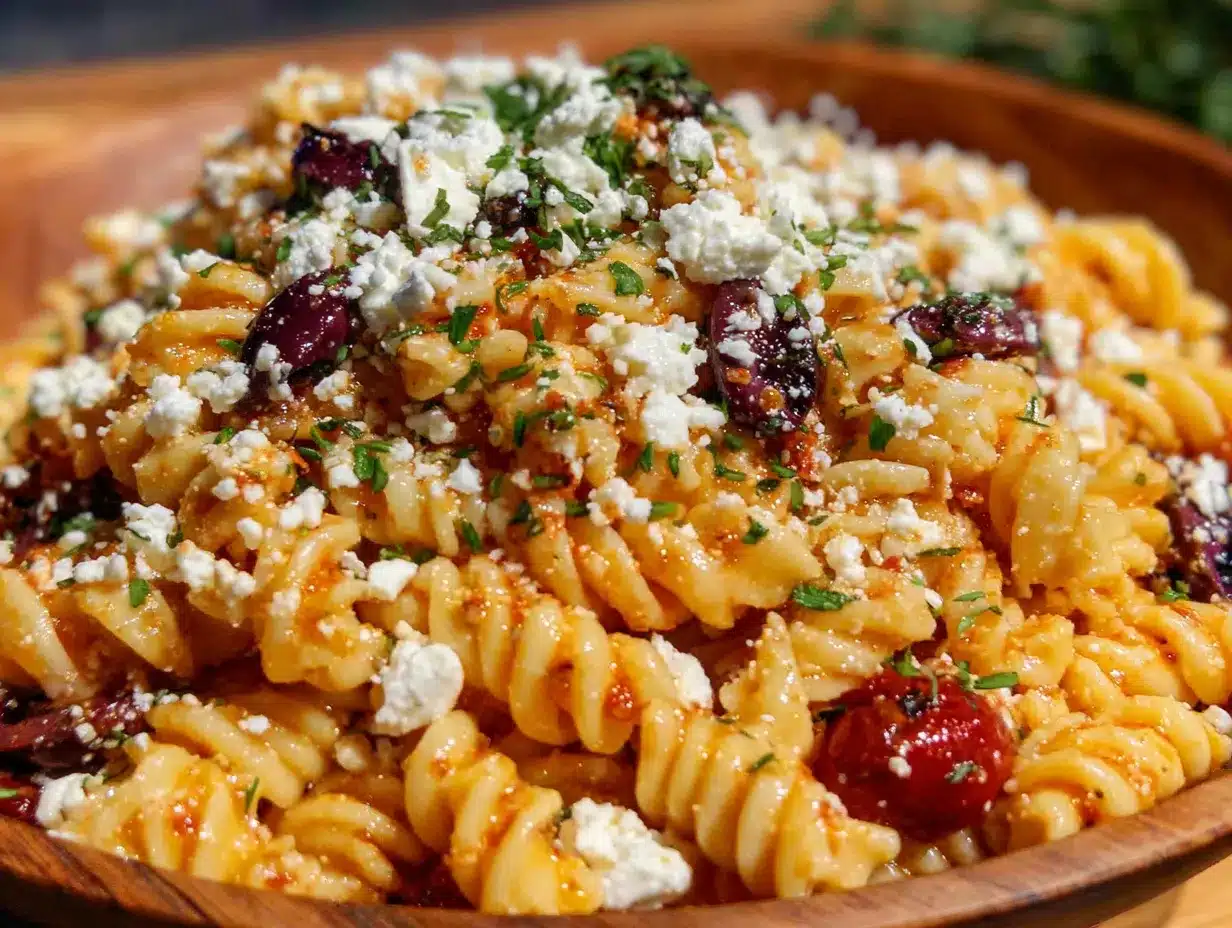
- Unbelievably Delicious: The texture and flavor combo is next-level comfort food—tangy feta, briny olives, and al dente pasta in a bright, herby dressing.
What makes this recipe different from the rest? It’s the balance. I use a lighter hand with the olives and a creamier feta, so the flavors mellow out for younger palates. Plus, I add a pinch of sugar to the dressing—a trick I learned from a Greek grandmother—which rounds out the acidity without making it sweet. This isn’t just another pasta salad. It’s the one that makes you close your eyes after the first bite, even if you’re standing at the kitchen counter with a toddler tugging at your shirt.
This is comfort food reimagined—healthier, faster, but with the same soul-soothing satisfaction. Perfect for impressing guests without stress, or turning a simple Tuesday dinner into something memorable.
What Ingredients You Will Need
This recipe uses simple, wholesome ingredients to deliver bold flavor and satisfying texture without the fuss. Most of these are pantry staples or easy to find at any grocery store. I’ve grouped them by function so you can prep like a pro.
For the Pasta Salad
- Rotini pasta – 12 ounces (340 grams). I love rotini because the spirals catch the dressing and feta crumbs. You can use fusilli, penne, or even bowties in a pinch.
- Cherry tomatoes – 1 cup (150 grams), halved. Look for firm, bright red ones for the best flavor. In summer, swap in heirloom cherry tomatoes for extra sweetness.
- English cucumber – 1 medium, diced (about 1 cup). I prefer English cucumbers because they have fewer seeds and don’t get watery. No need to peel them!
- Kalamata olives – ½ cup (70 grams), halved. I recommend Peloponnese brand for the best briny flavor. For kids, you can chop them smaller or use mild black olives instead.
- Feta cheese – ¾ cup (110 grams), crumbled. Use a block of feta in brine, not pre-crumbled—it’s creamier and less salty. Valbreso is my go-to.
- Red onion – ¼ cup (30 grams), finely diced. Soak the diced onion in cold water for 10 minutes to mellow the bite—this is a game-changer for picky eaters.
- Fresh parsley – ¼ cup (15 grams), chopped. Optional but adds a fresh pop of color and flavor.
For the Lemon Oregano Dressing
- Extra virgin olive oil – ⅓ cup (80 ml). Use a good-quality oil here—it’s the backbone of the dressing.
- Fresh lemon juice – 3 tablespoons (45 ml). About 1 large lemon. Never use bottled juice—it makes a huge difference.
- Red wine vinegar – 1 tablespoon (15 ml). Adds a gentle tang without overpowering.
- Dried oregano – 1 teaspoon. I prefer McCormick or Simply Organic for consistent flavor.
- Garlic powder – ½ teaspoon. Not fresh garlic—trust me, raw garlic can be too sharp for kids.
- Salt – ½ teaspoon, or to taste.
- Black pepper – ¼ teaspoon, freshly ground.
- Pinch of sugar – Just a pinch (about ⅛ teaspoon). This balances the acidity and makes the dressing kid-friendly.
Substitution Guidance
- Gluten-free: Use your favorite gluten-free pasta. I like Barilla red lentil rotini—it holds up well.
- Dairy-free: Swap feta with a plant-based feta or omit it entirely. Add a tablespoon of nutritional yeast to the dressing for a cheesy flavor.
- Lower sodium: Rinse the olives and feta briefly under cold water to reduce saltiness.
- Add protein: Toss in 1 cup of cooked chickpeas or diced grilled chicken for a heartier meal.
Equipment Needed
You don’t need a professional kitchen to make this pasta salad. Here’s what I use:
- Large pot – For boiling the pasta. I use a 6-quart stainless steel pot, but any large pot works.
- Colander – For draining the pasta. A fine-mesh colander is ideal if you’re using small pasta shapes.
- Large mixing bowl – I prefer a glass or ceramic bowl because it doesn’t absorb odors. My favorite is a 4-quart Pyrex bowl.
- Small bowl or jar – For whisking the dressing. A mason jar with a lid works perfectly—just shake it up!
- Chef’s knife and cutting board – A sharp knife makes dicing tomatoes and cucumbers a breeze. I use an 8-inch Wusthof chef’s knife.
- Measuring cups and spoons – For accuracy. I have a set of stainless steel measuring cups that have lasted years.
- Wooden spoon or silicone spatula – For stirring the pasta and mixing the salad.
If you don’t have a large mixing bowl, use a big pot or even a disposable aluminum pan for potlucks. And honestly, I’ve made the dressing in a coffee mug before—it’s not pretty, but it works.
Preparation Method
Follow these steps, and you’ll have a pasta salad that disappears in minutes. I’ve included time estimates and sensory cues so you know exactly what to look for.
Step 1: Cook the Pasta (10 minutes)
Fill a large pot with water—about 4 quarts (3.8 liters). Add 1 tablespoon of salt (yes, really—it seasons the pasta from the inside). Bring it to a rolling boil over high heat. Add the rotini and cook according to package directions until al dente, usually 8-10 minutes. Stir occasionally so the pasta doesn’t stick. You want it tender but with a slight bite—mushy pasta ruins the texture.
Sensory cue: When you bite a piece, the center should be opaque and offer gentle resistance. Drain the pasta in a colander and rinse it under cold running water for about 30 seconds. This stops the cooking and cools it down for the salad. Shake the colander well to remove excess water—wet pasta dilutes the dressing.
Step 2: Prep the Vegetables (5 minutes)
While the pasta cooks, wash and dry your cherry tomatoes, cucumber, and parsley. Halve the cherry tomatoes and place them in a large mixing bowl. Dice the cucumber into small, bite-sized cubes—about ½ inch (1.3 cm). If the cucumber feels watery, pat it dry with a paper towel. Finely dice the red onion and soak it in a small bowl of cold water for 10 minutes. This step is non-negotiable for picky eaters—it removes the sharp bite.
Step 3: Make the Dressing (3 minutes)
In a small bowl or mason jar, combine the olive oil, lemon juice, red wine vinegar, dried oregano, garlic powder, salt, black pepper, and a pinch of sugar. Whisk vigorously until the dressing is emulsified and slightly thickened. If using a jar, screw the lid on tight and shake for about 20 seconds. Taste it—the dressing should be bright and tangy with a hint of herbiness. Adjust salt or lemon juice to your liking.
Personal tip: I always make a little extra dressing and keep it in the fridge. It’s great on roasted vegetables or as a quick marinade for chicken.
Step 4: Assemble the Salad (5 minutes)
To the bowl with the tomatoes, add the cooled pasta, diced cucumber, halved kalamata olives, and drained red onion. Pour the dressing over the top and toss gently with a wooden spoon or silicone spatula until everything is evenly coated. Add the crumbled feta and fresh parsley, then toss once more—gently, so the feta doesn’t break into dust.
Troubleshooting: If the salad looks dry, add a splash of olive oil or a squeeze of lemon juice. If it’s too wet, let it sit for 5 minutes—the pasta will absorb excess liquid.
Step 5: Rest and Serve (10 minutes)
Let the pasta salad rest at room temperature for at least 10 minutes before serving. This allows the flavors to meld together. For the best texture, serve it slightly chilled or at room temperature. If you’re meal prepping, cover the bowl and refrigerate for up to 3 days.
Preparation note: The pasta will absorb some dressing as it sits. If you’re making this ahead, reserve a few tablespoons of dressing to toss in just before serving.
Cooking Tips & Techniques
I’ve made this pasta salad about twenty times now, and I’ve learned a few things the hard way. Here are my best tips for getting it right every time.
Don’t overcook the pasta. Mushy pasta is the enemy of a good pasta salad. Set a timer and taste a piece a minute before the package suggests. Al dente pasta holds its shape and soaks up the dressing without turning into a soggy mess. I once forgot to set the timer and ended up with pasta that looked like it had been through a war—my kids still ate it, but they knew something was off.
Season the pasta water generously. This is the only chance you have to season the pasta itself. Use about 1 tablespoon of salt per 4 quarts of water. It sounds like a lot, but most of it goes down the drain. Underseasoned pasta makes for a bland salad, no matter how good the dressing is.
Rinse the pasta with cold water. I know some people say you should never rinse pasta, but for cold pasta salads, it’s essential. Rinsing stops the cooking and removes excess starch, which keeps the salad from getting gummy. Just make sure you drain it well afterward.
Let the salad rest. This is the hardest tip to follow because you’ll want to dive in immediately. But trust me—letting the pasta salad sit for 10-15 minutes allows the flavors to marry. The feta softens slightly, the olives release their brine, and the dressing seeps into every crevice. It’s worth the wait.
Double the dressing. Pasta is a sponge. It absorbs dressing quickly, especially if you’re making the salad ahead of time. I always make 1.5 times the dressing recipe and keep the extra in the fridge. A quick toss before serving revives the salad and makes it taste freshly made.
Use a light hand with the olives. I love olives, but my kids don’t share my enthusiasm. I chop the olives into smaller pieces so they’re less noticeable, and I use a little less than the recipe calls for. You can always add more at the table for the olive lovers in your family.
Variations & Adaptations
This recipe is incredibly flexible. Here are a few ways to change it up based on what you have on hand or who you’re feeding.
Dietary Variations
- Gluten-Free: Substitute the rotini with your favorite gluten-free pasta. I’ve used chickpea pasta and brown rice pasta with great results. Just be careful not to overcook it—gluten-free pasta can turn mushy fast.
- Dairy-Free: Omit the feta or use a plant-based alternative. For a creamy texture, add a tablespoon of tahini to the dressing.
- Low-Carb: Replace the pasta with cauliflower florets (roasted or steamed) or zucchini noodles. It’s not the same texture, but it’s a great way to use up veggies.
Seasonal Variations
- Spring: Add ½ cup of blanched asparagus spears (cut into 1-inch pieces) and ¼ cup of fresh mint leaves.
- Summer: Toss in 1 cup of grilled corn kernels and ½ cup of diced bell peppers. The sweetness pairs beautifully with the tangy dressing.
- Fall: Swap the cherry tomatoes for roasted butternut squash cubes and add a handful of toasted pumpkin seeds.
- Winter: Use roasted red peppers (from a jar) and sun-dried tomatoes for a burst of flavor when fresh produce is scarce.
Flavor Twists
- Spicy: Add ¼ teaspoon of red pepper flakes to the dressing for a subtle kick. My husband loves this version.
- Herby: Replace the parsley with fresh basil, dill, or a mix of both. Dill is especially good with feta.
- Protein-Packed: Stir in 1 cup of cooked chickpeas, diced grilled chicken, or flaked tuna. This turns the salad into a complete meal.
Personal variation: Last summer, I added chopped roasted beets and a handful of arugula to the mix. The beets stained everything pink, but the kids thought it was hilarious and ate every bite. Sometimes you just have to embrace the mess.
Serving & Storage Suggestions
This pasta salad is versatile enough for a quick lunch, a side dish at a barbecue, or a light dinner on a hot evening. Here’s how to serve and store it like a pro.
Serving temperature: I prefer this salad slightly chilled or at room temperature. If you’re serving it straight from the fridge, let it sit on the counter for 10-15 minutes first. The flavors are more pronounced when it’s not ice-cold.
Presentation: Serve it in a large, shallow bowl so the ingredients are visible. Garnish with a few extra feta crumbles, a sprinkle of fresh parsley, and a drizzle of olive oil. For a pretty touch, add a few whole olives on top.
Complementary dishes: This pasta salad pairs beautifully with grilled chicken, lamb chops, or fish. It’s also great alongside a simple green salad or some crusty bread. For a complete Mediterranean meal, serve it with hummus and pita chips on the side.
Beverage pairing: A crisp white wine like Sauvignon Blanc or a light rosé works well. For a non-alcoholic option, try sparkling water with a slice of lemon or a minty iced tea.
Storage: Store leftovers in an airtight container in the refrigerator for up to 3 days. The pasta will absorb some of the dressing, so the salad will be a little less saucy on day two. That’s fine—just toss in a splash of olive oil or a squeeze of lemon juice before serving.
Freezing: I don’t recommend freezing this salad. The texture of the vegetables and feta will suffer. If you have a large batch, share it with a neighbor or enjoy it for lunch all week.
Flavor development: Honestly, this salad tastes even better the next day. The flavors meld together overnight, and the feta softens into a creamy coating. It’s one of those rare dishes that improves with time.
Nutritional Information & Benefits
Here’s a rough estimate of the nutritional values per serving (based on 6 servings):
| Nutrient | Amount Per Serving |
|---|---|
| Calories | 320 |
| Total Fat | 16g |
| Saturated Fat | 5g |
| Cholesterol | 20mg |
| Sodium | 580mg |
| Total Carbohydrates | 35g |
| Dietary Fiber | 3g |
| Sugars | 4g |
| Protein | 8g |
| Vitamin C | 15% DV |
| Calcium | 12% DV |
| Iron | 10% DV |
Health benefits: This pasta salad offers a good balance of carbohydrates from the pasta, healthy fats from the olive oil and olives, and protein from the feta. The cherry tomatoes and cucumber provide vitamin C and hydration, while the red onion offers antioxidants. The olive oil is rich in monounsaturated fats, which support heart health.
Dietary considerations: This recipe is vegetarian and can be made gluten-free and dairy-free with simple substitutions. It’s also nut-free and egg-free, making it a safe option for many common allergies. The sodium content is moderate, so if you’re watching your salt intake, use low-sodium feta and rinse the olives.
Personal wellness perspective: I love that this salad feels indulgent but is actually quite balanced. It’s the kind of dish I feel good about serving my family—colorful, flavorful, and packed with real ingredients. Plus, it’s a sneaky way to get kids to eat vegetables. My daughter calls the tomatoes “red flavor bombs,” and I’m not about to correct her.
Conclusion
This kid-approved Mediterranean pasta salad has become a staple in our home for good reason. It’s quick, affordable, and packed with the kind of bold flavors that make everyone happy—from the pickiest eater to the most adventurous palate. The tangy feta, briny olives, and bright lemon dressing come together in a way that feels both familiar and exciting.
I hope you’ll give this recipe a try and make it your own. Maybe you’ll add extra olives for yourself or swap in whatever vegetables are lingering in your fridge. That’s the beauty of a good pasta salad—it’s forgiving, adaptable, and always delicious. Don’t be afraid to experiment and find your family’s perfect version.
Honestly, this recipe reminds me why I love cooking for my family. It’s not about perfection—it’s about creating something that brings us together around the table. Whether you’re making it for a busy weeknight dinner or a lazy Sunday lunch, I hope it brings you the same joy it’s brought us.
If you try this recipe, I’d love to hear about it! Leave a comment below and let me know how it turned out. Did your kids love it? Did you add a twist? Share your photos and tag me on social media—I can’t wait to see your creations. Happy cooking!
Frequently Asked Questions
Can I make this pasta salad ahead of time?
Absolutely! In fact, it tastes even better the next day. Make it up to 24 hours in advance, but reserve a little extra dressing to toss in before serving. Store it in an airtight container in the refrigerator.
What’s the best pasta shape for this salad?
Rotini is my top choice because the spirals catch the dressing and feta crumbs. Fusilli, penne, bowties, or even macaroni work well too. Avoid long pasta like spaghetti—it’s harder to mix and eat.
How do I make this salad more filling for a main dish?
Add 1 cup of cooked chickpeas, diced grilled chicken, or flaked tuna. You can also double the feta or add a handful of toasted nuts for extra protein and healthy fats.
My kids don’t like olives. Can I leave them out?
Yes! Simply omit the olives or replace them with chopped roasted red peppers or sun-dried tomatoes. The salad will still be delicious. You can also chop the olives very small so they’re less noticeable.
How long does this pasta salad last in the fridge?
It keeps well for up to 3 days in an airtight container. The pasta will absorb some dressing over time, so you may need to refresh it with a splash of olive oil or lemon juice before serving. I don’t recommend freezing it.
Pin This Recipe!
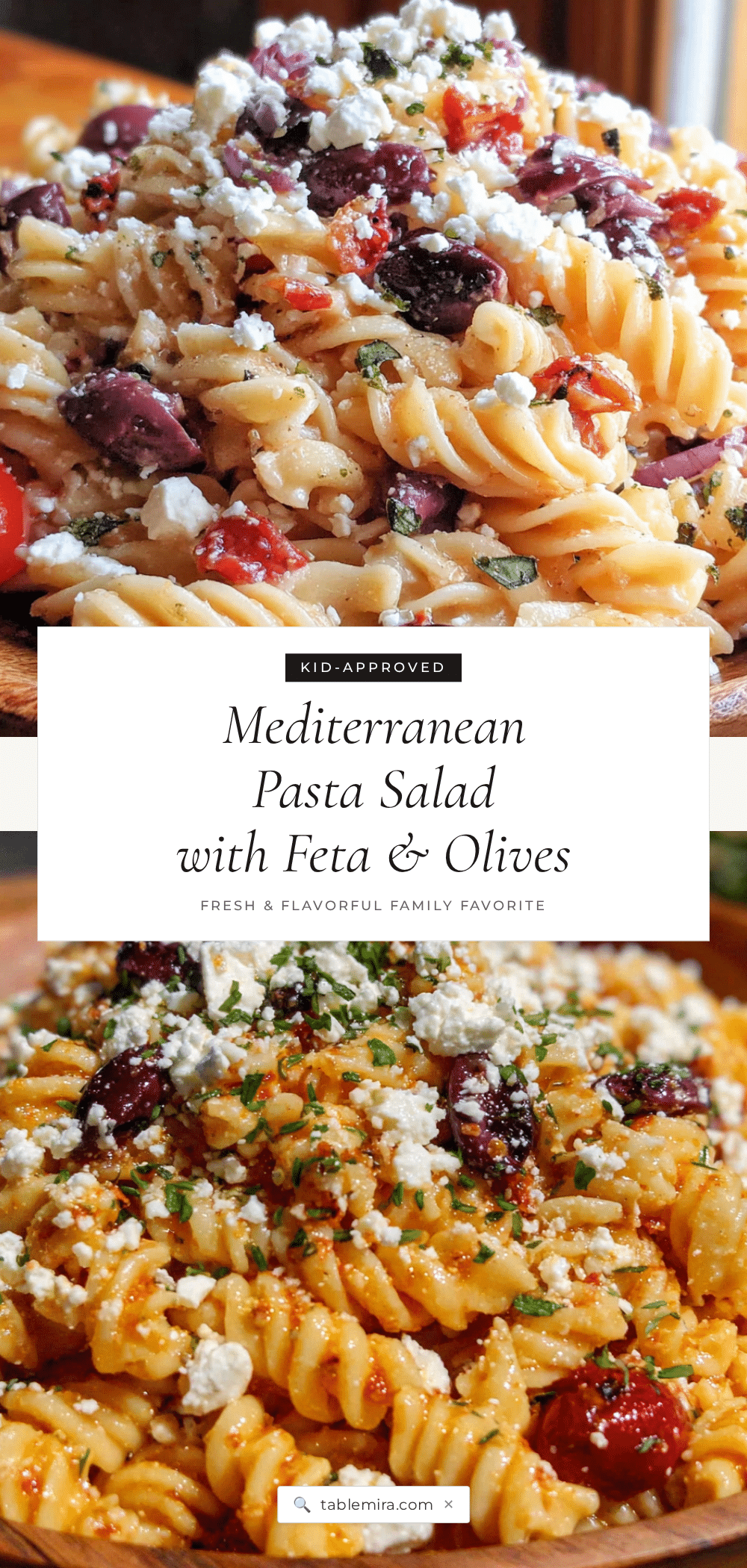
Best Kid-Approved Mediterranean Pasta Salad Recipe
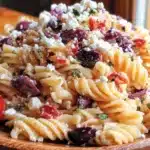
A quick and easy Mediterranean pasta salad with feta, kalamata olives, and a zesty lemon-oregano dressing that even picky eaters will love. Perfect for busy weeknights, lunchboxes, and potlucks.
- Prep Time: 15 minutes
- Cook Time: 10 minutes
- Total Time: 25 minutes
- Yield: 6 servings 1x
- Category: Main Course
- Cuisine: Mediterranean
Ingredients
- 12 ounces (340 grams) rotini pasta
- 1 cup (150 grams) cherry tomatoes, halved
- 1 medium English cucumber, diced (about 1 cup)
- ½ cup (70 grams) kalamata olives, halved
- ¾ cup (110 grams) feta cheese, crumbled
- ¼ cup (30 grams) red onion, finely diced
- ¼ cup (15 grams) fresh parsley, chopped
- ⅓ cup (80 ml) extra virgin olive oil
- 3 tablespoons (45 ml) fresh lemon juice
- 1 tablespoon (15 ml) red wine vinegar
- 1 teaspoon dried oregano
- ½ teaspoon garlic powder
- ½ teaspoon salt
- ¼ teaspoon black pepper, freshly ground
- Pinch of sugar (about ⅛ teaspoon)
Instructions
- Cook the pasta: Fill a large pot with 4 quarts (3.8 liters) of water and add 1 tablespoon of salt. Bring to a rolling boil over high heat. Add the rotini and cook according to package directions until al dente, usually 8-10 minutes. Stir occasionally. Drain in a colander and rinse under cold running water for about 30 seconds. Shake well to remove excess water.
- Prep the vegetables: While the pasta cooks, wash and dry the cherry tomatoes, cucumber, and parsley. Halve the cherry tomatoes and place them in a large mixing bowl. Dice the cucumber into small, bite-sized cubes (about ½ inch). Finely dice the red onion and soak it in a small bowl of cold water for 10 minutes to mellow the bite.
- Make the dressing: In a small bowl or mason jar, combine the olive oil, lemon juice, red wine vinegar, dried oregano, garlic powder, salt, black pepper, and a pinch of sugar. Whisk vigorously until emulsified and slightly thickened, or shake in a jar for about 20 seconds. Taste and adjust salt or lemon juice as needed.
- Assemble the salad: To the bowl with the tomatoes, add the cooled pasta, diced cucumber, halved kalamata olives, and drained red onion. Pour the dressing over the top and toss gently with a wooden spoon or silicone spatula until evenly coated. Add the crumbled feta and fresh parsley, then toss once more gently.
- Rest and serve: Let the pasta salad rest at room temperature for at least 10 minutes before serving. Serve slightly chilled or at room temperature. For meal prep, cover and refrigerate for up to 3 days.
Notes
For best results, use a block of feta in brine (not pre-crumbled) and rinse the pasta with cold water to stop cooking. Let the salad rest for 10-15 minutes before serving to allow flavors to meld. If making ahead, reserve a few tablespoons of dressing to toss in just before serving. The salad tastes even better the next day.
Nutrition
- Serving Size: 1 serving (about 1.5
- Calories: 320
- Sugar: 4
- Sodium: 580
- Fat: 16
- Saturated Fat: 5
- Carbohydrates: 35
- Fiber: 3
- Protein: 8
Keywords: Mediterranean pasta salad, kid-friendly pasta salad, easy pasta salad, summer pasta salad, feta pasta salad, quick pasta salad