There used to be a tiny bakery tucked behind a laundromat on South Congress in Austin called Batch. They made this sourdough focaccia with rosemary and sea salt that was honestly life-changing. When they closed in 2020—pandemic casualties, like so many good places—I actually mourned. I mean, I know that sounds dramatic. But that focaccia? It was the kind of bread that made you cancel dinner plans because you’d already eaten half the loaf walking home.
After eighteen tries—eighteen, let me tell you, including one that was basically a salty frisbee—I finally got it. The crackling crust. The pillowy, almost custard-like interior. That perfect sheen of olive oil pooling in the dimples. The rosemary and sea salt doing that little dance on top. It took me a solid year of weekend experiments, a sourdough starter I named Betty, and one very memorable kitchen meltdown involving a 5-pound bag of flour. But here we are.
This sourdough focaccia is the recipe that made my neighbor knock on my door at 9 PM asking what smelled so good. It’s the bread I bring to every potluck, the one that disappears before the main course hits the table. If you’ve ever stood in a bakery staring at those golden, dimpled slabs wondering how they get that texture—the answer is patience, a good starter, and a few tricks I learned the hard way. Maybe you’ve been there, staring at a sad, flat focaccia wondering where you went wrong. I promise, this version is the one.
Why You’ll Love This Recipe
This isn’t just another bread recipe. This is the sourdough focaccia that makes people think you secretly went to culinary school. I’ve tested this version more times than I care to count, and each batch taught me something new about what makes focaccia truly exceptional.
- That Signature Texture : The long, cold fermentation gives you a crumb that’s almost creamy on the inside with a crust that shatters when you bite into it. You just can’t get that with commercial yeast alone.
- Simple Ingredients : Flour, water, salt, olive oil, rosemary, and your sourdough starter. That’s it. No fancy equipment, no hard-to-find ingredients.
- Perfect for Entertaining : This bread is a showstopper at any gathering. Serve it as an appetizer with olive oil for dipping, alongside a hearty soup, or as the base for the most incredible sandwiches your guests have ever had.
- Make-Ahead Magic : The dough actually tastes better after a slow rise in the fridge. You can prep it two days ahead and bake it fresh when your guests arrive. The smell alone will have them hovering in your kitchen.
- Forgiving and Foolproof : Once you understand the hydration and the folding technique, this dough is remarkably forgiving. I’ve forgotten it, over-proofed it slightly, and it still turned out beautiful.
This focaccia is the kind of bread that makes you close your eyes after the first bite. It’s comfort food at its most elemental—crispy, salty, herbaceous, and so deeply satisfying. Perfect for impressing a dinner party crowd without spending all day in the kitchen, or for turning a simple Tuesday night into something memorable.
What Ingredients You Will Need
This recipe uses simple, wholesome ingredients to deliver that signature focaccia texture and flavor. Most of these are pantry staples if you maintain a sourdough starter, and the rosemary and sea salt are the stars that make this bread unforgettable.
For the Dough
- 500 grams bread flour (I use King Arthur for consistent protein content; it gives the best structure)
- 100 grams active sourdough starter (fed and bubbly, ideally at its peak 4-6 hours after feeding)
- 375 grams lukewarm water (around 80°F/27°C—this high hydration is key for that open crumb)
- 10 grams fine sea salt (adds flavor and strengthens the gluten structure)
- 15 grams extra-virgin olive oil (plus a generous amount for the pan and topping)
For the Topping
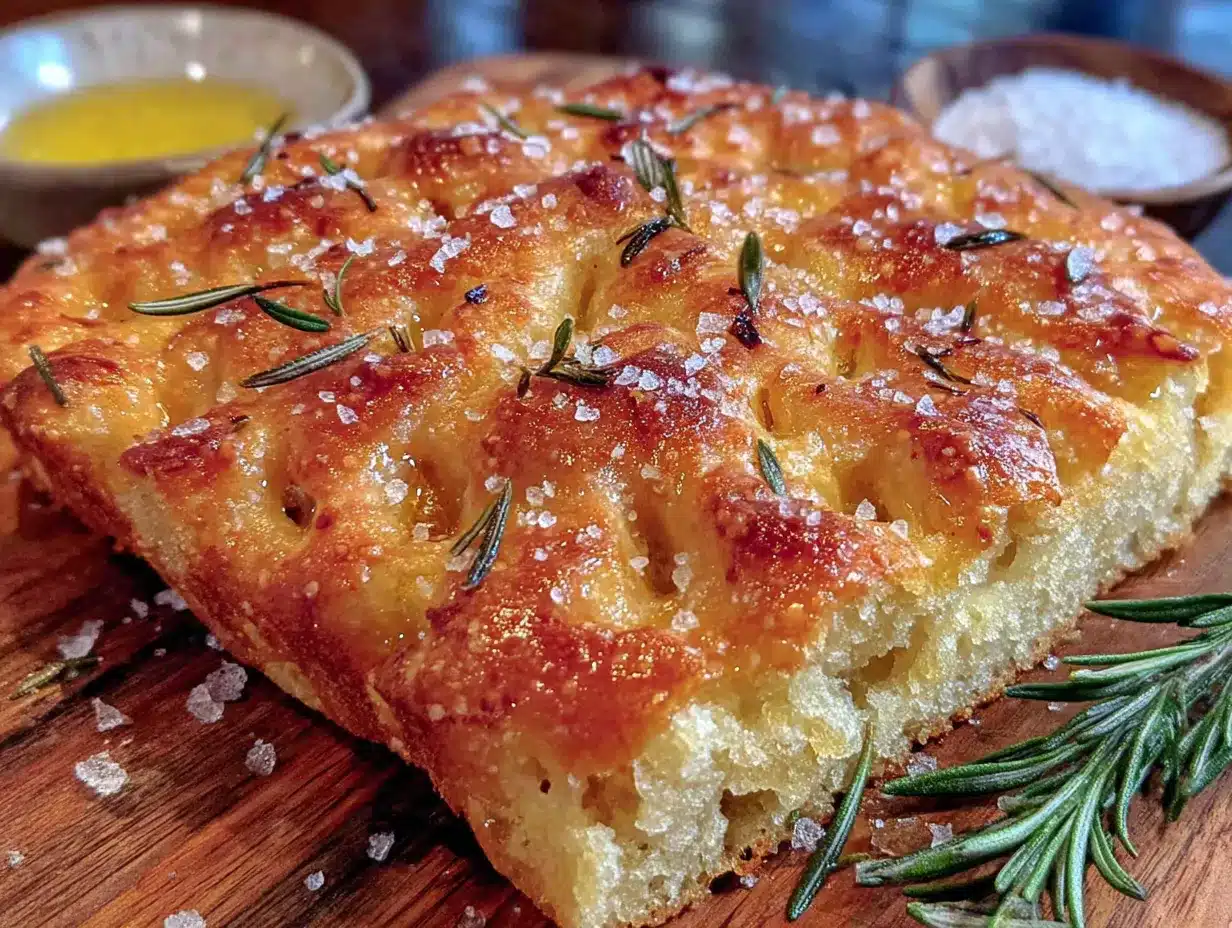
- 3-4 tablespoons extra-virgin olive oil (use a good quality one here—you’ll taste it)
- 2 tablespoons fresh rosemary leaves (roughly chopped; avoid the woody stems)
- 1-2 teaspoons flaky sea salt (like Maldon or Jacobsen—the big crystals make a difference)
- Optional: fresh thyme or black pepper (for variation)
I recommend using a young, active starter for this recipe. If your starter is sluggish, give it a few extra feedings before you begin. The hydration level here is around 75%, which is ideal for focaccia—wet enough to create those beautiful air pockets, but manageable enough to handle with a little practice.
For the rosemary, fresh is non-negotiable here. Dried rosemary just burns in the oven and turns into little bitter needles. Trust me, I learned that one the hard way. And that flaky sea salt? Don’t substitute with table salt. The big crystals create little bursts of salinity that make this bread absolutely addictive.
Equipment Needed
You don’t need much for this recipe, which is part of its beauty. Here’s what you’ll need:
- Digital kitchen scale (I cannot stress this enough—baking by weight is the only way to get consistent results with sourdough)
- Large mixing bowl (glass or ceramic works well; I use a 4-quart Pyrex bowl)
- 9×13-inch baking pan (metal is ideal for even heat distribution; a dark pan will give you a darker bottom crust)
- Bench scraper (optional but helpful for folding the dough and cleaning up)
- Plastic wrap or a reusable bowl cover (for the bulk fermentation)
- Small bowl for the olive oil (for dimpling the dough)
If you don’t have a 9×13 pan, you can use a 10-inch cast iron skillet for a round focaccia—just adjust the baking time slightly. I actually love using my cast iron for this; the sides get incredibly crispy. A glass baking dish works too, but you’ll need to add 5-10 minutes to the baking time.
Preparation Method
This process spans two days, but don’t let that scare you. The active work is maybe 20 minutes total. The rest is just patience.
Day 1: Mix and Bulk Fermentation
- Mix the dough. In your large bowl, combine the bread flour and water. Mix with your hand until no dry flour remains. It will look shaggy and rough. Cover and let it rest for 30 minutes. This is called autolyse, and it helps the flour absorb the water and start developing gluten naturally.
- Add the starter and salt. After the rest, add your active sourdough starter and the fine sea salt. Wet your hand slightly and squeeze everything together until incorporated. The dough will feel very wet and sticky—that’s exactly what we want.
- Fold the dough. Over the next 2 hours, perform 4 sets of stretch and folds, 30 minutes apart. To do this: wet your hand, grab one side of the dough, stretch it up and fold it over itself. Rotate the bowl 90 degrees and repeat. Do this 4 times total per set. You’ll feel the dough going from a sticky mess to something smooth and elastic.
- Bulk ferment. Cover the bowl and let it rest at room temperature (around 70-75°F) for 8-10 hours. The dough should roughly double in size and be domed on top with small bubbles visible on the surface. If your kitchen is cold, it might take longer. If it’s warm, check it earlier.
- Cold retard. After bulk fermentation, cover the bowl tightly and place it in the refrigerator overnight (12-24 hours). This slow cold fermentation develops incredible flavor and makes the dough easier to handle.
Day 2: Shaping and Baking
- Prepare the pan. Pour 2-3 tablespoons of olive oil into your 9×13 pan. Use your fingers to spread it evenly across the bottom and up the sides. The oil should pool slightly—this is what gives focaccia its signature crispy bottom.
- Transfer the dough. Turn the cold dough out into the oiled pan. It will be cold and slightly stiff—this is good. Use your fingertips to gently press and stretch the dough to fill the pan. Don’t force it. If it resists, let it rest for 15 minutes and try again.
- Final proof. Cover the pan with plastic wrap and let it proof at room temperature for 3-4 hours. The dough should puff up and become jiggly. It should nearly double in height and feel airy when you poke it.
- Dimple the dough. About 30 minutes before baking, preheat your oven to 425°F (220°C). When the dough is ready, drizzle another tablespoon of olive oil over the top. Dip your fingertips in olive oil and press straight down into the dough, creating dimples all across the surface. Don’t be shy—go all the way to the bottom of the pan.
- Add the toppings. Sprinkle the chopped rosemary evenly over the surface. Finish with a generous sprinkle of flaky sea salt. The salt crystals should be visible and scattered, not clumped together.
- Bake. Place the pan on the middle rack and bake for 25-30 minutes. The focaccia should be deep golden brown on top and sound hollow when you tap it. If the bottom isn’t browning enough, transfer the focaccia directly to the oven rack for the last 5 minutes.
- Cool. Let the focaccia cool in the pan for 5 minutes, then transfer it to a wire rack. Don’t skip this step—the steam needs to escape or the bottom will get soggy. Wait at least 20 minutes before cutting into it. I know, it’s torture.
Cooking Tips & Techniques
After eighteen attempts, I’ve collected some hard-won wisdom. Here are the things I wish someone had told me:
Trust the hydration. This dough is wet. Like, really wet. When you first mix it, you’ll think you made a mistake. You didn’t. That high hydration (75%) is what creates the open, airy crumb that makes focaccia so special. Don’t be tempted to add more flour. Instead, wet your hands before handling the dough—it’s a game changer.
Watch the temperature. Sourdough is all about temperature. If your kitchen is cold (below 70°F), your bulk fermentation could take 12 hours instead of 8. If it’s warm (above 80°F), check it after 6 hours. I keep my dough in the oven with the light on during winter—it stays around 78°F in there. During summer, I just let it sit on the counter.
Don’t skip the cold ferment. I made this mistake on my first five attempts. I was impatient and wanted bread the same day. The cold ferment isn’t just about convenience—it’s about flavor. That overnight rest in the fridge develops a tangy, complex flavor that you simply cannot get any other way. It also makes the dough much easier to handle.
The dimpling matters. When you press your fingers into the dough, you’re not just making it look pretty. Those dimples create pockets that hold the olive oil, creating little fried, crispy spots during baking. Press firmly and confidently. The dough should dimple and stay dimpled.
Oil is not the enemy. A generous amount of olive oil in the pan and on top is what gives focaccia its signature texture. The oil fries the bottom and top of the dough as it bakes, creating that crackly crust. Skimping on oil leads to a dry, sad focaccia. Use the good stuff here.
Variations & Adaptations
Once you master the basic recipe, the possibilities are endless. Here are some of my favorite variations:
Herb and Garlic Focaccia. Before the final proof, press 4-5 cloves of thinly sliced garlic into the dough along with the rosemary. The garlic roasts into sweet, buttery morsels that are absolutely addictive. Just make sure the slices are thin enough that they cook through.
Everything Bagel Focaccia. After dimpling, sprinkle the dough with everything bagel seasoning (sesame seeds, poppy seeds, dried garlic, dried onion, and salt). This version disappears fastest at brunch gatherings. I once brought it to a book club and someone asked for the recipe before they even sat down.
Roasted Tomato and Thyme. Press halved cherry tomatoes into the dough before the final proof. As they roast, they release their juices into the bread, creating little pockets of concentrated tomato flavor. Pair with fresh thyme instead of rosemary for a completely different vibe.
Gluten-Free Adaptation. I’ve tested this with a gluten-free flour blend (specifically Cup4Cup) and it works surprisingly well. Reduce the water to 350 grams and add 1 teaspoon of xanthan gum. The texture is different—denser, less airy—but still delicious. My gluten-intolerant friend declared it “the best bread I’ve had in years.”
Serving & Storage Suggestions
This focaccia is best served warm, within an hour of baking. The contrast between the crispy, oil-crusted exterior and the soft, airy interior is at its peak when it’s fresh from the oven. I like to serve it on a wooden board with a small dish of extra-virgin olive oil and balsamic vinegar for dipping.
For a dinner party, slice the focaccia into squares or long strips and arrange them on a platter. It pairs beautifully with:
- A bowl of tomato soup or minestrone
- Grilled vegetables and aioli
- Antipasto platters with cured meats and cheese
- As the base for panini or sandwiches the next day
Storage: Store leftover focaccia in an airtight container at room temperature for up to 2 days. Do not refrigerate it—the fridge will dry it out and make it stale faster. To reheat, pop it in a 350°F oven for 5-7 minutes. It will crisp right back up. The microwave will make it rubbery, so avoid that at all costs.
Freezing: Focaccia freezes beautifully. Slice it into portions, wrap each piece tightly in plastic wrap, then place in a freezer bag. It will keep for up to 3 months. To serve, thaw at room temperature and reheat in the oven. I always make a double batch and freeze one—it’s my secret weapon for unexpected guests.
The flavors actually continue to develop over the first 24 hours. I’ve found that day-old focaccia is even better for sandwiches because the crumb has firmed up slightly and the olive oil has soaked deeper into the bread.
Nutritional Information & Benefits
While focaccia is definitely a treat, sourdough fermentation offers some surprising benefits. The long fermentation process breaks down phytic acid, making the minerals in the flour more bioavailable. Many people with mild gluten sensitivities find they can tolerate sourdough bread better than commercially yeasted bread.
Per serving (1/8 of recipe):
- Calories: approximately 280
- Total Fat: 12g
- Saturated Fat: 2g
- Carbohydrates: 36g
- Fiber: 2g
- Protein: 6g
- Sodium: 480mg
The olive oil provides heart-healthy monounsaturated fats, and rosemary is rich in antioxidants and anti-inflammatory compounds. This isn’t health food, but it’s real food made with simple, wholesome ingredients. I’d rather eat a slice of this than some processed “healthy” bread any day.
Dietary considerations: This recipe contains gluten. For a dairy-free version, it’s already dairy-free as written. For a lower-sodium option, reduce the flaky sea salt topping to 1/2 teaspoon.
Conclusion
This sourdough focaccia with rosemary and sea salt is more than just a recipe—it’s the bread that made me believe I could actually bake. After that first successful batch, the one that finally matched my memory from Batch bakery, I actually teared up a little. It sounds silly, but that bread represented months of frustration, learning, and stubborn refusal to give up.
I hope you give this recipe a try. Don’t be intimidated by the two-day process—most of it is just waiting, and the payoff is absolutely worth it. Customize it with your favorite herbs, experiment with different toppings, and make it your own. That’s the beauty of bread baking: every loaf tells a story.
When you make it—and I know you will—come back and let me know how it turned out. Did you add garlic? Did you try the everything bagel version? Did your guests fight over the last piece? I want to hear it all. Drop a comment below, share your photos, and tag me so I can celebrate with you. Happy baking, friend.
Frequently Asked Questions
Can I use all-purpose flour instead of bread flour?
Yes, you can. The focaccia will be slightly less chewy and have a softer crumb, but it will still be delicious. Bread flour’s higher protein content gives better structure and a more pronounced crust. I’ve made it with both, and bread flour is my preference, but all-purpose works in a pinch.
My dough isn’t rising. What went wrong?
This usually means your starter isn’t active enough. Make sure your starter is doubling in size within 4-6 hours of feeding before you use it. Temperature also matters—if your kitchen is below 70°F, the fermentation will be very slow. Try placing the dough in a warm spot, like the oven with the light on.
Can I skip the overnight cold ferment?
You can, but you’ll lose a lot of flavor and the dough will be harder to handle. If you’re in a rush, do a 4-hour bulk fermentation at room temperature, then shape and bake the same day. The texture will still be good, but the flavor won’t be as complex.
How do I get more bubbles in my focaccia?
Higher hydration and gentler handling are the keys. Don’t deflate the dough when you transfer it to the pan. Use a very wet dough (75% hydration) and handle it with oiled hands, not floured hands. The cold ferment also helps develop a more open crumb structure.
Why is my bottom crust soggy?
This usually happens if the focaccia isn’t baked long enough, or if it’s cooled in the pan. Make sure you’re baking until deep golden brown on top and bottom. If the top is browning too fast, tent it with foil for the last 10 minutes. Always transfer the focaccia to a wire rack to cool so steam can escape.
Pin This Recipe!
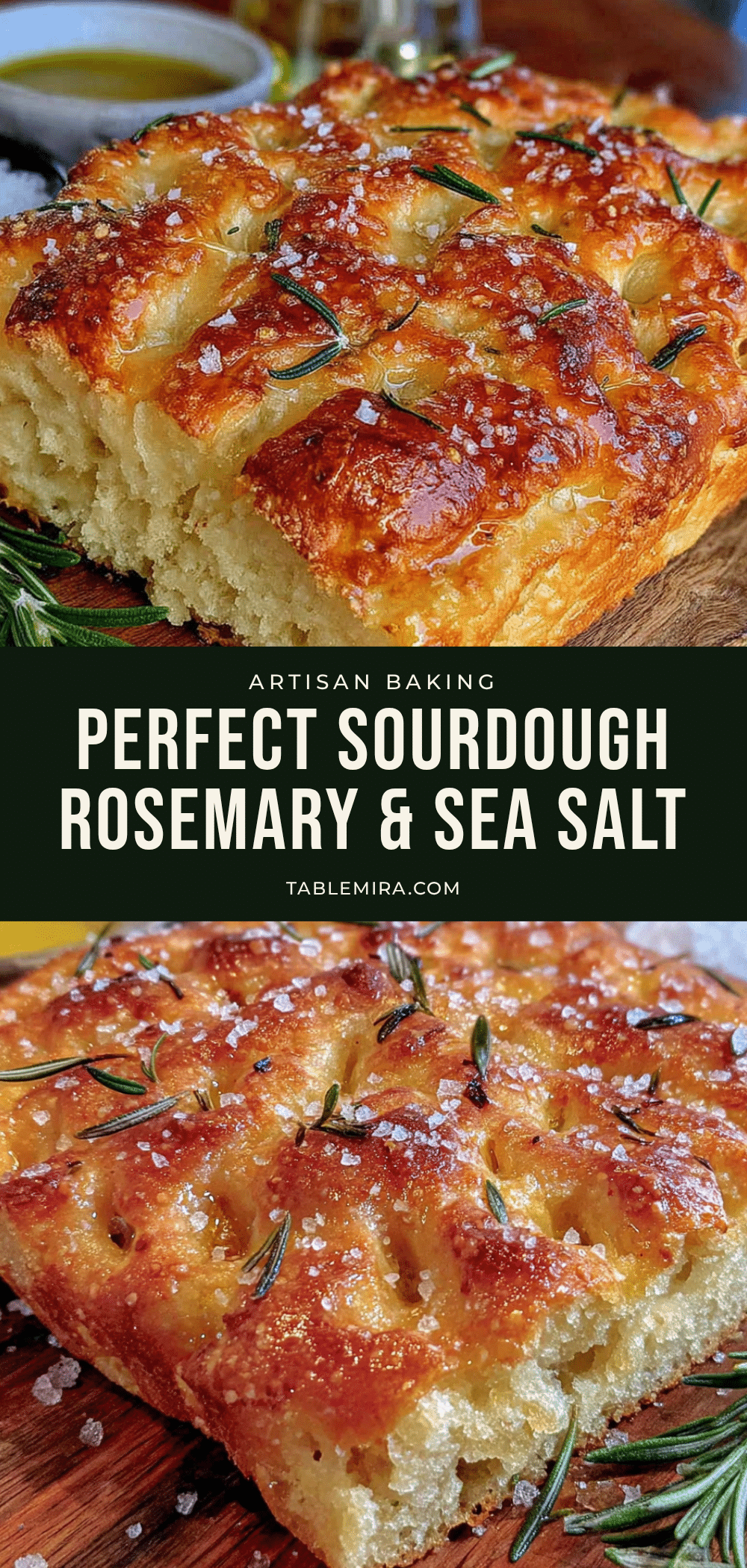
Perfect Sourdough Focaccia with Rosemary & Sea Salt
This sourdough focaccia features a crackling crust and a pillowy, almost custard-like interior with a perfect sheen of olive oil pooling in the dimples, topped with rosemary and sea salt. It’s the result of eighteen attempts to recreate a life-changing bakery focaccia from Austin’s Batch bakery.
- Prep Time: 20 minutes
- Cook Time: 25-30 minutes
- Total Time: 2 days (includes fermentation and proofing)
- Yield: 8 servings 1x
- Category: Bread
- Cuisine: Italian
Ingredients
- 500 grams bread flour (King Arthur recommended)
- 100 grams active sourdough starter (fed and bubbly)
- 375 grams lukewarm water (around 80°F/27°C)
- 10 grams fine sea salt
- 15 grams extra-virgin olive oil (plus more for pan and topping)
- 3–4 tablespoons extra-virgin olive oil (for topping)
- 2 tablespoons fresh rosemary leaves (roughly chopped)
- 1–2 teaspoons flaky sea salt (like Maldon or Jacobsen)
- Optional: fresh thyme or black pepper (for variation)
Instructions
- Day 1: Mix and Bulk Fermentation. In a large bowl, combine bread flour and water. Mix until no dry flour remains. Cover and let rest for 30 minutes (autolyse).
- Add active sourdough starter and fine sea salt. Wet your hand and squeeze everything together until incorporated. The dough will be very wet and sticky.
- Over the next 2 hours, perform 4 sets of stretch and folds, 30 minutes apart. Wet your hand, grab one side of the dough, stretch it up and fold it over itself. Rotate the bowl 90 degrees and repeat 4 times per set.
- Cover the bowl and let it rest at room temperature (70-75°F) for 8-10 hours until roughly doubled in size and domed with small bubbles on the surface.
- After bulk fermentation, cover the bowl tightly and refrigerate overnight (12-24 hours) for cold retard.
- Day 2: Shaping and Baking. Pour 2-3 tablespoons of olive oil into a 9×13-inch pan and spread evenly across the bottom and up the sides.
- Turn the cold dough out into the oiled pan. Use fingertips to gently press and stretch the dough to fill the pan. If it resists, let it rest for 15 minutes and try again.
- Cover the pan with plastic wrap and let it proof at room temperature for 3-4 hours until puffed up, jiggly, and nearly doubled in height.
- About 30 minutes before baking, preheat oven to 425°F (220°C). Drizzle another tablespoon of olive oil over the dough. Dip fingertips in olive oil and press straight down into the dough, creating dimples all across the surface.
- Sprinkle chopped rosemary evenly over the surface, then finish with a generous sprinkle of flaky sea salt.
- Bake on the middle rack for 25-30 minutes until deep golden brown on top and sounds hollow when tapped. If bottom isn’t browning enough, transfer directly to oven rack for last 5 minutes.
- Let cool in the pan for 5 minutes, then transfer to a wire rack. Wait at least 20 minutes before cutting.
Notes
Use a young, active starter. Fresh rosemary is non-negotiable; dried rosemary burns. Don’t substitute flaky sea salt with table salt. The dough is very wet (75% hydration) – don’t add more flour. Wet your hands before handling. Cold ferment develops flavor and makes dough easier to handle. Dimples create pockets for olive oil to create crispy spots. Store at room temperature for up to 2 days; do not refrigerate. Reheat in 350°F oven for 5-7 minutes. Freezes well for up to 3 months.
Nutrition
- Serving Size: 1/8 of recipe
- Calories: 280
- Sodium: 480
- Fat: 12
- Saturated Fat: 2
- Carbohydrates: 36
- Fiber: 2
- Protein: 6
Keywords: sourdough focaccia, rosemary focaccia, sea salt focaccia, homemade bread, sourdough bread, focaccia recipe, artisan bread