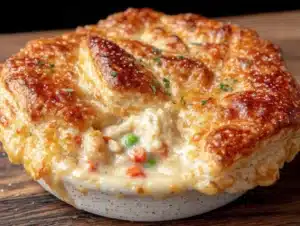
The turkey platter came back to the kitchen with nothing but a smear of herb-flecked butter and a single sprig of rosemary. My mother-in-law, who has been hosting Thanksgiving for forty years, just looked at me. “Okay,” she said, “you’re doing the turkey from now on.” That was the first time I realized this garlic herb butter roasted turkey wasn’t just good—it was the kind of good that changes family traditions.
I didn’t set out to dethrone anyone’s holiday staple, honestly. I just got tired of dry, flavorless turkey that needed a gallon of gravy to be edible. You know the one—pale skin, sad texture, that weird spongy feeling when you carve into it. I wanted turkey that could stand on its own. Turkey that made people reach for seconds before they even touched the mashed potatoes. So I started experimenting, and after a few disasters (under-cooked thighs, over-salted skin, one memorable year where the butter just slid right off), I landed on this method.
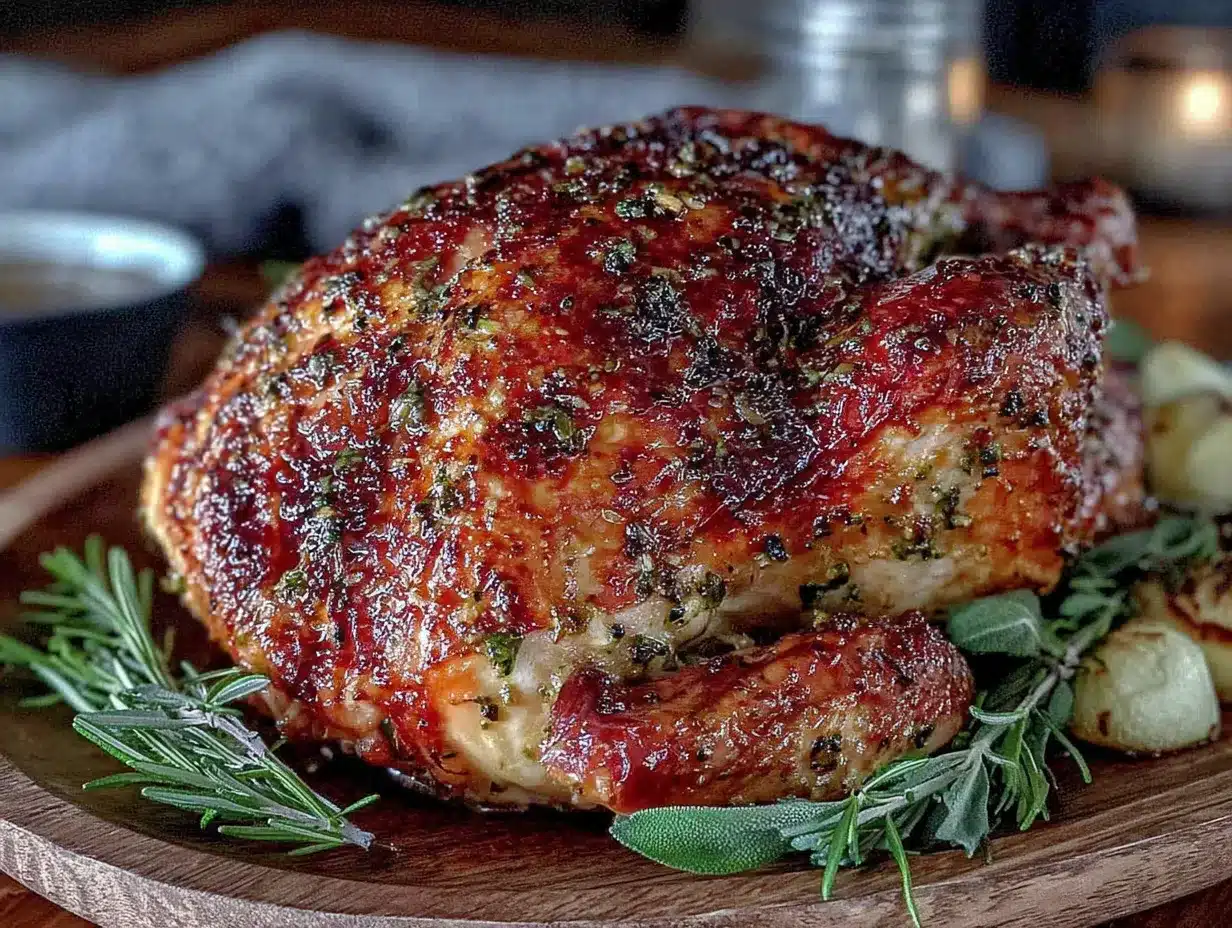
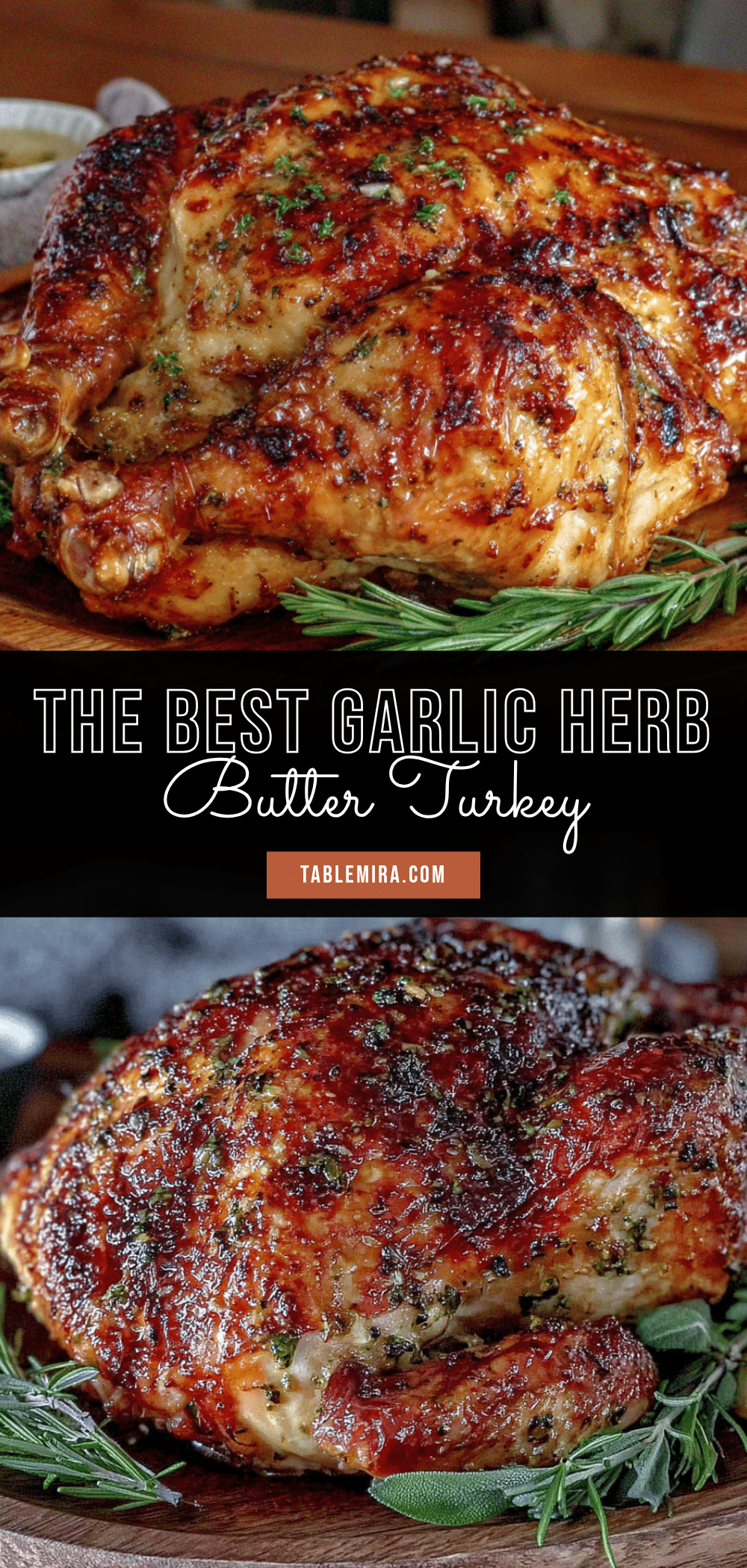
What makes this garlic herb butter roasted turkey different is the technique. It’s not just about rubbing butter on the outside—though that helps. It’s about getting that garlic-herb mixture under the skin, all over the breast, down into the thighs. It’s about salt timing and temperature tricks and letting the bird rest long enough that you could set a watch by it. The result is impossibly juicy meat, crackling golden skin, and that deep savory aroma that makes everyone wander into the kitchen asking when dinner is ready.
This recipe has become my non-negotiable for every holiday gathering. It’s the one dish I never stress about, because I know it works. And honestly? Seeing that empty platter come back to the kitchen is still the best part of my meal.
Why You’ll Love This Recipe
I’ve tested this garlic herb butter roasted turkey more times than I care to count, and every single time, it delivers. Here’s why this recipe stands out from every other turkey recipe you’ll find online.
- Incredibly Juicy Meat: The garlic herb butter works its way under the skin, basting the meat from the inside out. You get moist white meat and tender dark meat, every single time.
- Crackling Golden Skin: That signature crispy, golden-brown skin comes from a combination of proper drying, butter application, and high-heat finishing. It’s the kind of skin people fight over.
- Simple Ingredients: You don’t need a specialty grocery store for this. Butter, garlic, fresh herbs, salt, pepper—that’s it. Things you probably already have in your kitchen.
- Make-Ahead Friendly: The butter mixture can be prepared days in advance. The dry brine works overnight. You can even prep the aromatics the day before. Thanksgiving morning becomes about relaxing, not rushing.
- Foolproof Method: I’ve walked dozens of friends through this recipe over the phone, and not one has had a dry turkey. The combination of temperature monitoring and resting time takes the guesswork out completely.
- Crowd-Pleaser: From picky kids to foodie relatives, everyone loves this turkey. It’s the centerpiece that actually lives up to the hype.
- Leftovers That Shine: Honestly, this turkey makes the best sandwiches, soups, and casseroles the next day. The flavor only gets better as it sits.
This isn’t just another turkey recipe. It’s the one that made my mother-in-law hand over the carving knife without a second thought. And if that’s not a testimonial, I don’t know what is.
What Ingredients You Will Need
This garlic herb butter roasted turkey uses simple, high-quality ingredients to deliver maximum flavor with minimal fuss. Most of these are pantry staples, especially during the holiday season.
For the Dry Brine
- 1 whole turkey (12-14 pounds), fully thawed if frozen (remove giblets and neck, pat dry inside and out)
- 2 tablespoons kosher salt (I prefer Diamond Crystal for its even texture; use 1.5 tablespoons if using Morton’s)
- 1 teaspoon black pepper, freshly ground
For the Garlic Herb Butter
- 1 cup unsalted butter, softened to room temperature (use European-style butter like Kerrygold for richer flavor)
- 8 cloves garlic, minced finely (or use a microplane for a paste-like consistency)
- 2 tablespoons fresh rosemary, finely chopped (stems removed)
- 2 tablespoons fresh thyme leaves (strip from stems, no chopping needed)
- 2 tablespoons fresh sage, finely chopped
- 1 tablespoon fresh parsley, finely chopped
- 1 teaspoon lemon zest (from about 1 lemon)
- 1 teaspoon kosher salt
- 1/2 teaspoon black pepper
For the Aromatics
- 1 lemon, halved (zest already used above)
- 1 onion, quartered (yellow or sweet onion works best)
- 3-4 sprigs fresh rosemary
- 3-4 sprigs fresh thyme
- 4-5 cloves garlic, smashed (skin on is fine)
For the Roasting Pan
- 2 cups low-sodium chicken broth (or turkey stock if you have it)
- 1 cup dry white wine (optional, but adds lovely acidity—use more broth if skipping)
- 1 onion, roughly chopped
- 2 carrots, roughly chopped
- 2 celery stalks, roughly chopped
Ingredient Selection Tips: Always buy a fresh turkey if possible—the texture is noticeably better. If using frozen, give it 3-4 days in the refrigerator to thaw completely. For the herbs, I’ve found that using fresh rather than dried makes a massive difference in the butter’s flavor profile. That said, if you’re in a pinch, use half the amount of dried herbs. The lemon zest is non-negotiable in my book—it brightens the whole dish without tasting lemony. It just makes everything taste more like itself.
Substitution Notes: If you’re dairy-free, you can use a high-quality vegan butter stick (not margarine) for the compound butter. The texture won’t be quite as rich, but it still works beautifully. For a lower-sodium option, reduce the salt in the dry brine to 1 tablespoon and skip the extra salt in the butter.
Equipment Needed
You don’t need a professional kitchen to make this garlic herb butter roasted turkey, but having the right tools makes the process smoother. Here’s what you’ll need:
- Roasting pan with rack: A sturdy metal pan (not disposable) with a V-rack or flat rack. The rack keeps the turkey elevated so air circulates and the bottom doesn’t steam.
- Instant-read thermometer: This is non-negotiable. I’ve used the ThermoPro TP19 for years and it’s never let me down. A leave-in probe thermometer is even better.
- Kitchen twine: For trussing the legs and tucking the wings. Cotton butcher’s twine works best.
- Large cutting board: You’ll need one for prep and another for resting the cooked turkey. Make sure it has a groove to catch juices.
- Mixing bowl: For combining the herb butter ingredients.
- Pastry brush or silicone brush: For applying any extra butter during roasting (optional but helpful).
- Aluminum foil: For tenting the turkey if the skin browns too quickly.
- Carving knife and fork: A sharp, long slicing knife makes carving so much easier. I use a 10-inch chef’s knife.
- Measuring spoons: For the salt and herbs.
- Kitchen shears: Useful for trimming excess skin or cutting twine.
Budget-Friendly Alternatives: If you don’t have a roasting rack, you can use rolled-up aluminum foil coils to lift the turkey off the pan bottom. It’s not as stable, but it works in a pinch. A disposable aluminum roasting pan is fine for one-time use, just double it up to prevent bending. And honestly? A basic analog meat thermometer costs under $10 and is infinitely better than guessing.
Preparation Method
Let’s get into the actual process. This garlic herb butter roasted turkey takes time, but most of it is inactive—you’re just waiting for the oven to do its thing.
Step 1: Dry Brine the Turkey (24-48 hours before cooking)
Pat the turkey completely dry with paper towels—inside and out. This is crucial. Any moisture on the skin will prevent the salt from working properly. Mix the kosher salt and pepper together, then sprinkle it evenly all over the turkey, including the cavity and under the skin where you can reach. Place the turkey on a rimmed baking sheet with a rack (or in the roasting pan) and refrigerate uncovered for 24-48 hours. The uncovered part is important—it allows the skin to dry out, which means crispier results later. I usually do this two days before Thanksgiving, and it makes the day-of cooking so much less stressful.
Step 2: Make the Garlic Herb Butter
About an hour before you plan to roast, take the butter out of the fridge to soften. In a medium bowl, combine the softened butter, minced garlic, chopped rosemary, thyme, sage, parsley, lemon zest, salt, and pepper. Mix until everything is evenly distributed. Taste a tiny bit (it’s safe—the salt content is fine) and adjust seasoning if needed. The butter should be spreadable but not melted. If it’s too soft, pop it in the fridge for 10 minutes.
Step 3: Prepare the Turkey for Roasting
Remove the turkey from the refrigerator about 45 minutes before roasting. Let it sit at room temperature—this helps it cook more evenly. Pat it dry again with paper towels (more moisture removal for crispier skin). Using your fingers, gently loosen the skin from the breast meat, working from the neck cavity down toward the legs. Be careful not to tear the skin. Take about two-thirds of the herb butter and spread it directly onto the breast meat under the skin. Use your hands to massage it evenly across both breasts. Then spread the remaining butter all over the outside of the turkey—legs, thighs, wings, every exposed bit of skin.
Step 4: Stuff the Cavity and Truss
Place the halved lemon, quartered onion, rosemary sprigs, thyme sprigs, and smashed garlic cloves inside the turkey cavity. Don’t pack it too tight—you want air to circulate. Tie the legs together with kitchen twine using a simple knot. Tuck the wing tips under the body (this prevents them from burning). The turkey should look neat and compact.
Step 5: Set Up the Roasting Pan
Place the chopped onion, carrots, and celery in the bottom of the roasting pan. Pour in the chicken broth and white wine (if using). Place the turkey on the rack over the vegetables. The vegetables will flavor the drippings for gravy, and the liquid creates steam that keeps the pan from burning.
Step 6: Roast the Turkey
Preheat your oven to 425°F. Place the turkey on the lower-middle rack and roast for 30 minutes at this high temperature—this kickstarts the browning process. After 30 minutes, reduce the oven temperature to 325°F. Continue roasting, basting every 45 minutes with the pan juices. If the skin is browning too quickly (it happens with some ovens), tent the breast loosely with aluminum foil. Total roasting time will be approximately 13-15 minutes per pound, so a 14-pound turkey takes about 3 to 3.5 hours total.
Step 7: Check for Doneness
Start checking temperature about 30 minutes before your estimated finish time. Insert the thermometer into the thickest part of the thigh without touching bone. The turkey is done when the thigh reaches 165°F and the breast reaches 160°F (it will carry over to 165°F while resting). If you’re using a leave-in probe, set it and forget it—it’ll beep when you’re there.
Step 8: Rest and Carve
This is the hardest part. Once the turkey is out of the oven, transfer it to a cutting board and let it rest for at least 30-45 minutes. Do not skip this. The juices need time to redistribute, and if you carve too early, they’ll run all over the board instead of staying in the meat. Tent loosely with foil to keep warm. While it rests, you can make gravy from the pan drippings. When you’re ready to carve, remove the twine, pull out the aromatics, and slice against the grain.
Visual Cue: The skin should be deep golden brown and crispy. When you insert the thermometer, the juices should run clear, not pink. The legs should wiggle easily in their sockets. If any of these things aren’t happening, give it another 10-15 minutes and check again.
Cooking Tips & Techniques
After making this garlic herb butter roasted turkey more times than I can count (and failing spectacularly a few times), here’s what I’ve learned.
Don’t Skip the Dry Brine. I know it requires planning ahead, but it’s the single biggest factor in getting juicy, well-seasoned meat. The salt slowly penetrates the meat, seasoning it from the inside out, while the uncovered fridge time dries the skin. If you’re short on time, even 12 hours makes a difference. But 24 hours is where the magic happens.
Room Temperature Matters. Taking the chill off the turkey before it goes in the oven prevents the breast from drying out while you wait for the thigh to come up to temperature. A cold turkey cooks unevenly, period. Give it at least 45 minutes on the counter.
Baste Smart, Not Often. Every time you open the oven door, heat escapes and your cooking time extends. Basting every 45 minutes is plenty. And honestly? The butter under the skin does more for moisture than any surface basting ever could. The basting is mostly for flavor development on the skin.
My Biggest Failure: The first time I made this, I didn’t let the turkey rest. I was hungry, the guests were hungry, and I carved it straight out of the oven. The breast meat was dry within minutes, and all those beautiful juices ended up on the cutting board instead of in the meat. I learned my lesson the hard way. Now I set a timer for 45 minutes and I don’t touch it until that timer goes off.
Temperature is Truth. Trust the thermometer over the timer. Ovens vary wildly, turkey sizes are never exact, and your particular bird might cook faster or slower than expected. A $15 thermometer is the best investment you’ll make for holiday cooking.
Multitasking Strategy: While the turkey rests, that’s your window for making gravy, reheating side dishes, and setting the table. The turkey stays warm under foil, and you get to use the oven for everything else at 350°F. Perfect timing, every time.
Variations & Adaptations
One of the best things about this garlic herb butter roasted turkey is how adaptable it is. Here are some variations I’ve tried and loved.
Citrus-Herb Variation
Add the zest of one orange and one lime to the herb butter along with the lemon zest. Replace the lemon in the cavity with one halved orange and one halved lime. The citrus adds a bright, almost floral note that pairs beautifully with the herbs. I did this for a Friendsgiving once and it was gone in 20 minutes.
Spiced Turkey Variation
Add 1 teaspoon smoked paprika, 1/2 teaspoon cumin, and 1/4 teaspoon cayenne pepper to the herb butter. This gives the turkey a subtle warmth without being spicy. It’s especially good if you’re serving it with a smoky pulled pork slider spread on the side for a Southern-inspired holiday table.
Herb-Only Variation
If you’re not a garlic person (are we still friends?), reduce the garlic to 4 cloves and add 2 tablespoons of fresh tarragon and 1 tablespoon of fresh dill to the butter. The tarragon adds a slight licorice note that’s surprisingly elegant.
Dietary Adaptations
- Dairy-Free: Use vegan butter or ghee (if you can tolerate clarified butter). The texture is slightly different but still delicious.
- Low-Sodium: Skip the dry brine and just season the butter mixture with 1 teaspoon salt total. The herbs will still provide plenty of flavor.
- Gluten-Free: This recipe is naturally gluten-free. Just make sure your broth and any added ingredients are certified gluten-free.
Cooking Method Variations
If you’re short on oven space (hello, holiday kitchen chaos), you can spatchcock the turkey—remove the backbone and flatten it before roasting. This cuts cooking time by about 40% and gives you even crispier skin. Just be careful with the garlic herb butter application since the skin is more exposed.
For a smaller gathering, try this method on a turkey breast instead of a whole bird. The garlic herb butter works just as well, and you’ll have dinner on the table in under two hours.
Serving & Storage Suggestions
This garlic herb butter roasted turkey is the star of the show, but it plays well with others. Here’s how to serve and store it like a pro.
Serving Suggestions
Serve the turkey on a large platter, surrounded by fresh herb sprigs and citrus slices for color. Carve it at the table for maximum drama—the aroma alone will make everyone’s mouth water. The ideal serving temperature is warm, not hot. That 45-minute rest means it’s perfectly ready to eat when you sit down.
What to Serve With It: This turkey pairs beautifully with classic sides like mashed potatoes, green bean casserole, and cranberry sauce. For something unexpected, try it alongside a brown butter apple cider cake for dessert. The herbal notes in the turkey complement the apple and brown butter beautifully.
Beverage Pairings: A crisp Chardonnay or a light Pinot Noir works wonderfully. For non-alcoholic options, sparkling apple cider or a rosemary-ginger spritzer cuts through the richness perfectly.
Storage Instructions
Refrigerator: Remove all meat from the bones within two hours of cooking. Store in airtight containers for up to 4 days. The meat stays moist and flavorful, perfect for sandwiches and salads.
Freezer: Shredded or sliced turkey freezes beautifully for up to 3 months. Wrap tightly in plastic wrap, then foil, then place in a freezer bag. Thaw overnight in the refrigerator before using.
Reheating: The best way to reheat is in a covered dish with a splash of broth at 325°F for 15-20 minutes. This prevents drying out. For quick reheating, microwave in 30-second bursts with a damp paper towel over the top.
Flavor Development: Honestly? Day-old turkey is often better than fresh. The herbs and garlic continue to meld, and the meat becomes even more tender. I always make extra just for leftovers.
Nutritional Information & Benefits
Turkey is one of the leanest, most protein-packed meats you can eat. Here’s what you’re getting with this garlic herb butter roasted turkey (based on a 4-ounce serving of white meat without skin).
| Nutrient | Amount Per Serving |
|---|---|
| Calories | 185 |
| Protein | 34g |
| Fat | 5g |
| Saturated Fat | 2g |
| Carbohydrates | 0g |
| Sodium | 520mg (varies with brining) |
| Potassium | 350mg |
| Vitamin B6 | 25% DV |
| Niacin | 40% DV |
| Selenium | 30% DV |
Health Benefits: Turkey is packed with tryptophan, which supports serotonin production and helps regulate mood and sleep (that post-Thanksgiving nap isn’t just from the carbs). It’s also rich in B vitamins that support energy metabolism and selenium, a powerful antioxidant that supports thyroid function.
Dietary Considerations: This recipe is naturally gluten-free, low-carb, and keto-friendly if you skip the wine in the pan. The butter adds some saturated fat, but in moderation, it’s part of a balanced diet. If you’re watching sodium, reduce the dry brine salt and use unsalted butter.
Allergen Note: This recipe contains dairy (butter). For a dairy-free version, use vegan butter as mentioned in the variations section.
I personally love that this turkey lets me enjoy a rich, satisfying meal without feeling like I’ve derailed my eating habits. It’s comfort food that actually has nutritional value—a rare combination in the holiday world.
Conclusion
This garlic herb butter roasted turkey has become my signature dish, and I’m honestly a little proud of that. It’s the recipe that made my mother-in-law hand over the Thanksgiving reins, the one that gets requested for Christmas and Easter and random Sunday dinners. And the best part? It’s not complicated. It just requires a little planning and a willingness to trust the process.
I love this recipe because it proves that simple ingredients, treated with care, can produce something extraordinary. No fancy techniques, no hard-to-find ingredients, no stress. Just juicy, flavorful turkey that makes everyone at the table happy.
I’d love to hear how yours turns out. Did you try a variation? Did your family fight over the crispy skin? Drop a comment below and let me know. And if you’re looking for more holiday inspiration, check out the Christmas morning breakfast bake for the next day, or the gingerbread cheesecake bars for dessert. Happy roasting, friends—you’ve got this.
Frequently Asked Questions
Can I use dried herbs instead of fresh?
You can, but the flavor won’t be as bright. Use about half the amount of dried herbs since they’re more concentrated. Fresh herbs really do make a difference in this garlic herb butter roasted turkey, so I recommend fresh if you can find them.
How do I keep the turkey from drying out?
The dry brine and the butter under the skin are your two best defenses. Also, don’t overcook it—use a thermometer and pull the turkey at 160°F in the breast. The carryover cooking will bring it to 165°F while it rests.
Can I make the herb butter ahead of time?
Absolutely. Make it up to 3 days in advance and store it in the refrigerator. Let it come to room temperature for about 30 minutes before using so it’s spreadable. You can also freeze the butter for up to 3 months.
What if my turkey is bigger or smaller than 12-14 pounds?
Adjust the cooking time accordingly—about 13-15 minutes per pound at 325°F after the initial high-heat blast. The dry brine salt amount should be about 1 teaspoon per 5 pounds of turkey. The herb butter recipe works for turkeys up to 16 pounds; for larger birds, increase the butter by half.
Do I have to use wine in the roasting pan?
Not at all. You can substitute additional chicken broth or turkey stock. The wine adds acidity that helps deglaze the pan for gravy, but it’s not essential for the turkey itself. If you’re serving kids or avoiding alcohol, just use broth.
Pin This Recipe!
Perfect Garlic Herb Butter Roasted Turkey – Easy Holiday Recipe
This garlic herb butter roasted turkey delivers impossibly juicy meat with crackling golden skin, thanks to a dry brine and herb butter technique. It’s the foolproof holiday centerpiece that will change your family traditions.
- Prep Time: 45 minutes
- Cook Time: 3 hours 30 minutes
- Total Time: 4 hours 15 minutes (plus 24-48 hours dry brine time)
- Yield: 12-14 servings 1x
- Category: Main Course
- Cuisine: American
Ingredients
- 1 whole turkey (12–14 pounds), fully thawed if frozen (remove giblets and neck, pat dry inside and out)
- 2 tablespoons kosher salt (Diamond Crystal preferred; use 1.5 tablespoons if using Morton’s)
- 1 teaspoon black pepper, freshly ground
- 1 cup unsalted butter, softened to room temperature (European-style like Kerrygold recommended)
- 8 cloves garlic, minced finely
- 2 tablespoons fresh rosemary, finely chopped
- 2 tablespoons fresh thyme leaves
- 2 tablespoons fresh sage, finely chopped
- 1 tablespoon fresh parsley, finely chopped
- 1 teaspoon lemon zest (from about 1 lemon)
- 1 teaspoon kosher salt
- 1/2 teaspoon black pepper
- 1 lemon, halved (zest already used above)
- 1 onion, quartered (yellow or sweet onion)
- 3–4 sprigs fresh rosemary
- 3–4 sprigs fresh thyme
- 4–5 cloves garlic, smashed (skin on is fine)
- 2 cups low-sodium chicken broth (or turkey stock)
- 1 cup dry white wine (optional; use more broth if skipping)
- 1 onion, roughly chopped
- 2 carrots, roughly chopped
- 2 celery stalks, roughly chopped
Instructions
- Dry brine the turkey 24-48 hours before cooking: Pat turkey completely dry with paper towels. Mix kosher salt and pepper, sprinkle evenly all over turkey including cavity and under skin. Place on a rimmed baking sheet with rack and refrigerate uncovered for 24-48 hours.
- About an hour before roasting, make the garlic herb butter: In a medium bowl, combine softened butter, minced garlic, chopped rosemary, thyme, sage, parsley, lemon zest, salt, and pepper. Mix until evenly distributed. Taste and adjust seasoning if needed.
- Remove turkey from refrigerator 45 minutes before roasting. Pat dry again with paper towels. Gently loosen skin from breast meat using fingers. Spread about two-thirds of herb butter directly onto breast meat under the skin. Spread remaining butter all over the outside of the turkey.
- Place halved lemon, quartered onion, rosemary sprigs, thyme sprigs, and smashed garlic cloves inside the turkey cavity. Tie legs together with kitchen twine. Tuck wing tips under the body.
- Place chopped onion, carrots, and celery in the bottom of the roasting pan. Pour in chicken broth and white wine (if using). Place turkey on rack over vegetables.
- Preheat oven to 425°F. Roast turkey on lower-middle rack for 30 minutes. Reduce oven temperature to 325°F. Continue roasting, basting every 45 minutes with pan juices. If skin browns too quickly, tent breast loosely with aluminum foil. Total roasting time: approximately 13-15 minutes per pound (about 3 to 3.5 hours for a 14-pound turkey).
- Start checking temperature about 30 minutes before estimated finish time. Insert thermometer into thickest part of thigh without touching bone. Turkey is done when thigh reaches 165°F and breast reaches 160°F (will carry over to 165°F while resting).
- Transfer turkey to a cutting board and let rest for at least 30-45 minutes, tented loosely with foil. Remove twine, pull out aromatics, and carve against the grain.
Notes
Do not skip the dry brine—it’s the single biggest factor for juicy, well-seasoned meat. Let the turkey rest for at least 30-45 minutes after roasting to allow juices to redistribute. Trust the thermometer over the timer. For dairy-free, use high-quality vegan butter. For lower sodium, reduce dry brine salt to 1 tablespoon and skip extra salt in butter. The herb butter can be made up to 3 days ahead and stored in the refrigerator.
Nutrition
- Serving Size: 4 ounces white meat
- Calories: 185
- Sodium: 520
- Fat: 5
- Saturated Fat: 2
- Protein: 34
Keywords: garlic herb butter roasted turkey, holiday turkey recipe, juicy turkey, crispy skin turkey, Thanksgiving turkey, Christmas turkey, dry brine turkey, herb butter turkey