The way the brown butter clings to those crescent-shaped slices of squash—that’s what I made this for. Everything else is secondary, honestly. I mean, sure, the pasta is good, the sage is fragrant, but that moment when the roasted delicata squash gets all glossy and coated in that nutty, golden butter? That’s the whole point of this Cozy Delicata Squash and Sage Brown Butter Pasta.
I stumbled onto this combination by accident, if I’m being real. I had a delicata squash sitting on my counter for about a week, looking at me every time I walked into the kitchen. It was one of those ingredients I bought with good intentions—visions of roasted squash salads dancing in my head—but life got busy. Then, on a chilly Tuesday night when I needed something comforting but didn’t want to spend hours cooking, I grabbed that squash, a bunch of sage from my garden (okay, my sad little windowsill herb pot), and decided to wing it.
The first bite stopped me mid-chew. Not in a dramatic, food-commercial way, but in that quiet, “oh, this is actually special” kind of way. The squash gets soft and caramelized on the edges, the sage crisps up in the butter, and the whole thing feels like a warm hug in a bowl. It’s not complicated—it’s just good. And that’s honestly why I keep coming back to it.
Why You’ll Love This Recipe
Let’s be honest—there are a million pasta recipes out there. So why should this one earn a spot in your dinner rotation? Well, I’ve tested this one more times than I care to admit, tweaking the butter-to-sage ratio, the roasting time for the squash, even the shape of the pasta. And what I landed on is something that feels both effortless and impressive. You don’t need to be a chef to pull this off, but when you serve it, people will think you are.
- Quick & Easy: This comes together in about 30 minutes, start to finish. Perfect for those nights when you want something cozy but don’t have hours to spend.
- Simple Ingredients: No fancy grocery trips required. Delicata squash, sage, butter, pasta, Parmesan—that’s basically it. You probably have half of this in your kitchen right now.
- Perfect for Fall & Winter: There’s something about the combination of roasted squash and brown butter that just screams sweater weather. It’s great for a quiet weeknight dinner or even a Thanksgiving side dish.
- Crowd-Pleaser: I’ve served this to picky eaters, vegetarians, and even my dad who “doesn’t like squash,” and everyone went back for seconds. It’s that good.
- Unbelievably Delicious: The texture is what gets you—the tender pasta, the creamy squash, the crispy sage, all tied together with that nutty brown butter. It’s next-level comfort food without being heavy.
What makes this recipe different from all the other squash pastas out there? It’s the technique. Most recipes just toss roasted squash with pasta and call it a day. But here, we take the time to brown the butter properly, let the sage get crispy, and then toss everything together so every single bite has that rich, nutty flavor. It’s not just another version—it’s the best version. Trust me, I’ve eaten enough pasta to know.
What Ingredients You Will Need
This recipe uses simple, wholesome ingredients that come together to create something truly special. No weird, hard-to-find stuff here—just good, honest food that sings when combined.
- Delicata squash (2 medium, about 1.5 lbs total): This is the star of the show. Unlike other winter squashes, you don’t need to peel delicata—the skin is thin and tender, which makes prep a breeze. Look for squash that feels heavy for its size with no soft spots.
- Olive oil (2 tablespoons, plus more for drizzling): Use a good quality extra virgin olive oil for roasting the squash. It adds a subtle fruitiness that complements the brown butter.
- Salt and black pepper (to taste): Don’t skimp here. Proper seasoning makes everything pop.
- Unsalted butter (4 tablespoons, or half a stick): I prefer unsalted so I can control the salt level. If you only have salted butter, just reduce the added salt slightly.
- Fresh sage leaves (15-20 leaves): Fresh is non-negotiable here—dried sage just won’t give you that same aromatic, slightly peppery flavor. Look for leaves that are bright green and fragrant.
- Pasta (12 ounces, or about 340g): I love using short shapes like orecchiette, farfalle, or rigatoni for this. The little cups and ridges catch all that brown butter goodness. My personal favorite is orecchiette—those little “ears” hold the squash pieces perfectly.
- Parmesan cheese (1/2 cup, freshly grated): Please, please grate your own. The pre-shredded stuff has anti-caking agents that prevent it from melting smoothly. It makes a real difference.
- Garlic (2 cloves, thinly sliced): Adds a gentle aromatic note that rounds out the flavors.
- Red pepper flakes (1/4 teaspoon, optional): I like a tiny bit of heat to cut through the richness. Totally optional, but highly recommended.
- Lemon juice (1 tablespoon, fresh): A squeeze of lemon at the end brightens everything up and prevents the dish from feeling too heavy.
- Toasted walnuts or pine nuts (1/4 cup, optional): I add these when I want a little crunch. They’re not traditional, but they work beautifully with the sage and brown butter.
For the best results, I recommend using organic delicata squash if you can find it—the skin is more tender, and you’ll be eating it. And for the butter, I’m partial to Kerrygold or any European-style butter because it has a higher fat content, which means it browns more evenly and tastes richer. But honestly, any good unsalted butter will work.
Equipment Needed
You don’t need a ton of fancy equipment for this recipe, which is part of its charm. Here’s what you’ll need:
- Large pot (for boiling pasta): A 5-6 quart pot works well. You want enough water for the pasta to move freely.
- Baking sheet: A rimmed baking sheet is perfect for roasting the squash. Line it with parchment paper for easy cleanup.
- Large skillet or sauté pan: This is where the magic happens—browning the butter and bringing everything together. A 12-inch pan gives you plenty of room.
- Chef’s knife and cutting board: You’ll need a sharp knife to cut the squash. Delicata is easier to cut than butternut, but a sharp knife still makes the job safer and cleaner.
- Microplane or box grater: For grating that Parmesan. A microplane gives you the fluffiest, meltiest cheese.
- Colander: For draining the pasta. Don’t forget to reserve some pasta water before you drain!
- Measuring spoons and cups: Basic but essential.
If you don’t have a microplane, a box grater works fine—just use the finest side. And if you don’t have a rimmed baking sheet, any oven-safe pan will do, though you might want to put a regular baking sheet on a lower rack to catch any drips.
Preparation Method
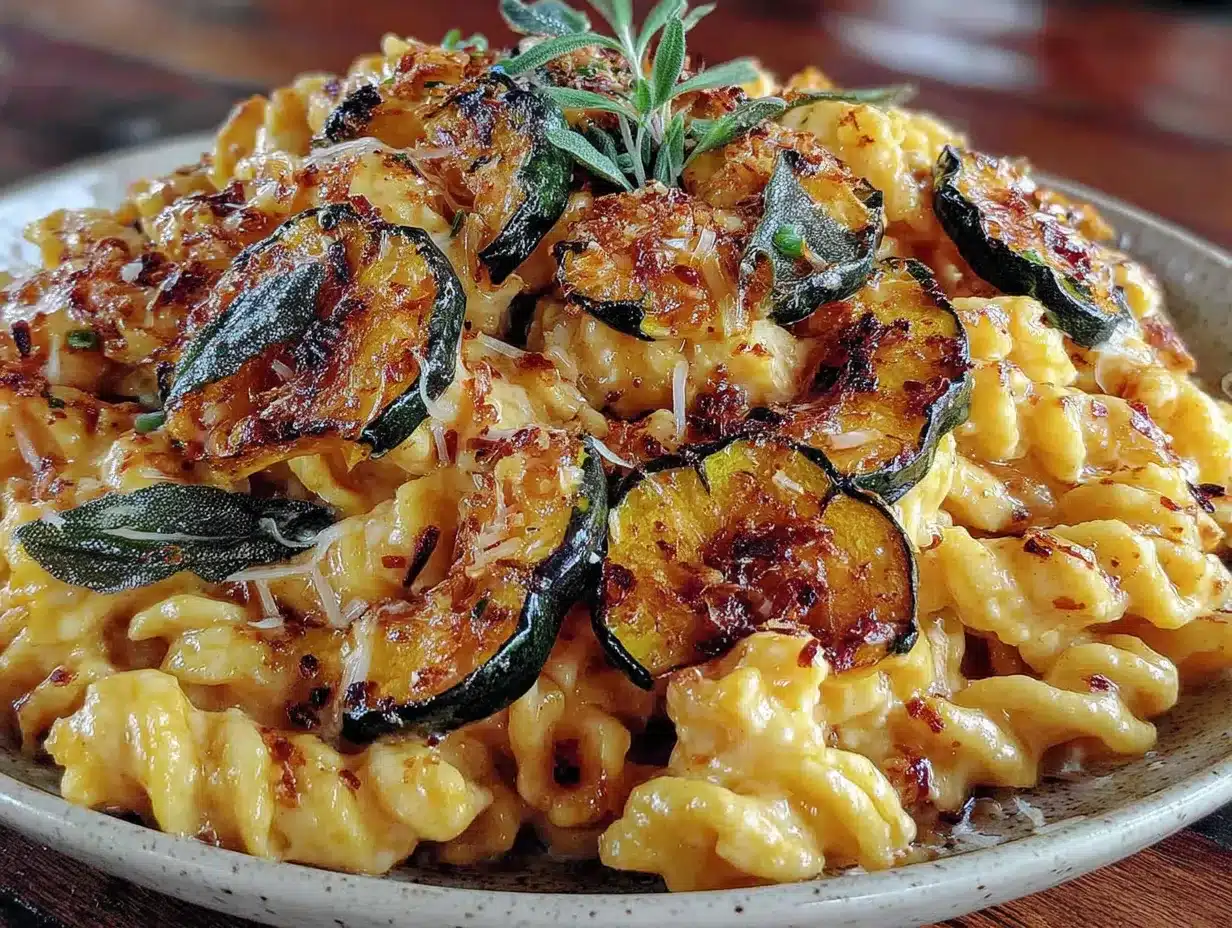
Alright, let’s get cooking! This whole process takes about 30 minutes, and the timing works out beautifully if you start the squash first, then the pasta, then the sauce.
- Preheat your oven to 400°F (200°C). While it’s heating up, wash your delicata squash thoroughly. Cut off the stem and blossom ends, then slice the squash in half lengthwise. Scoop out the seeds and stringy bits with a spoon—save the seeds for roasting if you’re feeling ambitious!
- Slice the squash into half-moons, about 1/2-inch thick. You want them thin enough to cook through quickly but thick enough to hold their shape. Place them on your baking sheet, drizzle with olive oil, and season generously with salt and pepper. Toss to coat, then spread them in a single layer. Roast for 15-20 minutes, flipping halfway through, until they’re golden brown and tender when pierced with a fork.
- While the squash roasts, bring a large pot of salted water to a boil. I add about a tablespoon of salt per gallon of water—it should taste like the sea. Add your pasta and cook according to package directions until al dente. Before you drain, reserve about 1 cup of pasta water. Then drain the pasta and set it aside.
- Now for the brown butter—this is where the magic happens. In your large skillet, melt the butter over medium heat. Swirl the pan occasionally as it melts. First it will foam, then the foam will subside, and you’ll start to see little brown specks forming at the bottom of the pan. This takes about 3-4 minutes. Watch it carefully—brown butter can go from perfect to burnt in seconds. When it smells nutty and looks amber-colored, you’re there.
- Immediately add the sage leaves to the brown butter. They’ll sizzle and crisp up in about 30 seconds. Use a slotted spoon to transfer them to a paper towel-lined plate. They’ll get even crispier as they cool.
- Add the sliced garlic and red pepper flakes to the brown butter (keep the pan on medium heat). Cook for about 30 seconds until fragrant, then add the roasted squash slices. Toss gently to coat them in that glorious butter.
- Add the drained pasta to the skillet with the squash and butter. Toss everything together, adding splashes of reserved pasta water as needed to create a silky sauce that coats every piece of pasta. You’ll probably use about 1/2 cup.
- Remove from heat and stir in the freshly grated Parmesan cheese. Toss until the cheese melts and creates a creamy, luscious sauce. Add the lemon juice and toss again.
- Serve immediately, topped with the crispy sage leaves and any extra Parmesan you want. If you’re using toasted nuts, sprinkle them on top too.
A few things to watch for: if your brown butter starts smoking, you’ve gone too far—start over. And if your sauce seems too thick, add more pasta water a tablespoon at a time until it’s the consistency you want. The pasta will continue to absorb liquid as it sits, so don’t be shy with that starchy water.
Cooking Tips & Techniques
I’ve made this recipe at least a dozen times, and I’ve learned a few things the hard way. Let me save you some trouble.
Perfect brown butter every time: Use a light-colored pan so you can actually see the color change. A dark nonstick pan makes it nearly impossible to tell when the butter is properly browned. Also, cut your butter into smaller pieces so it melts more evenly. And don’t walk away—brown butter demands your full attention for those last 30 seconds.
Don’t crowd the squash: When roasting, give those squash slices some breathing room. If they’re piled on top of each other, they’ll steam instead of caramelizing, and you’ll miss out on those gorgeous browned edges. Use two baking sheets if you need to.
Save more pasta water than you think you need: I always reserve a full cup, even though I usually only use half. That extra water has saved me more times than I can count when the sauce tightens up too much. It’s liquid gold, honestly.
One mistake I made early on: I added the sage to the butter too early, and it burned before the butter was properly browned. Now I wait until the butter is just about done, then add the sage for a quick 30-second crisp. The sage should be fragrant and crispy, not dark and bitter.
Timing is everything: Start the squash first, then get your pasta water boiling. By the time the squash is done, your pasta should be almost ready, and you can finish the sauce while the pasta drains. This way, everything comes together hot and fresh.
Variations & Adaptations
One of the things I love about this recipe is how flexible it is. Here are some ways to make it your own:
- Make it vegetarian/vegan: It’s already vegetarian! For a vegan version, use a good quality vegan butter (Miyoko’s works great) and nutritional yeast instead of Parmesan. You can also add some white beans for extra protein.
- Add protein: I’ve added crispy pancetta or bacon to this before, and it was incredible. Just cook the pancetta first, remove it from the pan, and use the rendered fat in place of some of the butter. Or try it with roasted chicken—this crispy air fryer garlic parmesan chicken thighs would be amazing on the side.
- Switch up the squash: If you can’t find delicata, butternut squash works well—just peel it first and cut it into cubes. Acorn squash is another good option, though you’ll want to peel it too. Roasting times may vary slightly.
- Different herbs: Thyme and rosemary both work beautifully with brown butter. I’ve made a version with fresh thyme that was equally delicious, just different.
- Gluten-free option: Use your favorite gluten-free pasta. Brown rice pasta or chickpea pasta both work well here. Just be careful not to overcook it—gluten-free pasta can get mushy fast.
- Add greens: Toss in a handful of fresh spinach or kale at the end and let it wilt in the residual heat. It adds color and makes you feel a little healthier about all that butter.
I once made this with roasted delicata squash and added some leftover crockpot ground beef and potato casserole on the side for my husband who “needs meat with dinner.” He ate both, no complaints.
Serving & Storage Suggestions
This pasta is best served immediately, while it’s hot and the sauce is silky. But let’s be real—sometimes you have leftovers, and that’s okay.
How to serve: Plate it up in warm bowls (run them under hot water for a minute and dry them off—it makes a difference). Top with the crispy sage leaves, a generous shower of Parmesan, and maybe a crack of black pepper. A side of crusty bread is never a bad idea for sopping up any extra brown butter sauce.
What to serve with it: A simple green salad with a lemony vinaigrette cuts through the richness beautifully. Or try it alongside some crispy air fryer chicken parmesan zucchini boats for a full Italian-inspired meal. A glass of crisp white wine like Sauvignon Blanc or a light Pinot Noir pairs perfectly.
Storage: Leftovers will keep in an airtight container in the fridge for up to 3 days. The pasta will absorb some of the sauce, so don’t expect it to be as saucy as day one. To reheat, add a splash of water or broth and warm it gently in a skillet over medium-low heat, stirring occasionally. The microwave works in a pinch, but the stovetop gives you better results.
Freezing: I don’t recommend freezing this one—the texture of the squash and the sauce just aren’t the same after thawing. But if you have a ton of roasted squash, you can freeze that separately and make fresh pasta later.
Flavor development: Honestly, this dish is best fresh. The brown butter flavor is most pronounced right after cooking, and the sage stays crispiest when served immediately. But if you do have leftovers, they’re still delicious—just different.
Nutritional Information & Benefits
Let’s be real—this isn’t a health food. But it’s not as indulgent as you might think, either. Here’s a rough breakdown per serving (based on 4 servings):
- Calories: Approximately 480-520 per serving
- Protein: 14-16g
- Fat: 22-26g (mostly from butter and olive oil)
- Carbohydrates: 58-62g
- Fiber: 6-8g (thanks to the squash and whole wheat pasta if you use it)
- Sugar: 8-10g (natural sugars from the squash)
Delicata squash is actually a nutritional powerhouse—it’s packed with vitamin A (great for your eyes and immune system), vitamin C, and potassium. The skin is where a lot of the fiber lives, so eating it is a bonus. Sage has anti-inflammatory properties and is rich in antioxidants. And yes, butter has saturated fat, but in moderation, it’s fine—especially when it makes vegetables this delicious.
If you’re watching your carbs, you can swap the pasta for zucchini noodles or spaghetti squash. The brown butter and sage work beautifully with either. For a lower-fat version, reduce the butter to 2 tablespoons and use more pasta water to create the sauce.
Potential allergens: This recipe contains dairy (butter, Parmesan) and gluten (pasta). It’s nut-free if you skip the optional walnuts or pine nuts.
Conclusion
This Cozy Delicata Squash and Sage Brown Butter Pasta has become my go-to for those nights when I want something that feels special but doesn’t require a culinary degree. It’s the kind of meal that makes you slow down and actually taste your food—the sweetness of the roasted squash, the nuttiness of the brown butter, the crisp pop of sage.
I love that it’s flexible enough to adapt to whatever you have on hand, but perfect enough to serve to company without feeling like you’re “just throwing something together.” And honestly? It’s become my favorite way to use up that last squash sitting on the counter.
I’d love to hear how this turns out for you! Did you add something unexpected? Make it vegan? Double the sage? Drop a comment below and let me know—I read every single one, and your tweaks might just inspire my next version. And if you loved it, share it with a friend who needs a little cozy comfort in their life. Happy cooking, friends!
Frequently Asked Questions
Can I use butternut squash instead of delicata?
Absolutely! Butternut squash works great, but you’ll need to peel it first since the skin is tough. Cut it into 1/2-inch cubes and roast for about 20-25 minutes at 400°F. The flavor is slightly sweeter than delicata, but it pairs beautifully with the sage and brown butter.
How do I keep the sage leaves from burning?
The key is timing. Add the sage leaves to the brown butter only after the butter has finished browning. They need just 20-30 seconds to crisp up—any longer and they’ll turn bitter. Transfer them immediately to a paper towel-lined plate so they cool and crisp further without overcooking.
Can I make this recipe dairy-free?
Yes! Use a good quality vegan butter for the brown butter (Miyoko’s or Earth Balance work well) and nutritional yeast or a dairy-free Parmesan alternative for the cheese. The flavor will be slightly different, but still delicious. Add a little extra lemon juice to brighten things up.
What’s the best pasta shape for this recipe?
I love orecchiette because those little “ears” catch the squash pieces and sauce perfectly. But any short pasta works—farfalle, rigatoni, penne, or even cavatappi. Avoid long, thin pastas like spaghetti or angel hair, as they don’t hold the chunky sauce as well.
Can I prep any of this ahead of time?
You can roast the squash up to 2 days in advance and store it in the fridge. You can also crisp the sage leaves ahead of time and keep them in an airtight container at room temperature. But the pasta itself is best made fresh—the sauce loses its silky texture when reheated.
Pin This Recipe!
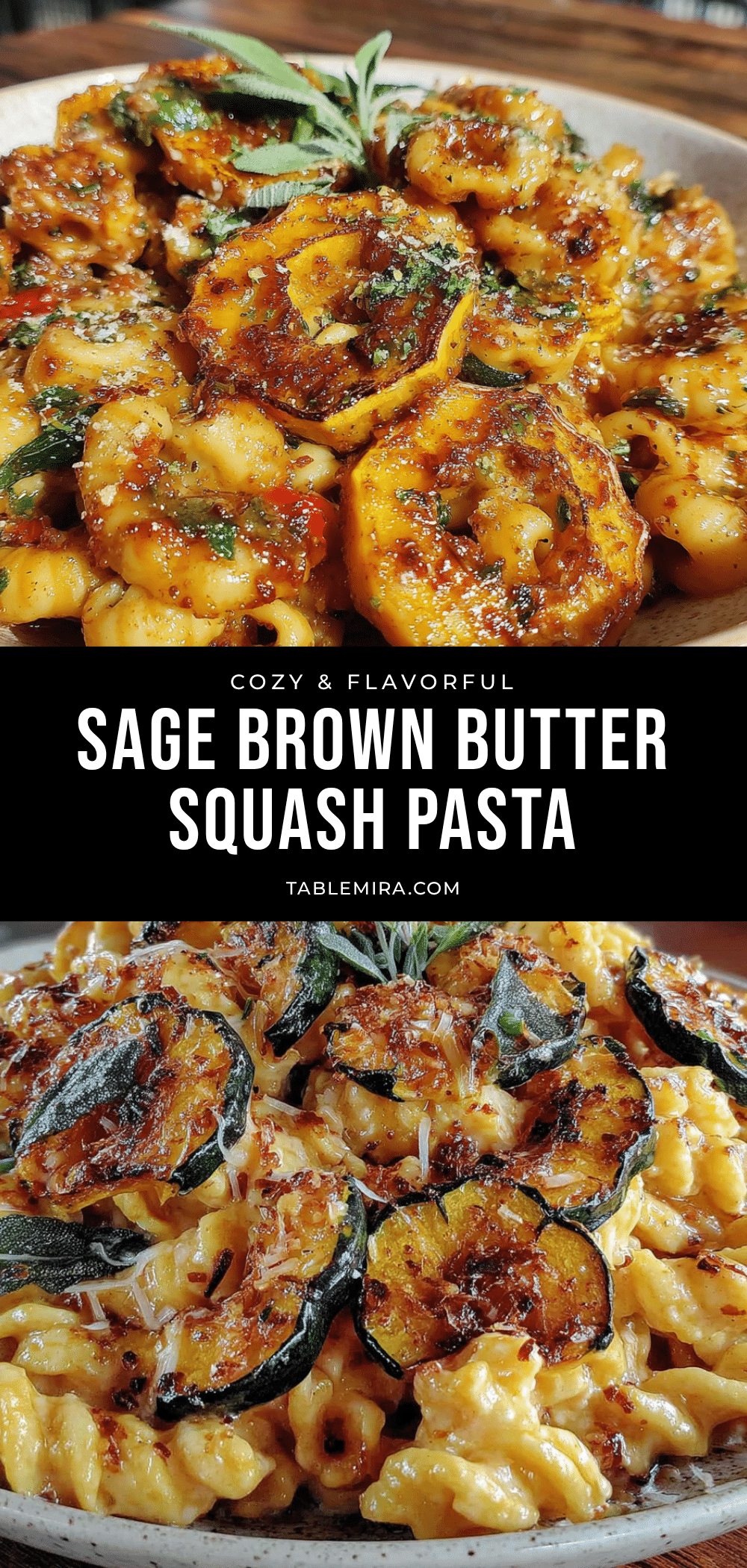
Cozy Delicata Squash and Sage Brown Butter Pasta
A quick and cozy pasta dish featuring roasted delicata squash, crispy sage, and nutty brown butter. Perfect for fall and winter weeknights, this recipe comes together in about 30 minutes with simple ingredients.
- Prep Time: 10 minutes
- Cook Time: 20 minutes
- Total Time: 30 minutes
- Yield: 4 servings 1x
- Category: Main Course
- Cuisine: Italian
Ingredients
- 2 medium delicata squash (about 1.5 lbs total)
- 2 tablespoons olive oil, plus more for drizzling
- Salt and black pepper to taste
- 4 tablespoons unsalted butter (half a stick)
- 15–20 fresh sage leaves
- 12 ounces pasta (orecchiette, farfalle, or rigatoni)
- 1/2 cup freshly grated Parmesan cheese
- 2 cloves garlic, thinly sliced
- 1/4 teaspoon red pepper flakes (optional)
- 1 tablespoon fresh lemon juice
- 1/4 cup toasted walnuts or pine nuts (optional)
Instructions
- Preheat oven to 400°F (200°C). Wash delicata squash, cut off stem and blossom ends, slice in half lengthwise, and scoop out seeds. Slice into half-moons about 1/2-inch thick.
- Place squash on a baking sheet, drizzle with olive oil, season with salt and pepper, and toss to coat. Spread in a single layer and roast for 15-20 minutes, flipping halfway, until golden brown and tender.
- While squash roasts, bring a large pot of salted water to a boil. Cook pasta according to package directions until al dente. Reserve 1 cup of pasta water before draining.
- In a large skillet, melt butter over medium heat. Swirl occasionally until it foams, then the foam subsides and brown specks form (about 3-4 minutes). When it smells nutty and is amber-colored, it’s ready.
- Immediately add sage leaves to the brown butter; they will sizzle and crisp in about 30 seconds. Use a slotted spoon to transfer them to a paper towel-lined plate.
- Add sliced garlic and red pepper flakes to the brown butter; cook for 30 seconds until fragrant. Add roasted squash slices and toss gently to coat.
- Add drained pasta to the skillet with squash and butter. Toss, adding splashes of reserved pasta water as needed to create a silky sauce (about 1/2 cup).
- Remove from heat and stir in freshly grated Parmesan until melted and creamy. Add lemon juice and toss again.
- Serve immediately, topped with crispy sage leaves, extra Parmesan, and toasted nuts if using.
Notes
For perfect brown butter, use a light-colored pan to see the color change. Don’t crowd the squash when roasting to ensure caramelization. Reserve more pasta water than you think you need—it’s liquid gold for adjusting sauce consistency. Add sage only after butter has browned to prevent burning. This dish is best served fresh.
Nutrition
- Serving Size: 1 serving (about 1/4
- Calories: 500
- Sugar: 9
- Sodium: 480
- Fat: 24
- Saturated Fat: 10
- Carbohydrates: 60
- Fiber: 7
- Protein: 15
Keywords: delicata squash, brown butter, sage, pasta, fall recipe, winter recipe, vegetarian pasta, quick dinner