I did not trust butternut squash in mac and cheese. Honestly, it sounded like one of those wellness blog tricks where you hide vegetables in things that don’t need hiding. Mac and cheese is perfect as it is—creamy, cheesy, unapologetically indulgent. Why mess with that?
Then my sister showed up at a family dinner with a big pot of orange pasta and told me to try it before saying anything. I took a bite (mostly to be polite), and something weird happened. I took another bite. Then I asked for the recipe. That was three years ago, and this creamy one pot butternut squash mac and cheese has been in steady rotation ever since.
The squash doesn’t make it taste healthy—it makes the sauce velvety without needing a ton of heavy cream. It adds this subtle sweetness that plays off the sharp cheddar, and the color is ridiculous. Like, sunset-orange ridiculous. The first time I made it for my kids, they didn’t even ask what was in it. They just ate it. That’s when I knew this recipe was sticking around.
Why You’ll Love This Recipe
This isn’t your average mac and cheese. It’s the kind of recipe that makes you feel like you’re getting away with something. Rich, creamy, deeply satisfying—but with a vegetable doing most of the heavy lifting in the sauce. Here is why this one stands out:
- One Pot Wonder : Everything cooks in a single pot. No boiling pasta separately, no draining, no extra dishes. That’s less time cleaning and more time eating.
- Hidden Veggie Magic : The butternut squash blends into the silkiest sauce you have ever had. Picky eaters won’t notice, and you will feel good about the extra nutrients.
- Ready in 30 Minutes : From start to finish, this comes together faster than takeout. Perfect for those nights when you need comfort food on the table, stat.
- Simple Pantry Ingredients : Nothing fancy here. If you have pasta, cheese, and a butternut squash (or even frozen cubes), you are good to go.
- Crowd-Pleaser Status : I have brought this to potlucks, served it for weeknight dinners, and even made it for Thanksgiving as a side dish. It disappears every single time.
What makes this recipe different is the technique. Instead of making a traditional roux-based cheese sauce, you blend the cooked squash with milk and cheese until it’s impossibly smooth. The result is a sauce that coats every piece of pasta without being gluey or heavy. It’s comfort food that actually feels good to eat—not just in the moment, but afterward too.
What Ingredients You Will Need
This recipe uses simple, wholesome ingredients to create something that tastes far more indulgent than it actually is. Most of these are pantry staples, and the ones that aren’t are easy to find.
- Butternut Squash : About 2 cups of peeled and cubed squash. You can buy pre-cut cubes to save time, or use frozen butternut squash in a pinch—just thaw and pat dry first. I prefer fresh for the best texture, but frozen works fine when squash isn’t in season.
- Elbow Macaroni : 8 ounces (about 2 cups). Any short pasta works here—shells, cavatappi, or rotini all hold the sauce beautifully.
- Vegetable Broth : 2 cups for cooking the pasta and squash together. Use low-sodium so you can control the salt level. Chicken broth works too if that is what you have.
- Milk : 1 cup of whole milk for the creamiest result. You can use 2% or even oat milk, but whole milk gives that luxurious texture. I have tested this with unsweetened almond milk, and it works but is noticeably thinner.
- Sharp Cheddar Cheese : 1 ½ cups shredded. Please shred your own cheese—pre-shredded bags have anti-caking agents that mess with the smoothness of the sauce. Extra sharp cheddar gives the most flavor, but mild works if that is your preference.
- Parmesan Cheese : ¼ cup grated. This adds a salty, nutty depth that rounds out the sweetness of the squash. I like using real Parmigiano-Reggiano when I can, but the stuff in the green can works in a pinch.
- Butter : 2 tablespoons. A little butter stirred in at the end makes everything taste richer. Use unsalted so you can adjust the salt.
- Garlic Powder : ½ teaspoon. Don’t use fresh garlic here—it can make the sauce taste sharp. Garlic powder blends in seamlessly.
- Onion Powder : ½ teaspoon. Same logic as the garlic powder. It adds savory depth without any raw bite.
- Dijon Mustard : 1 teaspoon. This is the secret ingredient you won’t taste directly, but it brightens the whole dish and makes the cheese taste cheesier. Trust me on this one.
- Salt and Black Pepper : To taste. Start with ½ teaspoon of salt and adjust at the end.
- Optional Toppings : Panko breadcrumbs toasted in butter, fresh thyme, or a sprinkle of smoked paprika. I usually add breadcrumbs for crunch, but it is totally optional.
Equipment Needed
The beauty of a one pot recipe is the minimal cleanup. Here is what you will need:
- Large Dutch Oven or Heavy-Bottomed Pot : A 5-6 quart pot with a lid is ideal. The heavy bottom prevents the milk from scorching. I have used my trusty enameled cast iron Le Creuset for years, but a stainless steel stockpot works just fine. If you are shopping on a budget, the Lodge enameled dutch oven is a solid choice that won’t break the bank.
- Immersion Blender or Regular Blender : You need something to puree the squash into the sauce. An immersion blender is easier because you can blend right in the pot. A regular blender works too, just work in batches and be careful with the hot liquid—never fill the blender more than halfway.
- Cutting Board and Sharp Knife : For cubing the squash. A good chef’s knife makes this job much less annoying.
- Wooden Spoon or Silicone Spatula : For stirring. Wooden spoons are great because they don’t scratch your pots.
- Cheese Grater : Please grate your own cheese. A box grater or microplane works perfectly.
- Measuring Cups and Spoons : Standard set for accuracy.
One tip: If you use an immersion blender, make sure your pot is deep enough to avoid splashing. I learned this the hard way when I blended too close to the surface and ended up with butternut squash sauce on my ceiling. Not my finest moment.
Preparation Method
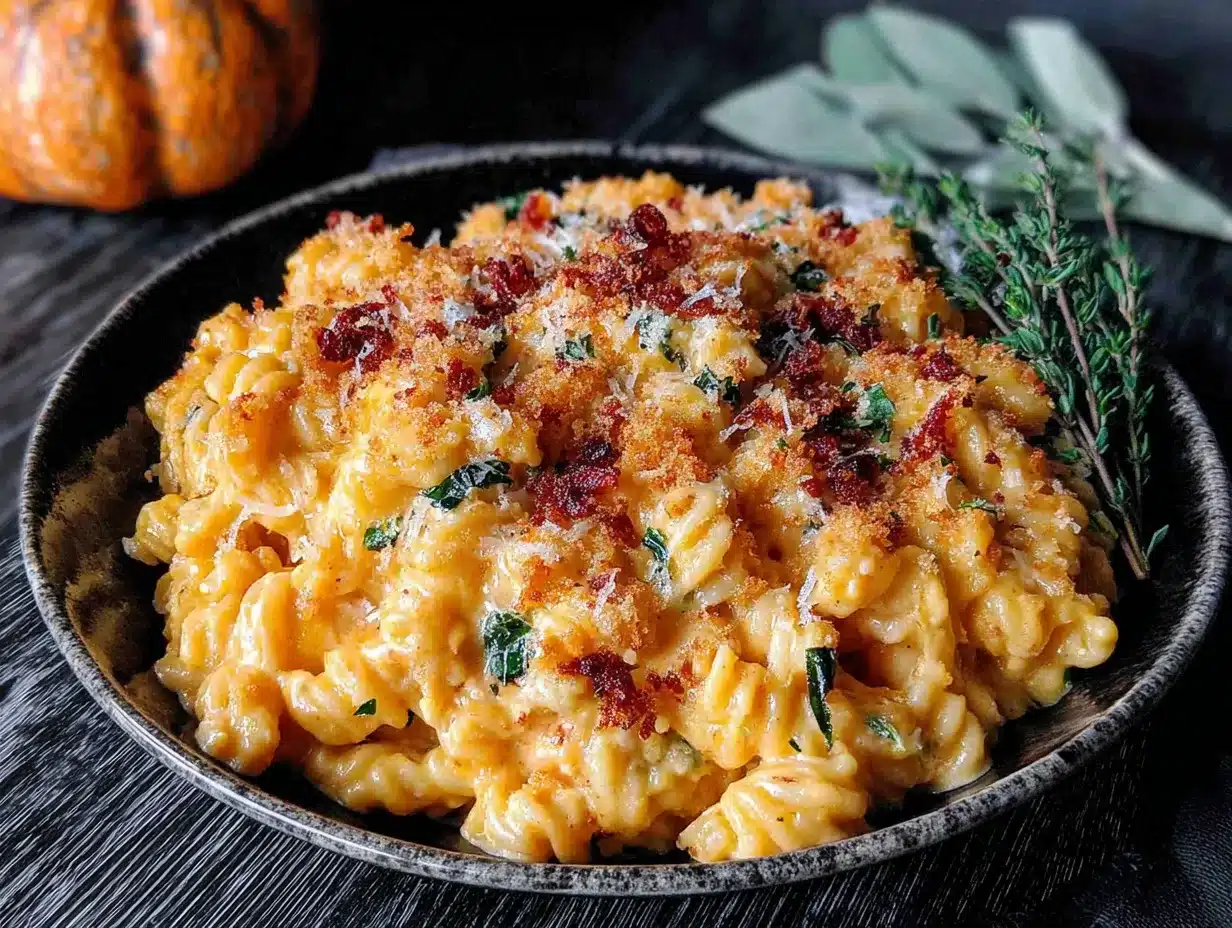
This comes together in one pot, but there is a specific order to follow for the best texture. Here is exactly how to do it:
- Prep the Squash : Peel the butternut squash with a vegetable peeler, then cut it in half lengthwise. Scoop out the seeds with a spoon. Cut the flesh into ½-inch cubes. You should have about 2 cups. If you are using pre-cut cubes, give them a quick rinse and pat them dry.
- Start Cooking : Place the cubed squash, dry macaroni, and vegetable broth in your large pot. Yes, the pasta goes in dry—it will cook in the broth and absorb all that flavor. Bring everything to a boil over medium-high heat.
- Simmer Together : Once boiling, reduce the heat to medium-low and cover the pot. Let it simmer for 10-12 minutes, stirring once or twice to make sure the pasta isn’t sticking to the bottom. The pasta should be al dente and the squash should be fork-tender. If the liquid looks a little low, add a splash more broth or water.
- Blend the Sauce : Remove the pot from the heat. Use your immersion blender to puree the squash and pasta mixture right in the pot. Blend until it is completely smooth—about 30-45 seconds. If you are using a regular blender, carefully transfer the mixture in batches and blend until smooth, then return it to the pot. Be patient here; a few extra seconds of blending makes a huge difference in texture.
- Add the Dairy : Place the pot back over low heat. Stir in the milk, Dijon mustard, garlic powder, onion powder, and a pinch of salt. Let it warm through for about a minute.
- Melt the Cheese : Gradually add the shredded cheddar and grated Parmesan, stirring constantly. Add the cheese in handfuls rather than all at once—this helps it melt evenly and prevents clumping. Keep stirring until the sauce is smooth and all the cheese has melted. This should take about 2 minutes.
- Finish with Butter : Stir in the butter until it melts completely. This adds gloss and richness. Taste and adjust salt and pepper. You might need more salt than you think—squash is sweet, and salt balances that out.
- Rest and Serve : Let the mac and cheese sit off the heat for 2-3 minutes before serving. This allows the sauce to thicken slightly and cling to the pasta. If you serve it immediately, it will be a bit looser, which is fine too.
The sauce will look a little thin right after blending, but trust the process. As it sits and the pasta absorbs some of the liquid, it thickens into that perfect creamy consistency. If it gets too thick overnight (which it will), just add a splash of milk when reheating.
Cooking Tips & Techniques
I have made this recipe more times than I can count, and I have definitely made my share of mistakes along the way. Here is what I have learned:
Don’t Overcook the Pasta in Step 3. The pasta will continue cooking after you blend it and add the cheese, so take it off the heat when it is just al dente. Mushy pasta ruins the texture of the whole dish.
Low Heat is Your Friend. When you add the milk and cheese, keep the heat on low. High heat can cause the dairy to separate and turn grainy. If you see tiny bubbles forming around the edges, the heat is too high. Pull it off the burner for a minute.
Season in Layers. Add a little salt at the beginning when cooking the pasta, then again after blending, and finally after adding the cheese. This builds depth of flavor that you can’t get from a single seasoning moment. I once forgot to salt the pasta water and ended up with bland mac and cheese—no amount of extra salt at the end could fix it.
Toast Your Breadcrumbs. If you are adding panko topping, toast them in a dry skillet over medium heat with a tablespoon of butter until golden brown. Sprinkle over the finished dish right before serving. The crunch against that creamy sauce is textural perfection.
Make it Ahead. This recipe is actually better the next day. The flavors meld together overnight, and the sauce gets even creamier. If you are meal prepping, make the full recipe, let it cool, and refrigerate. Reheat gently with a splash of milk.
One of my biggest failures was the time I tried to double the recipe in a pot that was too small. The pasta expanded, the sauce bubbled over, and I spent twenty minutes scrubbing burnt cheese off my stovetop. Use a big enough pot, and you will save yourself that headache.
Variations & Adaptations
This recipe is endlessly adaptable. Here are some ways to switch it up:
Make it Gluten-Free. Use your favorite gluten-free pasta—I like brown rice pasta or chickpea pasta for extra protein. Just note that gluten-free pasta can get mushy faster, so check it a minute or two earlier than the recipe suggests.
Add Protein. Stir in cooked shredded chicken, crispy bacon bits, or browned Italian sausage at the end. I have done this with leftover rotisserie chicken, and it turns the dish into a full meal. The honey garlic chicken breast recipe on this site would be incredible chopped and stirred in here.
Swap the Squash. Roasted sweet potato or carrot puree works beautifully in place of butternut squash. The flavor will be slightly different, but the creamy texture stays the same. I have even used canned pumpkin puree in a pinch—just make sure it is 100% pumpkin, not pumpkin pie filling.
Spice It Up. Add ¼ teaspoon of cayenne pepper or smoked paprika along with the garlic powder. A pinch of nutmeg also works wonders with the squash and cheese combo.
Make it Dairy-Free. Use unsweetened oat milk or cashew milk, and swap the cheeses for dairy-free alternatives. Look for a sharp dairy-free cheddar that melts well. The texture won’t be quite as creamy, but it is still delicious. I tested this with Violife cheddar, and my non-dairy-eating friends loved it.
Add Greens. Stir in a handful of fresh spinach or chopped kale right at the end, just until it wilts. It adds color and nutrients without changing the flavor much.
Serving & Storage Suggestions
This mac and cheese is best served warm, straight from the pot. The sauce is at its creamiest right after resting for a few minutes. Spoon it into bowls and top with toasted breadcrumbs, a sprinkle of fresh thyme, or a crack of black pepper.
For sides, a simple green salad with a lemon vinaigrette cuts through the richness beautifully. I also love serving it alongside roasted broccoli or a bowl of creamy roasted tomato basil soup for a cozy, soul-warming dinner. If you are feeling indulgent, pair it with some crispy roasted chicken thighs—the parmesan crusted chicken thighs are a fantastic match.
Storage: Let any leftovers cool completely, then transfer to an airtight container. It will keep in the refrigerator for up to 5 days. The sauce will thicken as it sits, so don’t be alarmed.
Reheating: The best way to reheat is on the stovetop over low heat with a splash of milk. Stir frequently until warmed through. The microwave works in a pinch, but it can make the sauce a little grainy. If microwaving, do it in 30-second bursts, stirring between each.
Freezing: This freezes surprisingly well. Portion it into freezer-safe containers, leaving a little room for expansion. Thaw overnight in the fridge and reheat on the stovetop with a splash of milk. I have frozen this for up to 3 months with no issues.
The flavors actually deepen after a day or two in the fridge. The squash and cheese meld together into something even more cohesive. I always make a double batch just so I have leftovers.
Nutritional Information & Benefits
Here is an approximate nutritional breakdown per serving (based on 6 servings):
- Calories: 385
- Protein: 16g
- Carbohydrates: 42g
- Fat: 18g
- Fiber: 4g
- Sugar: 6g
- Sodium: 520mg
These values will vary based on the exact ingredients and brands you use.
Butternut squash is packed with vitamin A (over 400% of your daily needs per cup), vitamin C, potassium, and fiber. It adds serious nutritional value to a dish that is usually just empty carbs and cheese. The squash also gives the sauce its creamy texture without needing as much heavy cream or butter as traditional mac and cheese.
This recipe is vegetarian as written. To make it gluten-free, use gluten-free pasta. It is also relatively low in added sugar—only what is naturally in the milk and squash. If you are watching your sodium, use low-sodium broth and skip the added salt until the very end.
I personally love that I can serve this to my family and feel good about what they are eating. It is comfort food that doesn’t come with a side of guilt. That is a win in my book.
Conclusion
This creamy one pot butternut squash mac and cheese has become a staple in my kitchen for good reason. It is quick, it is easy, and it delivers on every level—flavor, texture, and that warm, cozy feeling that only mac and cheese can provide.
I love that I can make it on a busy Tuesday night without stressing about a sink full of dishes. I love that my kids eat it without complaint. And I really love that I can feel good about serving it, knowing that butternut squash is doing some heavy lifting behind the scenes.
Try it once, and I think you will understand why this recipe stuck with me after that first bite at my sister’s table. It is comfort food, reimagined. Give it a shot, and let me know how it turns out. Did you add any fun variations? Did your picky eaters notice the squash? Drop a comment below—I genuinely love hearing about your kitchen adventures.
Happy cooking, friends.
Frequently Asked Questions
Can I use frozen butternut squash for this recipe?
Yes, absolutely. Frozen butternut squash cubes work perfectly. Just thaw them first and pat them dry with a paper towel to remove excess moisture. This helps the sauce stay creamy instead of watery.
Why did my sauce turn out grainy?
Grainy sauce usually happens when the heat is too high when melting the cheese, or when pre-shredded cheese is used. Always use low heat and freshly grated cheese for the smoothest result. If it does get grainy, try blending it again with an immersion blender—sometimes that saves it.
Can I make this recipe vegan?
You can! Use unsweetened oat milk or cashew milk, dairy-free cheddar shreds, and vegan butter. Nutritional yeast (about 2 tablespoons) adds a cheesy flavor that helps bridge the gap. The texture will be slightly less creamy, but it is still really good.
How do I prevent the pasta from sticking to the bottom of the pot?
Stir the pot once or twice during the initial simmering stage. Make sure there is enough liquid to cover the pasta and squash. If it looks dry, add a splash more broth. A heavy-bottomed pot also helps distribute heat evenly and prevents scorching.
Can I add other vegetables to this mac and cheese?
Definitely. Finely diced broccoli florets, peas, or chopped spinach all work well. Add them in the last 2-3 minutes of cooking the pasta so they soften slightly but don’t get mushy. Roasted cauliflower blended into the sauce is another great option.
Pin This Recipe!
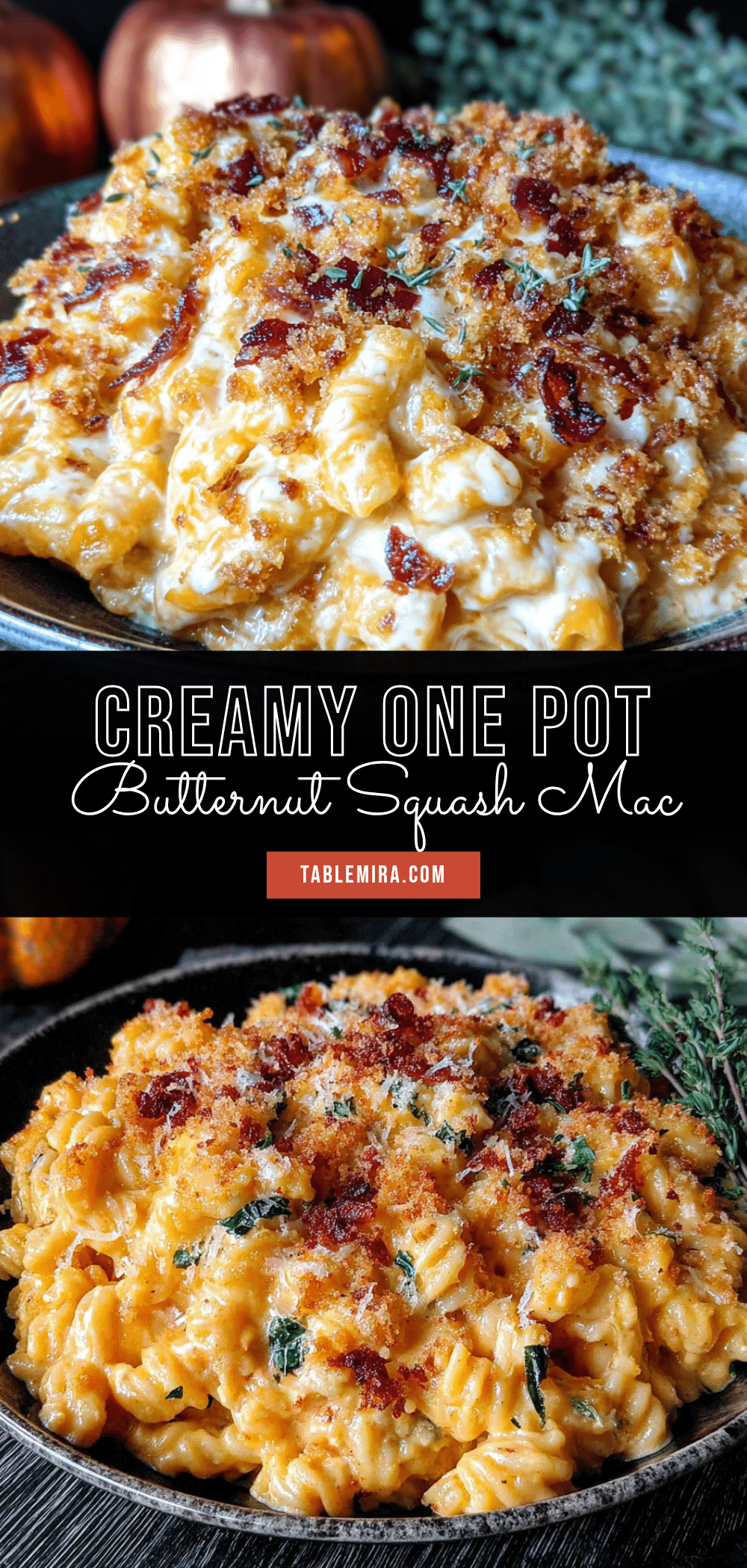
Creamy One Pot Butternut Squash Mac and Cheese (Easy & Healthy)

This creamy one pot butternut squash mac and cheese is a quick, easy, and healthy twist on a classic comfort food. The squash creates a velvety sauce without heavy cream, and everything cooks in a single pot for minimal cleanup.
- Prep Time: 10 minutes
- Cook Time: 20 minutes
- Total Time: 30 minutes
- Yield: 6 servings 1x
- Category: Main Course
- Cuisine: American
Ingredients
- 2 cups butternut squash, peeled and cubed (about ½-inch cubes)
- 8 ounces elbow macaroni (about 2 cups)
- 2 cups vegetable broth (low-sodium)
- 1 cup whole milk
- 1 ½ cups sharp cheddar cheese, freshly shredded
- ¼ cup Parmesan cheese, grated
- 2 tablespoons unsalted butter
- ½ teaspoon garlic powder
- ½ teaspoon onion powder
- 1 teaspoon Dijon mustard
- Salt and black pepper to taste
- Optional: panko breadcrumbs, fresh thyme, smoked paprika for topping
Instructions
- Prep the squash: Peel the butternut squash, cut in half lengthwise, scoop out seeds, and cut into ½-inch cubes. You should have about 2 cups.
- Place cubed squash, dry macaroni, and vegetable broth in a large pot. Bring to a boil over medium-high heat.
- Reduce heat to medium-low, cover, and simmer for 10-12 minutes, stirring once or twice, until pasta is al dente and squash is fork-tender.
- Remove pot from heat. Use an immersion blender to puree the mixture right in the pot until completely smooth (30-45 seconds). If using a regular blender, carefully blend in batches.
- Return pot to low heat. Stir in milk, Dijon mustard, garlic powder, onion powder, and a pinch of salt. Warm through for about 1 minute.
- Gradually add shredded cheddar and grated Parmesan, stirring constantly, until cheese is fully melted and sauce is smooth (about 2 minutes).
- Stir in butter until melted. Taste and adjust salt and pepper as needed.
- Let mac and cheese rest off the heat for 2-3 minutes before serving. Sauce will thicken as it sits.
Notes
For best results, shred your own cheese to avoid anti-caking agents. Use low heat when melting cheese to prevent graininess. The sauce will thicken as it sits; add a splash of milk when reheating. This recipe is vegetarian as written; for gluten-free, use gluten-free pasta. Leftovers keep in the refrigerator for up to 5 days and freeze well for up to 3 months.
Nutrition
- Serving Size: 1 serving
- Calories: 385
- Sugar: 6
- Sodium: 520
- Fat: 18
- Saturated Fat: 10
- Carbohydrates: 42
- Fiber: 4
- Protein: 16
Keywords: butternut squash mac and cheese, one pot mac and cheese, healthy mac and cheese, easy mac and cheese, vegetarian mac and cheese, creamy mac and cheese