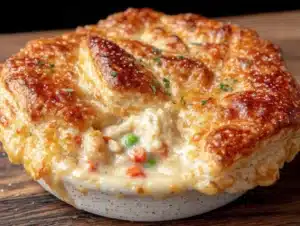
My husband took one bite and just stared at his fork for a second. Not in a dramatic way, more like he was trying to figure out why a Tuesday night pasta tasted like something you’d pay twenty bucks for at a nice restaurant. I was half-waiting for criticism, honestly—I’d thrown this together in a mild panic after a long work day, using up odds and ends in the fridge. He asked for it again three days later. And then again the next week. That’s when I knew this Creamy One-Pot Garlic Parmesan Chicken Pasta wasn’t just a happy accident. It was a keeper.
This recipe started as one of those nights where you stare into the pantry hoping for inspiration to strike. I had chicken thighs, some pasta, a wedge of Parmesan that was getting brave, and heavy cream that needed using. The one-pot promise was non-negotiable—I was not about to boil pasta separately and dirty another pot. So I took a breath, trusted my instincts, and started cooking. What came together was so ridiculously good that I actually wrote it down immediately, which is something I rarely do unless it’s really special.
The garlic gets all sweet and mellow as it cooks down into the cream, and the Parmesan melts into this velvety sauce that coats every single piece of pasta perfectly. There’s no flour or cornstarch involved—the pasta itself releases enough starch to thicken everything naturally. It’s the kind of meal that feels luxurious but comes together in about 30 minutes, and honestly, that’s my favorite kind of cooking. Let me show you exactly how it works.
Why You’ll Love This Recipe
I’ve tested this recipe more times than I care to admit, tweaking little things each round until it felt absolutely right. Here’s why I keep coming back to it—and why I think you will too.
- One Pot, Minimal Mess : Everything cooks in a single skillet or Dutch oven. No separate pot for pasta, no colander to wash, no extra saucepans. Dinner is ready and cleanup takes five minutes flat.
- Ready in 30 Minutes : From the moment you start heating your pan to the moment you’re sitting down to eat, it’s about half an hour. Perfect for those evenings when you need something satisfying but don’t have time to mess around.
- Pantry-Friendly Ingredients : Chicken, pasta, garlic, cream, Parmesan, broth, and a few seasonings. That’s it. No trips to a specialty store or weird ingredients you’ll never use again.
- Restaurant-Quality Flavor : The sauce is genuinely creamy without being gluey, and the garlic-Parmesan combo is just chef’s kiss. It feels indulgent but isn’t complicated at all.
- Crowd-Pleasing Magic : I’ve served this to picky kids, in-laws, and friends who claim they don’t cook—everyone goes back for seconds. It’s one of those rare recipes that works for a quiet weeknight dinner or when you’re trying to impress someone.
What really sets this apart from other creamy chicken pasta recipes is the technique. Instead of making a separate sauce and mixing it with pasta, you cook everything together so the pasta absorbs all that garlicky, chicken-y goodness as it simmers. The starch from the pasta naturally thickens the liquid into a sauce that clings to every piece without being heavy. It’s not just another recipe—it’s the version I’ve perfected after many, many bowls.
What Ingredients You Will Need
This recipe uses simple, honest ingredients that work together to create something genuinely special. Most of these are probably already in your kitchen, which is exactly how I like to cook.
- 1 ½ pounds boneless, skinless chicken thighs (or breasts, but thighs stay juicier) — I prefer thighs here because they don’t dry out during simmering. If using breasts, keep an eye on them and pull them out a minute or two earlier.
- 2 tablespoons olive oil — For searing the chicken. Use a good-quality extra virgin if you have it, but regular works fine.
- 4 tablespoons unsalted butter — Adds richness and helps sauté the garlic without burning it.
- 6 cloves garlic, minced — Yes, six. This is not the time to be shy with garlic. It mellows beautifully as it cooks.
- 1 cup heavy cream — The backbone of the sauce. For a lighter version, you can use half-and-half, but the sauce won’t be quite as lush.
- 3 cups low-sodium chicken broth — I use Swanson’s unsalted so I can control the salt level myself. Homemade broth works beautifully too.
- 12 ounces short pasta (penne, rigatoni, or fusilli) — Short shapes work best because they cook evenly and catch the sauce in their nooks. I’m partial to rigatoni here.
- 1 cup freshly grated Parmesan cheese — Please, please grate it yourself. The pre-shredded stuff has anti-caking agents that prevent smooth melting. You’ll notice a huge difference.
- ½ teaspoon salt — Plus more to taste. Start with less and adjust at the end.
- ½ teaspoon black pepper — Freshly ground if you can manage it.
- ½ teaspoon red pepper flakes (optional) — Adds a gentle warmth without making it spicy. I add this most of the time.
- 1 teaspoon dried Italian seasoning — Or a mix of dried oregano, basil, and thyme if that’s what you have.
- 2 tablespoons fresh parsley, chopped — For garnish. Adds a pop of color and freshness that cuts through the richness.
- Fresh lemon juice (optional, from half a lemon) — A tiny squeeze at the end brightens everything up. I do this almost every time now.
I really recommend sticking with the heavy cream for the first time you make this. I tried it once with whole milk and Greek yogurt when I was out of cream, and honestly, it curdled a bit and the sauce wasn’t nearly as silky. Learn from my mistake! The cream is worth it for the texture alone.
As for the Parmesan, I’ve tested this with Grana Padano and Pecorino Romano too. Both work, but Pecorino is saltier, so adjust your salt accordingly. Grana Padano is milder and creamier—a lovely swap if you happen to have it on hand.
Equipment Needed
One of the best things about this recipe is how little equipment it requires. Here’s what you’ll need:
- Large Dutch oven or deep skillet (5 to 6 quarts) — A heavy-bottomed pot distributes heat evenly and prevents scorching. I use my trusty enameled cast iron Le Creuset, but any heavy pot works. A deep nonstick skillet is also fine.
- Wooden spoon or silicone spatula — For stirring and scraping up the browned bits from the bottom of the pan. Those bits are pure flavor.
- Chef’s knife and cutting board — For mincing garlic and chopping parsley.
- Microplane or box grater — For grating Parmesan. A microplane gives you fluffy, fine shreds that melt instantly.
- Measuring cups and spoons — For accuracy, especially with the liquid ingredients.
- Tongs — For flipping the chicken and serving the pasta.
- Lid for your pot — You’ll need this during the simmering stage.
If you don’t have a Dutch oven, a large stainless steel skillet with high sides works beautifully. Just make sure it’s at least 3 inches deep so nothing splashes over. I’ve even made this in a large nonstick wok in a pinch—it worked surprisingly well, though the sauce reduced a bit faster than usual.
Preparation Method
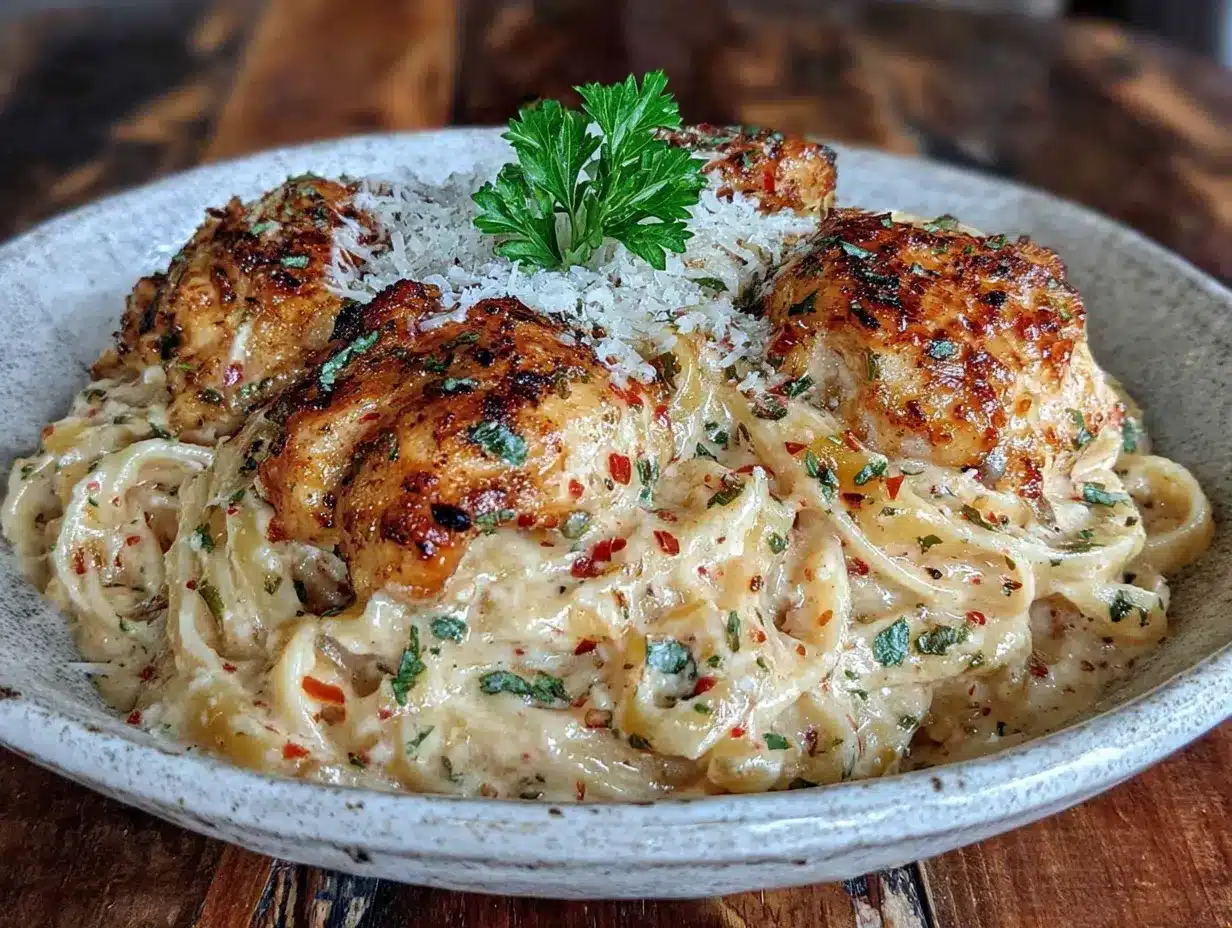
Let me walk you through this step by step. I’ve included all the little details I wish someone had told me the first time I made it.
- Prep your ingredients first. Mince the garlic, grate the Parmesan, chop the parsley, and measure out your cream and broth. Having everything ready makes the process so much smoother. Pat the chicken thighs dry with paper towels and season both sides with salt and pepper.
- Heat the olive oil in your Dutch oven or deep skillet over medium-high heat. You want the oil shimmering but not smoking. Add the chicken thighs in a single layer—don’t crowd them. If your pot is too small, cook them in two batches. Let them sear without moving for 4-5 minutes until the underside is deep golden brown. Flip and cook another 4 minutes. The chicken won’t be fully cooked through yet, and that’s okay. Transfer the chicken to a plate and set aside.
- Reduce the heat to medium and add the butter. Let it melt, then add the minced garlic. Stir constantly for about 30-45 seconds until it’s fragrant but not browned. Burnt garlic turns bitter, so keep it moving. If the garlic starts browning too fast, take the pot off the heat for a few seconds.
- Pour in the chicken broth and use your wooden spoon to scrape up all those lovely browned bits from the bottom of the pot. This is called deglazing, and it’s where so much flavor lives. Don’t skip this step—those bits are gold.
- Add the heavy cream, salt, pepper, red pepper flakes, and Italian seasoning to the pot. Stir everything together until smooth. Bring the liquid to a gentle boil.
- Stir in the pasta and return the chicken thighs to the pot, nestling them into the liquid. They’ll finish cooking as the pasta simmers. Reduce the heat to maintain a steady simmer—not a rolling boil, but a gentle bubble. Cover the pot with the lid slightly ajar.
- Cook for 12-14 minutes, stirring occasionally to prevent the pasta from sticking to the bottom. The pasta should be tender and most of the liquid should be absorbed into a creamy sauce. If the pot looks dry before the pasta is done, add a splash more broth or water. If it’s too liquidy at the end, let it simmer uncovered for another minute or two.
- Remove the chicken thighs to a cutting board. Use two forks to shred them into bite-sized pieces, or slice them if you prefer. Return the chicken to the pot.
- Turn off the heat and sprinkle the grated Parmesan over the pasta. Stir gently until the cheese is fully melted and the sauce is silky and smooth. The residual heat will do the work—you don’t need to keep cooking.
- Taste and adjust seasoning. Add a squeeze of fresh lemon juice if you like a little brightness. Sprinkle with fresh parsley and serve immediately while it’s hot and creamy.
A quick note about the sauce consistency: it will look a bit loose when you first add the Parmesan, but it thickens beautifully as it sits for a minute or two. Don’t be tempted to add more cheese or cook it longer—just let it rest briefly before serving.
Cooking Tips & Techniques
After making this recipe probably twenty times (no exaggeration), I’ve picked up a few things that make a real difference. Here are my best tips:
Don’t rush the sear on the chicken. I know it’s tempting to flip it early, but that golden-brown crust is where so much flavor comes from. Let it develop a deep color before you touch it. If it sticks to the pan, it’s not ready to flip—give it another minute.
Keep an eye on your heat level. Medium heat is your friend here. If you cook the sauce on high, the cream can separate and you’ll end up with a grainy texture instead of a silky one. Low and slow is the way to go once the cream goes in.
Grate your own Parmesan. I cannot stress this enough. Pre-shredded cheese has cellulose and other anti-caking agents that prevent it from melting smoothly. You’ll end up with a clumpy, gritty sauce instead of that velvety finish. A block of good Parmesan and a microplane takes two minutes and makes all the difference.
Watch the pasta closely toward the end of cooking. Different brands and shapes of pasta absorb liquid at different rates. Start checking for doneness around the 10-minute mark. You want it al dente—firm to the bite but cooked through. Remember that it will continue to soften slightly after you turn off the heat.
If your sauce is too thick by the time the pasta is done, stir in a splash of warm broth or milk to loosen it up. If it’s too thin, let it simmer uncovered for a couple more minutes. The starch from the pasta will continue to thicken it as it sits.
I once made the mistake of adding the garlic too early and letting it burn while I was distracted by my phone. The whole pot had this bitter, acrid taste that I couldn’t fix. Now I prep everything before I even turn on the stove, and I don’t walk away from the pan when the garlic is in. Learn from my mistakes!
Variations & Adaptations
One of the things I love about this recipe is how adaptable it is. Here are some variations I’ve tried and loved:
Vegetarian Version : Skip the chicken and add a can of drained chickpeas or white beans along with the pasta. Use vegetable broth instead of chicken broth. The beans add protein and creaminess without any meat. I’ve also added sautéed mushrooms for extra umami—they’re wonderful here.
Add Some Greens : Stir in a few handfuls of fresh spinach or kale during the last 2 minutes of cooking. The heat will wilt them down beautifully. Broccoli florets work too—add them with the pasta so they cook together. This is my go-to when I want to feel slightly virtuous about eating creamy pasta.
Make It Spicy : Double the red pepper flakes or add a finely chopped jalapeño along with the garlic. For extra heat, drizzle with chili oil before serving. My husband loves it this way—he adds hot sauce to basically everything anyway.
Lighter Version : Swap the heavy cream for half-and-half or evaporated milk, and use chicken breast instead of thighs. The sauce won’t be quite as luxurious, but it’s still really good. I’ve also used a mixture of milk and a tablespoon of cream cheese—surprisingly effective.
Different Protein Options : This works beautifully with Italian sausage (remove the casings and brown it like ground meat), shrimp (add during the last 5 minutes), or even leftover rotisserie chicken stirred in at the end. I’ve made it with all of these and each version is delicious in its own way.
Gluten-Free Adaptation : Use your favorite gluten-free pasta. Just be aware that gluten-free pasta absorbs liquid differently—check it a couple minutes early and add extra broth if needed. I’ve had good luck with brown rice pasta here.
Serving & Storage Suggestions
This pasta is best served immediately while it’s hot and the sauce is at its creamiest. I like to serve it in shallow bowls with a generous sprinkle of fresh parsley and extra Parmesan on top. A side of crusty bread is almost mandatory—you’ll want something to soak up any leftover sauce in the bowl.
For a complete meal, pair it with a simple green salad dressed with lemon vinaigrette. The acidity cuts through the richness of the pasta beautifully. If you’re feeling extra, try it alongside some fresh garlic Parmesan zucchini noodles with brown butter tomatoes for a lighter veggie side that echoes the flavors in the main dish. Or start with a bowl of quick spicy ramen with a creamy soft-boiled egg for a fun, unexpected appetizer that your guests will talk about.
Storage : Leftovers keep well in an airtight container in the refrigerator for up to 3 days. The sauce will thicken as it sits because the pasta continues to absorb liquid. When reheating, add a splash of milk or broth to loosen it back up to a creamy consistency.
Reheating : The best way to reheat this is on the stovetop over medium-low heat, stirring gently and adding a little liquid as needed. You can also microwave individual portions in 30-second bursts, stirring between each. Just know that the texture won’t be quite as silky as the first time around.
Freezing : I don’t recommend freezing this dish because the cream sauce can separate and become grainy when thawed. If you absolutely must freeze it, undercook the pasta by a minute or two and expect the texture to be different after thawing. It’s really best enjoyed fresh.
Interestingly, the flavors actually deepen overnight. The garlic and Parmesan meld together even more, and some people (including me) actually like the leftovers better the next day. Just add that splash of liquid when reheating and you’re golden.
Nutritional Information & Benefits
Here’s the approximate nutritional breakdown per serving (based on 6 servings):
| Nutrient | Amount Per Serving |
|---|---|
| Calories | 580 |
| Protein | 35g |
| Fat | 32g |
| Saturated Fat | 16g |
| Carbohydrates | 42g |
| Fiber | 2g |
| Sugar | 4g |
| Sodium | 680mg |
| Calcium | 280mg |
| Iron | 2.5mg |
This recipe provides a solid amount of protein from the chicken and Parmesan, which helps keep you full and satisfied. The calcium from the cheese and cream is great for bone health, and the garlic offers anti-inflammatory benefits. Chicken thighs are also a good source of B vitamins and selenium.
If you’re watching your sodium, use low-sodium broth and go easy on the added salt—the Parmesan brings plenty of saltiness on its own. For a lower-calorie option, the lighter version mentioned above works well. This recipe is not suitable for those with dairy allergies or lactose intolerance unless you use dairy-free substitutes (the texture will differ).
For a balanced meal, I like serving this with a big handful of greens on the side or adding vegetables directly into the pot. It’s comfort food, yes, but it can absolutely be part of a nourishing dinner rotation.
Conclusion
This Creamy One-Pot Garlic Parmesan Chicken Pasta has become my go-to for so many reasons. It’s the recipe I turn to when I’m tired, when I’m short on time, when I want to impress someone without breaking a sweat, and when I just need a bowl of something warm and satisfying. The fact that it all cooks in one pot and takes about 30 minutes feels almost like cheating.
What I love most is how forgiving it is. You can swap in different pasta shapes, use whatever chicken you have, add vegetables, adjust the spice level—it adapts to whatever you have on hand and still turns out delicious. That’s the mark of a truly great recipe in my book.
I’d love to hear how this turns out for you. Did you add any twists? Serve it with something special? Make it for someone who asked for the recipe? Drop a comment below and let me know—I read every single one and I genuinely love hearing about your kitchen adventures. And if you’re looking for another quick weeknight dinner that delivers big flavor, you might enjoy this easy chipotle-style chicken burrito bowl—it’s another one of my favorites for busy nights.
Happy cooking, friends. Go make something creamy and wonderful.
Frequently Asked Questions
Can I use chicken breasts instead of thighs?
Absolutely. Chicken breasts work fine, but they can dry out more easily since they have less fat. Cook them just until they reach 165°F internally, then pull them out. I recommend slicing them instead of shredding for better texture with breasts.
What’s the best pasta shape for this recipe?
Short pasta shapes with ridges or holes work best because they catch the creamy sauce. Rigatoni, penne, fusilli, and farfalle are all excellent choices. I’d avoid long pasta like spaghetti or linguine—they don’t cook as evenly in the one-pot method.
Why did my sauce turn out grainy?
Grainy sauce usually happens for one of two reasons: the heat was too high (causing the cream to separate) or the Parmesan was pre-shredded (the anti-caking agents prevent smooth melting). Keep the heat at a gentle simmer and always grate your Parmesan fresh from a block.
Can I add vegetables to this dish?
Yes! Spinach, kale, broccoli, peas, mushrooms, and sun-dried tomatoes all work beautifully. Add heartier vegetables like broccoli with the pasta so they have time to cook. Stir in delicate greens like spinach during the last 2 minutes of cooking.
How do I make this dairy-free?
Use full-fat canned coconut milk instead of heavy cream, dairy-free butter or olive oil, and a dairy-free Parmesan alternative. The flavor will be different—coconut milk adds a slight sweetness—but it’s still creamy and delicious. Nutritional yeast can help replace some of the cheesy flavor.
Pin This Recipe!
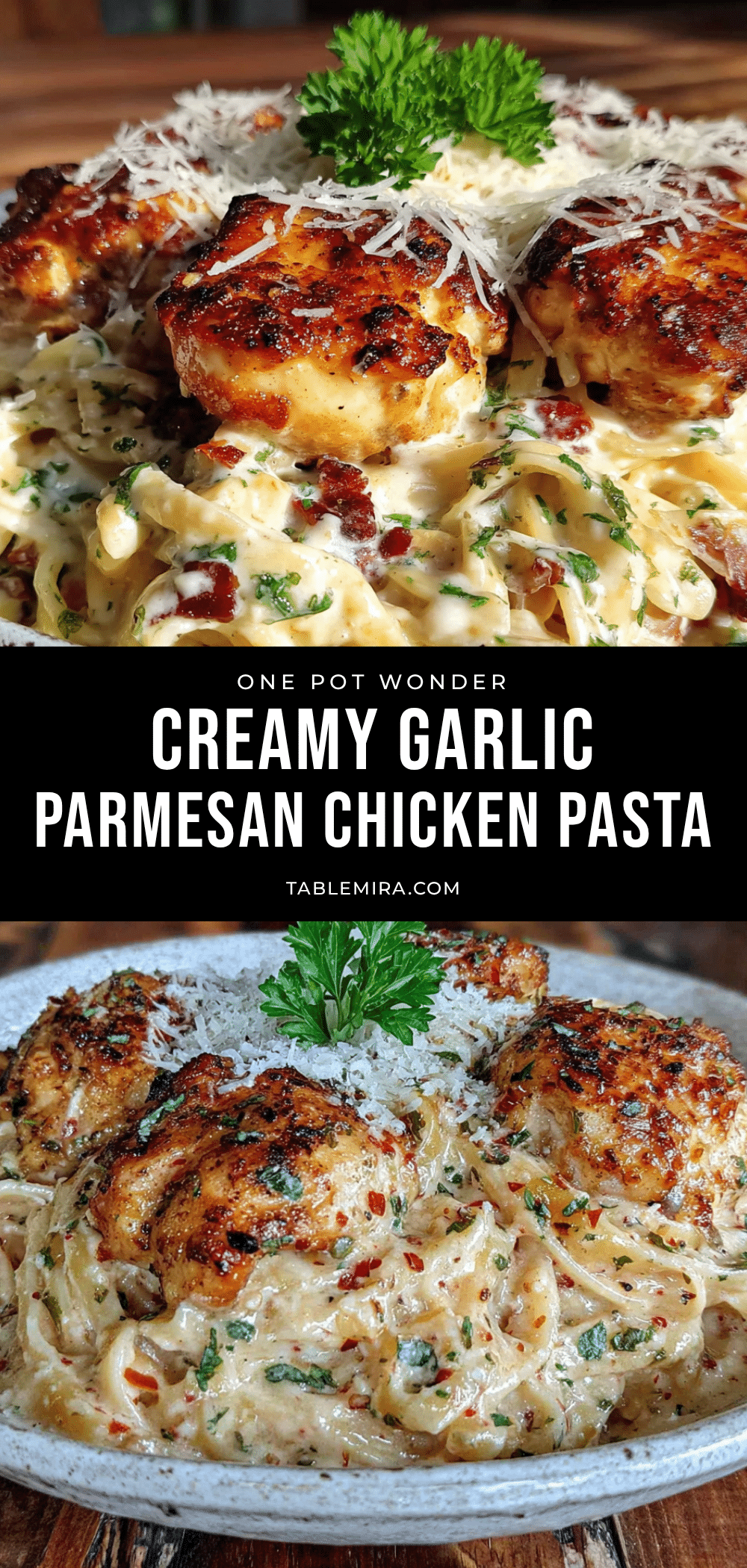
Creamy One-Pot Garlic Parmesan Chicken Pasta (Easy Dinner)
A rich and creamy one-pot pasta with tender chicken, garlic, and Parmesan that comes together in about 30 minutes. Perfect for busy weeknights, this dish delivers restaurant-quality flavor with minimal cleanup.
- Prep Time: 10 minutes
- Cook Time: 20 minutes
- Total Time: 30 minutes
- Yield: 6 servings 1x
- Category: Main Course
- Cuisine: Italian-American
Ingredients
- 1 ½ pounds boneless, skinless chicken thighs (or breasts)
- 2 tablespoons olive oil
- 4 tablespoons unsalted butter
- 6 cloves garlic, minced
- 1 cup heavy cream
- 3 cups low-sodium chicken broth
- 12 ounces short pasta (penne, rigatoni, or fusilli)
- 1 cup freshly grated Parmesan cheese
- ½ teaspoon salt
- ½ teaspoon black pepper
- ½ teaspoon red pepper flakes (optional)
- 1 teaspoon dried Italian seasoning
- 2 tablespoons fresh parsley, chopped
- Fresh lemon juice (optional, from half a lemon)
Instructions
- Prep your ingredients first. Mince the garlic, grate the Parmesan, chop the parsley, and measure out your cream and broth. Pat the chicken thighs dry with paper towels and season both sides with salt and pepper.
- Heat the olive oil in your Dutch oven or deep skillet over medium-high heat. Add the chicken thighs in a single layer and sear without moving for 4-5 minutes until deep golden brown. Flip and cook another 4 minutes. Transfer the chicken to a plate and set aside.
- Reduce the heat to medium and add the butter. Let it melt, then add the minced garlic. Stir constantly for about 30-45 seconds until fragrant but not browned.
- Pour in the chicken broth and use your wooden spoon to scrape up the browned bits from the bottom of the pot.
- Add the heavy cream, salt, pepper, red pepper flakes, and Italian seasoning. Stir until smooth. Bring the liquid to a gentle boil.
- Stir in the pasta and return the chicken thighs to the pot, nestling them into the liquid. Reduce the heat to maintain a steady simmer. Cover the pot with the lid slightly ajar.
- Cook for 12-14 minutes, stirring occasionally, until the pasta is tender and most of the liquid is absorbed into a creamy sauce.
- Remove the chicken thighs to a cutting board. Shred or slice them, then return to the pot.
- Turn off the heat and sprinkle the grated Parmesan over the pasta. Stir gently until the cheese is fully melted and the sauce is silky.
- Taste and adjust seasoning. Add a squeeze of fresh lemon juice if desired. Sprinkle with fresh parsley and serve immediately.
Notes
For best results, grate Parmesan fresh from a block—pre-shredded cheese contains anti-caking agents that prevent smooth melting. Keep heat at a gentle simmer once cream is added to avoid graininess. The sauce will thicken as it sits; add a splash of broth or milk when reheating leftovers.
Nutrition
- Serving Size: 1 serving (about 1.5
- Calories: 580
- Sugar: 4
- Sodium: 680
- Fat: 32
- Saturated Fat: 16
- Carbohydrates: 42
- Fiber: 2
- Protein: 35
Keywords: one-pot pasta, creamy chicken pasta, garlic parmesan pasta, easy dinner, 30-minute meal, weeknight dinner