I want a Sunday dinner that feels like a holiday but doesn’t require me to spend all day in the kitchen. That’s the thought that hit me around 10 AM last Saturday, standing in front of my open fridge with the door slowly fogging up. I had a beautiful bone-in turkey breast thawed and ready, a bunch of rosemary threatening to wilt, and potatoes rolling around in the bottom drawer. The craving was specific—something sweet and savory, with crispy edges and tender meat that pulls apart with a fork. Honey glazed turkey breast with rosemary potatoes. Not a whole bird, just the best part. And I wanted it perfect.
Here’s the thing about turkey breast—it’s forgiving in ways a whole turkey isn’t. It cooks faster, stays moister, and you don’t have to wrestle with dark meat versus white meat preferences. But it can still go wrong. Dry, bland, rubbery. I’ve been there. I’ve served turkey that needed a gallon of gravy to be edible. Not this time.
I wanted a glaze that would caramelize into something sticky and golden, not just slide off the meat. I wanted potatoes that would soak up those pan drippings and come out crispy on the outside, fluffy on the inside. I wanted a recipe that would make people close their eyes after the first bite—the kind of quiet that tells you everything you need to know.
So I started testing. Three different honey-to-butter ratios. Two different roasting temperatures. A few different herb combinations. And what I landed on is this recipe right here. It’s the one I keep coming back to, the one that’s earned a permanent spot in my fall and winter rotation. It’s honest food that delivers exactly what it promises.
Why You’ll Love This Recipe
This isn’t just another roasted turkey breast recipe. It’s the one that solves the problems you didn’t realize you were having. Let me break it down for you.
- Quick & Easy: From prep to plate in under 2 hours, with only 15 minutes of active hands-on time. Perfect for a Sunday dinner that feels special without the all-day commitment.
- Simple Ingredients: You probably have most of these in your kitchen right now. Honey, butter, rosemary, garlic, potatoes, salt, pepper. No weird specialty items that you’ll use once and forget about.
- Perfect for Entertaining: This is your holiday dinner without the stress of a whole turkey. Smaller group? Weeknight craving? Impromptu dinner party? This recipe handles it all.
- Crowd-Pleaser: I’ve served this to picky kids, turkey skeptics, and serious food people. Everyone goes back for seconds. The honey glaze hits that sweet spot—literally—that appeals to all ages.
- Unbelievably Delicious: The honey caramelizes into a sticky, golden crust. The rosemary infuses everything with that woodsy, aromatic flavor. The potatoes soak up the pan juices and come out crispy-edged and tender. It’s comfort food that feels elevated but isn’t fussy.
What makes this recipe different? It’s the technique. Most recipes either roast the turkey dry and add glaze at the end, or they baste constantly and lose heat from the oven. I developed a two-step method—roast the turkey breast uncovered to develop that golden skin, then glaze and finish under high heat to caramelize the honey without burning it. The potatoes go in underneath, catching all those drippings. It’s smart cooking that works every time.
This is the kind of recipe that makes you look like a hero in the kitchen. The kind that gets requested for holidays and birthdays. The kind that becomes your signature dish. And honestly? It’s simple enough that you’ll make it on a random Tuesday, just because you want something good.
What Ingredients You Will Need
This recipe uses straightforward ingredients that come together to create something greater than the sum of their parts. Here’s what you’ll need and why each one matters.
For the Turkey & Glaze
- 1 bone-in, skin-on turkey breast (5-6 pounds) — Bone-in is non-negotiable here. The bone conducts heat evenly and keeps the meat moist. Skin-on gives you that crispy, golden exterior that catches the glaze. Look for a breast that’s evenly shaped for consistent cooking. If you’re feeding a smaller group, a 3-4 pound breast works too—just adjust cooking time down.
- 1/3 cup honey (use a good quality one) — I prefer a mild wildflower or orange blossom honey here. Strong buckwheat honey can overpower the rosemary. The honey provides sweetness that caramelizes beautifully in the oven. Local honey is always a nice touch if you have it.
- 3 tablespoons unsalted butter, softened — Butter adds richness and helps the glaze adhere to the skin. It also contributes to that golden-brown color. Make sure it’s truly softened, not melted—melted butter will slide off the turkey instead of sticking.
- 4 cloves garlic, minced — Garlic and honey are a classic pairing. The garlic becomes mellow and sweet as it roasts, adding depth without sharpness. Fresh garlic is worth the extra minute here—jarred stuff won’t give you the same result.
- 2 tablespoons fresh rosemary, finely chopped — Rosemary is the backbone of this dish. Its piney, slightly peppery flavor cuts through the sweetness of the honey and complements the turkey beautifully. Strip the leaves from the woody stems before chopping. If you only have dried rosemary, use 2 teaspoons—but fresh really makes a difference here.
- 1 tablespoon Dijon mustard — This is my secret weapon. The mustard adds a subtle tang that balances the sweetness of the honey and keeps the glaze from being cloying. It also helps emulsify the butter and honey together. You won’t taste mustard—I promise—but you’ll notice something is missing if you skip it.
- Salt and freshly ground black pepper — Don’t skimp on salt. It’s essential for seasoning the meat and bringing out the flavors of the other ingredients. I use kosher salt for its clean taste and easy handling. Freshly ground pepper adds a subtle heat that complements the honey.
For the Rosemary Potatoes
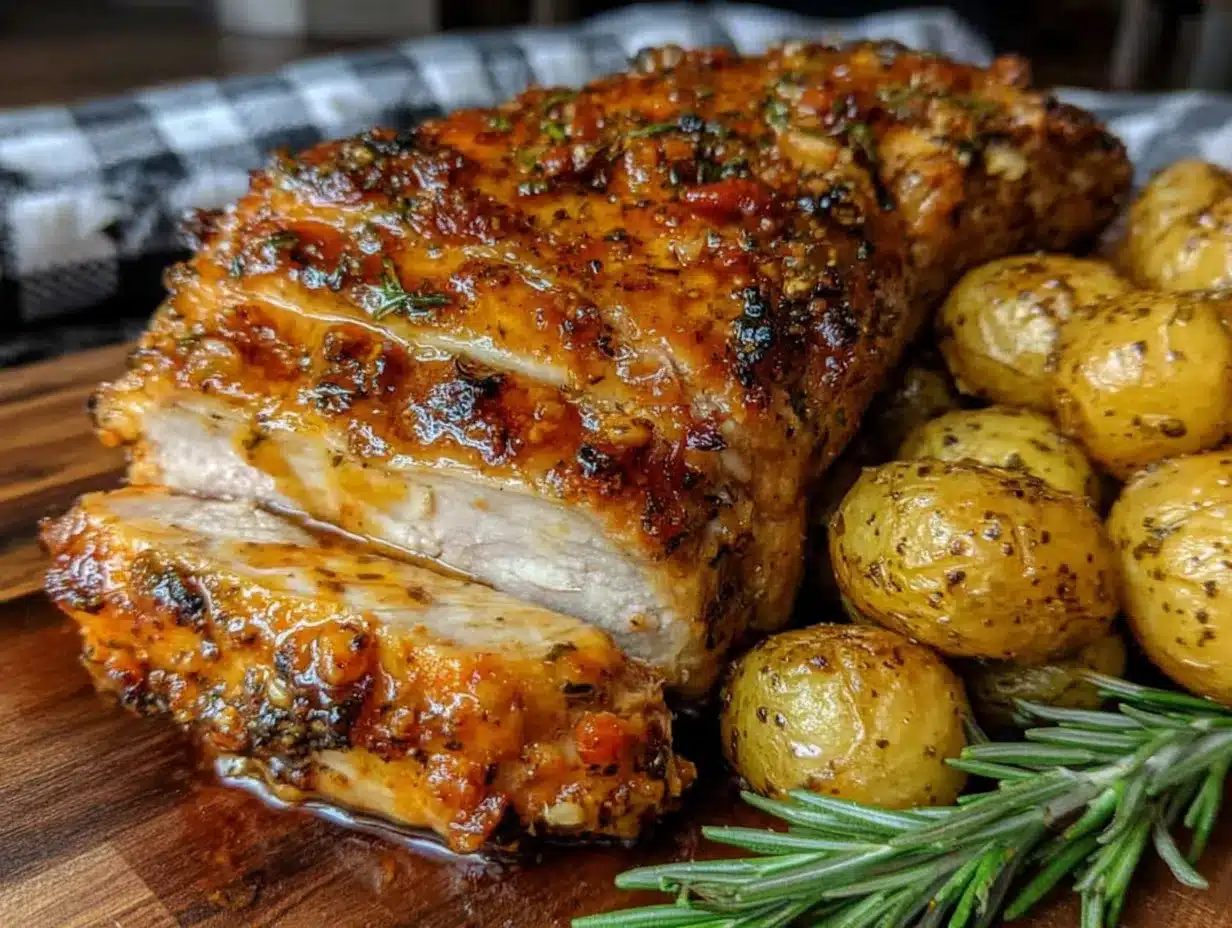
- 2 pounds Yukon Gold potatoes, halved or quartered — Yukon Golds are my go-to for roasting. They have a buttery flavor and creamy texture that holds up well to high heat. Their medium starch content means they get crispy on the outside while staying fluffy inside. Russets work too, but they’re starchier and can dry out. Red potatoes are a decent substitute but won’t get quite as crispy.
- 2 tablespoons olive oil — Olive oil helps the potatoes brown and crisp up. It also carries the rosemary flavor. A good extra virgin olive oil adds a subtle fruitiness, but regular olive oil works fine too.
- 1 tablespoon fresh rosemary, finely chopped — More rosemary for the potatoes. They roast underneath the turkey, so they absorb the herb flavors from the drippings too. Double the rosemary goodness.
- 3 cloves garlic, smashed — Smashed garlic cloves infuse the potatoes with flavor without burning. They’ll soften and sweeten as they roast alongside the potatoes. Leave the skins on—they’ll slip right off after roasting if you want to remove them.
- Salt and freshly ground black pepper — Season the potatoes generously. They need it to stand up to the rich turkey and sweet glaze.
For the Pan Sauce (Optional but Recommended)
- 1 cup chicken or turkey stock — Use low-sodium so you can control the salt level. The stock deglazes the pan and incorporates all those browned bits of flavor into a quick sauce.
- 1 tablespoon butter — A pat of butter whisked in at the end gives the sauce a silky finish.
- 1 teaspoon fresh lemon juice — A squeeze of lemon brightens the sauce and balances the richness of the pan drippings.
Ingredient Substitution Notes: If you need a dairy-free option, use vegan butter or coconut oil in place of the butter in the glaze. For a lower-sugar version, reduce the honey to 1/4 cup and add an extra tablespoon of mustard for tang. The potatoes can be swapped for sweet potatoes or parsnips for a different flavor profile—just adjust roasting time as needed.
Equipment Needed
You don’t need a fancy kitchen to pull this off. Here’s what you’ll need:
- Roasting pan — A sturdy metal or ceramic roasting pan works best. It should be large enough to hold the turkey breast with room around it for the potatoes. If you don’t have a roasting pan, a large rimmed baking sheet lined with foil works in a pinch—just watch for drips.
- Wire rack — Placing the turkey on a rack lifts it above the potatoes, allowing hot air to circulate for even cooking and crispy skin. If you don’t have one, you can roll up a few pieces of foil into snake shapes and place the turkey on top.
- Instant-read thermometer — This is non-negotiable for perfect turkey. Guessing doneness leads to dry meat. A digital thermometer gives you an accurate reading in seconds. I use a Thermapen, but any reliable instant-read thermometer works.
- Basting brush — For applying the honey glaze. A silicone brush is easy to clean and won’t shed bristles into your food. A pastry brush works too.
- Chef’s knife and cutting board — For prepping the rosemary, garlic, and potatoes. A sharp knife makes the work faster and safer.
- Small saucepan — For making the pan sauce on the stovetop while the turkey rests.
- Aluminum foil — For tenting the turkey during resting. Also useful for lining the pan if you want easier cleanup.
Budget-friendly tip: You don’t need a fancy roasting pan. A disposable aluminum roasting pan from the grocery store works perfectly fine. Just place it on a sturdy baking sheet for support. And if you don’t have a basting brush, use a spoon to drizzle the glaze over the turkey—it works just as well.
Preparation Method
Let me walk you through this step by step. Follow along, and you’ll have a beautiful, golden turkey breast with perfectly roasted rosemary potatoes.
- Preheat your oven to 375°F (190°C). Position the rack in the center of the oven. Give it a full 20 minutes to come to temperature—a properly preheated oven is crucial for even cooking.
- Prepare the turkey breast. Remove the turkey from the refrigerator about 30 minutes before cooking. Pat it completely dry with paper towels—this is the most important step for crispy skin. Let it sit at room temperature while you prep everything else. Season generously all over with salt and freshly ground black pepper, including underneath the skin if you can get in there.
- Make the honey glaze. In a small bowl, combine the softened butter, honey, minced garlic, chopped rosemary, and Dijon mustard. Mash it together with a fork until it forms a smooth paste. Taste it—yes, raw—and adjust if needed. The balance should be sweet with a hint of savory and a tiny kick from the mustard. Set aside about 2 tablespoons of the glaze for basting later.
- Prepare the potatoes. Wash and dry the Yukon Gold potatoes. Cut any larger ones in half or quarter them so they’re all roughly the same size—about 2-inch pieces. In a large bowl, toss the potatoes with olive oil, chopped rosemary, smashed garlic cloves, salt, and pepper. Make sure every piece is coated.
- Set up the roasting pan. Spread the seasoned potatoes in an even layer in the bottom of your roasting pan. Place the wire rack over the potatoes. Set the turkey breast on the rack, breast side up. This positioning is key—the potatoes will catch all the flavorful drippings as the turkey roasts.
- Apply the initial glaze. Using your hands or a brush, spread about half of the remaining honey-butter mixture all over the turkey skin. Don’t be shy—get it into every crevice. The butter in the glaze will help the skin brown and crisp while the honey starts to caramelize.
- Roast the turkey for 45 minutes. Place the pan in the preheated oven and roast undisturbed for 45 minutes. During this time, the skin will start to turn golden and the potatoes will begin to soften and brown. Resist the urge to open the oven door—every time you do, you lose heat and extend the cooking time.
- Apply the second glaze layer. After 45 minutes, remove the pan from the oven. Using your basting brush, apply another layer of the honey-butter mixture to the turkey. The heat will have melted the first layer, so this second application ensures a thick, sticky glaze. Give the potatoes a quick stir to redistribute them in the pan juices.
- Continue roasting. Return the pan to the oven and roast for another 20-30 minutes. Start checking the internal temperature of the turkey after 20 minutes. Insert your instant-read thermometer into the thickest part of the breast, avoiding the bone. You’re looking for 155°F (68°C)—the temperature will rise to 160°F (71°C) during resting.
- Apply the final glaze and broil. Once the turkey reaches 150°F (65°C), brush on the remaining honey-butter mixture. Turn the oven to broil and watch carefully for 2-4 minutes. The glaze will bubble and caramelize into a beautiful golden-brown crust. Keep a close eye—honey burns quickly under the broiler. You want deep amber, not black.
- Rest the turkey. Remove the pan from the oven. Transfer the turkey to a cutting board and tent loosely with aluminum foil. Let it rest for 15-20 minutes. This step is crucial—resting allows the juices to redistribute throughout the meat. If you cut into it right away, all those juices will run out onto the cutting board, leaving you with dry turkey.
- Finish the potatoes. While the turkey rests, check the potatoes. They should be golden brown and tender when pierced with a fork. If they need more time, remove the rack and return the pan to the oven for another 10 minutes at 400°F (200°C). The potatoes can handle the extra heat while the turkey rests.
- Make the pan sauce (optional). After removing the potatoes, place the roasting pan on the stovetop over medium heat. Add the chicken or turkey stock and scrape up all the browned bits from the bottom of the pan. Let it simmer for 3-4 minutes until slightly reduced. Whisk in the butter and lemon juice. Season with salt and pepper to taste. Strain if you want a smooth sauce, or leave it rustic with the garlic and herb bits.
- Carve and serve. Remove the foil from the turkey. Slice the breast against the grain into 1/2-inch thick slices. Arrange on a platter with the rosemary potatoes around it. Spoon the pan sauce over the top or serve it on the side. Watch everyone dig in.
Sensory cues to watch for: The turkey skin should be deep golden brown and glossy from the glaze. When you insert the thermometer, it should slide in smoothly with no resistance. The potatoes should be crispy on the outside and fluffy on the inside—they should yield easily to a fork but hold their shape. The pan sauce should be a rich, caramel color with a glossy finish.
Cooking Tips & Techniques
I’ve made this recipe more times than I can count, and I’ve learned a few things along the way. Here are my best tips for success.
Dry the skin thoroughly. This is the number one mistake people make. Wet skin steams instead of crisping. Use paper towels and really pat it dry, getting into all the nooks and crannies. Let it air-dry in the fridge uncovered for a few hours if you have time—it makes a noticeable difference.
Don’t skip the resting time. I know it’s tempting to carve right away, especially when the kitchen smells amazing and everyone’s hungry. But resting is non-negotiable for juicy meat. The internal temperature will continue to rise by 5-10 degrees during resting, so pulling it at 155°F (68°C) means it will reach a safe 160°F (71°C) without overcooking.
Watch the honey under the broiler. I learned this one the hard way. Honey burns fast—like, really fast. That final broil step is only 2-4 minutes, and you need to watch it the entire time. Walk away for even a minute, and you’ll have a blackened, bitter crust instead of a beautiful golden glaze. Set a timer and don’t leave the oven.
Use a meat thermometer. Please don’t rely on those pop-up timers that come with some turkeys. They’re notoriously inaccurate. An instant-read thermometer is the only way to guarantee perfectly cooked meat. It’s a small investment that pays off every time.
Give the potatoes space. Crowding the pan means the potatoes steam instead of roast. Make sure they’re in a single layer with a little breathing room. If they’re piled on top of each other, they won’t get crispy. Use a larger pan if needed.
Save the drippings. The pan drippings from this recipe are liquid gold. Don’t throw them away. Use them to make the pan sauce, or save them for gravy later. They freeze beautifully in a small container.
Multitasking strategy: While the turkey roasts, prep your side dishes. This recipe pairs well with roasted vegetables, a simple green salad, or crusty bread. You can also make a quick cranberry sauce or apple compote while the turkey rests. The 15-20 minute resting time is perfect for finishing last-minute dishes.
Variations & Adaptations
This recipe is versatile. Here are some ways to make it your own.
Herb swap. Not a rosemary fan? Substitute thyme, sage, or a combination of both. Thyme is milder and more versatile, while sage has that classic poultry flavor. Use the same amount—2 tablespoons fresh, finely chopped. You can also use herbes de Provence for a French twist.
Citrus honey glaze. Add the zest of one orange and one lemon to the honey-butter mixture. The citrus brightens the sweetness and adds a fresh, aromatic note. Squeeze the juice over the turkey before roasting for extra moisture. This version is especially good for spring and summer entertaining.
Spicy honey glaze. Add 1/2 teaspoon of red pepper flakes or a minced serrano pepper to the glaze. The heat cuts through the sweetness and adds complexity. If you’re serving spice-wary guests, serve the spicy glaze on the side instead.
Maple version. Swap the honey for pure maple syrup. The flavor is deeper and less floral, with a subtle smokiness that pairs beautifully with turkey. Use the same amount and follow the same method. This is my go-to for fall gatherings.
Vegetable swap. Not in the mood for potatoes? Try the same method with carrots, parsnips, sweet potatoes, or Brussels sprouts. Cut them into uniform pieces and toss with olive oil and rosemary. Root vegetables work particularly well because they can handle the longer roasting time.
Dietary adaptations. For a paleo-friendly version, use ghee or coconut oil instead of butter and serve with roasted sweet potatoes. For a lower-carb option, skip the potatoes and roast cauliflower florets or radishes instead—they absorb the pan drippings beautifully. For gluten-free, this recipe is naturally gluten-free as written.
Personal variation I love: I sometimes add a tablespoon of balsamic vinegar to the glaze. It adds a tangy complexity that balances the sweetness and gives the finished dish a deeper color. It’s a small change that makes a big difference.
Serving & Storage Suggestions
This dish is beautiful on its own, but here’s how to make it a complete meal.
Serving temperature: Serve the turkey warm, right after resting. The potatoes are best hot from the oven, when they’re at their crispiest. If you’re making the pan sauce, serve it warm in a small pitcher or gravy boat on the side.
Presentation: Arrange the sliced turkey on a large platter, slightly overlapping. Surround it with the rosemary potatoes. Garnish with fresh rosemary sprigs and a sprinkle of flaky sea salt—it adds a nice crunch and visual appeal. If you made the pan sauce, drizzle a little over the turkey and serve the rest on the side.
What to serve with it: This dish pairs beautifully with roasted green beans or a crisp arugula salad with lemon vinaigrette. The acidity of the salad cuts through the richness of the honey glaze. Crusty bread is essential for sopping up the pan sauce. For a holiday spread, add maple walnut pumpkin bread as a starter or side—the warm spices complement the rosemary and honey beautifully. A simple cranberry sauce or apple compote adds a tart counterpoint.
Beverage pairings: A crisp white wine like Sauvignon Blanc or unoaked Chardonnay works well with the honey glaze. For red wine drinkers, a light Pinot Noir won’t overpower the turkey. Non-alcoholic options include sparkling apple cider or a rosemary-infused lemonade.
Storage: Leftover turkey keeps in the refrigerator for 3-4 days in an airtight container. The potatoes are best eaten fresh—they lose their crispness when stored. For the turkey, slice it before storing to make reheating easier.
Reheating: The best way to reheat turkey without drying it out is in a low oven. Place slices in a baking dish, add a splash of chicken stock or water, cover with foil, and warm at 300°F (150°C) for 10-15 minutes. You can also reheat in a covered skillet over medium-low heat with a little broth. Avoid the microwave—it will toughen the meat.
Freezer instructions: Cooked turkey freezes well for up to 3 months. Slice it, wrap tightly in plastic wrap and then foil, and place in a freezer bag. Thaw overnight in the refrigerator before reheating. The honey glaze may weep a bit during freezing, but the flavor will still be excellent. Use leftover turkey in soups, salads, sandwiches, or burrito bowls for easy meals throughout the week.
Flavor development: The turkey actually tastes better the next day. The flavors meld and deepen overnight. Cold turkey sandwiches with leftover honey glaze and a smear of cranberry sauce are one of my favorite parts of this recipe.
Nutritional Information & Benefits
Here’s the nutritional breakdown for one serving (about 6 ounces of turkey with 1 cup of potatoes, based on 6 servings):
- Calories: 485
- Protein: 42g
- Fat: 16g (6g saturated)
- Carbohydrates: 38g
- Fiber: 3g
- Sugar: 14g
- Sodium: 580mg
Health benefits: Turkey breast is an excellent source of lean protein, which is essential for muscle repair and satiety. It’s also rich in B vitamins, particularly B6 and B12, which support energy metabolism. The honey provides natural sweetness with antioxidants and antimicrobial properties. Rosemary is packed with antioxidants and anti-inflammatory compounds—it’s more than just a flavoring. Potatoes get a bad rap, but they’re actually a good source of vitamin C, potassium, and fiber when you eat the skin.
Dietary considerations: This recipe is naturally gluten-free and nut-free. For a lower-sodium version, reduce the added salt and use low-sodium stock for the pan sauce. For a lower-sugar option, reduce the honey to 1/4 cup or substitute with a sugar-free maple syrup alternative. The protein content makes it a satisfying option for those following a high-protein diet.
Potential allergens: This recipe contains dairy (butter). For a dairy-free version, substitute with vegan butter or coconut oil. The recipe is free of eggs, soy, and shellfish.
Personal wellness perspective: I love that this recipe feels indulgent but is actually quite balanced. You get a solid serving of protein, complex carbohydrates from the potatoes, and healthy fats from the olive oil. It’s the kind of meal that leaves you satisfied without feeling heavy—perfect for a Sunday dinner that doesn’t derail your week.
Conclusion
This honey glazed turkey breast with rosemary potatoes is the recipe I turn to when I want to feel like a hero in the kitchen without spending all day there. It’s impressive enough for holiday gatherings but simple enough for a regular Sunday dinner. The honey glaze caramelizes into something magical, the rosemary infuses everything with its woodsy aroma, and the potatoes soak up all those pan drippings until they’re crispy and golden.
What I love most about this recipe is how adaptable it is. You can swap the herbs, change up the vegetables, or adjust the sweetness to your liking. It’s a template for great cooking that you can make your own. And honestly? It’s hard to go wrong when you start with quality ingredients and a solid technique.
I’d love to hear how this turns out for you. Did you try a variation? Add your own twist? Serve it for a special occasion? Drop a comment below and let me know. And if you share a photo on social media, tag me—I love seeing your kitchen creations. This is the kind of recipe that deserves to be shared, tweaked, and passed along. Happy cooking, friends.
Frequently Asked Questions
Can I use a boneless turkey breast for this recipe?
Yes, you can, but you’ll need to adjust the cooking time. Boneless turkey breasts cook faster—start checking the internal temperature at 40 minutes. The bone helps conduct heat and keeps the meat moist, so if you go boneless, be extra careful not to overcook it. Also, the presentation won’t be as dramatic without the bone, but the flavor will still be excellent.
How do I know when the turkey is done without a thermometer?
I really recommend using a thermometer for accuracy, but if you don’t have one, look for these signs: the juices should run clear when you pierce the thickest part of the breast, the meat should feel firm but not hard when pressed, and the internal temperature should feel hot to the touch. But honestly, a thermometer is a small investment that guarantees perfect results every time.
Can I make this recipe ahead of time?
You can prep the glaze and season the turkey up to 24 hours in advance. Store the glaze in the refrigerator and let it come to room temperature before using. For the potatoes, you can wash and cut them a day ahead and store them in cold water in the refrigerator. The actual roasting is best done the day you plan to serve it for optimal texture and flavor.
What if my glaze burns under the broiler?
It happens to the best of us. If the glaze gets too dark, don’t panic. Scrape off the burnt bits gently with a knife—you’ll still have plenty of caramelized flavor underneath. For next time, reduce the broiling time or move the rack further from the heating element. Keep a close eye on it, and remember that honey burns fast.
Can I use dried rosemary instead of fresh?
Yes, but use less. Dried herbs are more concentrated than fresh. Use 1 teaspoon of dried rosemary for the glaze and 1 teaspoon for the potatoes. Keep in mind that dried rosemary has a more intense, slightly woody flavor compared to fresh. If possible, stick with fresh for this recipe—it really makes a difference in the overall flavor profile.
Pin This Recipe!
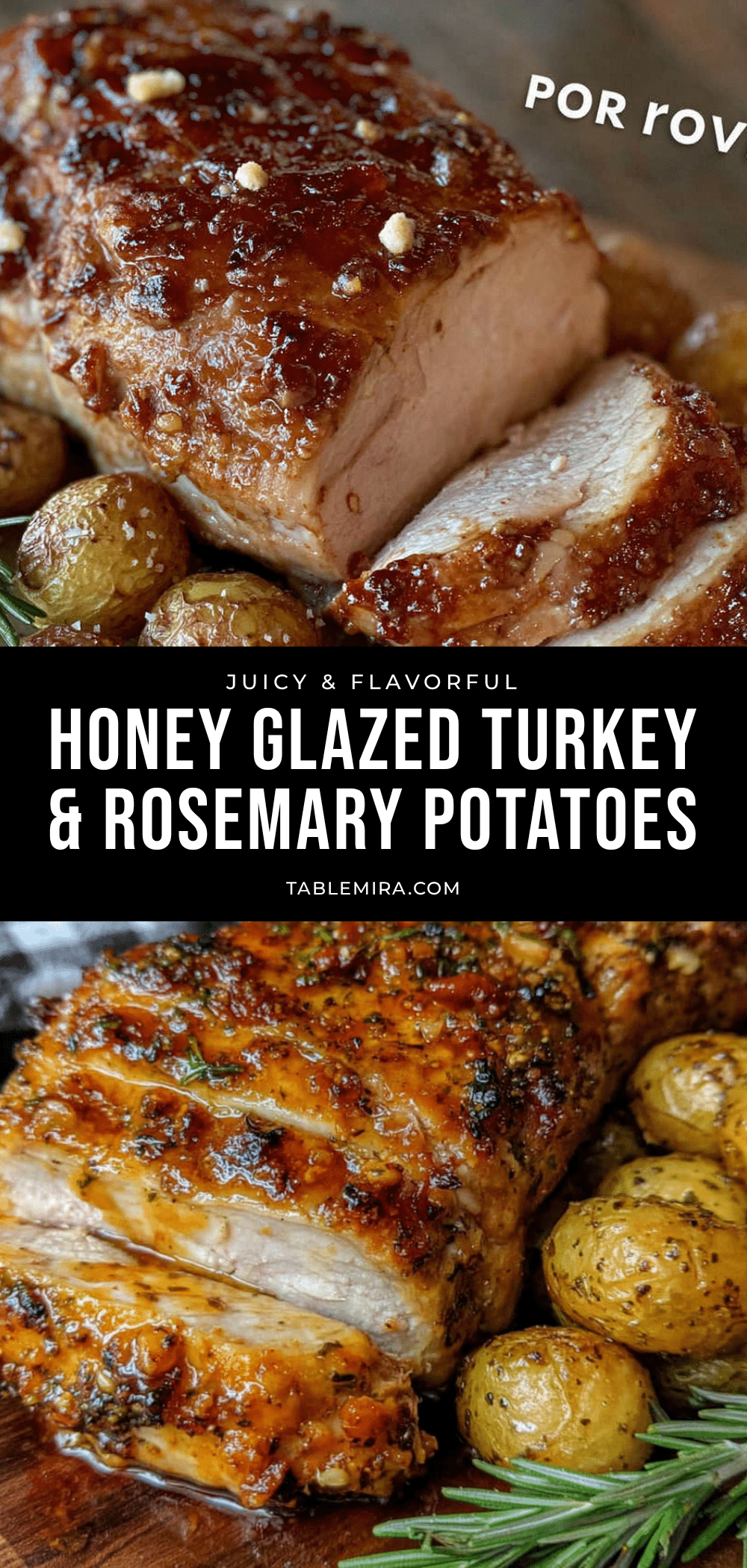
Perfect Honey Glazed Turkey Breast with Rosemary Potatoes

A honey glazed turkey breast with rosemary potatoes that is quick and easy, perfect for a Sunday dinner or holiday gathering. The honey caramelizes into a sticky, golden crust, and the potatoes soak up the pan drippings for a crispy, tender side.
- Prep Time: 15 minutes
- Cook Time: 1 hour 15 minutes
- Total Time: 1 hour 45 minutes
- Yield: 6 servings 1x
- Category: Main Course
- Cuisine: American
Ingredients
- 1 bone-in, skin-on turkey breast (5–6 pounds)
- 1/3 cup honey (mild wildflower or orange blossom)
- 3 tablespoons unsalted butter, softened
- 4 cloves garlic, minced
- 2 tablespoons fresh rosemary, finely chopped
- 1 tablespoon Dijon mustard
- Salt and freshly ground black pepper
- 2 pounds Yukon Gold potatoes, halved or quartered
- 2 tablespoons olive oil
- 1 tablespoon fresh rosemary, finely chopped
- 3 cloves garlic, smashed
- Salt and freshly ground black pepper
- 1 cup chicken or turkey stock (low-sodium)
- 1 tablespoon butter
- 1 teaspoon fresh lemon juice
Instructions
- Preheat your oven to 375°F (190°C). Position the rack in the center of the oven.
- Remove the turkey from the refrigerator about 30 minutes before cooking. Pat it completely dry with paper towels. Season generously all over with salt and freshly ground black pepper, including underneath the skin if possible.
- In a small bowl, combine the softened butter, honey, minced garlic, chopped rosemary, and Dijon mustard. Mash together with a fork until it forms a smooth paste. Set aside about 2 tablespoons of the glaze for basting later.
- Wash and dry the Yukon Gold potatoes. Cut any larger ones in half or quarter them so they’re all roughly the same size—about 2-inch pieces. In a large bowl, toss the potatoes with olive oil, chopped rosemary, smashed garlic cloves, salt, and pepper.
- Spread the seasoned potatoes in an even layer in the bottom of your roasting pan. Place a wire rack over the potatoes. Set the turkey breast on the rack, breast side up.
- Using your hands or a brush, spread about half of the remaining honey-butter mixture all over the turkey skin.
- Roast the turkey for 45 minutes undisturbed.
- After 45 minutes, remove the pan from the oven. Apply another layer of the honey-butter mixture to the turkey. Give the potatoes a quick stir.
- Return the pan to the oven and roast for another 20-30 minutes. Start checking the internal temperature of the turkey after 20 minutes. Insert an instant-read thermometer into the thickest part of the breast, avoiding the bone. You’re looking for 155°F (68°C).
- Once the turkey reaches 150°F (65°C), brush on the remaining honey-butter mixture. Turn the oven to broil and watch carefully for 2-4 minutes until the glaze is caramelized and golden brown.
- Remove the pan from the oven. Transfer the turkey to a cutting board and tent loosely with aluminum foil. Let it rest for 15-20 minutes.
- While the turkey rests, check the potatoes. They should be golden brown and tender when pierced with a fork. If they need more time, remove the rack and return the pan to the oven for another 10 minutes at 400°F (200°C).
- After removing the potatoes, place the roasting pan on the stovetop over medium heat. Add the chicken or turkey stock and scrape up all the browned bits from the bottom of the pan. Let it simmer for 3-4 minutes until slightly reduced. Whisk in the butter and lemon juice. Season with salt and pepper to taste.
- Remove the foil from the turkey. Slice the breast against the grain into 1/2-inch thick slices. Arrange on a platter with the rosemary potatoes around it. Spoon the pan sauce over the top or serve it on the side.
Notes
Dry the turkey skin thoroughly for crispy skin. Don’t skip the resting time—it’s crucial for juicy meat. Watch the honey under the broiler as it burns quickly. Use a meat thermometer for accuracy. Give the potatoes space in the pan to ensure they get crispy. Save the pan drippings for the sauce or gravy.
Nutrition
- Serving Size: 6 ounces turkey with
- Calories: 485
- Sugar: 14
- Sodium: 580
- Fat: 16
- Saturated Fat: 6
- Carbohydrates: 38
- Fiber: 3
- Protein: 42
Keywords: honey glazed turkey breast, rosemary potatoes, roasted turkey, Sunday dinner, holiday turkey, easy turkey recipe