The first real chill of October hit, and I found myself standing in the middle of my kitchen with a half-gallon of fresh apple cider I’d impulsively grabbed at the farmers market. No plan. No recipe in mind. Just the smell of late-season apples and a sudden, desperate need for something warm and butter-soaked. My husband was due home in an hour, and I had about forty-five minutes to turn that cider into something that felt like a hug. I started browning butter without thinking—it’s my default move when I want something to feel special without much effort. The nutty aroma filled the kitchen, and I just started tossing things into a bowl. Flour, sugar, a splash of vanilla. The cider went in last, and the batter looked so promising I actually crossed my fingers (which makes measuring pretty tricky, honestly). That first slice, still warm, with the brown butter glaze dripping down the sides—it was one of those quiet victories you don’t plan for. This cake is proof that a random Wednesday can turn into something worth remembering.
Why You’ll Love This Recipe
This isn’t just another apple cake. The brown butter changes everything—it adds this deep, almost toasty richness that plain butter just can’t touch. And the apple cider? It keeps the crumb incredibly tender while giving you that authentic, orchard-fresh flavor without any fake syrup taste.
- Quick & Easy: From start to finish, this cake comes together in about an hour. No stand mixer required, no complicated techniques—just a whisk and a loaf pan.
- Simple Ingredients: You probably have most of this in your pantry already. The only “special” item is apple cider, and that’s easy to find this time of year.
- Perfect for Fall Gatherings: This cake is made for cozy weekends, Thanksgiving brunches, or surprise guests who show up when you’ve got nothing else to offer.
- Crowd-Pleaser: I’ve brought this to two potlucks and a book club meeting, and every single time, someone asked for the recipe. It’s not too sweet, which means even the “I don’t like cake” people go back for seconds.
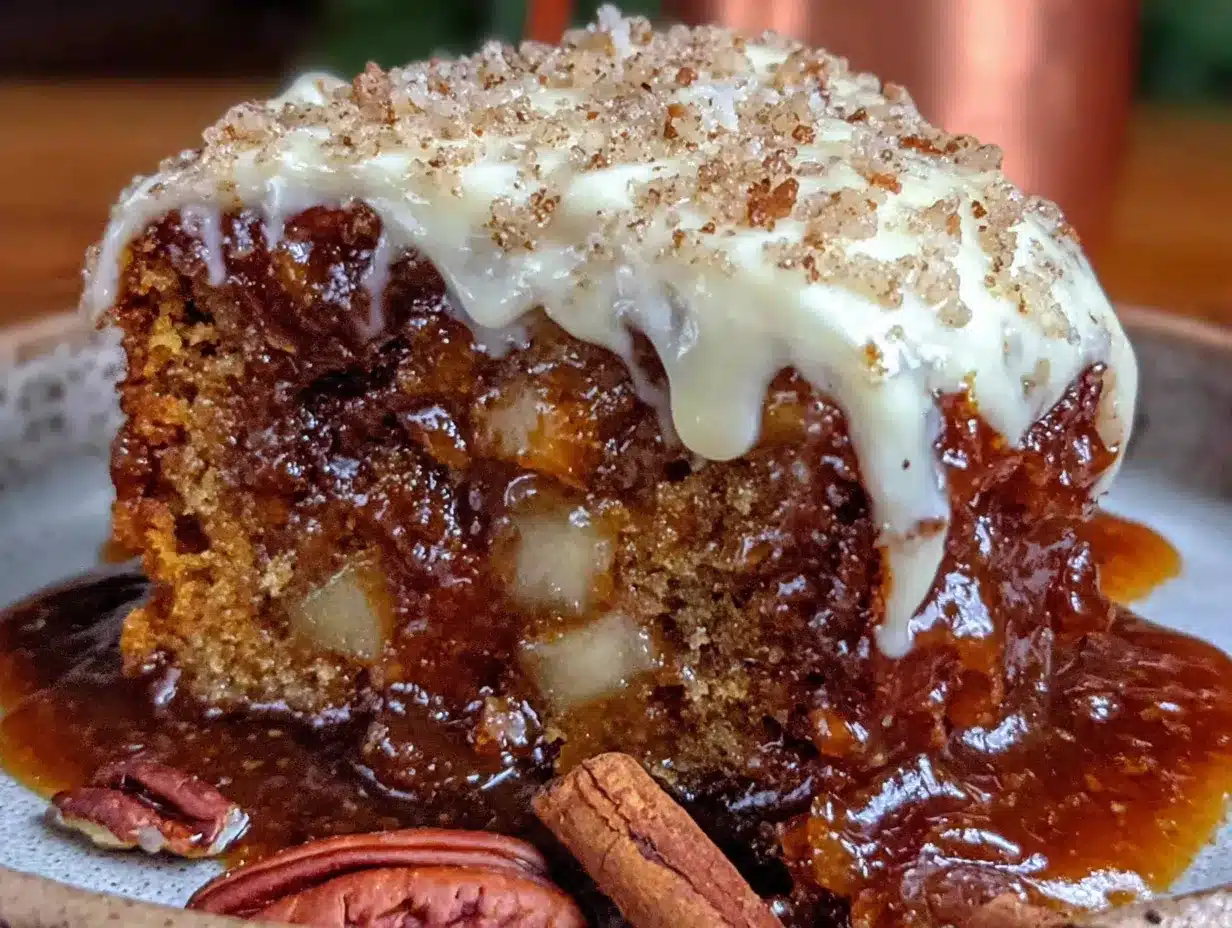
- Unbelievably Delicious: The texture is what gets you—moist but not dense, with a tender crumb that almost melts. And that brown butter glaze on top? It seeps into the cracks and creates little pockets of caramelized goodness.
What makes this recipe different is the technique. Browning the butter adds a layer of complexity that makes you wonder if there’s something fancy hiding in there (nope, just butter and patience). Plus, reducing the apple cider concentrates the flavor, so you get that bright apple taste without the cake turning soggy. It’s comfort food reimagined—faster than a pie, simpler than a layered cake, but with the same soul-soothing satisfaction that makes you close your eyes after the first bite.
What Ingredients You Will Need
This recipe uses simple, wholesome ingredients to deliver bold flavor and satisfying texture without the fuss. Most of these are pantry staples, and the substitutions are easy if you need them.
- Unsalted butter (1 cup / 2 sticks) – You’ll brown this, so don’t skip that step. The browning transforms the butter into something nutty and almost caramel-like. I use Kerrygold for the best flavor, but any good unsalted butter works.
- Apple cider (1 ¼ cups) – Not apple juice! Cider has more depth and a slightly tangy edge. Look for fresh, unfiltered cider if you can find it—it makes a real difference.
- All-purpose flour (2 ½ cups) – Spoon and level it into your measuring cup. Scooping directly can pack the flour and make the cake dry.
- Granulated sugar (1 cup) – Adds sweetness and helps create that tender crumb.
- Light brown sugar (½ cup, packed) – Brings moisture and a hint of molasses that plays beautifully with the brown butter.
- Large eggs (2, room temperature) – Room temperature eggs emulsify better into the batter. If you forgot to take them out, place them in a bowl of warm water for 5 minutes.
- Vanilla extract (2 teaspoons) – Pure vanilla, not imitation. It rounds out the apple flavor.
- Baking powder (1 ½ teaspoons) – Gives the cake lift without making it airy.
- Baking soda (½ teaspoon) – Helps with browning and tenderness.
- Salt (1 teaspoon) – Use fine sea salt. It balances the sweetness and makes the brown butter pop.
- Ground cinnamon (1 ½ teaspoons) – The backbone of fall baking. I like Saigon cinnamon for its warmth.
- Ground nutmeg (¼ teaspoon) – Freshly grated if you have it. It adds a subtle, almost floral note.
- Buttermilk (½ cup) – Makes the cake incredibly tender. No buttermilk? Add ½ tablespoon of lemon juice or vinegar to regular milk and let it sit for 5 minutes.
For the Brown Butter Glaze
- Unsalted butter (3 tablespoons) – You’ll brown this separately for the glaze.
- Powdered sugar (1 ½ cups) – Sift it if it’s lumpy. Nobody wants a lumpy glaze.
- Apple cider (2-3 tablespoons) – Adds flavor and thins the glaze to the perfect drizzling consistency.
- Pinch of salt – Trust me on this. Salt makes the sweetness sing.
Equipment Needed
You don’t need a fancy kitchen to pull this off. Here’s what you’ll need:
- 9×5-inch loaf pan – Standard size works perfectly. If you only have an 8×4, your cake will take a few extra minutes to bake.
- Parchment paper – Lining the pan makes removal a breeze. Leave some overhang on the long sides.
- Medium saucepan – For browning the butter. Light-colored pans make it easier to see the color change.
- Large mixing bowl – For the dry ingredients.
- Medium mixing bowl – For the wet ingredients.
- Whisk – A good whisk is your best friend here. No electric mixer needed.
- Rubber spatula – For folding and scraping every last bit of batter.
- Cooling rack – Lets air circulate so the cake doesn’t get soggy on the bottom.
- Small saucepan – For the glaze.
If you don’t have a cooling rack, you can use the inverted loaf pan to prop the cake up slightly. I’ve done that in a pinch, and it works fine. Just don’t leave the cake sitting in the pan too long, or the bottom will steam.
Preparation Method
Let’s make this cake. Take your time with the brown butter—it’s the star of the show, and rushing it means missing out on all that nutty goodness.
- Preheat your oven to 350°F (175°C). Position the rack in the center. Line your loaf pan with parchment paper, leaving about 2 inches of overhang on the long sides. Lightly grease the short sides with butter or nonstick spray.
- Brown the butter. Place 1 cup of unsalted butter in a medium saucepan over medium heat. Let it melt completely, then swirl the pan occasionally. After about 5-7 minutes, the butter will start to foam and turn golden. Watch closely—you’re looking for amber-colored specks forming at the bottom and a nutty aroma. The moment it smells like toasted hazelnuts, remove it from the heat. Pour it into a heatproof bowl (including all those brown bits—that’s the flavor) and let it cool for 10 minutes.
- Reduce the apple cider. While the butter cools, pour 1 ¼ cups of apple cider into a small saucepan. Bring it to a simmer over medium heat, then reduce the heat to low. Let it gently bubble until it reduces to about ¾ cup. This takes about 10-12 minutes. You want it slightly syrupy. Set it aside to cool.
- Whisk the dry ingredients. In a large bowl, whisk together 2 ½ cups all-purpose flour, 1 ½ teaspoons cinnamon, ¼ teaspoon nutmeg, 1 ½ teaspoons baking powder, ½ teaspoon baking soda, and 1 teaspoon salt. Make sure everything is evenly distributed.
- Mix the wet ingredients. In a medium bowl, whisk together the cooled brown butter, 1 cup granulated sugar, and ½ cup packed light brown sugar until smooth. Add 2 large eggs, one at a time, whisking well after each. Stir in 2 teaspoons vanilla extract. Then whisk in the reduced apple cider and ½ cup buttermilk. The mixture should look smooth and slightly glossy.
- Combine wet and dry. Pour the wet ingredients into the dry ingredients. Use a rubber spatula to fold gently—just until no streaks of flour remain. A few small lumps are fine. Overmixing will make the cake tough, so stop as soon as it comes together. The batter will be thick and smell incredible.
- Bake the cake. Pour the batter into your prepared loaf pan and spread it evenly. Tap the pan on the counter a few times to release any air bubbles. Bake for 50-60 minutes, or until a toothpick inserted into the center comes out clean or with a few moist crumbs. If the top is browning too quickly after 40 minutes, tent it loosely with foil.
- Cool the cake. Let the cake cool in the pan on a wire rack for 15 minutes. Then use the parchment overhang to lift it out and transfer it to the rack to cool completely. Don’t rush this—if you glaze it while it’s still warm, the glaze will slide right off.
- Make the glaze. While the cake cools, brown 3 tablespoons of butter in a small saucepan over medium heat. Follow the same process as before—watch for amber specks and that nutty smell. Remove from heat. Whisk in 1 ½ cups powdered sugar, 2 tablespoons apple cider, and a pinch of salt. If the glaze is too thick, add another tablespoon of cider. If it’s too thin, add a bit more powdered sugar. You want it thick enough to drizzle but thin enough to flow.
- Glaze and serve. Once the cake is completely cool, drizzle the brown butter glaze over the top. Let it set for about 10 minutes before slicing. The glaze will form a thin, crackly crust that contrasts beautifully with the tender cake.
Cooking Tips & Techniques
I’ve made this cake about seven times now, and I’ve learned a few things the hard way. Here’s what I wish someone had told me:
Don’t walk away from browning butter. I made that mistake once—got distracted by a phone call—and ended up with burnt butter that smelled like regret. It goes from perfect to ruined in about 30 seconds. Keep your eyes on the pan, and as soon as you see those amber specks, pull it off the heat immediately. Pour it into a cool bowl to stop the cooking process.
Room temperature ingredients matter. Cold eggs and cold buttermilk will seize up your brown butter and create a lumpy batter. I know it’s annoying to wait, but it takes less than 10 minutes to bring eggs to room temperature in warm water. Your cake will thank you with a smoother crumb.
Measure your flour correctly. This is the most common mistake in baking. Scooping your measuring cup directly into the flour bag packs it down, and you can end up with up to 25% more flour than you need. Instead, spoon the flour into the cup and level it off with a knife. It takes two extra seconds and prevents dry, dense cake.
Let the cake cool completely. I know it’s tempting to pour that gorgeous glaze over a warm cake, but patience pays off here. Warm cake absorbs the glaze instead of letting it sit on top, and you lose that beautiful crackly crust. Plus, the cake slices much cleaner when it’s fully cooled.
Test for doneness early. Ovens vary wildly. Start checking your cake at the 50-minute mark. Insert a toothpick into the center—if it comes out with wet batter, give it 5 more minutes. If it comes out with a few moist crumbs, it’s done. Overbaking is the number one reason cakes turn out dry.
Variations & Adaptations
This recipe is flexible, and I’ve tried a few variations that turned out surprisingly well:
Gluten-Free Version: Substitute the all-purpose flour with a 1:1 gluten-free baking flour blend that contains xanthan gum. I’ve used King Arthur Measure for Measure with great results. The texture is slightly more delicate, so let the cake cool completely before slicing.
Dairy-Free Adaptation: Use vegan butter for browning (Miyoko’s works beautifully) and replace the buttermilk with ½ cup of unsweetened oat milk mixed with ½ tablespoon of lemon juice. The flavor is slightly less rich, but the cake still comes out tender and delicious.
Spiced Apple Cake Variation: Add ½ cup of finely diced fresh apple (Granny Smith or Honeycrisp) to the batter along with ½ cup of chopped toasted pecans. Fold them in gently at the end. The apple pieces add little bursts of moisture, and the pecans give a nice crunch.
Maple Brown Butter Glaze: Replace 1 tablespoon of the apple cider in the glaze with pure maple syrup. It adds a deeper, almost woodsy sweetness that pairs beautifully with the brown butter. I tried this for a Thanksgiving brunch, and it was the first thing to disappear from the table.
Apple Cider Reduction Shortcut: If you’re short on time, you can skip reducing the cider. The cake will still be good, but it will be slightly less flavorful and a bit more tender (almost pudding-like). I’ve done this when I was in a hurry, and honestly, it’s still better than most store-bought coffee cakes.
Serving & Storage Suggestions
This cake is best served slightly warm or at room temperature. The glaze firms up beautifully, and the crumb is at its most tender about an hour after baking. Slice it thick—about 1-inch slices—and serve it on its own or with a dollop of lightly sweetened whipped cream. If you’re feeling extra cozy, warm a slice in the microwave for about 15 seconds and pour a little extra cider on top.
For drinks, this cake pairs beautifully with a hot cup of chai, a spiced latte, or even a mug of mulled wine. I’ve also served it alongside a creamy pumpkin cold foam latte for a full fall breakfast spread, and it was a hit.
Storage: Keep the cake in an airtight container at room temperature for up to 3 days. The glaze may soften slightly, but the flavor actually improves as it sits. Do not refrigerate—it dries out the cake. If you need to store it longer, wrap it tightly in plastic wrap and freeze for up to 3 months. Thaw overnight in the refrigerator, then bring to room temperature before serving.
Reheating: For that just-baked experience, warm individual slices in a 300°F oven for about 5 minutes. The microwave works in a pinch, but the oven preserves the texture better. If you’re reheating a whole frozen cake, unwrap it and warm it in a 325°F oven for 15-20 minutes.
The flavors deepen after a day or two—the brown butter becomes more pronounced, and the apple cider mellows into something almost caramel-like. Honestly, day-old slices might be even better than fresh ones. If you love this kind of cozy fall baking, you’ll also enjoy these easy one-bowl pumpkin cream cheese muffins for another quick breakfast option.
Nutritional Information & Benefits
Per slice (based on 10 servings):
- Calories: 410
- Fat: 18g
- Saturated Fat: 11g
- Carbohydrates: 59g
- Sugar: 38g
- Fiber: 1g
- Protein: 5g
- Sodium: 310mg
This cake is a treat, no question, but it does have a few redeeming qualities. Apple cider contains antioxidants called polyphenols, which may support heart health and reduce inflammation. The cinnamon adds anti-inflammatory benefits and helps regulate blood sugar response. And while brown butter isn’t exactly health food, it does provide vitamin A and healthy fats that help your body absorb fat-soluble vitamins from other foods.
For dietary considerations, this recipe contains gluten, dairy, and eggs. It can be made gluten-free with a 1:1 flour blend and dairy-free with vegan butter and oat milk. If you’re watching your sugar intake, you can reduce the granulated sugar to ¾ cup, though the texture will be slightly less tender.
I believe in balance—this cake isn’t meant to be an everyday breakfast, but it’s perfect for those moments when you need something warm and comforting. Pair it with a protein-rich breakfast or a side of yogurt to round out the meal.
Conclusion
This cozy brown butter apple cider cake is the kind of recipe that makes you look forward to fall all year long. It’s simple enough for a weekday baking session but impressive enough to bring to any gathering. The brown butter adds a depth of flavor that feels luxurious without any fancy ingredients, and the apple cider keeps the cake incredibly moist and tender.
What I love most about this recipe is how forgiving it is. You can tweak the spices, swap in different glazes, or add mix-ins based on what you have on hand, and it still turns out delicious. It’s become my go-to fall recipe, and I hope it becomes yours too.
If you make this cake, I’d love to hear how it turned out. Drop a comment below and let me know if you tried any variations or if it became a new favorite in your kitchen. And if you’re looking for more cozy baking inspiration, don’t miss this moist maple walnut pumpkin bread with brown butter glaze—it’s another fall staple that pairs perfectly with a hot drink and a good book.
Frequently Asked Questions
Can I use apple juice instead of apple cider?
You can, but the flavor won’t be as rich. Apple juice is thinner and sweeter, with less of that tangy, orchard taste. If you’re in a pinch, reduce the apple juice by simmering it for a few minutes to concentrate the flavor before using it in the recipe.
Why did my brown butter turn bitter?
Brown butter turns bitter when it’s overcooked. The milk solids go from golden brown to burnt very quickly. Always remove the pan from heat as soon as you see amber specks and smell that nutty aroma. Pour it into a cool bowl immediately to stop the cooking process.
Can I make this cake ahead of time?
Absolutely. Bake the cake a day ahead, cool it completely, and store it wrapped tightly at room temperature. Make the glaze fresh on the day you plan to serve it. The cake actually tastes better on day two as the flavors meld together.
How do I know when the apple cider is reduced enough?
You’re looking for about ¾ cup of liquid from the original 1 ¼ cups. It should look slightly syrupy and coat the back of a spoon. If you tilt the pan, the liquid should move slowly rather than running like water. It usually takes about 10-12 minutes over low heat.
Can I double this recipe for a bundt pan?
Yes! Double all ingredients and bake in a greased 10-cup bundt pan. The baking time will increase to about 60-70 minutes. Check for doneness with a long skewer or toothpick. You may need to tent the top with foil after 45 minutes to prevent over-browning.
Pin This Recipe!
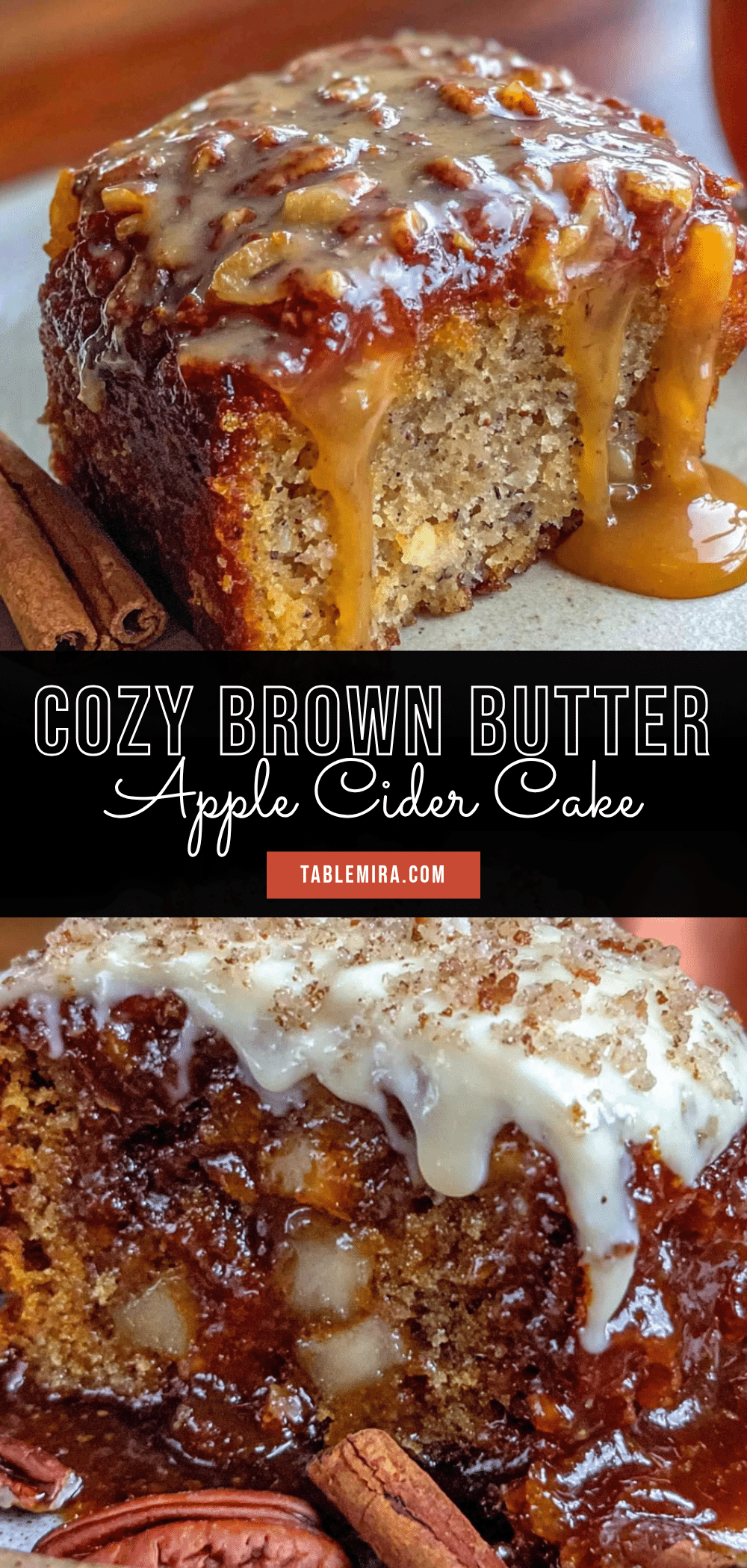
Cozy Brown Butter Apple Cider Cake (Easy Fall Recipe)
This moist and tender apple cider cake features nutty brown butter and a rich brown butter glaze. It’s an easy, one-bowl recipe that comes together in about an hour, perfect for cozy fall gatherings or a simple weekday treat.
- Prep Time: 15 minutes
- Cook Time: 50-60 minutes
- Total Time: 1 hour 15 minutes
- Yield: 10 servings 1x
- Category: Dessert
- Cuisine: American
Ingredients
- 1 cup (2 sticks) unsalted butter
- 1 ¼ cups apple cider
- 2 ½ cups all-purpose flour
- 1 cup granulated sugar
- ½ cup light brown sugar, packed
- 2 large eggs, room temperature
- 2 teaspoons vanilla extract
- 1 ½ teaspoons baking powder
- ½ teaspoon baking soda
- 1 teaspoon fine sea salt
- 1 ½ teaspoons ground cinnamon
- ¼ teaspoon ground nutmeg
- ½ cup buttermilk
- For the Brown Butter Glaze:
- 3 tablespoons unsalted butter
- 1 ½ cups powdered sugar
- 2–3 tablespoons apple cider
- Pinch of salt
Instructions
- Preheat oven to 350°F (175°C). Line a 9×5-inch loaf pan with parchment paper, leaving overhang on the long sides. Lightly grease the short sides.
- Brown the butter: In a medium saucepan over medium heat, melt 1 cup unsalted butter. Swirl occasionally until it foams and turns golden with amber specks, about 5-7 minutes. Remove from heat immediately and pour into a heatproof bowl. Let cool for 10 minutes.
- Reduce the apple cider: In a small saucepan, bring 1 ¼ cups apple cider to a simmer over medium heat, then reduce to low. Let it bubble gently until reduced to about ¾ cup, about 10-12 minutes. Set aside to cool.
- Whisk dry ingredients: In a large bowl, whisk together flour, cinnamon, nutmeg, baking powder, baking soda, and salt.
- Mix wet ingredients: In a medium bowl, whisk together cooled brown butter, granulated sugar, and brown sugar until smooth. Add eggs one at a time, whisking well after each. Stir in vanilla, then whisk in reduced apple cider and buttermilk until smooth and glossy.
- Combine: Pour wet ingredients into dry ingredients. Fold gently with a rubber spatula until just combined—no streaks of flour remain. Do not overmix.
- Bake: Pour batter into prepared loaf pan and spread evenly. Tap pan on counter to release air bubbles. Bake for 50-60 minutes, until a toothpick inserted in center comes out clean or with a few moist crumbs. Tent with foil after 40 minutes if browning too quickly.
- Cool: Let cake cool in pan on a wire rack for 15 minutes. Use parchment overhang to lift out and transfer to rack to cool completely.
- Make glaze: In a small saucepan, brown 3 tablespoons butter over medium heat until amber specks appear. Remove from heat. Whisk in powdered sugar, 2 tablespoons apple cider, and a pinch of salt. Add more cider if too thick, more sugar if too thin.
- Glaze and serve: Once cake is completely cool, drizzle glaze over top. Let set for 10 minutes before slicing.
Notes
Don’t walk away from browning butter—it can burn quickly. Room temperature ingredients ensure a smooth batter. Measure flour by spooning and leveling. Let cake cool completely before glazing. Start checking for doneness at 50 minutes. Store in an airtight container at room temperature for up to 3 days. Freeze for up to 3 months.
Nutrition
- Serving Size: 1 slice
- Calories: 410
- Sugar: 38
- Sodium: 310
- Fat: 18
- Saturated Fat: 11
- Carbohydrates: 59
- Fiber: 1
- Protein: 5
Keywords: brown butter apple cider cake, easy fall cake, apple cider loaf, brown butter glaze, fall dessert, apple cake recipe