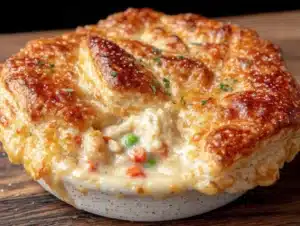
Three-time-in-a-week and still, the irresistible pull of caramelized onions melting into golden Gruyère over a tangy sourdough focaccia crust grabbed me again. Honestly, by the third loaf this week, I was knee-deep in dough, slathering olive oil and sprinkling flaky sea salt like some kind of bread-obsessed wizard. The kitchen smelled like autumn afternoons, all sweet and savory mingling in the air like a hug you didn’t know you needed.
It’s funny how this recipe has hijacked my baking mojo lately — the way the crust crisps just right, yet stays soft inside, combined with those slowly caramelized onions that taste like pure magic, makes it impossible to put down the rolling pin. And the Gruyère? It’s not just cheese; it’s the crown jewel that stretches and browns perfectly, adding that nutty, melty punch that keeps pulling me back.
Every time I make this sourdough focaccia loaf, I notice something new — a slightly deeper caramelization here, a little more bubbling cheese there — and that tiny tweak makes all the difference. I’m not kidding when I say I’ve been waking up thinking about it, planning my next batch while washing dishes from the last.
There’s something quietly satisfying about sinking your teeth into this loaf, the balance of sweet, savory, tangy, and buttery hitting just right. It’s not flashy or complicated, but it’s cozy in that very particular way that makes you want to curl up with a book or share it over a slow, lazy dinner. This bread has nestled itself into my routine, and honestly, it’s the kind of thing that sticks because it’s just that good — like a well-worn sweater you keep reaching for without thinking.
Why You’ll Love This Cozy Caramelized Onion and Gruyère Sourdough Focaccia Loaf
I’ve baked this sourdough focaccia loaf so many times that it’s basically become my go-to comfort bread, and here’s why it might just become yours too:
- Quick & Easy: From mixing to baking, it comes together in about 3 hours, perfect for weekend baking or a relaxed weekday treat.
- Simple Ingredients: No need for specialty stores — just pantry staples and a few fresh items like onions and Gruyère.
- Perfect for Cozy Gatherings: Whether it’s a chilly evening dinner or a weekend brunch, this loaf feels like a warm invitation to slow down and savor.
- Crowd-Pleaser: The rich onion flavor paired with nutty Gruyère wins over kids and adults alike — no leftovers here, trust me.
- Unbelievably Delicious: The texture is spot-on — chewy, airy sourdough crumb with a crisp, golden top studded with melted cheese and sweet onion ribbons.
- Unique Twist: Unlike typical focaccia, this recipe uses a sourdough starter for that tangy depth and slow fermentation, which makes the bread lighter and more flavorful.
This isn’t just another focaccia — it’s the one where you close your eyes after the first bite and think, “Yep, this is what homemade bread should taste like.” It’s comfort food in loaf form, but with a little extra soul. Honestly, it’s the kind of recipe I keep coming back to when I want something cozy but not fussy, and it’s perfect for impressing guests without the stress.
What Ingredients You Will Need
This Cozy Caramelized Onion and Gruyère Sourdough Focaccia Loaf uses straightforward, wholesome ingredients that come together to create bold flavors and a satisfying texture without any fuss.
- For the Dough:
- 500g (4 cups) bread flour (I like King Arthur for consistent results)
- 350ml (1½ cups) water, lukewarm
- 100g (½ cup) active sourdough starter, bubbly and fed
- 10g (2 tsp) fine sea salt
- 50ml (3 tbsp) extra virgin olive oil, plus extra for drizzling
- For the Caramelized Onions:
- 3 large yellow onions, thinly sliced
- 2 tbsp unsalted butter (adds richness and helps with browning)
- 1 tsp sugar (to speed caramelization)
- Pinch of salt
- For the Topping:
- 150g (1½ cups) Gruyère cheese, shredded
- Fresh rosemary sprigs (optional, for an herby touch)
- Flaky sea salt, for finishing
For substitutions, if you want to keep this dairy-free, swap the butter with olive oil and use a dairy-free cheese alternative, but honestly, the Gruyère is what makes this loaf sing. If you don’t have a sourdough starter, you can use commercial yeast, but the flavor won’t be quite the same.
Equipment Needed
- Large mixing bowl – I use a glass one to watch the dough rise (makes me feel like a scientist).
- Dough scraper or spatula – perfect for folding and handling the sticky dough without frustration.
- Cast iron skillet or a 9×13-inch baking pan – the skillet gives that crisp, rustic edge, but a baking pan works just fine.
- Sharp knife or kitchen scissors – for scoring the dough before baking.
- Wooden spoon or heatproof spatula – for stirring the caramelized onions.
- Kitchen scale – highly recommended for precise measurements, especially with flour and water.
If you don’t have a kitchen scale, you can measure by cups, but weighing ingredients really helps with consistent results. Also, keep a spray bottle handy if your oven tends to dry out the bread; a quick spritz mid-bake helps build a better crust.
Preparation Method

- Prepare the Caramelized Onions (about 40 min): Heat a large skillet over medium-low heat. Add butter and sliced onions, then sprinkle sugar and salt. Stir occasionally, letting the onions soften and turn golden-brown slowly. This step requires patience—don’t rush it or crank up the heat, or you risk burning. When the onions are deeply caramelized and jammy, remove from heat and set aside.
- Mix the Dough (15 min): In your large mixing bowl, combine bread flour and salt. In a separate bowl, mix lukewarm water with the bubbly sourdough starter. Pour wet into dry and stir with a wooden spoon until a shaggy dough forms. Drizzle in olive oil and mix again until incorporated. The dough will be sticky and loose — that’s exactly right.
- Bulk Fermentation and Folding (3 to 4 hours): Cover the bowl with a damp towel or plastic wrap and let the dough rest at room temperature. Every 30 minutes for the first 2 hours, perform gentle stretch and folds: reach under the dough, stretch it up, then fold it over itself. This builds gluten strength and gives the bread its open crumb.
- Shape and Second Rise (30 min): After the bulk fermentation, transfer the dough to your prepared pan or cast iron skillet, drizzling a little olive oil on the bottom first. Press the dough gently to fill the pan. Cover and let it rise again until puffy, about 30 minutes.
- Add Toppings and Score (5 min): Evenly spread the caramelized onions over the dough, then sprinkle shredded Gruyère and rosemary sprigs if using. Use your fingers to dimple the dough deeply all over — this is classic focaccia style. Finish with a sprinkle of flaky sea salt.
- Bake (25-30 min at 220°C/425°F): Place the pan in the oven preheated to 220°C (425°F). Keep an eye on the bread — the top should turn golden brown and bubbly, with cheese melted into irresistible pockets. If the top browns too quickly, tent with foil to avoid burning.
- Cool and Serve: Let the loaf cool on a wire rack for at least 15 minutes before slicing. The crumb will still be warm and soft, perfect for tearing apart or sandwiching.
Tip: If your dough feels too sticky during mixing, resist adding more flour; instead, just oil your hands to handle it better. Also, the slow caramelization of onions is worth every minute — don’t skip it or you’ll miss that deep, sweet flavor.
Cooking Tips & Techniques
Getting that perfect sourdough focaccia with caramelized onions and Gruyère is a bit like juggling — but once you learn the rhythm, it’s second nature.
- Patience with the onions: I’ve burned more batches of onions than I care to admit by rushing the process. Low and slow is the secret. Stir often but gently.
- Hydration matters: This dough is wetter than your average bread — that’s why it’s so airy and tender. Don’t add extra flour out of fear; embrace the stickiness.
- Stretch and fold: This technique is key for developing gluten without kneading. It might feel odd at first, but after a couple of tries, it’s oddly satisfying.
- Use room temperature ingredients: Your starter and water should be just warm enough to encourage fermentation but not kill the yeast.
- Don’t skimp on olive oil: It helps keep the focaccia moist and adds that golden sheen on the crust.
- Watch baking time: Every oven bakes differently. Start checking the loaf at 20 minutes, and don’t be afraid to tent it with foil if things brown too fast.
Once, I tried speeding things up by cranking the oven higher — the crust got too dark, and the inside stayed gummy. Lesson learned: slow and steady wins the bread race.
Variations & Adaptations
This sourdough focaccia recipe is a fantastic base for creative spins. Here are a few I’ve tried and loved:
- Herb lover’s focaccia: Swap rosemary for thyme, sage, or a mix of Italian herbs for a fragrant variation.
- Seasonal veggies: Add thinly sliced zucchini or roasted cherry tomatoes alongside the onions for a summery twist.
- Cheese swaps: Gruyère is my favorite, but fontina or aged cheddar make tasty alternatives if you want a sharper bite.
- Gluten-free adaptation: Use a gluten-free sourdough starter and a blend of gluten-free flours; the texture will change but the flavor remains cozy.
For a quick weeknight version, I sometimes skip the long fermentation and use a commercial yeast focaccia dough recipe, but the sourdough depth is what keeps me coming back. If you want to try something a bit different, pairing this focaccia with a light soup like the creamy one-pan garlic parmesan orzo from my blog is just heavenly.
Serving & Storage Suggestions
This focaccia loaf is best served warm or at room temperature, torn apart and shared with good company. It pairs beautifully with a simple salad or a bowl of soup — think something like a fresh cucumber mint lime spritz drink to refresh your palate or a cozy crockpot chicken tortilla soup for a full meal.
To store, wrap the cooled loaf tightly in plastic wrap or place it in an airtight container. It keeps well at room temperature for up to 2 days and in the fridge for about 5 days. For longer storage, slice and freeze; thaw slices at room temperature or toast them gently to revive that fresh-baked texture.
Reheating in a hot oven for 5-7 minutes helps bring back the crisp crust and melty cheese feel. The flavors actually deepen overnight, so leftovers can be even better the next day.
Nutritional Information & Benefits
This sourdough focaccia loaf offers a nice balance of carbs and protein, with the Gruyère adding calcium and a bit of fat for satiety. The slow fermentation from the sourdough starter makes the bread easier to digest compared to quick-rise breads. Caramelized onions bring antioxidants and fiber, while the olive oil contributes heart-healthy fats.
Per serving (about 1/8 loaf), you’re looking at roughly:
| Calories | 280 |
|---|---|
| Protein | 8g |
| Carbohydrates | 35g |
| Fat | 10g |
| Fiber | 2g |
Note: Contains gluten and dairy. For dairy-free or gluten-free diets, see the variations section above.
Conclusion
This Cozy Caramelized Onion and Gruyère Sourdough Focaccia Loaf is a recipe that’s become a quiet obsession for me, and I hope it finds a cozy spot in your kitchen too. It’s simple enough to fit into your baking routine but special enough to make any meal feel like an occasion. The way the sweet onions and nutty Gruyère come together over a tangy, airy sourdough base is truly something else.
Don’t hesitate to make it your own—add your favorite herbs, swap cheeses, or try it alongside a fresh cucumber salad or hearty soup. I love how forgiving and versatile this bread is, making it a staple I keep returning to, especially on chilly nights when comfort is everything.
If you give this loaf a try, I’d love to hear how you customize it or what moments it’s become part of. Baking bread is a little act of love, and sharing that love always makes it better.
FAQs About Cozy Caramelized Onion and Gruyère Sourdough Focaccia Loaf
Can I use instant yeast instead of sourdough starter?
Yes, you can substitute 1 packet (7g) of instant yeast and reduce the rising time accordingly, but the flavor won’t have the same tangy depth that sourdough provides.
How do I know when the sourdough starter is ready?
Your starter should be bubbly and double in size within 4-6 hours after feeding. A simple float test (dropping a spoonful in water) can also indicate readiness if it floats.
Can I prepare the caramelized onions ahead of time?
Absolutely! Caramelized onions store well in the fridge for up to 3 days and can be reheated gently before topping the focaccia.
What is the best way to store leftover focaccia?
Wrap cooled bread tightly and store at room temperature up to 2 days or freeze slices for longer storage. Reheat in the oven to restore crispness.
Can I add other toppings to this focaccia?
Yes! Feel free to add olives, sun-dried tomatoes, or different herbs like thyme or oregano for extra flavor variations.
Pin This Recipe!
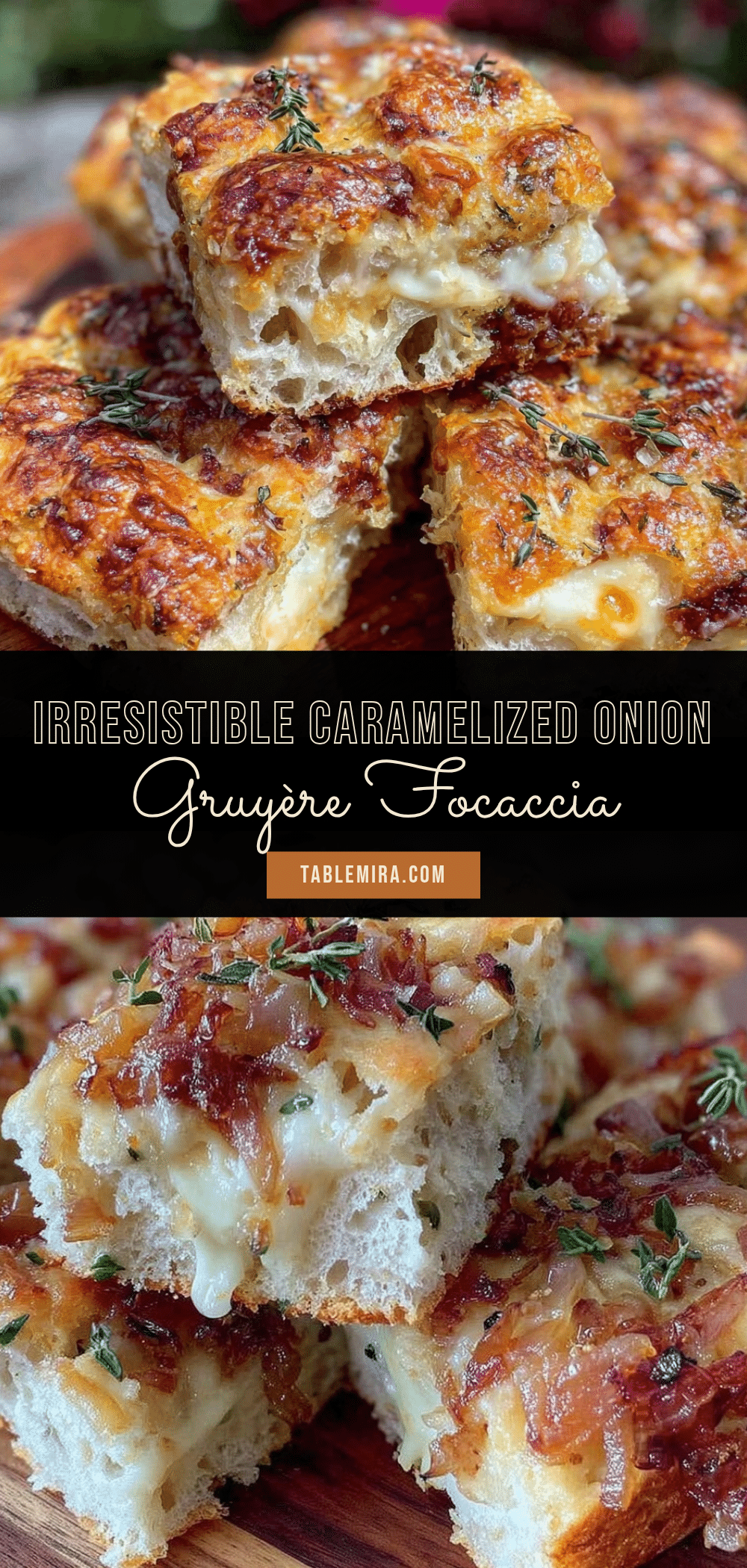
Cozy Caramelized Onion and Gruyère Sourdough Focaccia Loaf

A comforting sourdough focaccia loaf featuring sweet caramelized onions and nutty Gruyère cheese on a tangy, airy crust. Perfect for cozy gatherings and easy weekend baking.
- Prep Time: 55 minutes
- Cook Time: 25-30 minutes
- Total Time: 3 hours 20-25 minutes
- Yield: 8 servings 1x
- Category: Bread
- Cuisine: French-inspired
Ingredients
- 500g (4 cups) bread flour
- 350ml (1½ cups) lukewarm water
- 100g (½ cup) active sourdough starter, bubbly and fed
- 10g (2 tsp) fine sea salt
- 50ml (3 tbsp) extra virgin olive oil, plus extra for drizzling
- 3 large yellow onions, thinly sliced
- 2 tbsp unsalted butter
- 1 tsp sugar
- Pinch of salt
- 150g (1½ cups) Gruyère cheese, shredded
- Fresh rosemary sprigs (optional)
- Flaky sea salt, for finishing
Instructions
- Prepare the caramelized onions: Heat a large skillet over medium-low heat. Add butter and sliced onions, then sprinkle sugar and salt. Stir occasionally, letting the onions soften and turn golden-brown slowly. When deeply caramelized and jammy, remove from heat and set aside.
- Mix the dough: In a large mixing bowl, combine bread flour and salt. In a separate bowl, mix lukewarm water with the bubbly sourdough starter. Pour wet into dry and stir with a wooden spoon until a shaggy dough forms. Drizzle in olive oil and mix until incorporated. The dough will be sticky and loose.
- Bulk fermentation and folding: Cover the bowl with a damp towel or plastic wrap and let the dough rest at room temperature. Every 30 minutes for the first 2 hours, perform gentle stretch and folds to build gluten strength.
- Shape and second rise: Transfer the dough to a prepared pan or cast iron skillet with olive oil drizzled on the bottom. Press dough gently to fill the pan. Cover and let rise until puffy, about 30 minutes.
- Add toppings and score: Spread caramelized onions evenly over the dough, then sprinkle shredded Gruyère and rosemary sprigs if using. Dimple the dough deeply all over with fingers and finish with flaky sea salt.
- Bake: Place pan in oven preheated to 220°C (425°F). Bake for 25-30 minutes until top is golden brown and bubbly. Tent with foil if browning too quickly.
- Cool and serve: Let the loaf cool on a wire rack for at least 15 minutes before slicing.
Notes
Use low and slow heat for caramelizing onions to avoid burning. Resist adding extra flour to sticky dough; oil hands instead. Tent bread with foil if browning too fast. Caramelized onions can be prepared ahead and stored up to 3 days refrigerated.
Nutrition
- Serving Size: 1/8 of loaf
- Calories: 280
- Sugar: 4
- Sodium: 400
- Fat: 10
- Saturated Fat: 4
- Carbohydrates: 35
- Fiber: 2
- Protein: 8
Keywords: sourdough focaccia, caramelized onions, Gruyère, homemade bread, comfort food, easy bread recipe, savory focaccia